The celestial tapestry is often painted with the vibrant hues of nebulae, those ethereal clouds of gas and dust that ignite our imaginations. Their names – Orion, Carina, Eagle – evoke images of cosmic artistry, vast and luminous expanses that seem to beckon us closer. Yet, beneath this captivating facade lies a dim reality: despite their immense size and proximity to our Sun in the grand scheme of the Milky Way, nebulae are surprisingly faint. The notion that closeness equates to brilliance in the cosmos is a tempting one, but in the case of these stellar nurseries and remnants, it proves to be a deceptive illusion. This article delves into the intricate factors that contribute to the dimness of nebulae, exploring the physics of light, the nature of their composition, and the sheer scale of the universe that renders even grand structures subtly subdued.
The human perception of “close” and “far” is inherently relative to our terrestrial experiences. A few hundred or even a few thousand light-years might seem like an unfathomable distance, but in the context of the Milky Way galaxy, these distances are often considered local. Many of the most iconic nebulae, such as the Orion Nebula or the Lagoon Nebula, reside within a few thousand light-years of Earth. To put this into perspective, the Milky Way itself spans approximately 100,000 light-years in diameter. This means that while these nebulae are indeed within our galactic neighborhood, they are still a minuscule fraction of the galaxy’s total extent.
Light-Years as a Measure of Distance
The concept of a light-year is crucial to understanding cosmic scales. It is not a measure of time, but rather the distance that light travels in one Earth year. Light, the fastest thing in the universe, travels at approximately 186,282 miles per second. Therefore, one light-year equates to roughly 5.88 trillion miles. When we speak of a nebula being 1,344 light-years away, as is the case with the Orion Nebula, it signifies that the light we observe from it today began its journey over thirteen centuries ago. This immense journey, while impressive, also highlights the vastness separating us from these celestial objects.
The Galactic Neighborhood
Our Sun is situated in one of the Milky Way’s spiral arms, the Orion Arm, approximately two-thirds of the way out from the galactic center. This location places us amidst a concentration of stars and nebulae, contributing to the perception of proximity. However, even within this “neighborhood,” the sheer volume of space means that nebulae, despite being relatively near in galactic terms, are still incredibly dispersed. Imagine a vast desert with scattered oases. Even if the oases are relatively close to each other, the sheer emptiness of the desert between them makes them appear isolated and not necessarily part of a contiguous, bright landscape.
The Interstellar Medium: A Cosmic Haze
Between these nebulae and our telescopes lies the interstellar medium (ISM). This is not empty space, but rather a diffuse soup of gas and dust that permeates the galaxy. While the ISM is incredibly tenuous compared to Earth’s atmosphere, its vast extent can absorb and scatter light from distant objects. This subtle dimming effect, known as extinction, contributes to the fainter appearance of nebulae that might otherwise seem more brilliant.
In exploring the fascinating nature of nebulae, one might wonder why getting closer to these celestial objects does not necessarily make them appear brighter. A related article that delves into this topic is available on Freaky Science, which explains the intricate relationship between distance, light, and the physical properties of nebulae. You can read more about this phenomenon and gain a deeper understanding of the science behind it by visiting Freaky Science.
The Nature of Nebular Light: Emission vs. Reflection
The light we perceive from nebulae is not monolithic; it originates from different physical processes. Understanding these processes is key to appreciating why some nebulae appear brighter than others, and why even the brightest can still be considered dim in an absolute sense. The two primary mechanisms for nebular illumination are emission and reflection.
Emission Nebulae: Stellar Furnaces Ignited
Emission nebulae, often appearing red, are ionized by the ultraviolet radiation from nearby hot, massive stars. These stars, typically O and B type stars, are incredibly energetic and emit photons with enough energy to strip electrons from atoms within the surrounding gas, primarily hydrogen. As these freed electrons recombine with protons, they release energy in the form of photons, producing the characteristic red glow of hydrogen-alpha emission. The Orion Nebula is a prime example of a massive emission nebula.
Ionization and Recombination: The Physics of Color
The specific colors observed in emission nebulae are determined by the elemental composition of the gas and the energy of the ionizing radiation. Hydrogen-alpha, the most prominent emission line in many nebulae, appears red. Oxygen, when ionized twice, emits light in the green spectrum, and nitrogen can produce red and orange hues. The intensity of these emissions is directly proportional to the density of the gas and the strength of the ionizing radiation. However, even with intense stellar radiation, the gas is still incredibly diffuse, meaning that the overall light output, when spread over such a vast volume, is not overwhelmingly bright from our perspective.
The Role of Hot, Young Stars
The presence of massive, hot, young stars is crucial for the existence of emission nebulae. These stars have short lifespans, burning through their fuel rapidly. Therefore, emission nebulae are often associated with regions of active star formation. The energy output of these stars is immense, but it is spread across a vast area, and the nebulae themselves are not solid objects radiating uniformly.
Reflection Nebulae: Cosmic Mirrors in the Dark
Reflection nebulae, often appearing blue, are formed when light from nearby stars, typically less energetic than those that ionize emission nebulae, is scattered by dust particles. The dust grains are more effective at scattering shorter, bluer wavelengths of light, similar to how Earth’s atmosphere scatters sunlight to create blue skies. The Pleiades star cluster is a well-known example of a region dominated by reflection nebulae.
Scattering Properties of Dust Grains
The size, shape, and composition of dust grains play a significant role in the type of scattering that occurs. Smaller grains tend to scatter blue light more efficiently, while larger grains can scatter light more uniformly across the spectrum. The dust in reflection nebulae is not a perfect mirror; it is a diffuse medium that redirects existing starlight, rather than generating its own. This redirection, while creating visually stunning effects, is inherently less intense than the direct emission of light from ionized gas.
The Absence of Ionizing Radiation
Unlike emission nebulae, reflection nebulae are not bathed in the intense ultraviolet radiation needed to ionize gas. The light source is typically a single star or a group of stars whose radiation is primarily visible or infrared. This means that the energy available for illumination is less potent in the context of generating bright, visible light.
Density: The Key to Luminosity
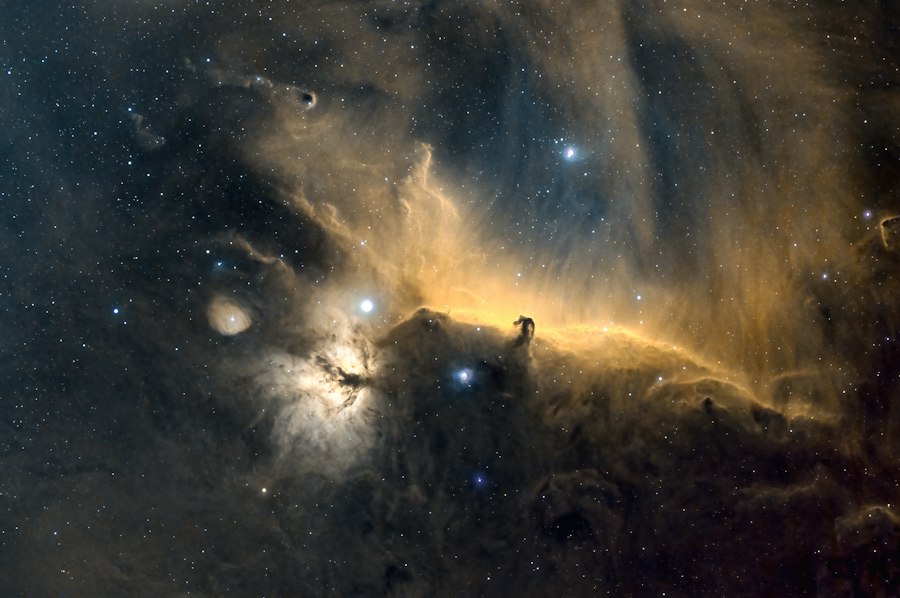
Perhaps the most significant factor contributing to the dimness of nebulae is their incredibly low density. While they are vast clouds, the amount of matter contained within them is astonishingly small when compared to everyday objects or even the vacuum of space as perceived on Earth.
A Near-Vacuum in Cosmic Terms
The density of interstellar gas is typically measured in atoms per cubic centimeter. In the densest regions of a nebula, the density might reach a few hundred or thousand atoms per cubic centimeter. For comparison, Earth’s atmosphere at sea level has around 2.5 x 10^19 molecules per cubic centimeter. Even the most “dense” nebular regions are vastly more empty than the air we breathe.
Atoms, Not Walls: The Diffuse Nature of Nebulae
This extreme diffuseness means that while there are trillions upon trillions of atoms within a nebula, they are spread out over immense volumes. Imagine trying to illuminate a vast stadium with a single flashlight. Even if the flashlight is bright, the light is spread so thinly across the enormous space that it would appear dim to anyone standing far away. The same principle applies to nebulae.
The Thin Veil of Light
The light emitted or scattered by nebular material is therefore spread incredibly thin. Even if individual atoms are emitting light efficiently, the sheer lack of density means that the collective light output is not concentrated enough to appear brilliant from Earth, especially considering the vast distances involved. The dimness is a direct consequence of the tenuous nature of these cosmic clouds.
Volume vs. Mass: An Unfavorable Ratio
The volume occupied by a nebula is enormous, but its total mass is relatively small. This unfavorably high volume-to-mass ratio means that any light generated or reflected is diluted over an immense expanse, diminishing its perceived intensity.
Distance and Extinction: The Dimming Effect of Space
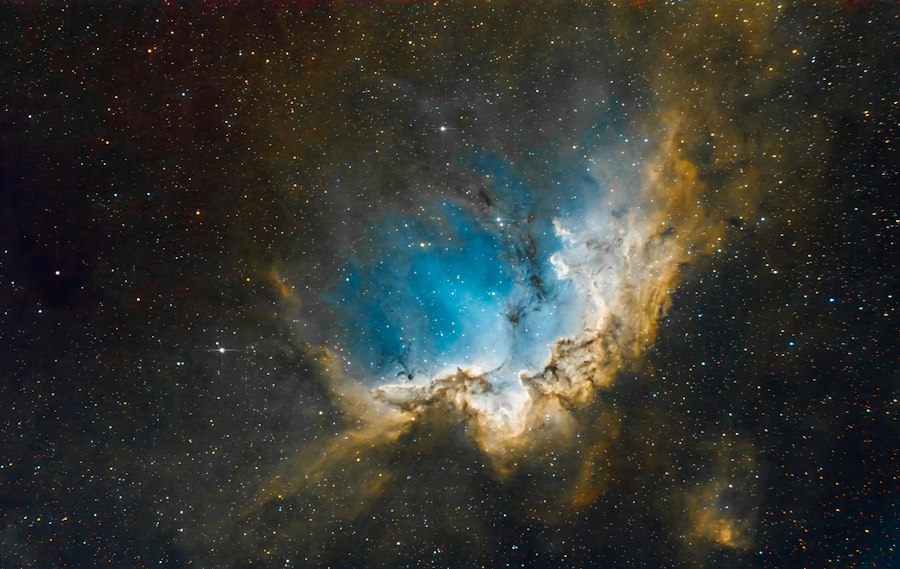
Even if a nebula were intrinsically brighter, the journey of its light to Earth is fraught with challenges that further diminish its brilliance. Distance and the intervening interstellar medium play crucial roles in this dimming.
The Inverse Square Law: Light Fades with Distance
The intensity of light decreases with the square of the distance from its source. This fundamental principle of physics, known as the inverse square law, means that as light travels further, it spreads out over a larger area, and its intensity diminishes rapidly. Even if a nebula were as bright as the Sun at its surface, its light would be significantly fainter by the time it reached us, simply due to the vast distances involved.
Apparent Magnitude: A Measure of Faintness
Astronomers use apparent magnitude to quantify the brightness of celestial objects as seen from Earth. Lower numbers indicate brighter objects, while higher numbers signify fainter ones. While nebulae can be visually striking through telescopes, their apparent magnitudes are generally much higher (meaning they are fainter) than those of nearby stars.
Interstellar Extinction: The Cosmic Dust Filter
As mentioned earlier, the interstellar medium is not empty. It contains gas and dust particles that absorb and scatter starlight. This phenomenon, known as interstellar extinction, acts like a cosmic fog, dimming the light from distant objects. The amount of extinction depends on the density and composition of the intervening medium. Certain regions of the galaxy are more dust-rich than others, leading to greater dimming.
Wavelength-Dependent Absorption
Dust particles are more effective at absorbing and scattering shorter wavelengths of light (blues and ultraviolet) than longer wavelengths (reds and infrared). This is why distant stars often appear redder than they would otherwise, a phenomenon known as interstellar reddening. While this primarily affects the color of the light, it also contributes to a reduction in overall brightness.
The Opaque Nature of Dense Dust Clouds
Some nebulae are themselves embedded within even denser regions of interstellar dust. These dark nebulae, like the Horsehead Nebula, are so opaque that they effectively block the light from objects behind them, making them appear as silhouettes against brighter backgrounds. Even the parts of these nebulae that are illuminated are still subject to the general dimming effects of the interstellar medium.
When exploring the fascinating world of nebulae, one might wonder why getting closer to these celestial objects does not necessarily make them brighter. A related article discusses the intricate relationship between distance and luminosity, shedding light on how factors such as the nebula’s composition and the scattering of light play crucial roles in their apparent brightness. For more insights, you can read the full article here. Understanding these dynamics not only enhances our appreciation of the universe but also deepens our knowledge of the fundamental principles of astrophysics.
Nebular Dynamics and the Transient Nature of Brightness
| Reasons | Explanation |
|---|---|
| Low surface brightness | Nebulae have low surface brightness, meaning that they are spread out over a large area and the light is not concentrated in a small area. |
| Scattering of light | Light from a nebula can be scattered in different directions, making it difficult to capture all the light when getting closer. |
| Atmospheric interference | When observing from Earth, the atmosphere can interfere with the light from a nebula, making it difficult to see the full brightness even when getting closer. |
| Photographic limitations | Photographic equipment may have limitations in capturing the full brightness of a nebula, even when getting closer. |
The dynamic nature of nebulae, particularly those associated with star formation, also influences their observed brightness. The processes within these cosmic clouds are not static, and their luminosity can change over time.
Stellar Winds and Shockwaves: Sculpting the Cosmos
Massive stars, especially in their early stages of life, often produce powerful stellar winds – streams of charged particles that can interact with the surrounding nebular gas. These winds can create shockwaves that compress and heat the gas, leading to increased emission of light. However, these processes are localized and transient.
The Explosive Beauty of Supernovae
Supernova remnants, the expanding shells of gas and dust left behind after a star explodes, can be incredibly luminous for a period. The shockwaves from the explosion energize the surrounding material, causing it to glow brightly. However, this brilliance is temporary. As the remnant expands and the material disperses, its luminosity decreases. The Crab Nebula, a supernova remnant, is one of the brightest nebulae, but its light is still relatively dim compared to the stars that formed it.
Star Formation Cycles: Birth and Death of Luminosity
Nebulae are often sites of ongoing star formation. As new, hot stars ignite within these clouds, they ionize the surrounding gas, creating emission nebulae. This process can lead to periods of increased brightness within specific regions of a nebula. However, these regions are often localized, and the overall nebula may still appear dim when viewed as a single entity. Furthermore, as the stars mature and eventually die, their influence on the nebula wanes.
The Balance of Light and Shadow
The constant interplay between the birth of new stars and the eventual death of others creates a complex and dynamic environment. While individual bright spots may appear and disappear, the overall illumination of the vast nebular expanse remains relatively subdued due to the fundamental limitations of density, distance, and the nature of light propagation in space. The dim reality of nebulae is not a flaw, but rather a testament to the vastness and the intricate physics that govern our universe. It is a subtle beauty, one that requires patient observation and a deeper understanding to fully appreciate.
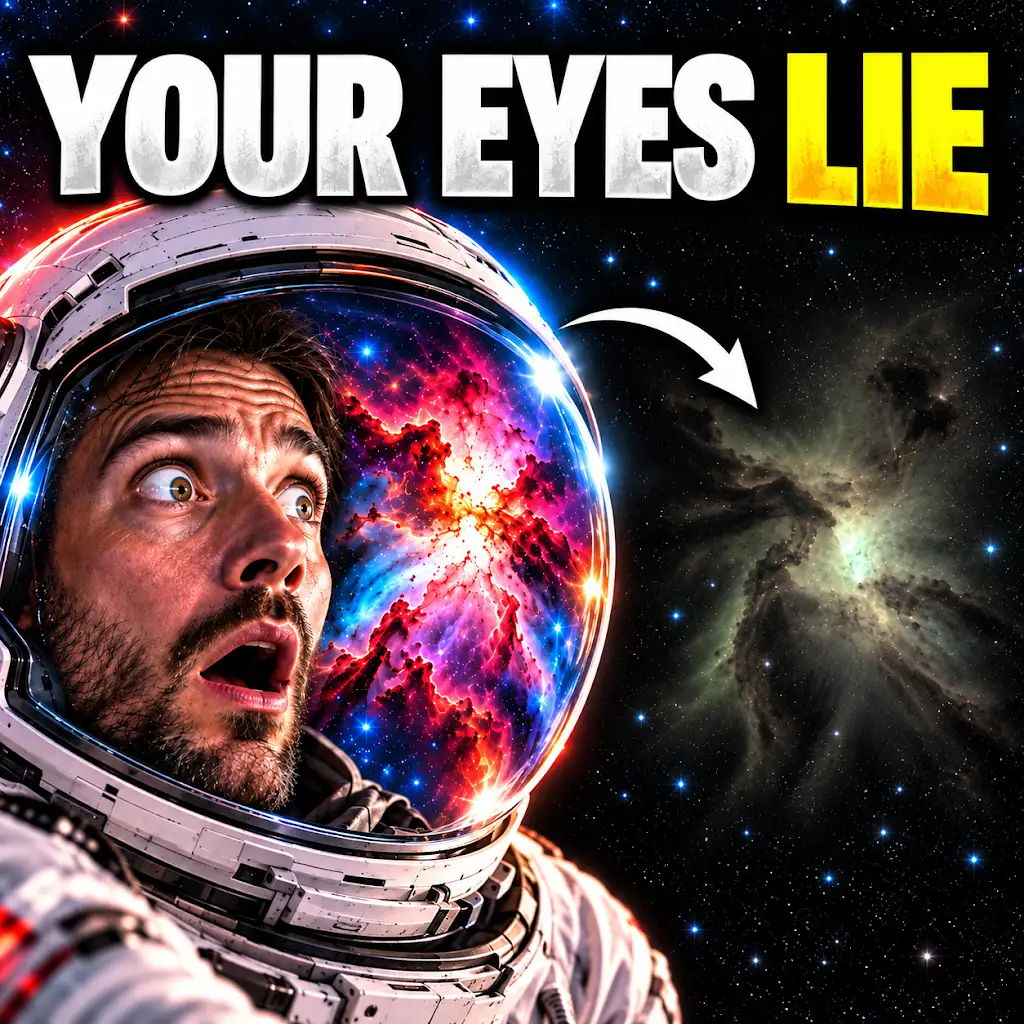
The Space Photos Are Real—But Your Eyes Would See This
FAQs
1. What is a nebula?
A nebula is a cloud of gas and dust in outer space, visible either as an indistinct bright patch or as a dark silhouette against other luminous matter.
2. Why does getting closer to a nebula not make it brighter?
Nebulae are not like stars, which emit their own light. Instead, they reflect light from nearby stars or are illuminated by nearby stars. Therefore, getting closer to a nebula does not make it brighter because the amount of light it reflects or is illuminated by remains the same.
3. How are nebulae illuminated?
Nebulae are illuminated by nearby stars, which emit light that is reflected off the gas and dust within the nebula. This is what makes them visible to us from Earth.
4. Can technology make a nebula appear brighter?
While technology can enhance our ability to observe and study nebulae, it cannot make them appear brighter than they actually are. The brightness of a nebula is determined by the amount of light it reflects or is illuminated by, which technology cannot change.
5. What are some examples of famous nebulae?
Some famous nebulae include the Orion Nebula, the Crab Nebula, the Helix Nebula, and the Eagle Nebula. These nebulae are well-known for their distinct shapes and colors, and have been the subject of extensive study and observation by astronomers.