The Science of Milky Way Colors: Explained
The night sky, a canvas speckled with countless stars, often evokes a sense of wonder and awe. Among these celestial diamonds, the Milky Way, our home galaxy, stands out as a luminous band stretching across the heavens. While we perceive it as a hazy, whitish glow, the reality of its colors is far more complex and scientifically fascinating. The Milky Way, like all galaxies, is a vibrant tapestry woven from the light emitted by its diverse stellar populations and illuminated gas clouds. Understanding the science behind these colors reveals the dynamic processes at play within our galactic neighborhood.
The most fundamental contributor to the Milky Way’s colors is the light emanating from its stars. Stars are not uniform entities; they vary immensely in size, mass, temperature, and age, each of which directly influences the color of the light they produce. This intricate relationship between stellar characteristics and emitted light forms the bedrock of understanding galactic coloration.
Stellar Temperature and Peak Emission
The color of a star is a direct consequence of its surface temperature. Hotter stars emit light with shorter wavelengths, shifting towards the blue end of the electromagnetic spectrum, while cooler stars emit light with longer wavelengths, appearing redder. This phenomenon is rooted in the principles of blackbody radiation. A blackbody is an idealized object that absorbs all incident electromagnetic radiation and emits radiation based solely on its temperature. Stars, while not perfect blackbodies, approximate this behavior remarkably well.
- Blue Stars: These are the hottest stars, with surface temperatures exceeding 25,000 Kelvin (K). Their peak emission lies in the ultraviolet range, but they still emit a significant amount of visible light, making them appear distinctly blue. Examples include Rigel and Spica.
- White Stars: Stars with surface temperatures in the range of 7,500 K to 10,000 K appear white. Our Sun, with a surface temperature of approximately 5,778 K, falls into the yellow-white category, but at such distances, its light blends into a perceived white.
- Yellow Stars: Stars like our Sun, with temperatures around 5,000 K to 6,000 K, emit most of their light in the yellow portion of the spectrum.
- Orange Stars: Cooler than yellow stars, orange stars have surface temperatures between 3,500 K and 5,000 K. They emit more red and orange light. Arcturus is a classic example.
- Red Stars: These are the coolest stars, with surface temperatures below 3,500 K. Their peak emission is in the infrared, but they still emit enough red light to appear distinctly red. Betelgeuse is a prominent red giant.
Stellar Age and Evolutionary Stage
A star’s age and its current evolutionary stage also play a crucial role in its color. As stars evolve, their internal processes change, leading to alterations in their surface temperature and, consequently, their color.
- Young, Massive Stars (O and B types): These are the most luminous and hottest stars. They are typically found in star-forming regions and are short-lived but incredibly bright. Their intense radiation often ionizes surrounding gas, leading to the emission of vibrant colors.
- Main Sequence Stars: Stars spend the majority of their lives on the main sequence, fusing hydrogen into helium in their cores. Their color during this phase is determined by their mass and temperature, as described above. Our Sun is a main sequence star.
- Red Giants and Supergiants: When stars like our Sun exhaust the hydrogen fuel in their core, they begin to fuse hydrogen in a shell around the core. This causes the star’s outer layers to expand and cool, leading to a redder appearance. More massive stars evolve into red supergiants.
- White Dwarfs: These are the dense remnants of low-to-intermediate mass stars after they have shed their outer layers. Initially, they are very hot and white, but they gradually cool over billions of years, becoming redder and eventually fading into obscurity.
- Neutron Stars and Black Holes: While not directly visible as colored objects due to their extreme nature, the accretion disks around neutron stars and black holes can become incredibly hot and emit X-rays and visible light, often with distinctive energetic signatures.
Stellar Populations within the Milky Way
The Milky Way is not a homogeneous collection of stars. It contains distinct stellar populations, each with its own characteristics and contributing to the overall color of the galaxy as observed from Earth.
- Galactic Disk: The galactic disk is home to younger, hotter, and bluer stars, as well as active star-forming regions. This abundance of young, blue stars contributes to the brighter, more bluish-white appearance of certain regions of the Milky Way as seen from Earth.
- Galactic Bulge: The galactic bulge, the central, dense region of the Milky Way, is primarily populated by older, redder stars. These are typically red giants and red dwarfs, which contribute a warmer, redder hue to the central parts of the galaxy.
- Galactic Halo: The galactic halo, a spherical distribution of stars and globular clusters surrounding the disk, contains some of the oldest stars in the Milky Way. These stars are generally redder due to their age and lower metallicity (fewer heavy elements).
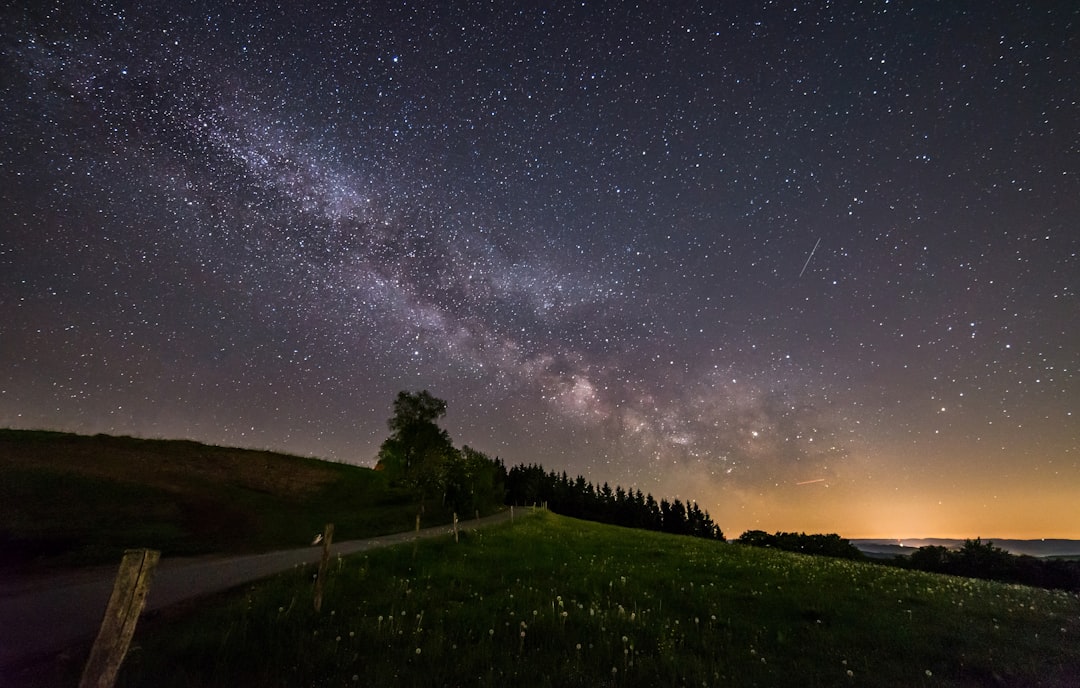
The vibrant colors seen in photos of the Milky Way are a result of various factors, including the presence of different gases and dust in space, as well as the techniques used in astrophotography. For a deeper understanding of the science behind these stunning images, you can explore an insightful article on the topic at Freaky Science, which delves into the reasons behind the colorful displays of our galaxy and the technology that captures them.
The Embers of Nebulae: Interstellar Gas and Dust
Beyond the direct light of stars, the Milky Way is permeated by vast clouds of gas and dust, known as nebulae. These nebulae are not just passive backdrops; they actively interact with starlight, absorbing, scattering, and emitting light, which paints the galaxy with a spectrum of vibrant colors.
Emission Nebulae: The Colorful Glow
Emission nebulae are clouds of ionized gas that emit their own light. The ionization is typically caused by the intense ultraviolet radiation from nearby hot, young stars. The specific color of an emission nebula depends on the chemical composition of the gas and the energy of the ionizing radiation.
- Hydrogen Alpha (H-alpha): The most abundant element in nebulae is hydrogen. When hydrogen atoms are ionized by ultraviolet light and then recombine with electrons, they emit photons. The most prominent emission line from hydrogen occurs at a wavelength of 656.3 nanometers, which falls in the red part of the visible spectrum. This is why many prominent emission nebulae, such as the Orion Nebula, appear strikingly red. The characteristic red hue of these stellar nurseries is a direct signature of ionized hydrogen.
- Oxygen III (OIII): Oxygen, another common element in nebulae, can also be ionized by energetic photons. When doubly ionized oxygen atoms recombine, they emit photons in two specific wavelengths, 495.9 nm and 500.7 nm, which appear as a brilliant blue-green. This contributes to the vibrant blues and greens seen in some nebulae, such as the Ring Nebula.
- Sulfur II (SII): Sulfur can also be ionized and emit light. The emission line for singly ionized sulfur at 672.4 nm falls in the red part of the spectrum, often blending with H-alpha to create deeper red or purplish hues.
Reflection Nebulae: The Scattered Light
Reflection nebulae, in contrast to emission nebulae, do not produce their own light. Instead, they reflect the light of nearby stars. The color of a reflection nebula is determined by the way dust particles within the cloud scatter starlight.
- Blue Scattering: Smaller dust grains are more efficient at scattering shorter, bluer wavelengths of light. This is similar to how Earth’s atmosphere scatters sunlight, making the sky appear blue. Consequently, reflection nebulae often appear blue, as seen in the Pleiades star cluster, where the nebulae surrounding the stars are tinged with blue.
- Red and Yellow Scattering: Larger dust grains can scatter longer, redder wavelengths more effectively. However, the dominant effect in reflection nebulae is the scattering of blue light.
Dark Nebulae: The Absence of Light
Dark nebulae are dense clouds of gas and dust that are so opaque they block out the light from stars behind them. They appear as dark patches against the brighter background of the Milky Way. While they don’t emit or reflect visible light, their presence shapes the perceived colors of the galaxy by obscuring certain regions and highlighting others. These dark curtains can also influence the formation of stars by providing the dense environments necessary for gravitational collapse.
The Role of the Observer: Our Perspective on Galactic Colors
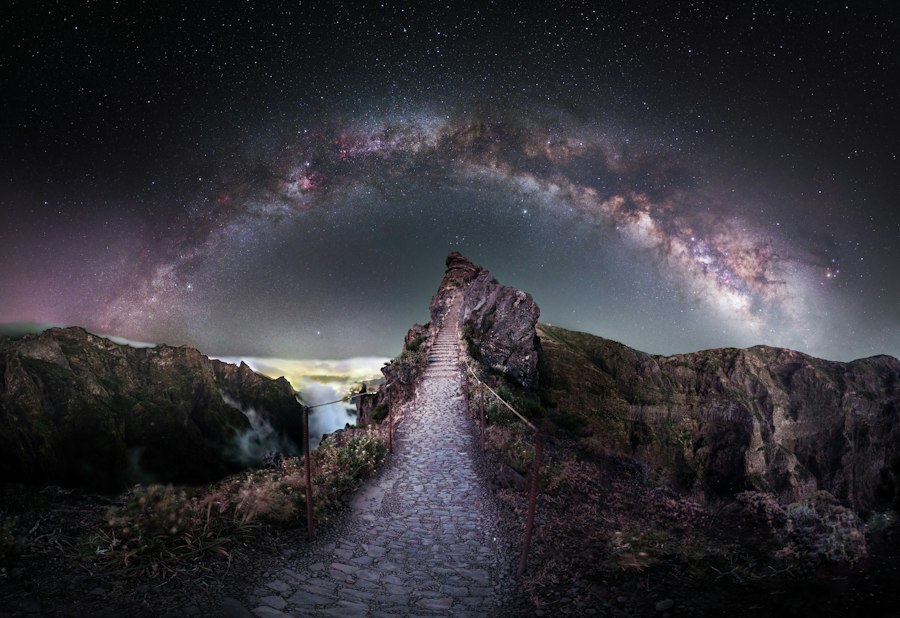
It is crucial to remember that our perception of the Milky Way’s colors is not solely determined by the light emitted by celestial objects. Our position within the galaxy, the Earth’s atmosphere, and even the limitations of human vision all play a significant role.
Our Vantage Point within the Milky Way
As inhabitants of the Milky Way, our perspective is unique. We are embedded within the galactic disk, meaning we are looking through vast swathes of interstellar gas and dust. This interposes a layer of material that can absorb and scatter starlight, affecting the colors we perceive.
- Extinction and Reddening: Interstellar dust absorbs and scatters starlight, a phenomenon known as interstellar extinction. This process is more effective at scattering shorter, bluer wavelengths, causing the light from distant stars to appear redder than it actually is. This is why stars and regions of the Milky Way seen through denser dust lanes often appear more reddish or muted.
- Galactic Center vs. Outer Reaches: The galactic center, being a region of high stellar density and gas clouds, appears brighter and often richer in warmer tones due to the abundance of older, redder stars and the effects of dust. Conversely, regions in the outer reaches of the disk, with fewer dust obscurations, might reveal bluer, younger stellar populations.
Atmospheric Effects on Observation
The Earth’s atmosphere, while essential for life, can also distort and alter the colors of celestial objects as their light passes through it.
- Scattering and Absorption: Atmospheric molecules and aerosols scatter and absorb starlight, similar to interstellar dust but on a smaller scale. This scattering is responsible for the blue color of the daytime sky and can affect the apparent colors of stars and nebulae, particularly at lower altitudes or in areas with significant air pollution.
- Light Pollution: Artificial light from cities can overwhelm the faint light of the Milky Way, making it difficult to discern its subtle colors. This widespread light pollution significantly diminishes our ability to appreciate the full chromatic richness of our galaxy.
Human Vision and Perception
The way our eyes perceive color is also a factor. Our eyes are more sensitive to certain wavelengths than others, and our brains interpret the incoming light to create a coherent visual experience.
- Rod vs. Cone Cells: Human vision relies on two types of photoreceptor cells in the retina: rods and cones. Rods are highly sensitive to light and are responsible for vision in low-light conditions, but they do not perceive color. Cones are responsible for color vision and function best in brighter light. When observing the faint glow of the Milky Way, our rod cells are primarily engaged, leading to a more monochromatic perception.
- Averaging and Interpretation: Even when some color is perceived, our brains often average the incoming wavelengths, leading to a generalized whitish or grayish appearance for the Milky Way. Special photographic techniques, which can capture more light and a wider range of wavelengths over longer exposures, are often necessary to reveal the true colors of nebulae and stellar populations.
Beyond Visible Light: Infrared and Ultraviolet Views
The Milky Way’s color palette extends far beyond what the human eye can detect. By observing the galaxy in infrared and ultraviolet wavelengths, astronomers gain crucial insights into processes that are hidden from visible light.
Infrared Insights: Dust and Cool Objects
Infrared light has longer wavelengths than visible light and is particularly useful for studying the cooler components of the galaxy, such as dust and cool stars.
- Penetrating Dust: Infrared radiation can penetrate the dense clouds of interstellar dust that obscure visible light. This allows astronomers to see through dusty regions and observe the stars and star-forming activity hidden within. For instance, the core of the Milky Way, heavily obscured by dust, becomes visible in infrared images.
- Cool Stellar Populations: Cooler stars, such as red dwarfs, emit a significant portion of their energy in the infrared. Observing in infrared helps to identify and study these numerous, yet faint, stellar inhabitants of the galaxy.
- Dust Emission: Interstellar dust itself, warmed by starlight, emits infrared radiation. The distribution and temperature of this dust can reveal details about the structure and evolution of the Milky Way.
Ultraviolet Unveiled: Hot Stars and Active Regions
Ultraviolet (UV) light has shorter wavelengths than visible light and is primarily emitted by the hottest and most energetic objects in the galaxy.
- Young, Massive Stars: Young, massive stars, which are extremely hot, emit strongly in the ultraviolet. Observing in UV helps astronomers to identify these stars and study their properties, providing clues about recent star formation events.
- Ionized Gas: The energetic UV photons from hot stars are responsible for ionizing gas in nebulae, leading to the emission of visible light. Observing in UV can reveal the source of this ionization and the intricate interactions between stars and gas.
- Supernova Remnants: The aftermath of supernova explosions, known as supernova remnants, are energetic and can emit strongly in the UV, carrying signatures of the violent cosmic event.
The vibrant colors in Milky Way photos can be attributed to various factors, including the presence of different gases and dust in space, which emit light at specific wavelengths. For a deeper understanding of the science behind these stunning images, you can explore a related article that delves into the intricacies of astrophotography and the techniques used to capture such breathtaking views. Check it out here to learn more about how these colorful celestial displays come to life.
The Colors of Cosmic Evolution: What the Milky Way Tells Us
| Reasons for Colorful Milky Way Photos |
|---|
| Presence of different gases and elements in the interstellar medium |
| Interaction of cosmic rays with gas and dust |
| Temperature variations in different regions of the Milky Way |
| Presence of young, hot stars emitting blue light |
| Reflection and scattering of light by dust particles |
The colors observed across the Milky Way are not merely aesthetic; they are profound indicators of the galaxy’s ongoing evolution. From the birth of stars to their eventual demise, each hue tells a story about the processes shaping our galactic home.
Star Formation Hotspots
Regions where new stars are being born are often characterized by vibrant colors. Emission nebulae, illuminated by the ultraviolet radiation of young, hot, blue stars, paint the sky with brilliant reds (from ionized hydrogen) and blues and greens (from ionized oxygen). These are the nurseries of the galaxy, teeming with the energetic processes of stellar genesis. The prevalence of these colorful nebulae in certain areas of the Milky Way indicates active and ongoing star formation.
The Aging Galaxy
As stars age and evolve, their colors change, reflecting their life cycle. The presence of red giants and red supergiants, cooler and larger than their main-sequence progenitors, contributes to the warmer, redder hues seen in older stellar populations, particularly in the galactic bulge and halo. These stars are nearing the end of their lives, their colors a testament to the passage of cosmic time. The gradual fading of white dwarfs, as they cool over eons, also adds subtle shifts in color to the galaxy’s ancient stellar populations.
The Interplay of Light and Matter
The colors we observe are a result of the intricate interplay between light and the matter it encounters. Dust clouds, while appearing dark, are crucial in shaping the colors we see. They absorb and scatter starlight, selectively filtering out bluer wavelengths and leading to the reddening of light from distant sources. This obscuration also creates the dramatic dark lanes that traverse the Milky Way, contrasting with the luminous star fields. The scattering of light by dust particles in reflection nebulae further contributes to the visual tapestry, often imbuing surrounding regions with a bluish cast.
Tracing Galactic Structure and Dynamics
The distribution of colors across the Milky Way also provides clues about its structure and dynamics. The bluer, younger stars concentrated in the galactic disk suggest a region of active star formation and ongoing replenishment, while the redder, older populations of the bulge and halo speak to the galaxy’s more ancient history. The presence of specific elements, detectable through their unique spectral emission lines, also contributes to the color variations and can help astronomers map the chemical enrichment of the galaxy over time. Studying these color patterns allows us to understand how the Milky Way formed, evolved, and continues to change.
The science of Milky Way colors is a testament to the power of observation and scientific inquiry. By dissecting the light that reaches us, astronomers unravel the complex processes that paint our galactic home. From the fiery birth of stars to the dusty veils of interstellar clouds, the colors of the Milky Way are a cosmic story, written in light, waiting to be understood.

The Space Photos Are Real—But Your Eyes Would See This
FAQs
1. Why are Milky Way photos so colorful?
Milky Way photos appear colorful due to the presence of different gases and elements in the interstellar medium, which emit light at various wavelengths when excited by radiation from stars.
2. What causes the vibrant hues in Milky Way images?
The vibrant hues in Milky Way images are caused by the interaction of different gases and dust particles with the radiation from stars, resulting in the emission of light at specific wavelengths that contribute to the colorful appearance.
3. Are the colors in Milky Way photos real or enhanced?
The colors in Milky Way photos are a combination of real and enhanced elements. While the colors are based on the actual emissions from different gases and elements, they are often enhanced to bring out the details and make the images more visually appealing.
4. What are the main factors contributing to the colorful nature of Milky Way photos?
The main factors contributing to the colorful nature of Milky Way photos include the presence of ionized gases such as hydrogen and oxygen, as well as the scattering and absorption of light by interstellar dust particles.
5. Can the colors in Milky Way photos vary depending on the location and time of observation?
Yes, the colors in Milky Way photos can vary depending on the location and time of observation. Factors such as the density of interstellar medium, the presence of different types of stars, and the angle of observation can all influence the colors captured in Milky Way images.