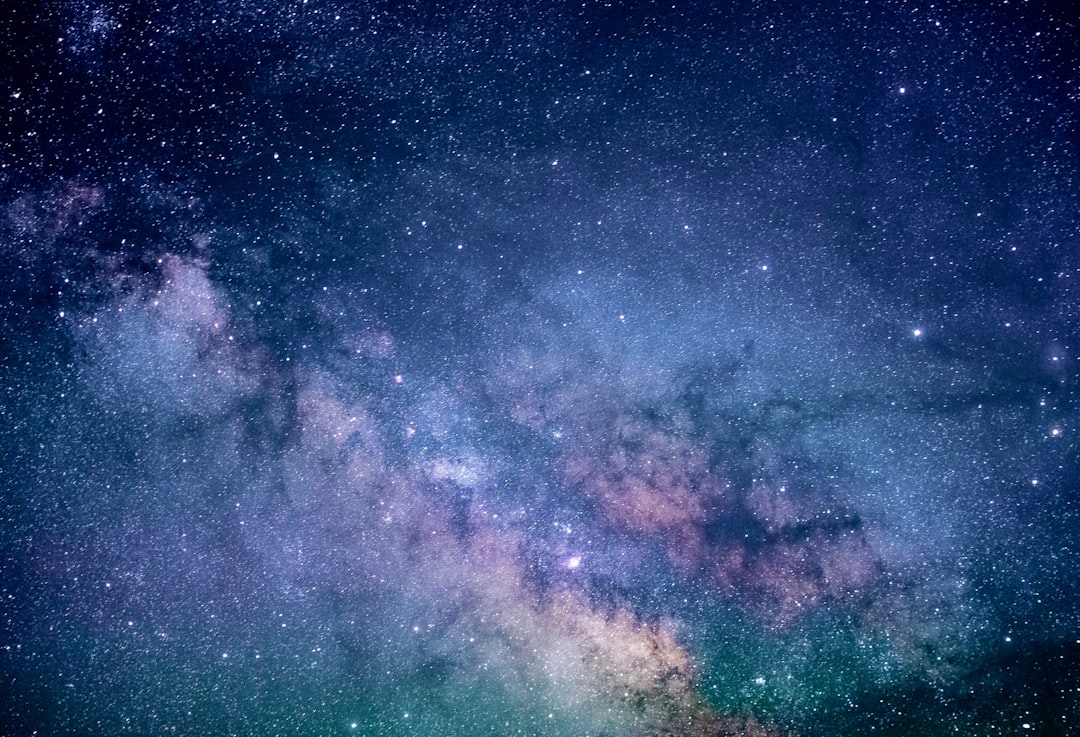
The Milky Way, a vast and luminous band stretching across the celestial sphere, is one of the most awe-inspiring sights that graces our night sky. For millennia, humanity has gazed upon this ethereal river of stars, weaving it into myths, legends, and scientific inquiry. More than just a beautiful spectacle, the Milky Way is our home galaxy, a swirling collection of billions of stars, gas, and dust, and understanding it offers a profound perspective on our place in the cosmos. This article delves into the captivating nature of the Milky Way, exploring its visibility, its composition, and the journey of discovery that continues to unveil its secrets.
The Milky Way’s visibility is not a constant presence; it ebbs and flows with the seasons and is profoundly affected by the ambient light pollution. To truly appreciate its grandeur, one must venture away from the artificial glow of cities.
The Dance of the Seasons: Seasonal Visibility
The visibility of the Milky Way’s core, the brightest and most concentrated region, is dictated by the Earth’s orbit around the Sun.
Spring’s Gentle Introduction
During the spring months, the Milky Way’s core rises earlier in the evening, but it is often lower on the horizon. This means that while it is technically visible, its brilliance can be diminished by atmospheric haze and the lingering twilight. Observing the spring Milky Way often requires patience and a clear view towards the southeast after full darkness has settled. It presents a more delicate and less overwhelming experience, akin to a subtle brushstroke across the night. Astronomers might be able to identify some of its brighter star clusters and nebulae, but the full, majestic sweep of the galactic arm is yet to be fully revealed. The constellation Sagittarius, which points towards the galactic center, begins its ascent, offering a clue to the hidden brilliance that lies in wait.
Summer’s Peak Spectacle
Summer is undeniably the prime season for witnessing the Milky Way in all its glory. As the nights are shorter, the window of darkness appears to be limited, but the Milky Way’s core rises higher in the sky, offering the most commanding views. From late evening through the early morning hours, the galactic center becomes a breathtaking spectacle. The combination of its high altitude and the lack of competing moonlight, especially during the new moon phase, allows for an unparalleled display of stellar density. This is the time when the “star river” appears widest and most luminous, with intricate details and structures becoming discernible even to the naked eye. The familiar constellations of summer, such as Cygnus, Lyra, and Aquila, often frame this magnificent band, adding context and beauty to the celestial panorama. Many stargazing events and astrophotography expeditions are timed to coincide with this peak summer visibility.
Autumn’s Fading Embrace
As autumn arrives, the Milky Way’s core begins to set earlier in the evening. While still visible, its presence becomes more fleeting. Observers will find the galactic center appearing in the western sky after sunset, making it a target for early evening observation. The cooler, crisper air of autumn can sometimes enhance clarity, offering sharp views of the Milky Way’s structure. However, the duration of its visibility decreases, and the angle at which it is seen also changes. It’s a bittersweet farewell to the summer’s grand display, a reminder of the changing celestial cycles. The autumnal constellations, such as Pegasus and Andromeda, begin to dominate the sky, and the Milky Way can be seen arcing through them, a more subdued but still captivating presence.
Winter’s Distant Glimpse
During winter, the Earth is oriented such that the Milky Way’s core is not visible in the evening sky. Instead, observers might catch glimpses of the outer arms of the galaxy, which are less dense and less luminous than the central bulge. These faint swathes of stars are more challenging to observe and often require the darkest of skies and keen eyesight. The dominant constellations of winter, like Orion and Taurus, are positioned in a part of the sky that faces away from the galactic center. While winter offers opportunities to observe other celestial wonders like nebulae and galaxies outside our own, the Milky Way’s spectacular core remains hidden, a testament to its position in our galactic orientation.
Escaping the Urban Glow: The Importance of Dark Skies
Light pollution, the excessive and misdirected use of artificial light, is the single greatest impediment to observing the Milky Way.
The Spectrum of Light Pollution
The artificial light emitted by cities and towns spreads into the atmosphere, creating a bright background glow that effectively washes out the faint light of distant stars. This phenomenon is not uniform; different types of lighting have varying impacts.
Streetlights: A Pervasive Problem
Traditional streetlights, often unshielded and emitting light upwards and outwards, are a major contributor to light pollution. This upward spill not only illuminates the sky but also wastes energy and disrupts nocturnal ecosystems. Modern shielded lighting, designed to direct light downwards where it is needed, has proven to be a significant improvement in reducing this pervasive problem. However, even with better lighting, the sheer quantity of light sources in urban areas can still create a formidable barrier to clear stargazing. The orange glow from sodium-vapor lamps is particularly notorious for its ability to obscure celestial objects.
Indoor Lighting: An Often-Overlooked Source
Even light emanating from inside homes and buildings can contribute to light pollution, especially if windows are left uncovered and illuminated rooms face outwards. While the impact might seem less significant than large-scale urban lighting, collectively, it adds to the overall brightness of the night sky, particularly in suburban areas. Simple measures like closing curtains and blinds can make a noticeable difference. The cumulative effect of numerous small, unmanaged light sources can be surprisingly detrimental to the faint light of the Milky Way.
Seeking Refuge: Dark Sky Preserves and Rural Escapes
To witness the Milky Way in its full splendor, one must seek out locations with minimal light pollution.
Designated Dark Sky Places
Recognized Dark Sky Preserves and Parks are specifically designated areas where efforts are made to preserve natural darkness. These locations often have strict lighting ordinances in place and are popular destinations for astronomers and nature enthusiasts alike. They offer a rare opportunity to experience the night sky as it was seen for millennia, unmarred by human-made light. These preserves are not just about stargazing; they are vital for protecting nocturnal wildlife and for preserving the natural rhythm of day and night.
The Serenity of Rural Environments
Even without formal designation, venturing into rural areas, away from towns and cities, can dramatically improve the view of the Milky Way. National forests, remote campgrounds, and even open farmlands can offer excellent stargazing opportunities. The absence of dense populations and concentrated development means less artificial light and a correspondingly darker sky. The quiet solitude of these locations also adds to the overall awe-inspiring experience of observing the cosmos.
The Milky Way, with its stunning array of stars and cosmic dust, presents a breathtaking view to the human eye, especially in areas with minimal light pollution. Observing our galaxy from Earth allows us to appreciate its spiral structure and the dense clusters of stars that form its core. For a deeper understanding of the Milky Way and its visual splendor, you can explore a related article that delves into the science behind our galaxy’s appearance and the factors that influence how we perceive it. Check it out here: Freaky Science.
The Galactic Tapestry: Composition and Structure of the Milky Way
The Milky Way is not merely a collection of stars; it is a complex and dynamic system with a defined structure and a rich composition.
Our Galactic Home: The Milky Way’s Classification
Astronomers classify the Milky Way as a barred spiral galaxy, a type of galaxy characterized by a central bar-shaped structure from which spiral arms emerge.
A Barred Spiral’s Defining Feature
The “barred” aspect refers to a central, elongated bar of stars that extends from the galactic nucleus. This bar is thought to play a crucial role in the dynamics of the galaxy, influencing the flow of gas and the formation of stars. Our Sun is located within one of the spiral arms, about two-thirds of the way out from the galactic center. This means we are not in a privileged position to view the entire galaxy; rather, we are embedded within its structure, offering a unique perspective. The bar is believed to be a significant feature in channeling gas towards the supermassive black hole at the galactic center, fueling its activity.
Spiral Arms: Nurseries of Star Birth
The prominent spiral arms are where most of the galaxy’s young stars, nebulae, and star-forming regions are found. These arms are not static structures but are dynamic waves of increased density that trigger the collapse of gas clouds and the birth of new stars.
The Orion Arm: Our Neighborhood
The Orion Arm, also known as the Orion Spur, is the relatively small spiral arm in which our Solar System resides. It’s a comparatively less dense region than some of the major arms, but it still contains numerous star clusters and nebulae, including the Orion Nebula, a famous stellar nursery visible to the naked eye. Being in the Orion Arm allows us to observe other parts of the Milky Way with a degree of clarity, as we are not looking directly through the densest regions.
The Sagittarius Arm: A Dominant Feature
The Sagittarius Arm is one of the major spiral arms of the Milky Way, and it is the one that points towards the galactic center. It is a particularly rich and active star-forming region, containing many bright nebulae and star clusters. When we look towards the heart of the Milky Way, we are largely looking along the Sagittarius Arm, which contributes significantly to the visible band of stars. This arm is a significant source of stellar activity and is home to many of the most impressive celestial sights.
The Galactic Center: A Black Hole’s Domain
At the heart of the Milky Way lies a supermassive black hole, Sagittarius A*, surrounded by a dense concentration of stars and gas.
Sagittarius A*: The Cosmic Monster
Sagittarius A is an object with a mass of about four million times that of our Sun. While it is a black hole, it is currently not actively feeding on large amounts of material, so it does not emit a powerful jet of radiation. However, its immense gravity influences the orbits of stars in its vicinity. The region around Sagittarius A is a very dynamic environment, with stars orbiting at incredible speeds. Radio telescopes have been instrumental in mapping and studying this region.
The Stellar Cluster Around the Black Hole
The extreme gravity of Sagittarius A* has sculpted a dense cluster of stars around it. These stars orbit the black hole at speeds that allow astronomers to study the effects of general relativity. Observing the motion of these stars provides crucial evidence for the existence and mass of the black hole. This dense cluster is a unique laboratory for understanding stellar dynamics under extreme gravitational conditions.
The Bulge: A Dense Stellar Population
Surrounding the galactic center is a bulge of stars, a more spherical component of the galaxy that contains a higher density of older stars compared to the spiral arms. This bulge is believed to have formed early in the galaxy’s history. It is a region of intense stellar population, with a significant contribution to the overall luminosity of the Milky Way. The stars in the bulge are generally older and redder than those found in the spiral arms, reflecting different evolutionary pathways.
Beyond Visible Light: The Milky Way’s Invisible Components
The Milky Way is not just made of stars and gas visible to the human eye; it also contains vast amounts of dark matter and dust.
Interstellar Dust: Dimming the Stars
Vast clouds of interstellar dust are scattered throughout the Milky Way, particularly within the spiral arms. This dust absorbs and scatters starlight, making it difficult to see distant objects, especially those lying behind dense dust lanes. This is why the Milky Way appears fainter in certain directions and why astrophotographers often employ techniques to mitigate its effects. These dust lanes are not just obstacles; they are also the raw material for future star formation.
Dark Dust Lanes: Obscuring the View
The dark lanes that often appear to divide the Milky Way are dense concentrations of interstellar dust. These lanes are so effective at blocking visible light that they can completely obscure stars that lie behind them, creating stark contrasts and intricate patterns within the galactic band. These are often referred to as “dust lanes” and are a prominent feature for observers.
Dark Matter: The Invisible Scaffold
A significant portion of the Milky Way’s mass is composed of dark matter, a mysterious substance that does not interact with light and is therefore invisible. Its presence is inferred from its gravitational effects on visible matter, such as the rotation of galaxies. Dark matter is thought to form a halo around the visible galaxy, providing the gravitational scaffolding that holds the entire structure together. Its composition remains one of the biggest mysteries in modern astrophysics.
Journey Through the Stars: Navigating the Milky Way
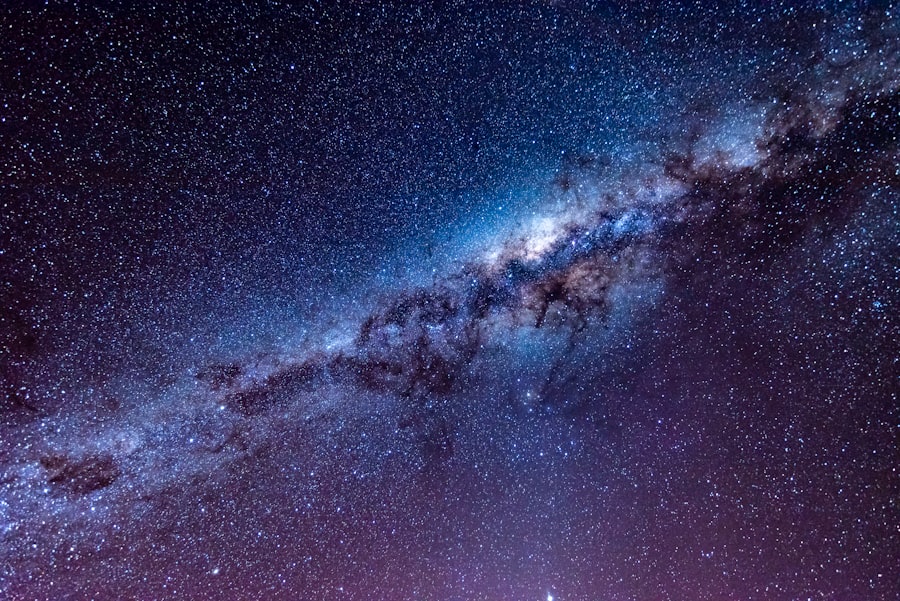
The Milky Way is a vast expanse, and its prominent features offer recognizable landmarks for those who take the time to observe.
Constellations as Cosmic Signposts
Several constellations are strategically positioned to guide observers towards the most prominent parts of the Milky Way.
Sagittarius: The Gateway to the Galactic Core
The constellation Sagittarius is arguably the most important celestial signpost for viewing the Milky Way. It lies in the direction of the galactic center, and during the summer months, its stars point directly towards the brightest and most concentrated region of our galaxy. Observing Sagittarius is like looking towards the heart of our celestial home. The shape of the constellation itself, often described as a teapot or a bowman, helps in its identification.
Cygnus and Lyra: The Northern Cross and the Harp
Further north, the constellations Cygnus (the Swan) and Lyra (the Harp) lie along the band of the Milky Way, offering different perspectives on its structure. Cygnus, with its prominent “Northern Cross” asterism, traces a path through a particularly rich and star-filled section of the galaxy. Lyra, home to the brilliant star Vega, is situated in a region that showcases beautiful star clusters and nebulae. These constellations provide a different, yet equally captivating, view of our galactic home.
Prominent Features within the Milky Way
Beyond the general band of stars, specific celestial objects stand out, offering deeper insights into the Milky Way’s workings.
Star Clusters: Galactic Neighborhoods
Star clusters are groups of stars that are gravitationally bound together, often born from the same giant molecular cloud. They range in size and age, providing snapshots of stellar evolution.
Open Clusters: Young and Vibrant
Open clusters, like the Pleiades and the Hyades, are relatively young and loosely bound collections of stars. They are often found in the spiral arms and are excellent places to study the early stages of stellar life. The Pleiades, in particular, is a stunning naked-eye object that is a popular target for both casual observers and astrophotographers. These clusters are dynamic and are slowly dispersing over time.
Globular Clusters: Ancient Relics
Globular clusters, such as Omega Centauri and Messier 13, are ancient, densely packed spherical collections of hundreds of thousands to millions of stars. They are typically found in the galactic halo and bulge, and their stars are much older than those in open clusters. These ancient relics offer a glimpse into the early universe and the formation of our galaxy. Their dense nature and sheer number of stars make them a breathtaking sight.
Nebulae: Stellar Nurseries and Remnants
Nebulae are vast clouds of gas and dust in space. They are either regions where stars are being born or the remnants of stars that have died.
Emission Nebulae: The Birthplaces of Stars
Emission nebulae, like the Orion Nebula (M42) and the Lagoon Nebula (M8), are illuminated by the ultraviolet radiation from nearby hot, young stars. These nebulae are stellar nurseries, the birthplaces of new generations of stars. The vibrant colors of emission nebulae, often dominated by reds and blues, are a result of different elements within the gas being excited by stellar radiation.
Dark Nebulae: Cosmic Veils
Dark nebulae, such as the Horsehead Nebula, are dense clouds of dust that absorb and block visible light from stars behind them. They appear as dark patches against the brighter background of the Milky Way or other nebulae. These nebulae are also sites of star formation, as the dust and gas within them eventually collapse under their own gravity.
The Science of the Stars: Understanding Our Galaxy
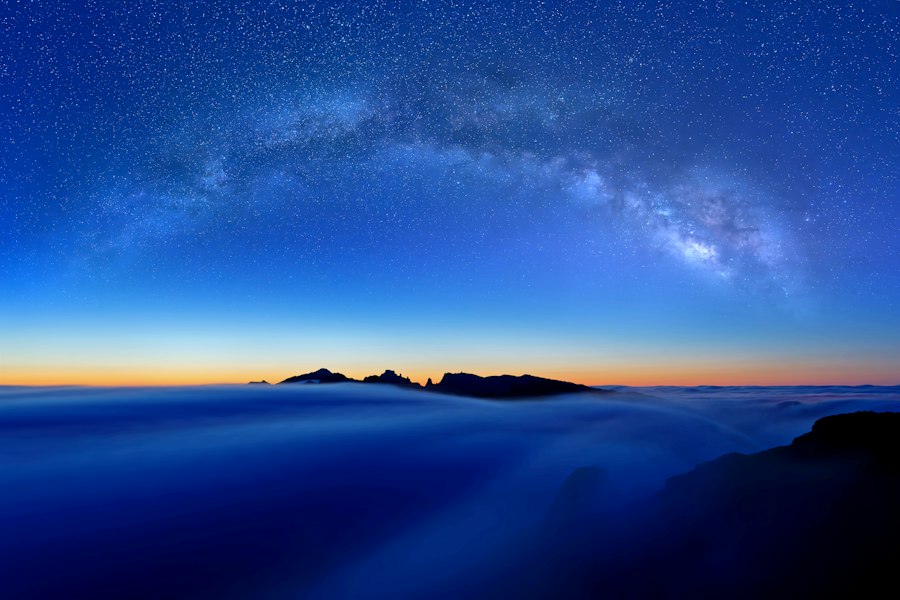
The Milky Way has been the subject of intense scientific study, leading to a progressively deeper understanding of its nature.
Telescopes: Windows to the Cosmos
Various types of telescopes, from ground-based optical instruments to sophisticated space observatories, have been crucial in unraveling the mysteries of the Milky Way.
Optical Telescopes: The Traditional View
Optical telescopes collect visible light, allowing us to see the stars, nebulae, and galaxies that populate the universe. Both amateur and professional astronomers use these instruments to observe the Milky Way. The larger the aperture of the telescope, the more light it can collect, enabling the observation of fainter and more distant objects.
Radio Telescopes: Seeing Through the Dust
Radio telescopes detect radio waves, which can penetrate the dense clouds of interstellar dust that obscure visible light. This allows astronomers to study regions of the galaxy that are hidden from optical view, such as the galactic center and star-forming regions. The discovery of radio waves emitted by hydrogen atoms was particularly important in mapping the spiral structure of the Milky Way.
Space Telescopes: Unimpeded Views
Space telescopes, such as the Hubble Space Telescope and the James Webb Space Telescope, are above the Earth’s atmosphere, providing unobstructed views of the universe. They can observe across the electromagnetic spectrum, from infrared to ultraviolet light, offering unparalleled detail and insights into the Milky Way’s composition and evolution. These platforms are essential for capturing images of the Milky Way with remarkable clarity and depth.
Mapping the Galaxy: The Milky Way’s Grand Design
Astronomers have employed various techniques to map the structure and extent of the Milky Way.
Stellar Motion Studies: Unveiling Dynamics
By observing the motion of stars, astronomers can infer the gravitational forces at play within the galaxy and map its structure. The movement of stars provides clues about the distribution of mass, including dark matter. Studying how stars orbit the galactic center helps to understand the galaxy’s rotation curve and the presence of unseen matter.
Parallax Measurements: Determining Distances
The parallax method, which measures the apparent shift in a star’s position as the Earth orbits the Sun, is used to determine the distances to nearby stars. This is crucial for building accurate three-dimensional maps of the Milky Way. Accurate distance measurements are fundamental to understanding the scale and structure of our galaxy.
The Milky Way’s Evolution: A Cosmic Saga
The Milky Way is not a static entity; it has undergone a long and complex evolutionary history.
Early Formation: A Protogalaxy
The Milky Way is believed to have formed from the gravitational collapse of a large cloud of gas and dark matter billions of years ago. This initial protogalactic cloud began to coalesce, forming the first stars and gradually developing into the barred spiral structure we see today.
Galactic Collisions: Shaping the Future
Galaxies, including the Milky Way, are known to interact and collide with each other. The Milky Way is currently on a collision course with the Andromeda Galaxy, a process that will dramatically reshape both galaxies over billions of years. These galactic mergers are a common phenomenon in the universe and play a significant role in galaxy evolution, leading to the formation of larger galaxies and the redistribution of stellar populations.
When we gaze up at the night sky, the Milky Way presents a breathtaking view that has captivated humanity for centuries. Its luminous band of stars and cosmic dust creates a stunning spectacle that can vary in appearance depending on light pollution and atmospheric conditions. For those interested in exploring this celestial wonder further, you can read more about the fascinating details of our galaxy in a related article found here: Milky Way’s Beauty. This resource delves into the science behind what makes our galaxy so special and how it appears to the naked eye.
The Milky Way’s Enduring Allure: A Source of Wonder and Inspiration
| Aspect | Description |
|---|---|
| Shape | The Milky Way appears as a faint band of light stretching across the night sky, resembling a hazy, irregularly shaped cloud. |
| Color | It appears as a pale white or grayish color, with some areas appearing slightly more concentrated or brighter than others. |
| Size | It spans a large portion of the sky, but its visibility can be affected by light pollution and atmospheric conditions. |
| Detail | While the naked eye can perceive the general shape and brightness of the Milky Way, finer details and individual stars are not visible without the aid of telescopes or long-exposure photography. |
The Milky Way’s spectacular appearance continues to captivate the human imagination, inspiring art, science, and a profound sense of wonder.
Artistic and Cultural Significance
Throughout history, the Milky Way has been a muse for artists, poets, and storytellers.
Ancient Myths and Legends
Many ancient cultures attributed mythological significance to the Milky Way, with narratives ranging from rivers of the gods to paths to the afterlife. These stories reflect humanity’s early attempts to comprehend this celestial phenomenon. The concept of the Milky Way as a divine pathway or a celestial road is a recurring theme in global mythology.
Modern Interpretations in Art and Literature
The Milky Way continues to inspire contemporary artists, writers, and filmmakers, appearing in paintings, poems, novels, and movies. Its grandeur and mystery lend themselves to exploring themes of infinity, human insignificance, and the search for meaning. Its presence in science fiction often symbolizes the vastness of space and the potential for exploration.
Scientific Exploration: Pushing the Boundaries of Knowledge
The ongoing study of the Milky Way fuels scientific advancements and our understanding of the universe.
The Search for Exoplanets
The Milky Way is home to billions of planets, and the search for exoplanets within our galaxy is a major focus of modern astronomy. Discovering other worlds raises profound questions about the possibility of life beyond Earth. The sheer number of stars in our galaxy suggests that the potential for habitable exoplanets is immense.
Understanding Cosmic Evolution
By studying the Milky Way, astronomers gain insights into the formation and evolution of galaxies in general. This helps us to understand our place in the broader cosmic landscape and the processes that have shaped the universe over billions of years. The Milky Way serves as a local laboratory for understanding universal galactic processes.
A Call to Observe: Connecting with the Cosmos
The Milky Way offers a tangible connection to the vastness of the universe, reminding us of our origins and our place within it.
The Personal Experience of Stargazing
For many, the simple act of observing the Milky Way can be a deeply moving and introspective experience. It encourages contemplation of the immense scale of the cosmos and fosters a sense of awe and humility. The quiet solitude under a sky ablaze with stars can be a profoundly grounding experience.
Preserving the Darkness: A Collective Responsibility
The continued visibility of the Milky Way depends on our collective efforts to reduce light pollution. By adopting responsible lighting practices and supporting dark sky initiatives, we can ensure that future generations will also have the opportunity to witness this spectacular nighttime sight. Preserving the darkness is not just about stargazing; it is about protecting our natural environment and our connection to the universe. The Milky Way, in its silent majesty, beckons us to look up, to wonder, and to understand.

The Space Photos Are Real—But Your Eyes Would See This
FAQs
What does the Milky Way look like to human eyes?
The Milky Way appears as a faint band of light stretching across the night sky. It is not as bright or detailed as the images captured by telescopes and cameras, but it is still visible to the naked eye in areas with minimal light pollution.
When is the best time to see the Milky Way with the naked eye?
The best time to see the Milky Way with the naked eye is during the summer months in the northern hemisphere, when the galactic center is most visible. It is also best viewed in areas with little to no light pollution.
What color is the Milky Way to human eyes?
To human eyes, the Milky Way appears as a faint white or grayish band of light stretching across the night sky. The color may vary slightly depending on atmospheric conditions and the observer’s location.
Can the Milky Way be seen from both hemispheres?
Yes, the Milky Way can be seen from both the northern and southern hemispheres. However, the appearance and visibility of the Milky Way may vary depending on the observer’s location and the time of year.
What factors affect the visibility of the Milky Way to human eyes?
The visibility of the Milky Way to human eyes is affected by light pollution, atmospheric conditions, and the observer’s location. Areas with minimal light pollution and clear, dark skies provide the best conditions for viewing the Milky Way.