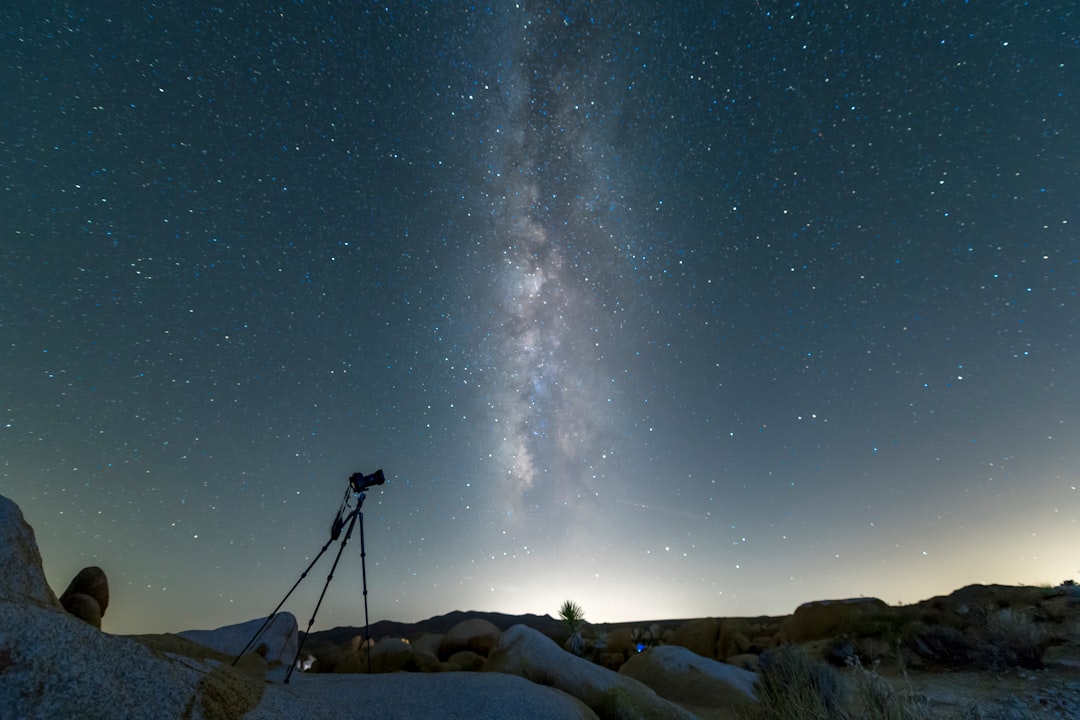
The night sky, a canvas of seemingly infinite black dotted with pinpricks of light, has captivated humanity for millennia. For most, our visual perception of this celestial expanse is limited to what the naked eye can discern – the moon’s familiar face, the hazy band of the Milky Way on a clear, dark night, and the brighter stars. However, a remarkable discipline known as astrophotography pushes beyond these limitations, delving into the invisible details that lie hidden within the cosmos. Through sophisticated equipment and meticulous techniques, astrophotographers unlock a universe of information, revealing faint nebulae, distant galaxies, and subtle structures that paint a far richer and more complex picture of our universe than we could ever observe with our unaided senses. This pursuit is not merely about capturing pretty pictures; it’s a scientific endeavor that aids in astronomical research, fosters public engagement with science, and provides a profound connection to the vastness of space.
The Limits of Human Vision and the Astrophotographer’s Toolkit
Our eyes, remarkable as they are for navigating our terrestrial world, are fundamentally ill-equipped to capture the subtle nuances of the night sky. The human eye possesses a limited dynamic range, struggling to perceive both the faint glow of nebulae and the bright stars simultaneously. Furthermore, our pupils constrict in the presence of bright light, making it impossible to adapt to the dimness required for observing faint celestial objects. This is where astrophotography steps in, leveraging technology to overcome these biological constraints.
Capturing Faint Light: The Power of Long Exposures
The most fundamental challenge in astrophotography is the extreme faintness of many celestial objects. Galaxies, nebulae, and even distant stars emit light that is incredibly diffuse. To capture this subtle illumination, astrophotographers employ long exposure times. Unlike a typical camera photograph that might last a fraction of a second, astrophotographic exposures can range from several seconds to many minutes, and even hours when stacking multiple frames. This extended period allows the camera’s sensor to accumulate photons, effectively amplifying the faint light and making it visible.
The Role of Sensor Technology
The evolution of digital camera sensors has been a game-changer for astrophotography. Modern CMOS and CCD sensors are significantly more sensitive to light than their predecessors. They are also capable of producing low-noise images, which is crucial when dealing with the minuscule signals from faint celestial objects. Advanced sensor designs, such as back-illuminated sensors, further enhance light-gathering capabilities.
Beyond the Visible Spectrum: Infrared and Ultraviolet
While astrophotography often focuses on capturing visible light, certain cameras and filters allow for the observation of light beyond the human visible spectrum. Infrared light, for instance, can penetrate dust clouds that obscure visible light, revealing hidden star-forming regions and the cores of galaxies. Ultraviolet light, on the other hand, can provide insights into the hot, energetic processes occurring in young stars and nebulae. While not typically considered “invisible” in the same way as extremely faint light, capturing these wavelengths provides an entirely different perspective on cosmic phenomena.
Minimizing Noise: The Bane of Faint Signals
One of the greatest adversaries of astrophotographers is noise. Noise refers to unwanted random fluctuations in an image that obscure the true signal from the celestial object. There are several sources of noise, each requiring different mitigation strategies.
Thermal Noise: The Heat of the Sensor
Even when not actively exposed to light, camera sensors generate heat, which leads to thermal noise. To combat this, many dedicated astrophotography cameras feature built-in cooling systems. These thermoelectric coolers (TECs) can significantly reduce the sensor’s operating temperature, thereby minimizing thermal noise, especially during long exposures.
Read Noise: The Electronic Whine
Read noise is introduced when the signal from the sensor is read out and converted into a digital image. While modern sensors have very low read noise, it can still be a factor in extremely faint signal detection. Using specialized low-noise readout techniques and minimizing the number of readouts can help reduce its impact.
Dark Current: Spontaneous Electron Generation
Dark current is another form of thermal noise where electrons are spontaneously generated within the sensor even in the absence of light. This is also exacerbated by higher temperatures. Taking “dark frames” – exposures of the same duration and temperature as the light frames but with the lens cap on – allows astrophotographers to characterize and subtract this dark current from their actual celestial images.
Astrophotography has the remarkable ability to unveil details of the universe that are otherwise invisible to the naked eye, allowing us to explore celestial phenomena in unprecedented ways. For a deeper understanding of how this fascinating field reveals hidden aspects of our cosmos, you can read a related article that delves into the techniques and technologies behind these stunning images. Check it out here: Astrophotography and Its Hidden Wonders.
The Art of Accumulation: Stacking for Detail and Clarity
The concept of “seeing” in astronomy is not just about the optical quality of telescopes but also about the limitations imposed by Earth’s turbulent atmosphere. These atmospheric distortions, known as “seeing,” cause stars to twinkle and blur fine details. Astrophotography overcomes this by employing a technique called image stacking.
The Principle of Stacking
Image stacking involves capturing multiple individual images of the same celestial object over a period of time. These individual frames, or “light frames,” are then aligned and combined using specialized software. By averaging the pixel values across all the aligned frames, the signal from the celestial object is reinforced, while random noise and atmospheric distortions are averaged out. This process dramatically improves the signal-to-noise ratio, revealing finer details that would be lost in a single exposure.
Alignment and Registration: Finding Common Ground
A crucial step in stacking is the accurate alignment of the individual frames. This process, known as registration, involves identifying common stars or features in each image and using them as reference points to precisely overlay the frames. Sophisticated algorithms can detect even subtle shifts and rotations between frames, ensuring accurate stacking.
Denoising and Calibration: Refining the Stack
Once aligned, the stacked image undergoes further calibration processes. Denoising algorithms can be applied to further reduce any remaining noise. Calibration frames, such as dark frames, flat frames (used to correct for uneven illumination across the sensor), and bias frames (short, zero-second exposures to capture read noise), are essential for removing instrumental artifacts and producing a clean, accurate representation of the celestial object.
Beyond Averaging: Advanced Stacking Techniques
While simple averaging is effective, more advanced stacking techniques can further enhance image quality.
Sigma Clipping: Eliminating Outliers
Sigma clipping is a method used during stacking to identify and reject outlier pixels. This is particularly useful for removing cosmic ray hits (streaks of light caused by high-energy particles striking the sensor) or airplane trails that may have appeared in individual frames. By comparing pixel values across multiple frames and identifying those that deviate significantly from the mean, these problematic pixels can be excluded from the final stack.
Drizzle Integration: Enhancing Resolution
Drizzle integration is a specialized stacking algorithm that can effectively increase the resolution of the final image. It works by slightly shifting and rotating each sub-frame before stacking, effectively “oversampling” the original pixel grid. The software then intelligently interpolates these sub-pixel shifts, creating a final image with finer detail and a smoother appearance, making the most of the telescope’s optical capabilities.
Capturing the Invisible Glow: Emission and Reflection Nebulae
Nebulae, vast interstellar clouds of gas and dust, are some of the most breathtaking objects in astrophotography. However, many of these celestial wonders are not readily visible to the naked eye, their subtle light requiring the specialized techniques of astrophotography to be unveiled.
Emission Nebulae: Themselves the Light Source
Emission nebulae are regions of ionized gas that emit light at specific wavelengths. This ionization is typically caused by the ultraviolet radiation from nearby hot, young stars. The most famous example is the Orion Nebula, a stellar nursery where new stars are born. While parts of the Orion Nebula are faintly visible to the naked eye under very dark skies, astrophotography reveals its intricate structure, vibrant colors, and the delicate wisps of gas that would otherwise remain unseen.
The Role of Filters: Isolating Specific Wavelengths
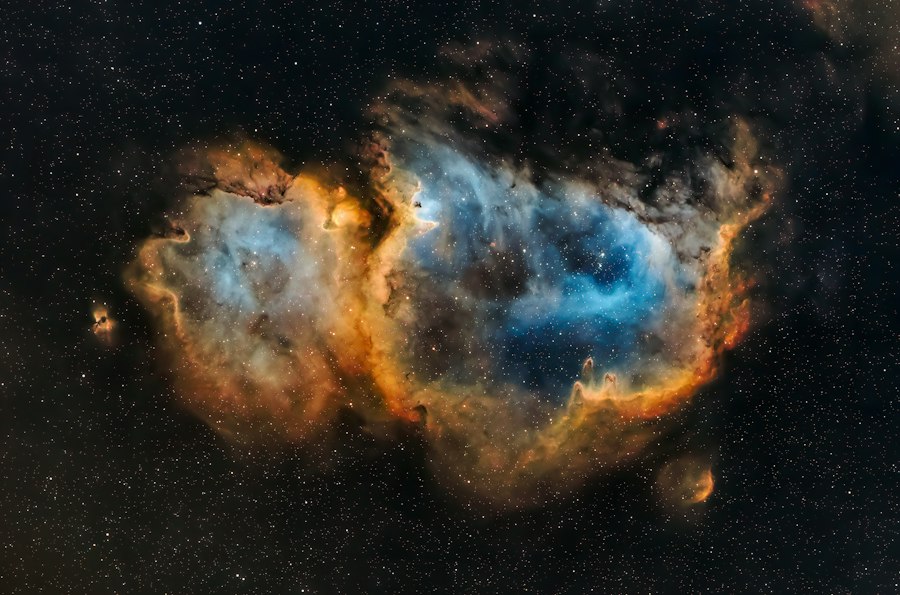
To best capture emission nebulae, astrophotographers often use specialized filters. Hydrogen-alpha (H-alpha) filters, for instance, are designed to pass only the red light emitted by ionized hydrogen, which is the most abundant element in these nebulae. Narrowband filters, like H-alpha, OIII (oxygen III), and SII (sulfur II), allow for the isolation and enhancement of specific emission lines, revealing the underlying structure and composition of the nebula in a way that broadband imaging cannot. This technique is often referred to as “false color” imaging, where different emission lines are assigned distinct colors to highlight their presence and distribution.
Understanding the Chemistry of the Cosmos
By capturing images at specific wavelengths, astrophotographers can effectively map the distribution of different elements within nebulae. This information is invaluable to astronomers, providing insights into the chemical composition of interstellar gas, the processes of star formation, and the evolution of galaxies. The subtle variations in color and intensity captured can reveal the temperature, density, and ionization state of the gas, painting a detailed chemical portrait of these cosmic clouds.
Reflection Nebulae: Borrowing Light from Neighbors
Reflection nebulae are clouds of dust that reflect the light from nearby stars. Unlike emission nebulae, they do not generate their own light. The Pleiades star cluster, for instance, is surrounded by a beautiful blue reflection nebula. The dust particles within the nebula scatter the blue light from the hot, young stars more effectively than other wavelengths, giving the nebula its characteristic color.
The Challenge of Contrast
Capturing reflection nebulae can be challenging due to their low contrast against the dark background of space. Long exposures and careful processing are essential to bring out the subtle scattering of light. Astrophotographers must balance capturing the faint nebulae with avoiding overexposing the brighter stars within the same field of view.
Tracing the Dust Lanes
The dust within reflection nebulae often forms intricate patterns and dark lanes that can obscure the light from stars behind them. Astrophotography can reveal these structures in exquisite detail, providing clues about the density and distribution of dust in interstellar space, and its role in blocking and scattering light. These dust lanes are not merely obscuring features; they are the very material from which stars and planets eventually form.
Galaxies: Unveiling Distant Worlds and Their Hidden Structures
Galaxies, immense collections of stars, gas, and dust, are some of the most awe-inspiring objects in the universe. While the Andromeda Galaxy is visible to the naked eye, the vast majority of galaxies are far too faint and distant to be seen without the aid of powerful telescopes and astrophotography.
The Grand Designs of Spiral Galaxies
Spiral galaxies, like our own Milky Way, are characterized by their majestic spiral arms. Astrophotography allows us to see these arms in incredible detail, revealing the intricate dust lanes and star-forming regions within them. The subtle variations in color can indicate the age of stellar populations, with bluer regions often signifying younger, hotter stars.
Uncovering the Galactic Core
The core of a galaxy is often a region of intense activity, hidden by dust and gas. Long exposures and specific processing techniques can help to penetrate these obscuring layers, revealing the bright central bulge and, in some cases, the supermassive black hole at its heart. The dynamics and energy output of galactic cores are crucial for understanding galaxy evolution and the universe’s large-scale structure.
The Dance of Galactic Interactions
Galaxies are not static entities; they interact and collide with each other over cosmic timescales. Astrophotography plays a vital role in capturing these gravitational dances, revealing distorted shapes, tidal tails of stars and gas being pulled from galaxies, and the chaotic aftermath of galactic mergers. These observations provide crucial data for testing cosmological models and understanding how galaxies grow and evolve.
Elliptical Galaxies and Their Subtle Features
Elliptical galaxies, while appearing smoother and less structured than spirals, still possess hidden details. Astrophotography can reveal faint shells of stars, subtle gradients in stellar populations, and even the faint glow of intracluster light – light scattered from stars within entire galaxy clusters.
Studying the Stellar Populations
The color of an elliptical galaxy is largely determined by the age of its stars. Astrophotography, by capturing detailed images, allows astronomers to study these stellar populations, inferring the galaxy’s formation history and evolutionary path. The subtle color variations across an elliptical galaxy can reveal distinct epochs of star formation.
Tracing the Faint Outer Reaches
The outermost regions of galaxies often contain faint, diffuse structures that are easily missed by visual observation. Astrophotography can extend our view to these faint halos, revealing globular clusters, dwarf satellite galaxies, and streams of stars that are remnants of past galactic interactions. These outer structures are crucial for understanding the overall mass and distribution of dark matter within galaxies.
Astrophotography has the remarkable ability to unveil details of the universe that are often invisible to the naked eye, allowing us to explore celestial phenomena in unprecedented ways. For those interested in learning more about the techniques and technologies that enhance our understanding of the cosmos, a related article can be found at Freaky Science, where the intricacies of capturing stunning images of distant galaxies and nebulae are discussed in depth. This fascinating field not only captures breathtaking visuals but also contributes significantly to scientific research and discovery.
The Unseen Universe Revealed: Dark Matter and Cosmic Structures
While astrophotography primarily deals with light, its ability to reveal subtle structures and patterns has indirect implications for understanding phenomena that are not directly observable, such as dark matter.
Gravitational Lensing: Warping the Fabric of Spacetime
Gravitational lensing is a phenomenon predicted by Einstein’s theory of general relativity, where massive objects like galaxies and galaxy clusters bend the path of light from more distant objects. This bending can create distorted, magnified, or even multiple images of the background objects. Astrophotography, by capturing these subtly distorted images of distant galaxies, provides direct evidence for the presence of massive amounts of unseen matter.
Mapping the Invisible Hand
By analyzing the degree of distortion in lensed images, astronomers can map the distribution of mass, including both visible matter and the invisible dark matter that dominates the universe’s mass budget. This technique has been instrumental in understanding the large-scale structure of the universe and the formation of galaxy clusters. The patterns revealed by gravitational lensing are the fingerprints of dark matter’s gravitational influence.
Probing the Early Universe
Gravitational lensing allows us to peer further back in time and observe some of the earliest galaxies formed after the Big Bang. The magnification effect of lensing can bring these extremely distant and faint objects within the reach of our telescopes, providing invaluable data for studying the conditions of the early universe and the processes of galaxy formation.
Understanding Galaxy Clusters and Large-Scale Structures
Galaxy clusters are the largest gravitationally bound structures in the universe, containing hundreds or even thousands of galaxies. Astrophotography reveals the intricate web of filaments and voids that connect these clusters, forming the cosmic web.
The Role of Hot Gas
Galaxy clusters are filled with hot, diffuse gas that emits X-rays. While not directly visible in optical astrophotography, the presence and distribution of this hot gas are crucial for understanding the dynamics and evolution of clusters. Astrophotographers often work in conjunction with X-ray astronomers to build a comprehensive picture of these massive structures.
Tracing the Cosmic Web
The large-scale structure of the universe, the cosmic web, is a complex network of galaxies and dark matter filaments. Astrophotography, by mapping the distribution of galaxies over vast cosmic distances, helps scientists to visualize and study this structure, providing insights into the fundamental forces that shaped the universe. The subtle clustering of galaxies, revealed through extensive imaging surveys, is a direct consequence of the initial density fluctuations in the early universe.
The Future of Unveiling the Unseen
The field of astrophotography is constantly evolving, driven by advancements in technology and innovative techniques. As equipment becomes more sensitive and processing power increases, astrophotographers will continue to push the boundaries of what is observable, unveiling even more of the universe’s hidden wonders.
Advancements in Telescope and Camera Technology
The development of larger, more sophisticated telescopes, both ground-based and space-based, will undoubtedly lead to even more detailed and sensitive astrophotographic images. New camera technologies, such as advanced sensor designs and quantum computing for image processing, hold the promise of revealing fainter and more distant objects with unprecedented clarity.
Artificial Intelligence in Image Processing
Artificial intelligence (AI) is increasingly being integrated into astrophotography workflows. AI algorithms can automate complex processing tasks, enhance image quality, and even assist in identifying and classifying celestial objects. This democratization of advanced processing techniques will allow more individuals to contribute to the unveiling of the unseen.
Citizen Science and the Democratization of Discovery
Astrophotography is no longer solely the domain of professional astronomers. The accessibility of increasingly affordable yet powerful equipment has led to a surge in citizen scientists who are contributing valuable data and stunning images. These amateur astronomers, armed with passion and dedication, are playing an increasingly important role in astronomical research and public engagement. Their images, often capturing details missed by professional surveys due to time or resource constraints, provide a unique and valuable perspective. The collaborative nature of online astrophotography communities fosters knowledge sharing and accelerates the learning process, allowing individuals to contribute to genuine scientific discovery. The sheer volume of data generated by a global community of astrophotographers can be analyzed for anomalies, previously undiscovered phenomena, or the refinement of existing astronomical models. This collaborative spirit ensures that the pursuit of unveiling the unseen is a shared human endeavor, driven by curiosity and a profound connection to the cosmos.
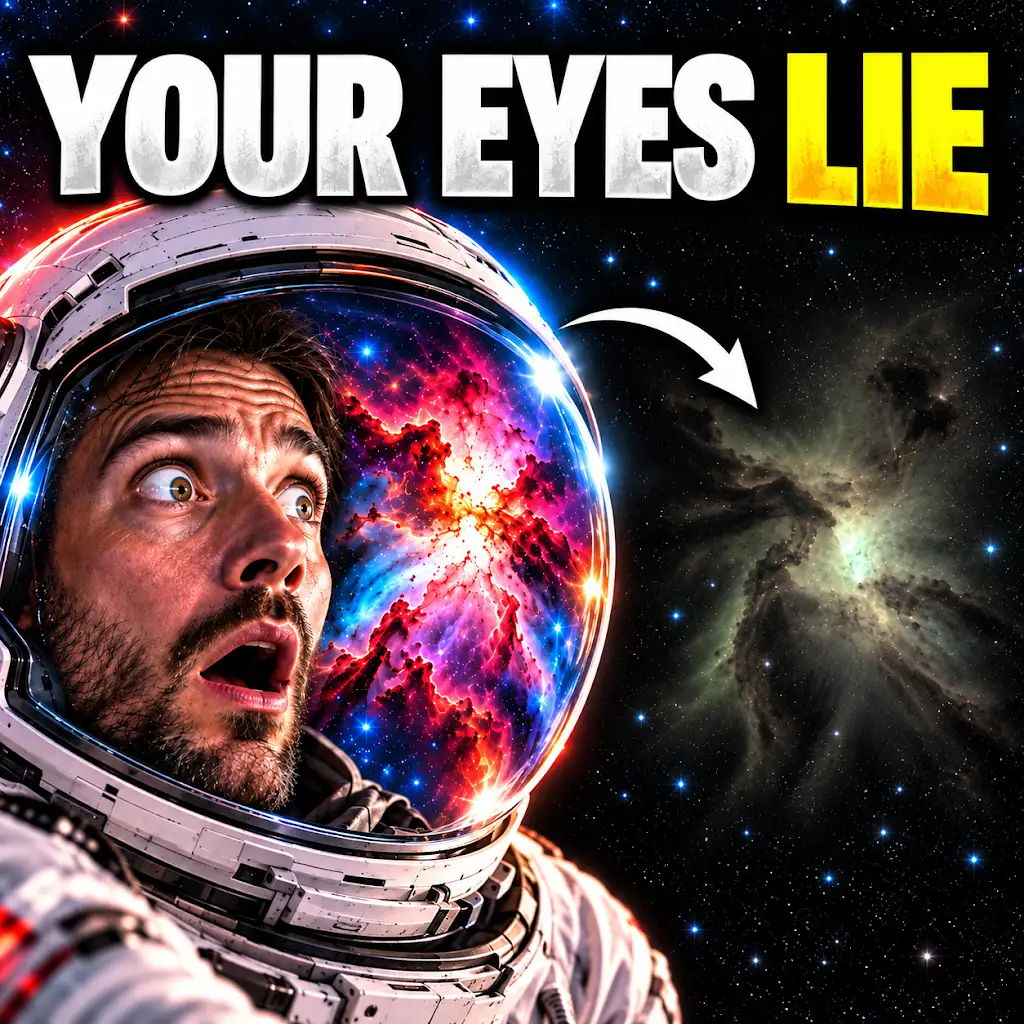
The Space Photos Are Real—But Your Eyes Would See This
FAQs
What is astrophotography?
Astrophotography is the practice of taking photographs of astronomical objects, celestial events, and areas of the night sky. It often involves using specialized equipment such as telescopes and cameras to capture images of objects that are not visible to the naked eye.
How does astrophotography reveal invisible details?
Astrophotography uses long exposure times and image processing techniques to capture and enhance details that are not visible to the naked eye. This allows photographers to reveal faint objects, intricate structures, and subtle colors in the night sky that are otherwise invisible to human vision.
What are some examples of invisible details revealed through astrophotography?
Astrophotography can reveal details such as distant galaxies, nebulae, star clusters, and planetary surfaces that are not visible to the naked eye. It can also capture the subtle colors and intricate structures of celestial objects that are often too faint to be seen without the aid of long exposure photography.
What equipment is needed for astrophotography?
Astrophotography typically requires specialized equipment such as telescopes, cameras, tracking mounts, and filters to capture high-quality images of celestial objects. Additionally, photographers often use image processing software to enhance and reveal the invisible details captured in their photographs.
What are some tips for getting started with astrophotography?
Some tips for getting started with astrophotography include investing in a good quality telescope and camera, learning about the night sky and celestial objects, practicing long exposure photography techniques, and experimenting with different image processing methods to reveal invisible details in your photographs. Additionally, joining a local astronomy club or online astrophotography community can provide valuable resources and support for beginners.