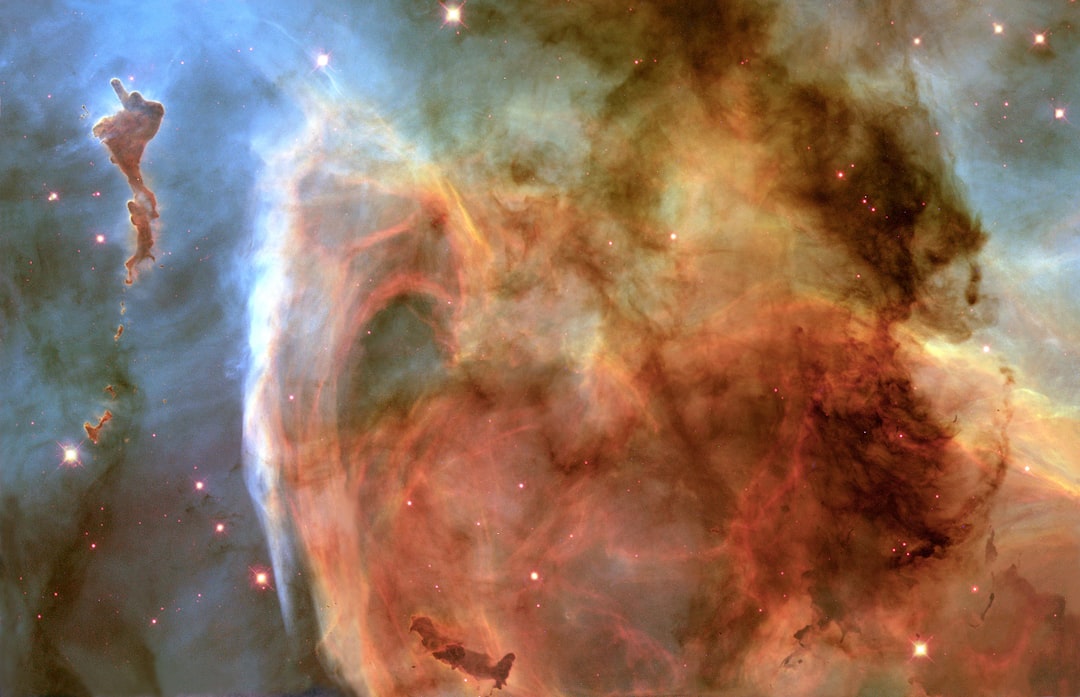
The celestial tapestry of the cosmos is adorned with breathtaking nebulae, vast clouds of gas and dust that paint the night sky with an array of vibrant hues. From the deep reds of hydrogen to the ethereal blues of oxygen, these stellar nurseries and remnants of dying stars offer a visual spectacle that has captivated humanity for centuries. However, a fundamental question arises when observing these cosmic wonders: can the human eye truly perceive the full spectrum of their magnificent colors, or are we merely glimpsing a muted, pale imitation? This article delves into the fascinating interplay between nebulae, human vision, and the scientific tools that allow us to appreciate their true chromatic splendor.
Nebulae are not solid objects but rather diffuse clouds, composed primarily of gases like hydrogen and helium, along with interstellar dust. The colors we associate with them are a direct result of how these components interact with light, particularly energetic radiation from nearby stars. Understanding the origins of these colors is crucial to appreciating the limitations and capabilities of human perception.
Emission Nebulae: The Emitting Lights
Emission nebulae are the most vividly colored of the nebular types. They are characterized by their radiant glow, which is produced when nearby hot stars ionize the surrounding gas. This ionization excites the atoms within the gas, causing them to emit light at specific wavelengths. The most common emission nebula is a type called an H II region, where hydrogen atoms have been ionized.
Hydrogen’s Fiery Red Glow
The dominant element in most nebulae is hydrogen, and its ionized state, H II, is responsible for the characteristic deep red or crimson color seen in many nebulae, such as the Orion Nebula or the Carina Nebula. When an electron recombines with a proton in ionized hydrogen, it emits photons. The most prominent emission line for hydrogen occurs in the red part of the visible spectrum, at a wavelength of 656.3 nanometers, known as the H-alpha line. This red hue is so pervasive in emission nebulae that it often serves as a visual indicator of active star formation. The energy levels within the hydrogen atoms dictate the specific wavelengths of light they emit as they transition between these states. For H-alpha emission, the electron drops from the third energy level to the second.
Oxygen’s Ethereal Blues and Greens
While hydrogen’s red is iconic, oxygen also plays a significant role in coloring nebulae, particularly with its characteristic blue and green emissions. Ionized oxygen, like hydrogen, emits light at specific wavelengths when its electrons transition between energy levels. The green emission, often seen alongside the red of hydrogen, is typically at 500.7 nanometers. The blue emissions from oxygen are also important, though often more subtle. These emissions are a result of different ionization states and energy level transitions within the oxygen atoms. The presence and abundance of ionized oxygen in a nebula contribute significantly to its overall color palette, often giving it a more complex and multi-hued appearance. The relative intensity of these different emissions determines the specific shade of blue or green observed.
Sulfur’s Crimson Contribution
Sulfur is another element that contributes to the vibrant colors of emission nebulae, often enhancing the reds and purples. Ionized sulfur emits light in the infrared and red parts of the spectrum, with its strongest emission line at 672.4 nanometers. This emission can blend with hydrogen’s H-alpha line, intensifying the red color or contributing to purplish hues when combined with other emissions. The presence of sulfur indicates a specific chemical environment within the nebula, often linked to the energetic processes occurring within it. Understanding the spectral lines of sulfur helps astronomers differentiate between various nebular components and processes.
Reflection Nebulae: Scattering Cosmic Light
Unlike emission nebulae, reflection nebulae do not produce their own light. Instead, they shine by reflecting the light of nearby stars. The color of a reflection nebula is determined by the wavelength of light scattered by the dust particles within it.
The Bluer Hue of Scattered Light
Dust particles are generally more efficient at scattering shorter wavelengths of light, such as blue and violet, than longer wavelengths like red. This phenomenon is analogous to why the Earth’s sky appears blue: atmospheric particles scatter sunlight, with blue light being scattered more effectively. Therefore, reflection nebulae often exhibit a distinct blue or bluish-white appearance, as seen in the Pleiades star cluster. The size and composition of the dust grains play a role in the precise color of the scattered light. Smaller particles tend to scatter blue light more strongly.
The Role of Dust Composition
While dust is primarily responsible for the blue color, the composition of the dust can influence the overall hue. If the dust contains organic molecules or other heavier elements, they can absorb certain wavelengths of light and scatter others, leading to variations in color. In some cases, the light illuminating the reflection nebula might also have a reddish tint, which can then be scattered, influencing the nebula’s appearance. The density of the dust also plays a role; denser regions can appear more opaque and less reflective.
Dark Nebulae: The Shadows of Space
Dark nebulae are not characterized by their emitted or reflected light but by their obscuring presence. These are dense clouds of gas and dust that are so opaque that they block the light from stars or nebulae behind them, creating dark silhouettes against the brighter background of the night sky.
Obscuring the Stars Behind
The striking feature of dark nebulae is their ability to hide the celestial objects situated beyond them. They appear as dark patches or voids in the starfield, their presence inferred by the absence of light. Famous examples include the Horsehead Nebula (partially a dark nebula) and the Great Rift in the Milky Way. Their opacity is due to the high concentration of dust particles, which absorb and scatter visible light effectively.
The Absence of Visible Light
While dark nebulae are invisible to the naked eye in terms of emitted or reflected light, they can be studied using infrared and radio telescopes. These wavelengths can penetrate the dust clouds, revealing the gas and dust within and the star formation processes that often occur inside these seemingly dark regions. The “darkness” is therefore a perception based on our limited visible light spectrum.
If you’re curious about the vibrant colors of nebulae and whether they can be seen with the naked eye, you might find the article on Freaky Science particularly enlightening. It explores the fascinating world of astronomical observations, detailing how different wavelengths of light contribute to the stunning hues of these celestial phenomena. While most nebulae are not visible in their full color spectrum without the aid of telescopes, this article provides insights into the science behind their colors and how technology enhances our understanding of the universe.
The Limitations of the Human Eye
The human eye, while an incredible biological instrument, has its limitations when it comes to perceiving the full spectrum of light and color, especially in the faint and diffuse light of nebulae. Our eyes are optimized for daylight vision and have specific photoreceptor cells that respond to light.
Rods and Cones: The Two Types of Photoreceptors
The retina of the human eye contains two main types of photoreceptor cells: rods and cones. Each plays a distinct role in our vision.
Cones: Color Vision in Bright Light
Cones are responsible for our color vision and function best in bright light conditions. There are three types of cones, each sensitive to different wavelengths of light: red, green, and blue. The brain interprets the signals from these cones to perceive the full range of colors. However, cones require a certain minimum amount of light to be stimulated effectively. In the dim light of distant nebulae, cones are not sufficiently activated to produce a vivid color perception.
Rods: Sensitivity in Low Light
Rods are much more sensitive to light than cones and are responsible for our vision in dim light or darkness. They are primarily used for detecting movement and shapes, but they do not perceive color. When we look at faint objects like nebulae with our naked eyes, it is mainly our rods that are active, leading to a monochromatic or grayscale perception. This is why nebulae often appear as faint, grayish smudges to the unaided eye. The sheer distance and faintness of the light from nebulae mean that the stimulus reaching our eyes is often below the threshold required for cone activation.
The Sensitivity Threshold of Our Vision
The sensitivity of our eyes to light has a threshold. Below a certain level of illumination, our cones simply do not have enough photons to register a color signal. For nebulae, which are vast but often thinly spread, the light reaching Earth can be incredibly faint. Even though a nebula might be emitting a significant amount of light, the intensity per unit area of our retina can be very low. This means that while a telescope might gather enough light to stimulate our cones, the naked eye often cannot. This threshold is a critical factor in understanding why nebulae appear so different through telescopes compared to what we can see with the naked eye.
The Scintillation Effect and Atmospheric Interference
Even if we could achieve the necessary light sensitivity, other factors can interfere with our perception of nebula colors. The Earth’s atmosphere is not perfectly transparent and can distort and filter light.
Atmospheric Turbulence and “Twinkling”
The “twinkling” of stars, known as scintillation, is caused by turbulence in the Earth’s atmosphere. This atmospheric turbulence refracts light unevenly, causing stars to appear to shimmer and change brightness and even slightly shift color. This same effect can also blur and distort the faint colors of nebulae, making them harder to discern. The varying density and temperature pockets within the atmosphere act like tiny, constantly moving lenses, scattering and deflecting the light before it reaches our eyes.
Light Pollution and Sky Glow
Light pollution from artificial sources on Earth significantly degrades our ability to see faint celestial objects. The scattered light from city lights creates a background glow in the night sky, drowning out the subtle colors and faint light of nebulae. This light pollution effectively raises the ambient light level, pushing the nebulae even further below the sensitivity threshold of our cones. In heavily light-polluted areas, many nebulae are completely invisible to the naked eye, regardless of their intrinsic brightness.
Telescopes and Astrophotography: Revealing True Colors
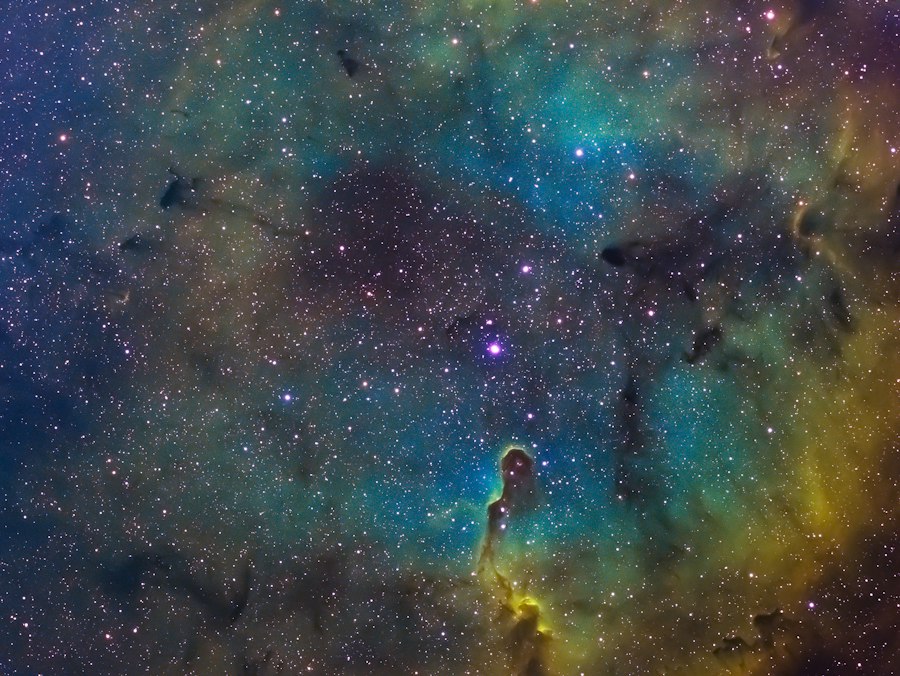
To overcome the limitations of the human eye and truly appreciate the vibrant colors of nebulae, astronomers rely on powerful telescopes and sophisticated imaging techniques. These tools gather more light and can capture wavelengths beyond the visible spectrum, allowing us to see what our eyes cannot.
The Power of Light Gathering
Telescopes are essentially light buckets. The larger the aperture (the diameter of the primary mirror or lens), the more light the telescope can collect. This increased light-gathering ability is crucial for observing faint nebulae.
Aperture and Light Collection
A larger aperture telescope can gather significantly more photons from a distant nebula than the human eye. This concentrated light is then directed to the eyepiece or a camera, where it can stimulate our cones more effectively or be recorded. This is the fundamental reason why nebulae appear so much more colorful and detailed through telescopes, even moderate-sized ones. The difference in light collection between the pupil of the eye and even a small amateur telescope is immense.
Magnification and Detail
While light-gathering is paramount, magnification also plays a role in revealing detail. Higher magnification can make faint structures within a nebula more apparent, allowing us to resolve finer features and perceive subtle color variations that would otherwise be lost in the blur. However, excessive magnification without sufficient light can lead to a dimmer and less vibrant image.
Filters: Isolating Specific Wavelengths
Astronomical filters are specialized pieces of glass or plastic that allow only specific wavelengths of light to pass through. This is particularly useful for observing emission nebulae.
Narrowband Filters and Emission Lines
Narrowband filters, such as those designed to capture the H-alpha and OIII (doubly ionized oxygen) emissions, are revolutionary in astrophotography. These filters block out most of the ambient light pollution and the light of other wavelengths, isolating the specific colors emitted by hydrogen and oxygen. By capturing images through these filters, astronomers can create composite images that showcase the true intensity and distribution of these crucial elements, revealing stunning and often unexpected color combinations. This technique is especially valuable for observing faint nebulae from light-polluted locations.
Broadband vs. Narrowband Imaging
Broadband filters capture a wider range of wavelengths, often used for general photography or observing objects that emit a broad spectrum of light. Narrowband filters, however, are designed for specific emission lines, allowing astronomers to isolate and enhance the colors produced by particular elements. This distinction is critical for understanding how astrophotographers achieve the hyper-realistic colors seen in many nebula images.
Astrophotography: Capturing Long Exposures
Astrophotography goes beyond simply looking through a telescope. It involves capturing images over extended periods, allowing faint light to accumulate.
Long Exposure Techniques
Modern digital cameras, when attached to telescopes, can record images for minutes or even hours. This “long exposure” technique allows the camera’s sensor to collect a vast number of photons from a nebula, far exceeding what the human eye can perceive in a single moment. This accumulated light reveals the fainter details and subtle color variations that are invisible to the naked eye.
Stacking and Processing Images
Once multiple long-exposure images are captured, they are “stacked” and processed using specialized software. This process involves aligning the images, averaging out noise, and enhancing the contrast and colors. Through careful processing, the true hues of the nebula are brought out, creating the breathtaking images that often grace astronomy books and websites. The software can also be used to adjust the color balance and saturation to better represent the spectral data.
Can the Human Eye See Nebula Colors? The Nuance
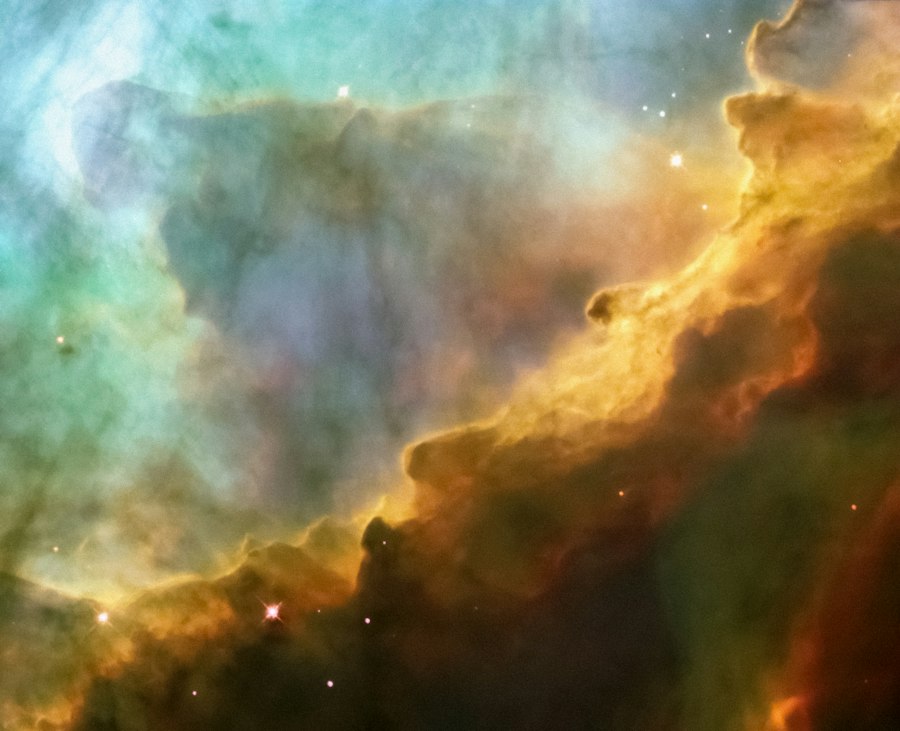
So, can the human eye see nebula colors? The answer is not a simple yes or no, but rather a nuanced understanding of what “seeing” entails.
The Naked Eye Experience: A Muted Glimpse
With the naked eye, under ideal dark sky conditions, one can perceive some nebulae as faint, grayish smudges. In exceptionally dark skies, very bright nebulae like the Orion Nebula might reveal a hint of reddish or greenish color. However, this is a far cry from the vibrant, multi-colored vistas captured by telescopes and astrophotography. Our eyes are primarily using their rod cells in these low-light conditions, which are colorblind. The limited sensitivity of our cones means that the faint light from most nebulae simply doesn’t stimulate them enough to register a distinct color.
The Role of Conditions and Brightness
The ability to perceive any color in a nebula with the naked eye is highly dependent on several factors:
Dark Skies and Optimal Viewing
The most crucial factor is viewing from a location with minimal light pollution. Away from city lights, under a truly dark, moonless sky, the contrast between the faint nebulae and the dark background is maximized. This allows even the faintest light to be more noticeable.
The Intrinsic Brightness of the Nebula
Some nebulae are intrinsically much brighter than others. Brighter nebulae, such as the Orion Nebula or the Lagoon Nebula, are more likely to show some color to the naked eye than fainter ones. The density of the gas and dust, as well as the energy output of nearby stars, influence a nebula’s brightness.
Individual Sensitivity and Adaptation
Individual variations in eyesight and the amount of time the eyes have been adapted to the dark also play a role. Longer dark adaptation periods (at least 30 minutes) allow the eyes to become more sensitive to faint light, increasing the chances of perceiving subtle colors. However, even with perfect dark adaptation, the inherent limitations of cone sensitivity remain.
The “True” Color: A Scientific Interpretation
The “true” color of a nebula, as often depicted in stunning astrophotographs, is a scientific interpretation rather than a direct visual experience for the human eye alone. These images are created by:
Combining Multiple Wavelengths
Astrophotographers often combine images taken through different filters (e.g., red for hydrogen, green for oxygen, blue for sulfur) to create a composite image that represents the emission from these elements. This process is often referred to as the “Hubble Palette” when specific color assignments are used for different elements.
False Color vs. True Color Representation
It’s important to distinguish between “true color” images (which attempt to represent how we might see the nebula if our eyes were more sensitive and could see more wavelengths) and “false color” images. False color images assign colors arbitrarily to enhance scientific data or create aesthetically pleasing visuals, not necessarily reflecting what we would visually perceive. However, even in what are considered “true color” astronomical images, the colors are often enhanced to make the details more apparent and visually striking.
The Role of Post-Processing
Image processing software allows for adjustments to contrast, saturation, and color balance, further enhancing the visibility of subtle details and colors. While this is a crucial step in revealing the beauty of nebulae, it also means that the final image is a carefully crafted representation, not a raw, unadulterated visual.
Many astronomy enthusiasts often wonder about the vibrant colors of nebulae and whether they can be seen with the naked eye. While most nebulae are indeed colorful, the human eye is not capable of perceiving these hues in the same way that a camera can capture them. For those interested in learning more about the fascinating world of nebulae and their colors, a related article can provide deeper insights into this topic. You can explore it further by visiting this link for a comprehensive overview of nebulae and their visual characteristics.
Beyond the Visible: Other Ways to “See” Nebulae
| Nebula | Color | Visibility to the naked eye |
|---|---|---|
| Orion Nebula | Greenish | Yes |
| Lagoon Nebula | Pinkish | Yes |
| Trifid Nebula | Reddish | Yes |
Our understanding of nebulae extends far beyond the visible light spectrum. Telescopes that operate in infrared, ultraviolet, X-ray, and radio wavelengths allow us to “see” nebulae in ways that reveal different aspects of their composition, temperature, and physical processes.
Infrared Astronomy: Peering Through Dust
Infrared light can penetrate the dense dust clouds that often obscure nebulae in visible light. This allows astronomers to study the cooler regions of nebulae, the dust itself, and the birth of stars hidden within.
Dust Penetration and Star Formation
Infrared telescopes can reveal the faint heat signatures of newly forming stars embedded within nebulae, as well as the distribution and temperature of the interstellar dust. This is particularly important for studying regions like the center of the Milky Way, which is heavily obscured by dust. The cooler the dust and gas, the more it emits in the infrared.
Unveiling Hidden Structures
By observing in infrared, astronomers can uncover structures and features within nebulae that are completely hidden from visible-light telescopes. This provides a more complete picture of the nebula’s complex morphology and dynamics.
Radio Astronomy: The Coldest Components
Radio waves can penetrate all types of nebulae and are emitted by the coldest gases, such as molecular hydrogen. This allows astronomers to study the large-scale structure and kinematics of nebulae.
Molecular Clouds and the Building Blocks of Stars
Radio telescopes are essential for studying molecular clouds, the cold, dense regions of gas and dust where stars are born. They can detect the emission from molecules like carbon monoxide, which are tracers of molecular hydrogen. This allows for the mapping of these vast star-forming nurseries.
Studying Gas Dynamics
Radio observations can reveal the motion of gas within nebulae, helping astronomers understand how these cosmic clouds evolve, collapse, and form stars. The Doppler shift in radio emissions provides information about the velocity of the gas.
Ultraviolet, X-ray, and Gamma-Ray Astronomy: Energetic Phenomena
Observing nebulae in ultraviolet, X-ray, and gamma-ray wavelengths provides insights into the most energetic processes occurring within them, such as supernova remnants and the activity of massive stars.
Supernova Remnants and Shockwaves
X-ray and gamma-ray telescopes can detect the high-energy radiation emitted by the hot, shocked gas in supernova remnants. This radiation provides clues about the explosion itself and its impact on the surrounding interstellar medium.
Stellar Winds and Ionizing Radiation
Ultraviolet observations can reveal the effects of powerful stellar winds from massive stars and the intense ionizing radiation that drives the color of emission nebulae. This helps us understand the complex interplay between stars and their surrounding gas.
In conclusion, while the human eye offers a limited, often monochromatic glimpse of nebulae, our scientific instruments and techniques have opened a universe of color and detail. The vibrant reds, blues, and greens we associate with these celestial wonders are, in large part, revealed through the power of telescopes and the ingenuity of astrophotography. By understanding the physical processes that create nebula colors and the limitations of our own vision, we gain a deeper appreciation for both the cosmos and the remarkable tools we have developed to explore it. The “true” color of a nebula is thus a multi-faceted concept, a combination of physical reality, scientific interpretation, and the evolving capabilities of human perception.

The Space Photos Are Real—But Your Eyes Would See This
FAQs
1. What are nebula colors?
Nebula colors are the result of the different gases and elements present in the nebula, which emit light at specific wavelengths. These emissions create the vibrant colors that we associate with nebulae, such as red, blue, and green.
2. Can the human eye see nebula colors?
Yes, the human eye can see nebula colors, but the colors may not appear as vibrant as they do in photographs taken by telescopes. The human eye is not as sensitive to color in low-light conditions, so the colors of nebulae may appear fainter and less distinct.
3. What factors affect the visibility of nebula colors with the naked eye?
The visibility of nebula colors with the naked eye is affected by factors such as the brightness of the nebula, the amount of light pollution in the area, and the observer’s own vision. In dark, clear skies, some nebula colors may be visible to the naked eye, while in urban areas with heavy light pollution, they may be difficult to see.
4. Are there specific nebulae that are more visible in color to the naked eye?
Yes, some nebulae are more visible in color to the naked eye than others. For example, the Orion Nebula (M42) is known for its visible greenish hue, while the Lagoon Nebula (M8) exhibits a pinkish-red color. These nebulae are relatively bright and have distinct colors that can be seen with the naked eye under optimal viewing conditions.
5. How can I improve my chances of seeing nebula colors with my eyes?
To improve your chances of seeing nebula colors with your eyes, find a location with minimal light pollution, allow your eyes to adjust to the darkness for at least 20 minutes, and use averted vision (looking slightly to the side of the object) to enhance your ability to perceive faint colors. Additionally, using a telescope or binoculars can help enhance the visibility of nebula colors.