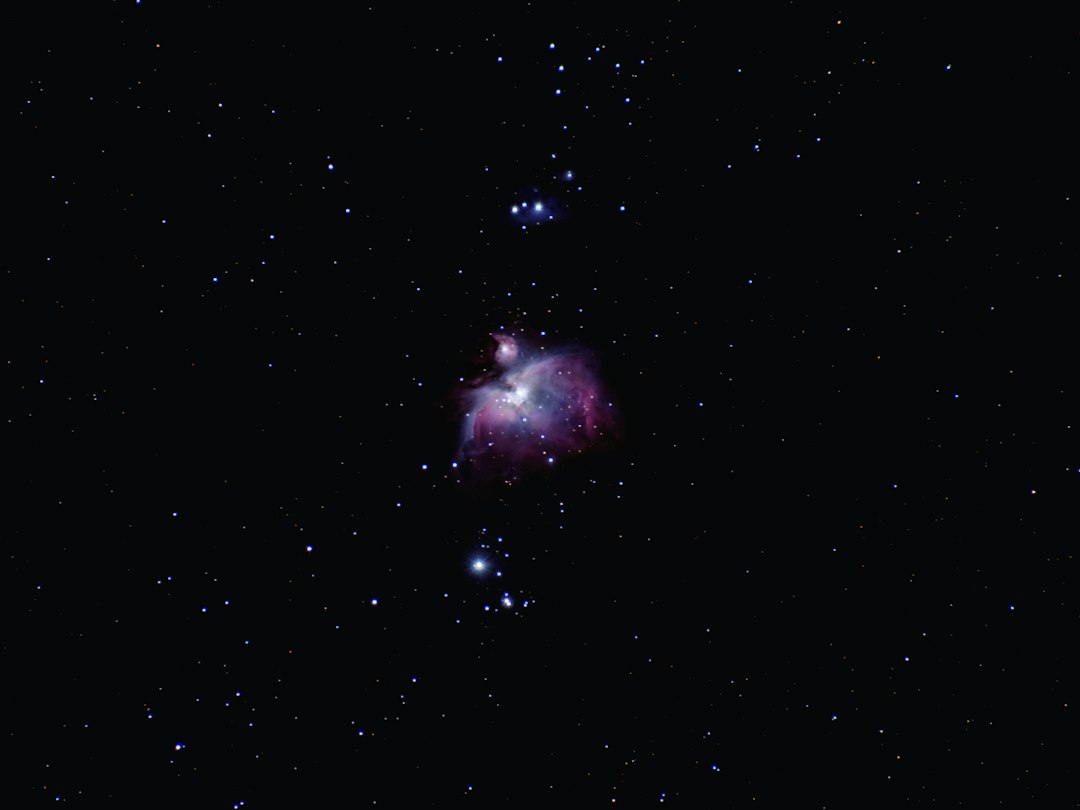
The Orion Nebula, a celestial beacon visible to the naked eye in the winter sky, has captivated humanity for millennia. More than just a smudge of light, it is a dynamic stellar nursery, a cosmic crucible where stars are born and planetary systems take shape. For centuries, its swirling gases and hidden depths have inspired awe and curiosity, fueling scientific inquiry and igniting the imaginations of artists and poets alike. This article embarks on a journey to explore the profound mysteries that lie within this iconic nebula, delving into its composition, its intricate processes of star formation, and its significance in our understanding of the universe.
The Orion Nebula, scientifically known as Messier 42 (M42), is a prominent emission nebula located in the constellation Orion. It is situated approximately 1,344 light-years from Earth, making it one of the closest star-forming regions to our solar system. This proximity allows astronomers to study its intricate structures and processes with unprecedented detail, providing invaluable insights into the fundamental mechanisms of stellar evolution. Its sheer size is staggering; it spans roughly 24 light-years across, encompassing an area equivalent to about 30 full moons in the night sky.
The Shimmering Veil: Composition and Appearance
At its heart, the Orion Nebula is a colossal cloud of interstellar gas and dust, primarily composed of hydrogen and helium. These primordial elements, forged in the Big Bang, are the fundamental building blocks of stars and planets. The vibrant colors observed in images of the nebula – striking reds, blues, and greens – are not arbitrary but are the result of different elements emitting light at specific wavelengths when energized.
Hydrogen’s Fiery Glow: The Dominant Red Hues
The ubiquitous red glow of the Orion Nebula is largely attributed to ionized hydrogen atoms. When ultraviolet radiation from young, hot stars within the nebula excites hydrogen atoms, their electrons absorb this energy and jump to higher energy levels. As these electrons return to their ground state, they release photons of light, predominantly in the red part of the visible spectrum, a phenomenon known as hydrogen-alpha emission. This constant bombardment of hydrogen by stellar radiation is what illuminates the vast expanses of the nebula.
Helium’s Subtle Influence: Contributing to the Blues and Greens
While hydrogen dominates the visible spectrum, other elements also contribute to the nebula’s dazzling palette. Ionized helium, excited by the intense ultraviolet radiation, emits light in the blue and green wavelengths. These emissions, though less intense than those from hydrogen, add crucial layers of detail and color to the nebula’s appearance, revealing the presence and distribution of these heavier elements within the interstellar medium.
The Dust’s Dark Secrets: Obscuring and Shaping
Interspersed within the gaseous clouds are vast quantities of interstellar dust grains. These microscopic particles, composed of silicates, carbon, and other heavier elements, play a dual role. On one hand, they act as cosmic obscurers, blocking and scattering visible light, creating the dark, intricate filaments and opaque regions that are so characteristic of the Orion Nebula. These dark lanes and patches are not empty voids but are regions where denser dust concentrations effectively hide the glowing gas behind them, sculpting the nebula’s complex morphology. On the other hand, dust grains are also crucial participants in the star and planet formation process, providing surfaces for molecules to form and acting as seeds for the accretion of larger bodies.
The Orion Nebula, one of the most studied regions of star formation, presents a breathtaking view when observed up close, revealing intricate details of its gaseous clouds and newly formed stars. For those interested in exploring what the Orion Nebula might look like in greater detail, a related article can provide fascinating insights and visuals. You can read more about this captivating celestial phenomenon in the article found here: Orion Nebula Up Close.
The Stellar Nursery: Birth of Stars and the Trapezium Cluster
The Orion Nebula is most famously recognized as one of the most active star-forming regions in our galaxy. Within its depths, the raw materials of gas and dust coalesce under gravity’s relentless pull to ignite the nuclear furnaces that power stars. The most prominent manifestation of this stellar birth is the Trapezium Cluster.
The Trapezium Cluster: A Stellar Crucible
At the heart of the Orion Nebula lies the Trapezium Cluster, a compact group of four massive, young, hot stars. These O and B-type stars are incredibly luminous and emit prodigious amounts of ultraviolet radiation, which is the primary energy source that illuminates and excites the surrounding nebula. The Trapezium Cluster is not a static entity; it is a dynamic collection of stars in various stages of formation and evolution, constantly influencing their environment through their intense radiation and stellar winds.
Young and Virulent: The Nature of Trapezium Stars
The stars within the Trapezium Cluster are exceptionally young, estimated to be only a few hundred thousand years old. Their youth is characterized by their high temperatures, immense luminosities, and powerful stellar winds. These winds, streams of charged particles ejected from the stars’ surfaces, interact with the surrounding gas and dust, creating shock waves and carving out cavities within the nebula. This dynamic interplay between stellar winds and the interstellar medium plays a significant role in shaping the nebula’s overall structure and can even trigger further star formation in adjacent regions.
Illuminating the Darkness: The Role of UV Radiation
The intense ultraviolet radiation emanating from the Trapezium stars is the driving force behind the nebula’s spectacular luminosity. This high-energy radiation ionizes the hydrogen gas, causing it to emit visible light. It also plays a crucial role in the photoevaporation of smaller molecular clouds, dispersing them and preventing them from collapsing to form stars prematurely. The UV radiation essentially acts as a cosmic sculptor, shaping the nebula and influencing the birth and evolution of its stellar population.
The Unfolding Drama: Protostars and Accretion Disks
Beyond the visible Trapezium Cluster, the Orion Nebula is teeming with countless unseen protostars – nascent stars still in the process of gathering mass. These young stellar objects are often shrouded in dense envelopes of gas and dust, making them invisible to optical telescopes. However, infrared and radio observations can penetrate these obscuring layers, revealing the tell-tale signatures of these developing stars.
From Dust to Destiny: The Process of Accretion
The formation of a protostar begins with the gravitational collapse of a dense molecular cloud. As the cloud collapses, material begins to spiral inward, forming a rotating disk around the central accumulating mass. This disk is known as an accretion disk. Within the accretion disk, dust grains collide and stick together, gradually growing larger and forming planetesimals. Simultaneously, the central protostar continues to accrete gas and dust from the disk, increasing its mass and temperature.
The Birth of Worlds: Circumstellar Disks and Planet Formation
The accretion disks surrounding young stars are the cradles of planetary systems. Within these disks, the process of planet formation unfolds over millions of years. Dust grains coalesce into larger objects, which then gravitationally attract more material, eventually forming protoplanets. These protoplanets continue to sweep up surrounding debris, clearing out their orbits and, if conditions are right, evolving into mature planets. The Orion Nebula, with its abundance of young stars and active star-forming regions, offers a unique laboratory for studying this fundamental process of planet formation. Astronomers are actively searching for and characterizing exoplanets forming within the circumstellar disks of stars in the Orion Nebula, seeking to understand the diversity of planetary systems and the conditions under which life might arise.
Unveiling the Hidden Structures: Molecular Clouds and Herbig-Haro Objects
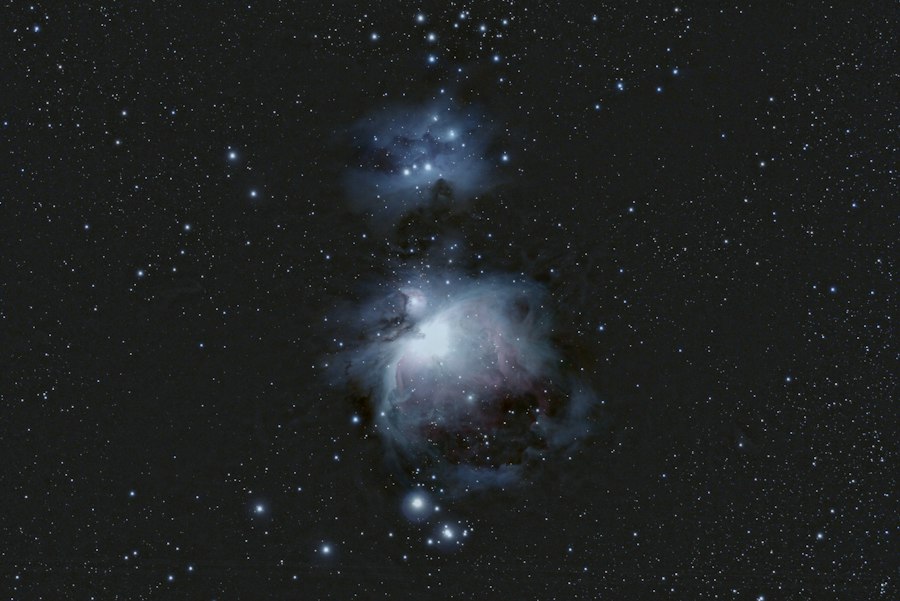
While the bright, glowing gas of the Orion Nebula is easily observed, much of its activity and the processes of star formation occur within darker, denser regions. Molecular clouds and the enigmatic Herbig-Haro objects offer glimpses into these hidden dramas.
Molecular Clouds: The Seeds of Stars
The Orion Nebula is enveloped by larger, colder, and denser molecular clouds. These clouds are composed primarily of molecular hydrogen, but they also contain a rich variety of other molecules, including carbon monoxide, water, and even complex organic molecules. These molecular clouds are the direct progenitors of the stars we see forming within the nebula.
The Cold and Dense Embrace: Conditions for Collapse
Within molecular clouds, pockets of slightly higher density can begin to collapse under their own gravity. These regions are often shielded from the intense ultraviolet radiation of nearby hot stars by the thick overlying dust and gas. This shielding allows the molecules to remain cool and the gravitational forces to overcome the internal pressure, initiating the process of collapse that will eventually lead to star formation.
Chemical Laboratories: The Abundance of Molecules
Molecular clouds are incredibly rich chemical environments. The cold temperatures and the presence of dust grains provide surfaces where atoms can combine to form molecules. These molecules are crucial for understanding the physical and chemical conditions within the nebula, and their composition can provide clues about the initial conditions for star and planet formation. The detection of complex organic molecules in these clouds has sparked considerable interest in the origins of life, as these molecules are considered precursors to the building blocks of biological systems.
Herbig-Haro Objects: Cosmic Light Shows of Stellar Birth
Herbig-Haro (HH) objects are small, bright nebulae that are associated with young stars. They are believed to be formed when jets of gas are ejected from protostars, interacting with the surrounding interstellar medium. These energetic outflows create shock waves that heat the gas, causing it to glow.
Jets of Energy: Outflows from Protostars
As protostars accrete material, they often develop powerful bipolar jets of gas that are expelled perpendicular to the accretion disk. These jets can travel at speeds of hundreds of kilometers per second and can extend for several light-years. The interaction of these supersonic jets with the surrounding interstellar gas creates shock fronts, which heat the gas to thousands of degrees Celsius, causing it to emit visible light.
Tracing Stellar Youth: Indicators of Recent Star Formation
Herbig-Haro objects are important signposts of recent star formation. Their presence indicates that young stars are actively forming and ejecting material in the vicinity. By studying the distribution and properties of HH objects, astronomers can map out the ongoing star-forming activity within the Orion Nebula and gain a better understanding of the energetics and dynamics of star birth. Some of the most spectacular HH objects are found within the Orion Nebula, providing breathtaking visual evidence of the raw power unleashed during stellar genesis.
Beyond the Visual: Infrared and Radio Revelations
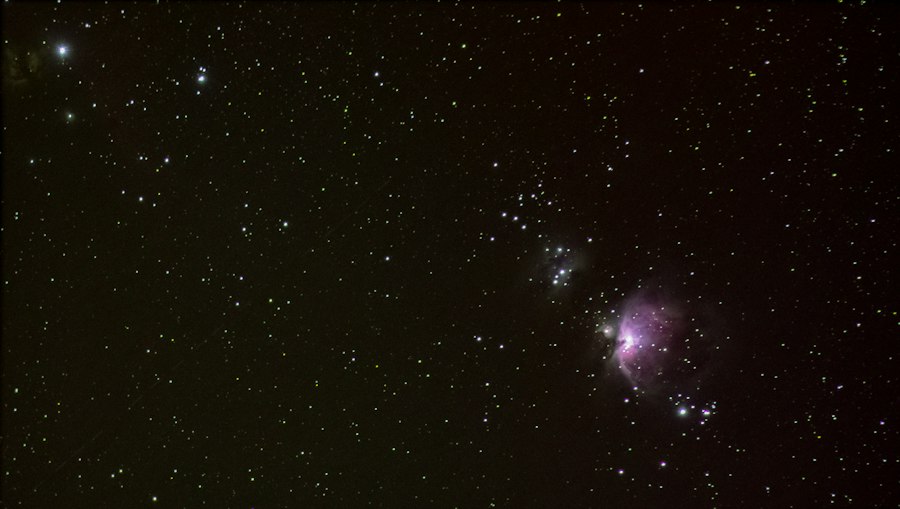
While optical telescopes provide stunning views of the Orion Nebula, many of its most active and fundamental processes are hidden from visible light. Infrared and radio observations are essential for peering through the dust and gas to reveal these hidden wonders.
Infrared Eyes: Peering Through the Dust
Dust grains within the Orion Nebula absorb visible light but re-emit it in the infrared part of the spectrum. This makes infrared telescopes invaluable for studying the cooler, denser regions where stars are born and for detecting embedded protostars and young stellar objects that are obscured by dust in visible light.
Unveiling the Unseen: Protostars and Pre-Main-Sequence Stars
Infrared observations have revolutionized our understanding of star formation in the Orion Nebula. They allow astronomers to see through the thick dust clouds that would otherwise hide young stars from view. This has led to the discovery of thousands of protostars and pre-main-sequence stars, providing a comprehensive census of the stellar population in various stages of development. These observations allow for the study of their temperatures, luminosities, and surrounding accretion disks, offering crucial data for theoretical models of stellar evolution.
The Dance of Disks: Protoplanetary Disks Revealed
Infrared telescopes are also crucial for observing protoplanetary disks around young stars. These disks, where planets form, emit strongly in the infrared due to the presence of warm dust. By analyzing the infrared emission from these disks, astronomers can determine their size, mass, temperature, and chemical composition, providing insights into the conditions under which planets are forming.
Radio Waves: Listening to the Universe’s Whispers
Radio telescopes are sensitive to the emission from molecules in the cold, dense molecular clouds that form the foundation of star formation. These observations allow astronomers to map the distribution of gas and dust, study the chemical composition of these clouds, and detect the faint radio emission from young stars and their outflows.
Mapping the Molecular Landscape: Gas and Dust Distribution
Radio observations are essential for mapping the vast molecular clouds that surround the Orion Nebula. They allow astronomers to trace the intricate filaments and clumps of gas and dust, revealing the structure of these star-forming regions. This mapping is crucial for understanding how gravity pulls these clouds together and initiates the process of star formation.
Chemical Clues: Studying Molecular Signatures
Different molecules emit radio waves at specific frequencies, acting like unique fingerprints. By analyzing these radio signals, astronomers can determine the chemical composition of the molecular clouds, identifying the presence of various molecules, including those that are considered precursors to life. This chemical inventory provides invaluable information about the raw materials available for forming stars and planets.
If you have ever wondered what the Orion Nebula would look like up close, you might find it fascinating to explore the stunning visuals and scientific insights provided in a related article. This piece delves into the intricate details of the nebula, showcasing its vibrant colors and complex structures that are often lost in distant images. To learn more about this captivating celestial phenomenon, check out the article on Freaky Science, where you can discover the wonders of the universe in greater depth.
The Orion Nebula’s Legacy: Understanding Our Place in the Cosmos
| Aspect | Description |
|---|---|
| Distance from Earth | Approximately 1,344 light years away |
| Size | 30 light years across |
| Temperature | Average temperature of 10,000 K |
| Composition | Mainly consists of hydrogen, helium, and other ionized gases |
| Appearance | Colorful and vibrant with swirling clouds of gas and dust, and young stars forming within |
The Orion Nebula is more than just a beautiful celestial object; it is a vital laboratory for understanding the fundamental processes that shape the universe. Its study has profound implications for our understanding of stellar evolution, planet formation, and the origins of life.
A Mirror to Our Own Past: Studying Stellar Evolution
The Orion Nebula, being a nearby and active star-forming region, serves as an excellent analog for similar processes that occurred in our own solar system billions of years ago. By studying the birth of stars and planets in Orion, astronomers can gain insights into the conditions that led to the formation of our Sun and Earth. This comparative study helps us to understand the universality of these processes and the potential for planet formation and habitability elsewhere in the galaxy.
The Cycle of Cosmic Creation: From Stars to Elements
The stars born in the Orion Nebula will eventually evolve and, in some cases, explode as supernovae. These stellar explosions will disperse heavy elements, forged in the stars’ cores, back into the interstellar medium. These elements will then become part of future generations of stars and planets, continuing the cosmic cycle of creation. The Orion Nebula is therefore a snapshot of this ongoing process, a testament to the universe’s perpetual renewal.
The Search for Origins: Astrobiology and the Orion Nebula
The discovery of complex organic molecules within the molecular clouds of the Orion Nebula has fueled interest in astrobiology, the study of the origin, evolution, and distribution of life in the universe. These molecules are considered potential building blocks for life, and their presence in star-forming regions suggests that the ingredients for life may be widespread throughout the cosmos.
Precursors to Life: Organic Molecules in Space
The Orion Nebula has been found to contain a surprising variety of organic molecules, including amino acids and other compounds essential for life as we know it. The presence of these molecules in such a dynamic star-forming region suggests that the chemical complexity required for life’s emergence can arise naturally in the interstellar medium, even before planets have fully formed. This discovery has significant implications for the likelihood of life arising on exoplanets.
The Interstellar Foundation: Seeds of Life Beyond Earth
The fact that the raw materials for life can be found in nebulae like Orion strengthens the hypothesis that life could have originated on Earth through similar processes and that life might exist elsewhere in the universe. The Orion Nebula acts as a tangible reminder that the universe is not just a vast expanse of empty space but a place rich with the potential for chemical complexity and, perhaps, biological emergence. The continued exploration of this magnificent celestial object promises to unlock even more secrets about our cosmic origins and our place within the grand tapestry of existence.

The Space Photos Are Real—But Your Eyes Would See This
FAQs
1. What is the Orion Nebula?
The Orion Nebula is a diffuse nebula situated in the Milky Way, being south of Orion’s Belt in the constellation of Orion. It is one of the brightest nebulae, and is visible to the naked eye in the night sky.
2. What would the Orion Nebula look like up close?
Up close, the Orion Nebula would appear as a stunning and colorful cloud of gas and dust, with bright regions of ionized gas and dark lanes of dust. The nebula would display vibrant hues of red, blue, and green, and would be filled with young stars and protoplanetary disks.
3. What are some features of the Orion Nebula?
The Orion Nebula is known for its intricate filaments, bright central region known as the Trapezium Cluster, and the presence of protostars and proplyds (protoplanetary disks). It is also a site of ongoing star formation, making it a fascinating area for astronomers to study.
4. How far away is the Orion Nebula from Earth?
The Orion Nebula is located at a distance of approximately 1,344 light years from Earth, making it one of the closest regions of massive star formation to our planet.
5. Can the Orion Nebula be observed with a telescope?
Yes, the Orion Nebula is a popular target for amateur astronomers and can be easily observed with a small telescope or even a pair of binoculars. Its bright and expansive nature makes it a captivating sight for stargazers.