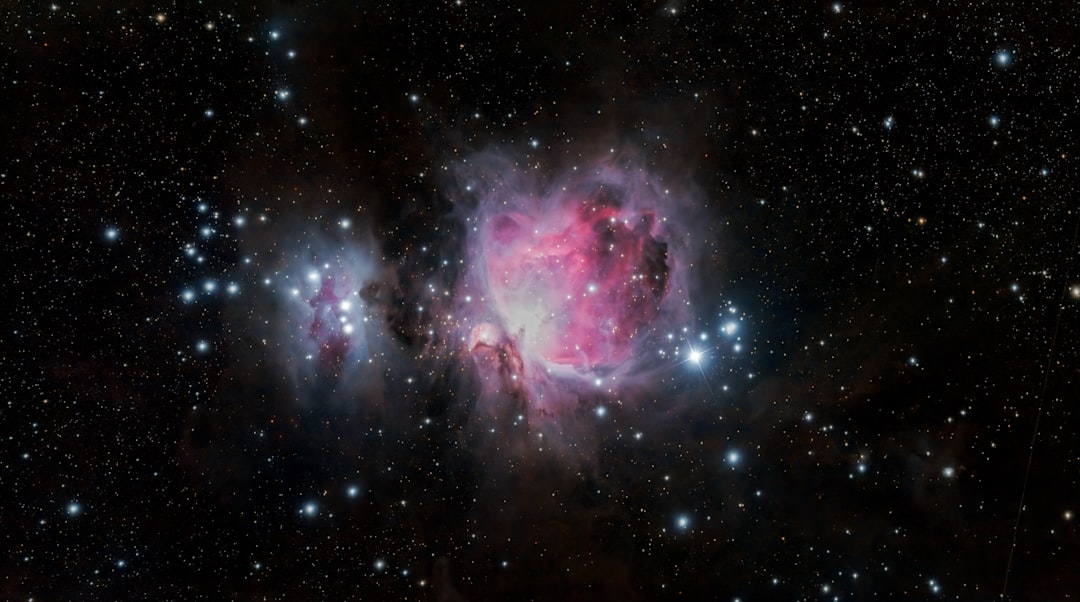
The Orion Nebula: A Stunning Naked Eye Spectacle
The night sky, a vast canvas of inky blackness, is adorned with countless celestial wonders. Among these, the Orion Nebula stands out as a particularly accessible and breathtaking spectacle, a cosmic jewel visible to the naked eye. This celestial cloud of gas and dust, also known as Messier 42 (M42) and cataloged as NGC 1976, is a stellar nursery where new stars are actively being born. Its prominence in our night sky, coupled with its inherent beauty, has captivated humanity for millennia, inspiring awe and scientific curiosity.
The Orion Nebula is not a single entity but rather a vast, complex structure of interstellar gas and dust. Its primary components are hydrogen and helium, the building blocks of stars, interspersed with heavier elements and microscopic dust grains. This diffuse cloud is illuminated by the intense ultraviolet radiation emanating from young, hot stars within it, causing the gases to glow. The nebula’s immense size, spanning approximately 24 light-years across and located roughly 1,344 light-years away in the constellation Orion, makes it one of the closest star-forming regions to Earth. Despite its vastness, its apparent size in the sky is considerable, a testament to its proximity and intrinsic luminosity.
A Stellar Nursery in Action
At its heart lies the Trapezium Cluster, a group of four massive, young stars whose powerful radiation is the primary source of the nebula’s illumination. These O-type and B-type stars are incredibly hot and luminous, shedding vast amounts of energy that excite the surrounding gas. The ultraviolet photons from these stars interact with the hydrogen atoms, causing them to emit light in characteristic colors, most notably a vibrant red from ionized hydrogen (H-alpha emission). This process of ionization and subsequent emission is what creates the ethereal glow we perceive as the Orion Nebula. The Trapezium stars are also crucial in carving out the cavity within the nebula, pushing away less dense gas and dust, and further shaping the structure.
Composition and Structure: A Cosmic Tapestry
Beyond the dominant hydrogen and helium, the Orion Nebula contains trace amounts of other elements, including oxygen and sulfur, which contribute to its varied and colorful appearance. The dust grains, typically composed of silicates and carbonaceous materials, play a vital role. They absorb some of the light from the stars, preventing it from reaching us directly, and also scatter light, giving the nebula its diffuse, hazy appearance. These dust lanes are not merely obscuring features; they are integral to the star formation process, providing denser regions where gravity can begin to coalesce matter. The complex structure of the nebula is a dynamic interplay between stellar radiation, gravity, and the expulsion of material from forming stars.
The Orion Nebula, one of the most stunning celestial objects visible to the naked eye, captivates stargazers with its vibrant colors and intricate structure. For those interested in learning more about its appearance and significance in the night sky, a related article can be found at Freaky Science. This resource delves into the details of the Orion Nebula, providing insights into its formation and the best viewing practices for amateur astronomers.
Locating the Jewel: Finding the Orion Nebula in the Night Sky
The Orion Nebula’s fame is not solely due to its beauty but also its ease of discovery. It is a prominent feature in one of the most recognizable constellations, making it an excellent target for amateur astronomers and casual stargazers alike. Its visibility depends on the time of year and geographic location, but during its peak viewing season, it is a truly rewarding celestial sight.
The Constellation Orion: A Celestial Hunter
The constellation Orion, representing a mythical hunter in Greek mythology, is easily identifiable by its distinctive “belt,” a line of three bright stars: Alnitak, Alnilam, and Mintaka. The Orion Nebula lies directly below this belt, appearing as a fuzzy patch of light. In less light-polluted skies, this “fuzzy patch” resolves into a more detailed structure, hinting at the cosmic processes unfolding within. Orion is best observed during the winter months in the Northern Hemisphere and during the summer months in the Southern Hemisphere, when it rises highest in the night sky.
Spotting the Nebula: A Simple Guide
To find the Orion Nebula, locate the constellation Orion. Once the three stars of Orion’s belt are identified, look slightly downwards (towards Orion’s “sword” or hilt) for a distinct, hazy patch of light. Even in urban environments with significant light pollution, the nebula’s brightness allows it to be seen as a faint smudge. However, the true spectacle unfolds when viewed from a location with darker skies, where details begin to emerge, and the surrounding gas and dust become more apparent. Binoculars greatly enhance the view, revealing more of the nebula’s structure and hints of color.
A Naked Eye Marvel: The Nebula’s Visual Appeal
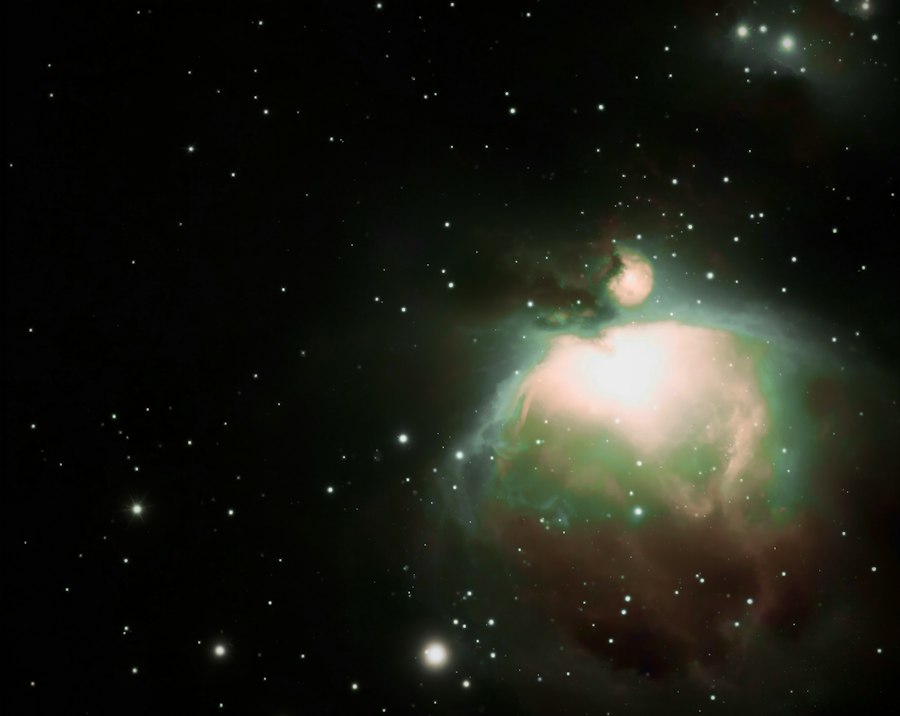
The most remarkable aspect of the Orion Nebula is its ability to captivate the naked eye. Unlike many deep-sky objects that require telescopes to appreciate, M42 is a significant celestial feature that can be observed without any optical aid, a rare treat for stargazers. This accessibility has undoubtedly contributed to its enduring fascination.
The “Fuzzy Star” Phenomenon
For the casual observer, the Orion Nebula appears as a noticeably fuzzy “star” situated within Orion’s sword. This visual impression is the first hint of the vast cosmic cloud lying far beyond our atmosphere. The contrast between the sharp points of light from stars and the diffuse glow of the nebula is striking, even to the unaided eye. It serves as a powerful reminder of the diversity of celestial objects and the vast scales of the universe. This “fuzzy star” is often the gateway for many into the world of astronomy.
The Power of Dark Skies
The difference in viewing the Orion Nebula under dark, rural skies versus a light-polluted urban environment is profound. In dark skies, the nebula is not just a smudge but a discernible patch of glowing gas, with brighter regions and darker lanes of dust becoming apparent. The sheer scale of the object becomes more appreciable, and one can begin to imagine the immense forces at play within. The experience of seeing the Orion Nebula with the naked eye under ideal conditions is a deeply personal and awe-inspiring encounter with the cosmos.
Beyond the Visible: What Telescopes Reveal
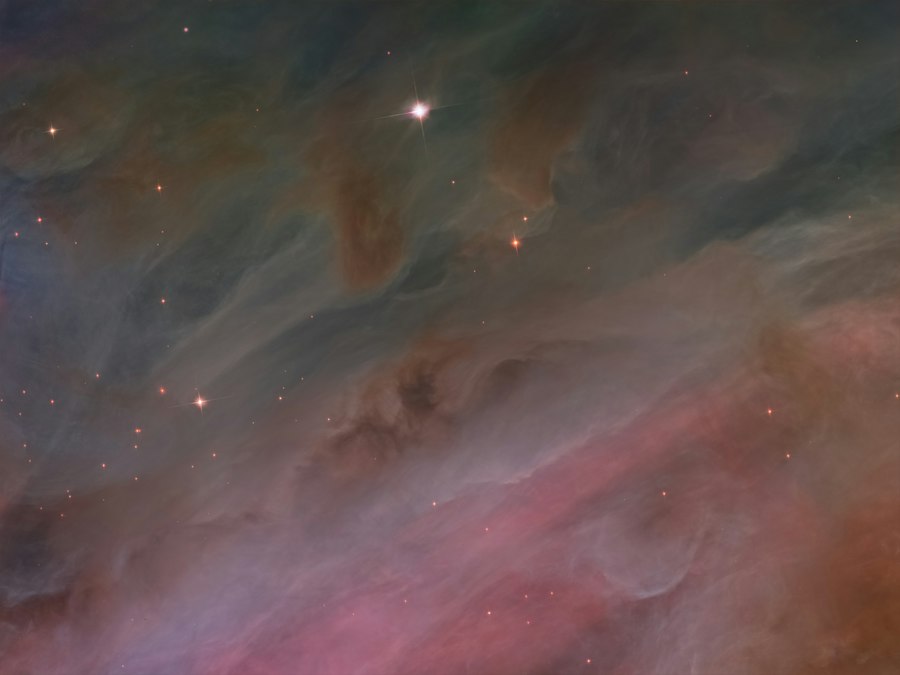
While the naked eye provides a tantalizing glimpse, the true grandeur and intricate details of the Orion Nebula are unlocked with the aid of telescopes. From small backyard instruments to powerful professional observatories, each level of magnification reveals new layers of beauty and complexity.
The Trapezium Cluster Revealed
Telescopes of even modest aperture will resolve the Trapezium Cluster at the heart of the nebula. These four bright stars, often appearing in a trapezoidal arrangement, are the engines powering the nebula’s illumination. Larger telescopes can reveal additional, fainter stars within the cluster and hint at the intense stellar winds and radiation emanating from them. The Trapezium is a testament to the fact that the nebula is not just a passive cloud but an active site of energetic processes.
Unveiling the Hues and Structures
With increased magnification, the subtle colors of the Orion Nebula become more apparent. The dominant red hues from ionized hydrogen are complemented by hints of green and blue, produced by other excited gases. The intricate structures within the nebula, such as dark dust lanes, brighter knots of gas, and wispy tendrils, are brought into sharper focus. These features are not static but are constantly being sculpted by the stellar winds and the gravitational forces within the nebula.
The Role of Astrophotography
Astrophotography plays a crucial role in capturing the full splendor of the Orion Nebula. Long exposure images can gather faint light, revealing details and colors that are invisible to the human eye even through powerful telescopes. These images showcase the vast extent of the nebula, its delicate filaments, and the interplay of light and shadow. They serve as invaluable scientific tools for studying star formation and also as breathtaking works of art that inspire wonder and curiosity about the universe.
The Orion Nebula, one of the most stunning celestial objects visible to the naked eye, captivates stargazers with its vibrant colors and intricate structure. For those interested in learning more about its appearance and how to best observe this magnificent nebula, you can check out a related article that delves into its features and viewing tips. This resource provides valuable insights for both novice and seasoned astronomers alike, enhancing your understanding of the wonders of the night sky. To explore further, visit this article for a deeper look at the Orion Nebula.
Scientific Significance: A Window into Star Birth
| Aspect | Details |
|---|---|
| Location | Located in the constellation of Orion |
| Apparent Magnitude | 4.0 |
| Distance | Around 1,344 light years away |
| Size | Approximately 24 light years across |
| Visibility | Visible to the naked eye in the night sky |
The Orion Nebula is not merely a beautiful sight; it is a vital laboratory for astronomers seeking to understand the fundamental processes of star formation. Its proximity and active star-forming regions make it an ideal target for studying the birth and early evolution of stars and planetary systems.
Studying Stellar Evolution
By observing the different stages of stellar evolution within the Orion Nebula – from collapsing gas clouds to protostars and young, massive stars – astronomers can piece together the life cycle of stars. The nebula contains stars of various ages and masses, providing a diverse range of examples to study. Understanding the processes occurring here helps us comprehend the formation of stars throughout the galaxy and beyond.
The Birth of Planetary Systems
The Orion Nebula is also a prime location for studying the formation of planetary systems. Observations have revealed protoplanetary disks – swirling disks of gas and dust around young stars from which planets are born. By studying these disks, astronomers can learn about the conditions necessary for planet formation and the composition of nascent planetary systems. Some of these disks have been directly imaged, offering unprecedented insights into this early stage of planetary development.
Our Place in the Cosmos
Ultimately, studying stellar nurseries like the Orion Nebula helps us understand our own origins. Our Sun and solar system formed from similar clouds of gas and dust billions of years ago. By observing the processes happening in M42, we gain a deeper appreciation for the cosmic journey that led to the formation of Earth and, subsequently, to the emergence of life. The Orion Nebula, in its breathtaking naked-eye glory and its profound scientific implications, serves as a constant reminder of our connection to the vast and dynamic universe.

The Space Photos Are Real—But Your Eyes Would See This
FAQs
What is the Orion Nebula?
The Orion Nebula is a diffuse nebula situated in the Milky Way, being south of Orion’s Belt in the constellation of Orion. It is one of the brightest nebulae, and is visible to the naked eye in the night sky.
What does the Orion Nebula look like to the naked eye?
To the naked eye, the Orion Nebula appears as a faint, hazy patch of light in the sword of the constellation Orion. It is not as detailed or colorful as it appears in long-exposure photographs, but it is still a beautiful sight to behold.
When is the best time to see the Orion Nebula with the naked eye?
The best time to see the Orion Nebula with the naked eye is during the winter months in the northern hemisphere, when the constellation Orion is most prominent in the night sky. It is best viewed from a location with minimal light pollution.
How far away is the Orion Nebula from Earth?
The Orion Nebula is located approximately 1,344 light years away from Earth. It is one of the closest regions of massive star formation to our planet.
Can the Orion Nebula be seen from both hemispheres?
Yes, the Orion Nebula can be seen from both the northern and southern hemispheres. However, its visibility and prominence in the night sky may vary depending on the observer’s location and the time of year.