Unveiling the Universe: How Space Telescope Images are Processed
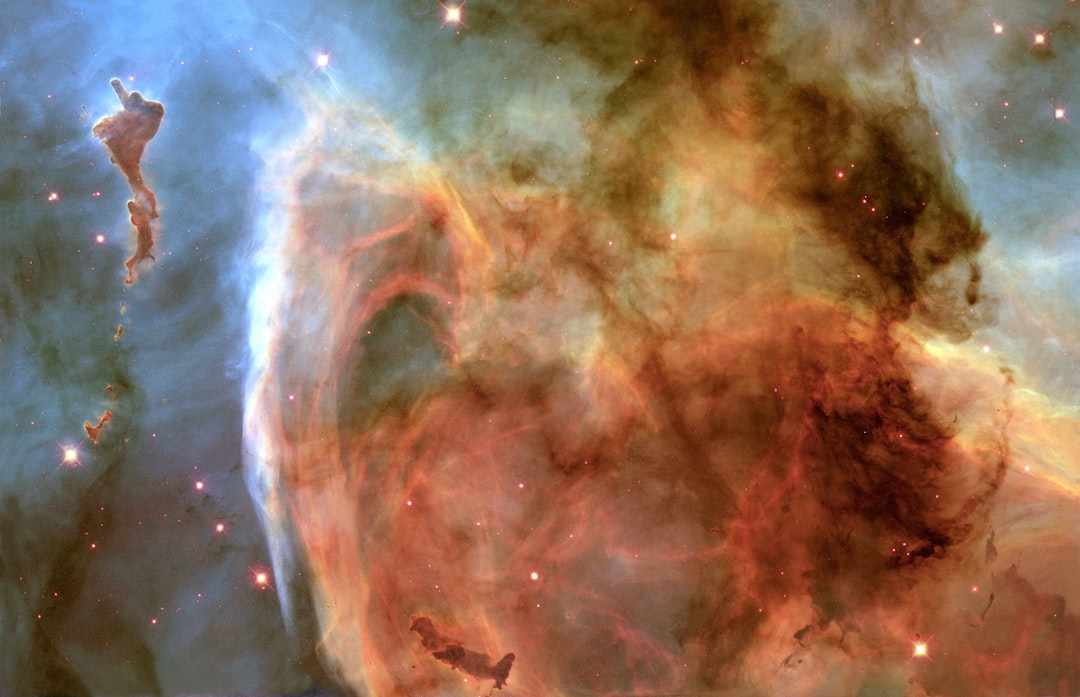
The breathtaking images of distant galaxies, nebulae, and planets that adorn our screens and textbooks are not direct photographs in the conventional sense. Instead, they are the result of a sophisticated and multi-layered process of data acquisition, manipulation, and interpretation, transforming raw signals from the void of space into visually stunning and scientifically invaluable representations of the cosmos. Space telescope images, whether captured by iconic instruments like the Hubble Space Telescope or the more recent James Webb Space Telescope, undergo a rigorous journey from the moment photons strike their detectors to their final presentation to the public and the scientific community. This journey is a testament to human ingenuity, combining cutting-edge technology with intricate computational techniques to unlock the secrets of the universe.
The process of turning a whisper of light from billions of light-years away into a vibrant picture is a marvel of modern science and engineering. It involves a complex interplay of hardware, software, and human expertise, each step crucial in ensuring the fidelity and interpretability of the final product. Understanding this process offers a deeper appreciation for the images we see and the scientific discoveries they facilitate, revealing not just the aesthetic beauty of the universe but also the intricate details that drive our understanding of its evolution and composition.
The initial step in creating any space telescope image is the actual capture of light from celestial objects. Space telescopes are equipped with highly sensitive instruments, primarily cameras or spectrographs, designed to detect electromagnetic radiation across various wavelengths, from visible light to infrared and ultraviolet. Unlike terrestrial telescopes, which are hampered by atmospheric distortion and light pollution, space telescopes operate in the vacuum of space, allowing them to capture incredibly faint and distant signals with unparalleled clarity.
The Role of Detectors: Pixels as Cosmic Receivers
The heart of any imaging instrument is its detector. For visible light and near-infrared observations, Charge-Coupled Devices (CCDs) or newer CMOS (Complementary Metal-Oxide-Semiconductor) sensors are commonly employed. These sensors are essentially grids of tiny light-sensitive elements called pixels. When photons strike a pixel, they generate an electrical charge proportional to the number of photons received. The brighter the source in the sky, the more photons hit a particular pixel, and the larger the charge accumulated. For infrared observations, specialized detectors sensitive to longer wavelengths, such as Mercury Cadmium Telluride (MCT) arrays, are used. These detectors are often cooled to extremely low temperatures to minimize their own thermal noise, which could otherwise interfere with the faint signals from space.
Wavelength Sensitivity: Seeing Beyond the Visible
Different telescopes and instruments are designed to observe specific ranges of the electromagnetic spectrum. For instance, the Hubble Space Telescope excels in visible and ultraviolet light, providing images that are often familiar to the public. The James Webb Space Telescope, on the other hand, is primarily an infrared observatory, allowing it to peer through dust clouds that obscure visible light and to observe very distant, redshifted objects that emit predominantly in the infrared. The choice of detector and the wavelength of light being observed directly influences the scientific information that can be gleaned from an image and the visual characteristics of the final representation.
Signal-to-Noise Ratio: The Battle Against Cosmic Static
One of the primary challenges in astronomical imaging is achieving a high signal-to-noise ratio (SNR). The “signal” is the actual light from the celestial object being observed, while the “noise” encompasses all unwanted signals, including instrumental noise (from the detectors themselves), cosmic rays, stray light, and background radiation from the telescope and Earth. To maximize the SNR, telescopes often collect data over extended periods, accumulating photons over time. This longer exposure allows the faint signal from a distant galaxy to build up, gradually overpowering the random fluctuations of the noise.
Dithering and Multiple Exposures: Averaging Out Imperfections
To further improve image quality and mitigate the effects of fixed-pattern noise or detector defects, astronomers employ techniques like dithering. This involves slightly moving the telescope between exposures, capturing the same region of the sky from slightly different positions. When these dithered images are combined, the fixed noise patterns are averaged out, while the celestial objects remain consistently positioned, allowing for their precise reconstruction. Multiple exposures are also stacked together, a process similar to averaging multiple measurements in a laboratory experiment, to reduce the impact of random noise.
The processing of images captured by space telescopes is a fascinating topic that delves into the intricate techniques used to enhance and analyze astronomical data. For those interested in learning more about this process, a related article can be found at Freaky Science, which explores the various methods employed by scientists to transform raw telescope images into stunning visual representations of the universe. This article provides insights into the technology and software used, as well as the challenges faced in accurately depicting celestial phenomena.
From Raw Data to Processed Pixels: The Calibration Pipeline
Once the raw light signals have been converted into digital data, they enter a critical phase known as the calibration pipeline. This is a sophisticated series of automated processes designed to correct for instrumental artifacts and ensure that the data accurately represents the light that arrived at the telescope. This stage is crucial for scientific analysis, as it transforms the raw, imperfect measurements into scientifically meaningful quantities.
Bias and Dark Current Correction: Eliminating Instrumental Footprints
Even when no light is hitting the detectors, they can generate a small electrical signal. This “bias” is a baseline voltage that needs to be subtracted from all subsequent measurements. Similarly, “dark current” is a spurious signal generated by thermal energy within the detector itself, especially at higher temperatures. By taking special “bias frames” (exposures with the shutter closed and no light) and “dark frames” (exposures taken in darkness for a similar duration as the scientific observations), astronomers can measure these instrumental effects and remove them from the scientific data.
Flat-Fielding: Correcting for Uneven Illumination
Telescope optics and detector sensitivity are not perfectly uniform across their entire surface. This means that some parts of the detector might be slightly more or less sensitive to light than others, leading to variations in brightness across a uniformly illuminated source. To correct for this, astronomers take “flat-field” images, which are exposures of a uniformly bright and diffuse source, such as the twilight sky or a special calibration lamp. By dividing the scientific images by these flat-field images, the variations in detector sensitivity are normalized, ensuring that the brightness of celestial objects is represented accurately.
Cosmic Ray Removal: Identifying and Erasing Extraneous Hits
Cosmic rays are high-energy particles from space that can strike the telescope’s detectors, creating bright, spurious spots on the images. These spots can be mistaken for actual astronomical sources or can obscure real features. Sophisticated algorithms are employed to identify these cosmic ray hits by analyzing the pattern of pixels they affect. Once identified, these spurious pixels are masked or interpolated over, effectively removing the cosmic ray contamination from the final image.
Wavelength Calibration: Assigning Meaning to Spectra
For spectrographic data, which breaks down light into its constituent wavelengths, calibration is equally important. Wavelength calibration involves identifying known spectral lines of elements (like hydrogen or oxygen) within the spectrum and using them to accurately map the pixel positions to specific wavelengths. This allows astronomers to determine the chemical composition, temperature, and velocity of celestial objects.
From Calibration to Science: Data Analysis and Interpretation
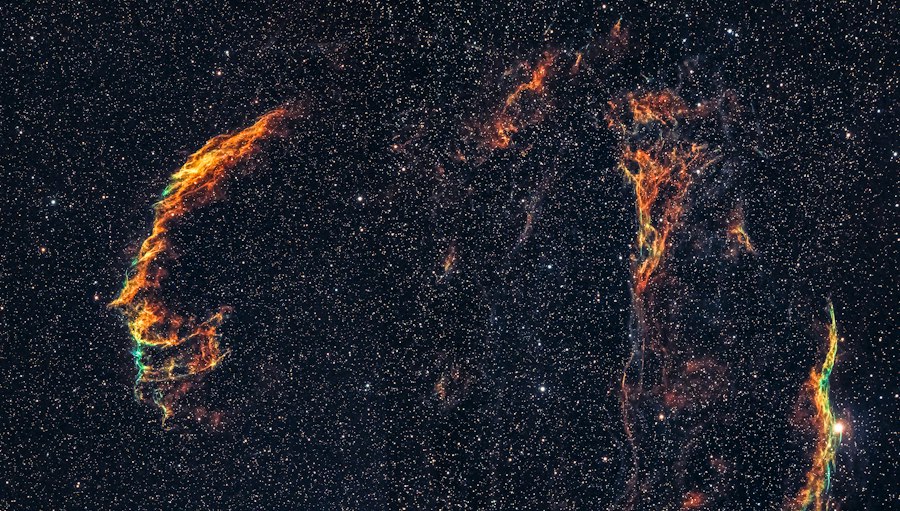
Once the raw data has been processed through the calibration pipeline, it is ready for scientific analysis. This stage involves extracting meaningful information from the calibrated images and spectra, often requiring specialized software and the expertise of astronomers. The goal is to understand the physical properties of the objects being observed, such as their distance, size, mass, temperature, and chemical composition.
Photometry: Measuring the Brightness of Objects
Photometry is the science of measuring the brightness of celestial objects. Astronomers use calibrated images to determine the flux of light received from stars, galaxies, and other sources. This information can reveal how luminous an object is, its evolutionary stage, and even its distance if combined with other measurements. By measuring the brightness of objects at different wavelengths, astronomers can also infer their temperature and composition.
Astrometry: Precisely Locating Cosmic Treasures
Astrometry is the branch of astronomy that deals with the precise measurement of the positions and movements of celestial objects. Calibrated telescope images allow astronomers to determine the precise coordinates of stars and galaxies in the sky. By comparing images taken at different times, astronomers can track the proper motion of stars and detect the subtle wobble of a star caused by the gravitational pull of an orbiting planet, thus aiding in the discovery of exoplanets.
Spectroscopy: Unraveling the Chemical Fingerprints
Spectroscopy is arguably one of the most powerful tools in astronomy. By spreading light into its constituent wavelengths, astronomers can obtain a spectrum that acts like a chemical fingerprint of the object. Each element and molecule absorbs or emits light at specific wavelengths, creating unique patterns in the spectrum. Analyzing these patterns allows astronomers to determine the chemical composition of stars and nebulae, their temperature, pressure, and even their velocity through the Doppler shift.
Redshift and Blueshift: Measuring Cosmic Motion
The Doppler effect, familiar from the changing pitch of a siren as it approaches or recedes, also applies to light. Light from objects moving away from us is stretched to longer wavelengths, a phenomenon known as redshift. Conversely, light from objects moving towards us is compressed to shorter wavelengths, a blueshift. By measuring the redshift or blueshift of spectral lines, astronomers can determine the radial velocity of celestial objects, providing crucial information about the expansion of the universe and the motion of galaxies.
From Scientific Data to Public Images: The Art of Visualization

The calibrated and analyzed data forms the scientific foundation of the images we see. However, this data is often not directly in a form that is visually appealing or easily understandable to the general public. This is where the art and science of astronomical visualization come into play. This phase involves transforming the scientific data into aesthetically pleasing and informative images that communicate the wonders of the universe.
False Color: Revealing Hidden Information
Many space telescope images are presented in “false color.” This is because the detectors used might be sensitive to wavelengths outside the visible spectrum (like infrared or ultraviolet), or to reveal subtle differences in brightness that are not apparent in true color. In false color imaging, different wavelengths or brightness levels are assigned arbitrary colors to highlight specific scientific features. For example, a region that is particularly bright in infrared might be colored red, while a region with a different chemical composition might be colored blue. This technique allows scientists and the public to visualize and understand data that would otherwise be invisible.
True Color vs. False Color: A Matter of Interpretation
While “true color” images attempt to represent what the human eye would perceive if it could see all the relevant wavelengths, they are often not scientifically optimal. For instance, to capture faint details of a distant galaxy, long exposures are needed, which can wash out brighter foreground objects. False color allows for the separation of scientific information, enabling the visualization of features that would be lost in a true color representation. It’s important to remember that false color is a tool for scientific understanding and communication, not a literal depiction of reality.
Compositing Images: Building a Multi-Wavelength Masterpiece
Often, the most scientifically rich images are composites created from observations made in multiple different wavelengths. For instance, a stunning image of a nebula might combine data from visible light, infrared, and X-ray observations. Each wavelength reveals different aspects of the nebula’s structure, composition, and processes. By carefully assigning colors to each wavelength band and layering them together, astronomers can create a comprehensive and visually stunning representation that showcases the object in its entirety.
Contrast Enhancement and Sharpening: Bringing Out the Details
Even after calibration, some fine details in astronomical images might be subtle and difficult to perceive. Techniques like contrast enhancement are used to make these subtle variations more apparent. This involves stretching the range of brightness values in the image, making fainter features more visible without overexposing the brighter ones. Sharpening algorithms can also be applied to reduce blurring and reveal finer structures, bringing out intricate details in galaxies and nebulae.
The intricate process of how space telescope images are processed is essential for astronomers to glean valuable insights from the vast cosmos. These images undergo a series of steps, including calibration, alignment, and enhancement, to ensure that the data captured is as accurate and informative as possible. For a deeper understanding of these techniques and their significance, you can explore a related article that delves into the fascinating world of astronomical imaging. This resource provides an in-depth look at the methodologies employed in processing these stunning visuals, making it a great read for anyone interested in the science behind the stars. To learn more, visit this article.
The Human Element: Scientists and the Art of Storytelling
| Processing Step | Description |
|---|---|
| Data Collection | Raw data is collected by the space telescope’s sensors. |
| Calibration | Noise and distortion are removed from the raw data. |
| Alignment | Images are aligned to correct for any movement or rotation. |
| Stacking | Multiple images are combined to improve signal-to-noise ratio. |
| Enhancement | Contrast and color adjustments are made to enhance features. |
| Analysis | Scientists analyze the processed images to extract scientific data. |
While sophisticated technology and algorithms are essential for processing space telescope images, the human element remains indispensable. Astronomers, data analysts, and visualization experts play a crucial role in interpreting the data, making scientific discoveries, and communicating these findings to the world. Their expertise guides the entire process, from planning observations to creating compelling visualizations that tell a story about the universe.
Scientific Interpretation: Drawing Conclusions from the Data
The ultimate goal of processing space telescope images is scientific discovery. Astronomers analyze the calibrated data to test hypotheses, discover new phenomena, and deepen our understanding of the cosmos. This involves comparing observations with theoretical models, identifying patterns, and drawing conclusions about the physical processes at play. The images we see are often the visual manifestations of these profound scientific insights.
The Role of Image Processors: Bridging Science and Art
Image processors, often working in close collaboration with astronomers, are the artists who transform scientific data into visually captivating images. They use their understanding of both the scientific content and the principles of visual design to create images that are both accurate and engaging. This involves making decisions about color palettes, contrast, and the emphasis of certain features, all while remaining true to the scientific integrity of the data.
Public Outreach and Education: Sharing the Wonders of the Cosmos
Space telescope images have become powerful tools for public outreach and education. They inspire awe and curiosity, sparking interest in science and space exploration. By presenting complex scientific findings in an accessible and visually appealing way, these images help to democratize scientific knowledge, allowing everyone to glimpse the marvels of the universe and the ongoing quest to understand our place within it. The continuous refinement of image processing techniques ensures that the universe, as revealed by our most advanced eyes in space, becomes ever more understandable and inspiring.

The Space Photos Are Real—But Your Eyes Would See This
FAQs
1. What is the process of processing space telescope images?
The process of processing space telescope images involves several steps, including removing noise and artifacts, calibrating the images, aligning and stacking multiple exposures, and enhancing the final image for scientific analysis and public dissemination.
2. What are some common techniques used in processing space telescope images?
Common techniques used in processing space telescope images include dark frame subtraction to remove sensor noise, flat fielding to correct for uneven illumination, image registration to align multiple exposures, and image stacking to improve signal-to-noise ratio.
3. How are space telescope images calibrated?
Space telescope images are calibrated using calibration frames, such as dark frames and flat fields, which are taken under controlled conditions to characterize and correct for sensor noise, pixel-to-pixel variations, and other instrumental effects.
4. What role does software play in processing space telescope images?
Specialized software, such as IRAF, AstroImageJ, and Adobe Photoshop, is used to process space telescope images. This software allows astronomers to perform tasks such as image calibration, alignment, stacking, and enhancement.
5. How are processed space telescope images used for scientific research and public outreach?
Processed space telescope images are used for scientific research to study celestial objects and phenomena, such as galaxies, nebulae, and exoplanets. They are also used for public outreach to engage and educate the public about the wonders of the universe.