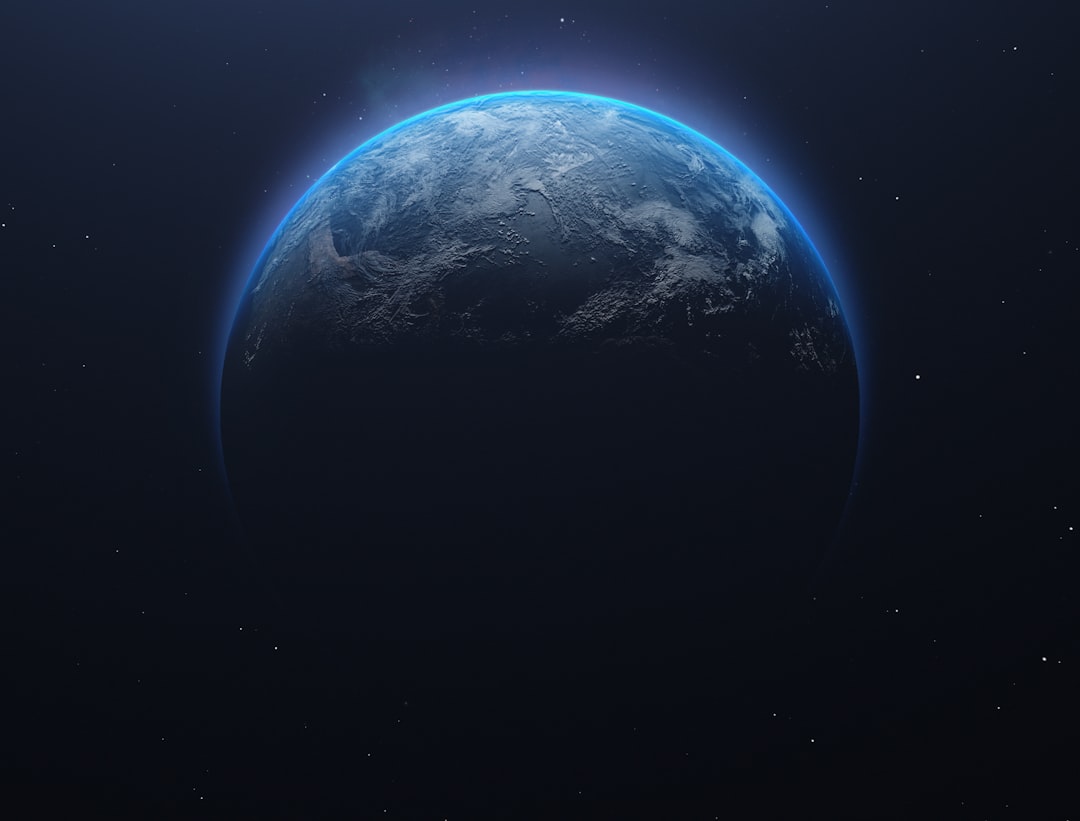
The common perception of space, gleaned from dramatic film portrayals and stylized artistic interpretations, often conjures images of inky blackness punctuated by pinpricks of light or swirling nebulae of vibrant, unnatural hues. This vision, while evocative, is a significant departure from the true, mind-bending reality of the cosmos. Unveiling the true appearance of space is not merely an aesthetic pursuit; it’s a journey into understanding the fundamental forces and phenomena that shape our universe, a process that relies heavily on scientific instruments and interpretation, rather than direct human visual experience in its rawest form. The universe, when stripped of artistic license and filtered through the lens of scientific observation, reveals a tapestry woven with radiation, gravitational influences, and phenomena that defy our everyday intuition.
The notion of space as an absolute void of blackness is a pervasive misconception. While it is true that much of the universe is indeed dark, this darkness is not an absence of color, but rather an absence of visible light originating from those particular regions. The true appearance of space is a complex symphony of electromagnetic radiation, much of which falls outside the narrow spectrum of human vision.
The Visible Spectrum: A Limited Window
Humans perceive the universe through the visible light spectrum, a small sliver of the electromagnetic radiation that permeates space. This visible light, emitted by stars and reflected by planets and celestial bodies, is what allows us to see the familiar constellations and the soft glow of distant galaxies. However, this is akin to looking at a magnificent orchestra through a single, very small window, perceiving only a fraction of the intricate performance.
Infrared: The Universe’s Warmth and Hidden Structures
Beyond the red end of the visible spectrum lies infrared radiation. This form of energy is directly related to heat, and the universe is far from being uniformly cold. Stars, planets, and even the dust and gas clouds that populate interstellar space emit infrared radiation. Astronomers use infrared telescopes to peer through the cosmic dust that often obscures visible light, revealing hidden star-forming regions, cooler stellar objects, and the thermal signatures of planets. The infrared appearance of space is thus one of subtle glows and diffuse warmth, painting a picture of ongoing cosmic processes.
Ultraviolet: Energetic Stellar Processes
Further up the electromagnetic ladder, beyond violet, lies ultraviolet (UV) radiation. This high-energy radiation is characteristic of extremely hot and energetic phenomena, such as young, massive stars and active galactic nuclei. While harmful to life on Earth in large doses, UV light provides crucial information about the most dynamic and energetic events in the universe. Its presence indicates regions of intense stellar activity and powerful cosmic forces at play.
X-rays and Gamma Rays: The Universe’s Most Violent Events
The truly energetic, and thus visually striking (if we could perceive them directly), manifestations of space come in the form of X-rays and gamma rays. These are the highest energy forms of electromagnetic radiation, originating from the most extreme astrophysical environments. Supernova remnants, the accretion disks around black holes, and active galactic nuclei are prodigious emitters of X-rays and gamma rays. These emissions are not gentle glows, but rather violent bursts of energy that reveal the universe’s most cataclysmic events. The appearance of space in these wavelengths is characterized by intense, localized points of extreme energy, hinting at the immense power of cosmic collisions and gravitational collapses.
Radio Waves: Echoes of the Big Bang and Galactic Structures
At the other end of the spectrum, the longest wavelengths are radio waves. These are emitted by a variety of celestial objects, including pulsars, quasars, and the vast clouds of neutral hydrogen gas that make up much of the visible matter in galaxies. Radio telescopes are essential for mapping the structure of galaxies, studying the remnants of ancient cosmic events, and detecting the faint afterglow of the Big Bang itself, the cosmic microwave background radiation. The radio universe is often depicted as large, diffuse structures and intricate filamentary networks, revealing the underlying architecture of the cosmos on grand scales.
If you’re curious about what space actually looks like in real life, you might find the article on Freaky Science particularly enlightening. It delves into the stunning visuals captured by telescopes and space missions, showcasing the breathtaking beauty of our universe beyond the artistic interpretations often seen in media. To explore this fascinating topic further, check out the article here: What Space Really Looks Like.
The Cosmic Canvas: Nebulae and Interstellar Medium
The vibrant, colorful nebulae that often grace popular depictions of space are, in reality, far more nuanced and complex. While color is present, it is not the saturated, fantastical palette often imagined. The appearance of nebulae is dictated by the type of gas and dust they contain and the way they interact with nearby stars.
Emission Nebulae: Stellar Excitation
Emission nebulae, such as the Orion Nebula, are clouds of ionized gas that emit their own light. This ionization is typically caused by the intense ultraviolet radiation from nearby hot, young stars. The colors we perceive in these nebulae are a result of different elements within the gas emitting light at specific wavelengths when they de-excite. For example, ionized hydrogen often appears red, while oxygen can produce green and blue hues. However, these colors are often subtle and blended, rather than distinct and vivid. The true appearance is a softer, more diffused glow.
Reflection Nebulae: Starlight Scattering
Reflection nebulae, on the other hand, do not produce their own light. Instead, they are illuminated by the light of nearby stars, which is scattered by the dust particles within the nebula. The color of a reflection nebula depends on the wavelength of light emitted by the illuminating star and how the dust scatters that light. Shorter wavelengths, like blue, tend to be scattered more effectively, giving many reflection nebulae a bluish appearance. The overall impression is often a hazy, ethereal illumination rather than a distinctly colored cloud.
Dark Nebulae: Cosmic Shadows
Dark nebulae, such as the Horsehead Nebula, are dense clouds of interstellar dust that are so opaque they block the light from stars behind them. From our perspective, they appear as dark silhouettes against a brighter background. Their true appearance is one of profound darkness, a testament to the ability of interstellar matter to obscure light and create cosmic voids.
The Interstellar Medium: A Near-Vacuum Filled with Structure
The space between stars, the interstellar medium (ISM), is often thought of as an empty vacuum. However, it is far from devoid of matter. It contains a diffuse mix of gas (primarily hydrogen and helium) and dust grains. While extremely tenuous by terrestrial standards, this medium is crucial for the formation of stars and planets. Its appearance is not uniform; it is structured into filaments, clumps, and voids, driven by a complex interplay of gravity, stellar winds, and magnetic fields. Mapping the ISM in different wavelengths reveals its intricate and dynamic nature.
Gravitational Lenses and Distorted Realities
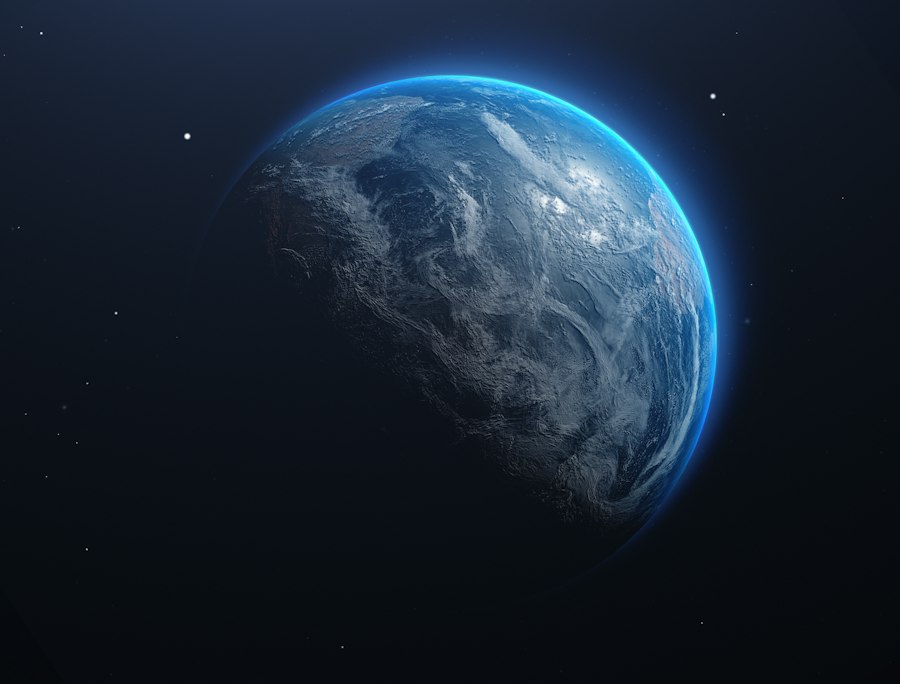
One of the most profound ways in which space’s appearance is altered is through the phenomenon of gravitational lensing. Einstein’s theory of general relativity dictates that massive objects warp the fabric of spacetime around them. This warping affects the path of light, causing it to bend as it travels through the universe.
Einstein Rings and Arcs: Cosmic Magnification and Distortion
When a massive object, such as a galaxy or a galaxy cluster, lies directly between an observer and a more distant light source, the intervening mass can bend the light from the distant source around it. If the alignment is perfect, this can create a complete circle of light around the foreground object, known as an Einstein ring. More commonly, the light is distorted into arcs and multiple images of the background object. The appearance of space in these scenarios is one of warped and magnified vistas, where distant galaxies appear stretched, duplicated, and distorted, providing astronomers with a natural telescope to study the most remote parts of the universe.
Dark Matter’s Invisible Influence
Gravitational lensing is also a primary tool for detecting and mapping dark matter, the enigmatic substance that makes up a significant portion of the universe’s mass but does not interact with light. The gravitational pull of dark matter can also cause light to bend, and by observing these lensing effects, astronomers can infer the distribution of dark matter even though it remains invisible. This reveals that the structures we see in space are often embedded within vast, unseen halos of dark matter, shaping the cosmic landscape in ways we cannot directly perceive.
The Universe’s Dynamic Nature: Explosions and Collisions
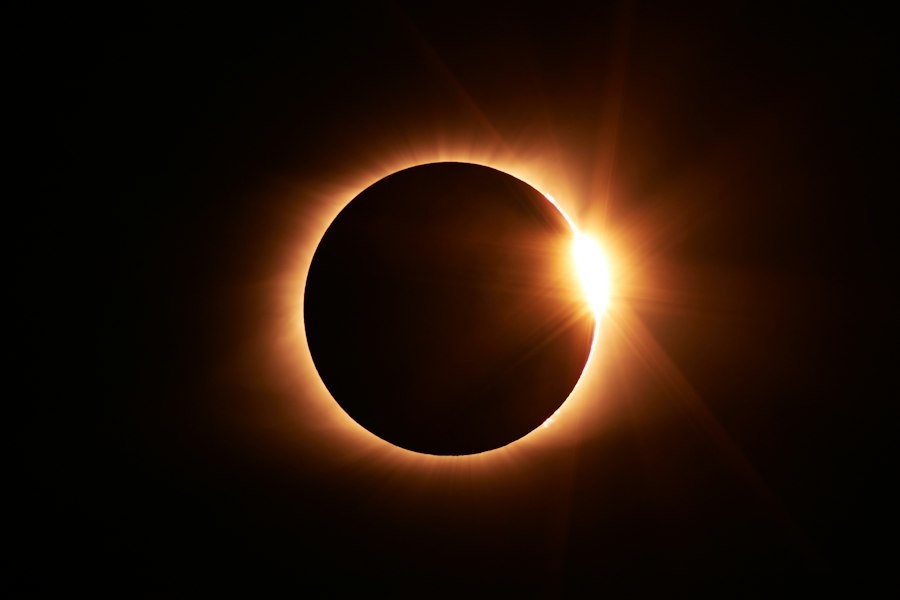
Space is not a static, unchanging realm. It is a place of constant motion, evolution, and dramatic events. The appearance of space is often punctuated by the cataclysmic outbursts of stars and the collisions of galaxies.
Supernovae: Stellar Explosions and Cosmic Resets
Supernovae are the spectacular explosions of stars, marking the end of their lives. These events are incredibly luminous, briefly outshining entire galaxies. The remnants of supernovae are often visible for millennia as expanding shells of gas and dust, enriched with heavy elements forged within the star. The appearance of these supernova remnants is one of glowing, chaotic structures, expanding outwards into the interstellar medium, scattering the building blocks for future stars and planets.
Galactic Mergers: Cosmic Dances of Destruction and Creation
Galaxies are not isolated entities; they interact and merge with each other over cosmic timescales. These galactic mergers are some of the most energetic events in the universe, involving immense gravitational forces that can rip apart and reshape galaxies. The appearance of merging galaxies is one of distorted shapes, long tidal tails of stars and gas being pulled out, and bursts of intense star formation triggered by the collision. These events are both destructive and creative, ultimately leading to the formation of larger, more complex galaxies.
When exploring the vastness of the universe, many people wonder what space actually looks like in real life. Contrary to the colorful images often portrayed in movies and media, the reality of space is far more complex and awe-inspiring. For a deeper understanding of this topic, you can read an insightful article that delves into the true nature of space and its breathtaking phenomena. Check out this fascinating article to learn more about the wonders that exist beyond our planet.
The Unseen Threads: Magnetic Fields and Cosmic Rays
| Aspect | Description |
|---|---|
| Size | Space can vary in size from small rooms to vast open areas. |
| Shape | Spaces can have different shapes such as square, rectangular, circular, or irregular. |
| Color | Spaces can have various colors depending on the materials and lighting used. |
| Texture | Surfaces in a space can have different textures such as smooth, rough, or patterned. |
| Lighting | Lighting in a space can be natural or artificial, and can vary in intensity and color temperature. |
| Features | Spaces can contain various features such as furniture, decorations, and architectural elements. |
Beyond the visible light, radiation, and matter, space is permeated by invisible forces that shape its structure and influence its phenomena. Magnetic fields and cosmic rays are two such crucial components.
Cosmic Magnetic Fields: Guiding Particles and Shaping Structures
Magnetic fields are present throughout the universe, from the interiors of stars to the vast expanses between galaxies. These fields play a significant role in the dynamics of plasma, guiding the motion of charged particles and influencing the formation of stars and galaxies. While invisible to the human eye, their presence can be inferred through their effects on charged particles, such as their synchrotron radiation. The appearance of space, when viewed through the lens of magnetic fields, is one of invisible lines of force guiding the flow of energy and matter.
Cosmic Rays: High-Energy Messengers
Cosmic rays are high-energy subatomic particles that travel through space at nearly the speed of light. They originate from various sources, including supernovae and active galactic nuclei. When cosmic rays interact with the Earth’s atmosphere or with interstellar gas, they produce showers of secondary particles and emit radiation that can be detected by scientific instruments. While their direct appearance is elusive, their impact is felt throughout the cosmos, influencing the composition and evolution of celestial objects.
In conclusion, the true appearance of space is a far cry from the simplistic, often romanticized depictions that have become commonplace. It is a universe of intricate radiation, dynamic gravitational forces, and energetic phenomena that demand specialized instruments and scientific interpretation to comprehend. The vibrant colors are not always as they seem, the darkness is not always empty, and the very fabric of reality is constantly being stretched and shaped. Unveiling the true appearance of space is an ongoing scientific endeavor, a testament to humanity’s insatiable curiosity and its capacity to explore the universe not just with our eyes, but with the most advanced tools of scientific inquiry. It is a journey that reveals a cosmos far more complex, awe-inspiring, and profoundly beautiful than we could have ever imagined.
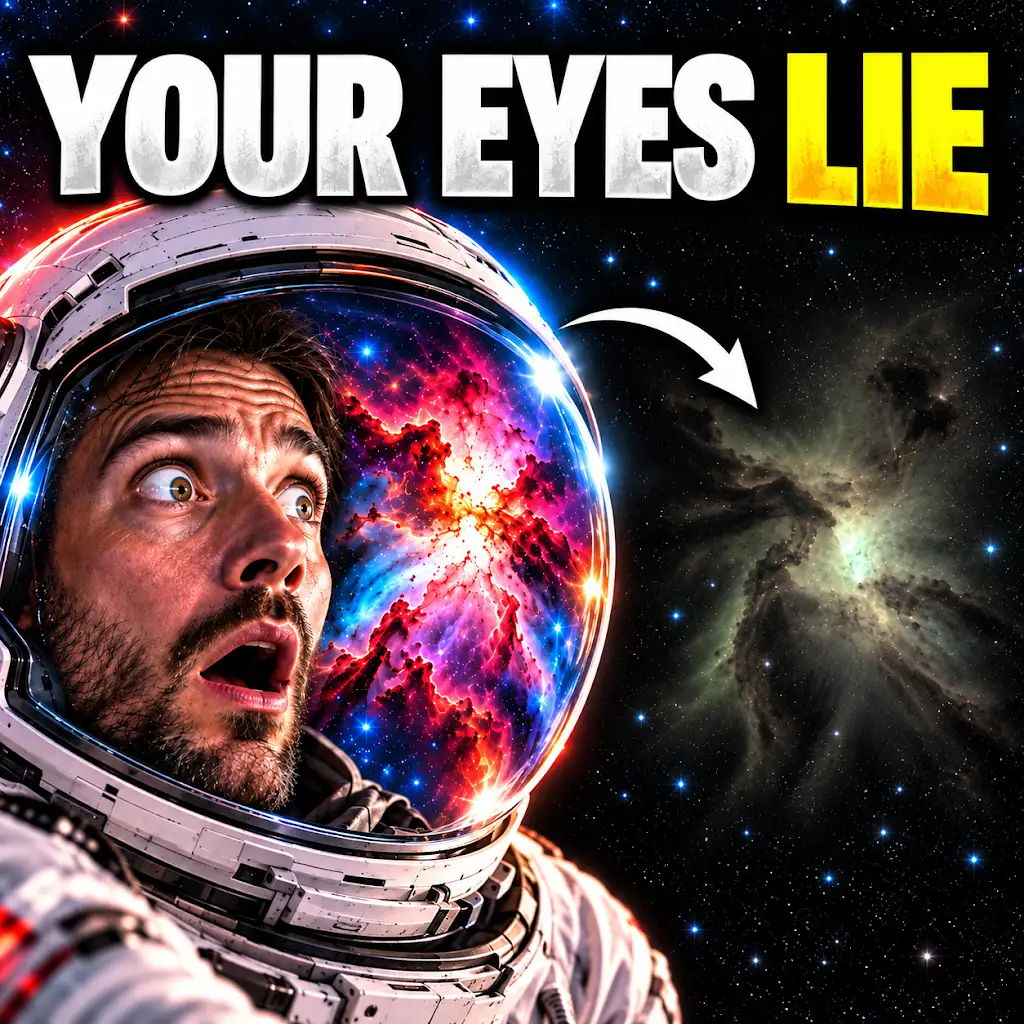
The Space Photos Are Real—But Your Eyes Would See This
FAQs
What does space actually look like in real life?
In real life, space appears as a vast expanse of darkness with scattered stars, planets, and other celestial bodies. It is not the colorful and vibrant images often depicted in movies and artwork.
Why does space appear black?
Space appears black because it is mostly empty, with very few particles to scatter or reflect light. This lack of atmosphere and particles means that there is no medium for light to bounce off of, resulting in the appearance of darkness.
Are there any colors in space?
While space appears black to the human eye, there are actually various colors present in space. These colors are often not visible to the naked eye and require specialized equipment, such as telescopes and cameras, to capture and display them.
What are some common misconceptions about the appearance of space?
One common misconception is that space is filled with colorful clouds and nebulae. In reality, these objects are often faint and require long exposure photography to capture their vibrant colors.
How do astronauts perceive space from their perspective?
Astronauts in space perceive the universe as a vast, dark expanse with countless stars and celestial bodies. They also experience the phenomenon of seeing the Earth as a bright and colorful orb against the darkness of space.