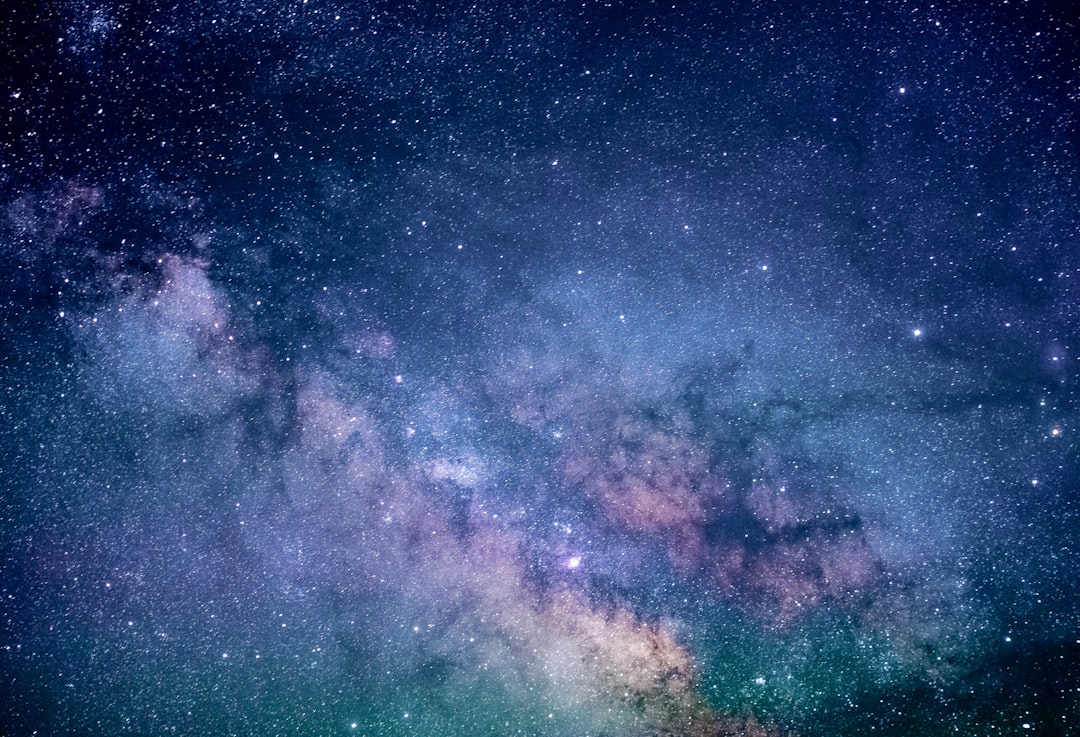
Decoding the Universe: How Scientists Assign Space Colors
The night sky, a canvas dusted with countless pinpricks of light, has captivated humanity for millennia. From ancient mythologies woven around constellations to the modern scientific quest to understand our cosmic origins, we have always looked to the stars. But beyond the dazzling spectacle, there lies a deeper layer of information, a silent language communicated through light. Scientists, through a complex and ingenious process, translate this light into the vibrant, often breathtaking, colors we see in astronomical images. This isn’t about painting a pretty picture; it’s about deciphering the fundamental properties of celestial objects, unlocking secrets about their composition, temperature, and even their movement. The assignment of “space colors” is a meticulous scientific endeavor, a bridge between the invisible wavelengths of light and the visual spectrum our eyes can perceive, enabling us to decode the universe in ways previously unimaginable.
Our perception of color is limited to a narrow band of the electromagnetic spectrum, the visible light. This is the range of wavelengths that our eyes have evolved to detect, from the deep reds on one end to the vibrant violets on the other. However, the universe is awash with electromagnetic radiation far beyond this visible window. Radio waves, microwaves, infrared, ultraviolet, X-rays, and gamma rays all carry information about celestial objects, just as visible light does. The challenge for astronomers is to capture and interpret this broader spectrum, then translate it into a visual representation that humans can comprehend.
The Electromagnetic Spectrum: A Cosmic Symphony
The electromagnetic spectrum is a continuous range of all possible frequencies of electromagnetic radiation. Each type of radiation has a different wavelength and energy level. Radio waves, with their long wavelengths and low energy, are used to study the coldest, most diffuse objects in the universe, like interstellar gas clouds. Microwaves can reveal the faint afterglow of the Big Bang. Infrared radiation allows us to peer through dust clouds that obscure visible light, revealing hidden stars and galaxies. Ultraviolet light is emitted by hot, energetic stars. X-rays and gamma rays, the most energetic forms of radiation, are produced by extremely violent cosmic events like supernovae and the feeding of black holes.
Beyond Visible Light: Expanding Our Cosmic Vision
To truly understand the universe, astronomers cannot rely solely on what we can see with our naked eyes or even with standard optical telescopes. Specialized instruments are designed to detect and measure these other forms of electromagnetic radiation. Radio telescopes, often vast dishes, are sensitive to radio waves. Infrared telescopes, like the James Webb Space Telescope, are cooled to extremely low temperatures to detect faint heat signatures. X-ray and gamma-ray observatories are typically placed in space, above Earth’s atmosphere which absorbs these high-energy photons. By observing celestial objects across the entire electromagnetic spectrum, scientists gain a comprehensive understanding of their physical processes.
Scientists use a variety of techniques to assign colors to space images, often translating data collected from telescopes and other instruments into visual representations that can be easily interpreted. For a deeper understanding of this fascinating process, you can read more in the article found here: Freaky Science. This article delves into the methods and technologies behind the colorization of astronomical images, shedding light on how these vibrant visuals help us comprehend the universe.
Capturing the Cosmic Light: Telescopes and Detectors
The journey of assigning space colors begins with the capture of light. This is the primary role of telescopes, instruments designed to collect and focus electromagnetic radiation. However, it’s not just about magnification; it’s about sensitivity and the ability to discern subtle differences in the incoming radiation. Modern astronomical instruments are incredibly sophisticated, employing a variety of detectors that are far more sensitive and capable than the human eye.
Optical Telescopes: The Eyes of Astronomy
Optical telescopes, whether ground-based or in space, are the most familiar tools for capturing visible light. They use mirrors or lenses to gather light and form an image. The light collected is then directed to detectors. Historically, photographic plates were used, but today, digital detectors like Charge-Coupled Devices (CCDs) and Complementary Metal-Oxide-Semiconductor (CMOS) sensors are standard. These electronic detectors convert photons into electrical signals, which can then be processed and analyzed by computers.
Different Types of Optical Telescopes
- Refracting Telescopes: Use lenses to bend light.
- Reflecting Telescopes: Use mirrors to reflect light. Most large modern optical telescopes are reflectors due to fewer optical aberrations.
- Space Telescopes: Orbit Earth, avoiding atmospheric distortion and absorption, offering clearer views of the universe. Examples include the Hubble Space Telescope and the James Webb Space Telescope.
Beyond Visible Light Detectors: Specialized Instruments
For wavelengths outside the visible spectrum, entirely different types of detectors are employed.
- Infrared Detectors: Often made of special semiconductor materials that become more conductive as they absorb infrared photons.
- Radio Receivers: Amplify faint radio signals from cosmic sources.
- X-ray and Gamma-ray Detectors: Utilize the ionization or excitation of materials caused by high-energy photons.
These detectors are crucial for gathering the raw data that astronomers will later translate into colors.
The Science of Spectroscopy: Unraveling the Composition
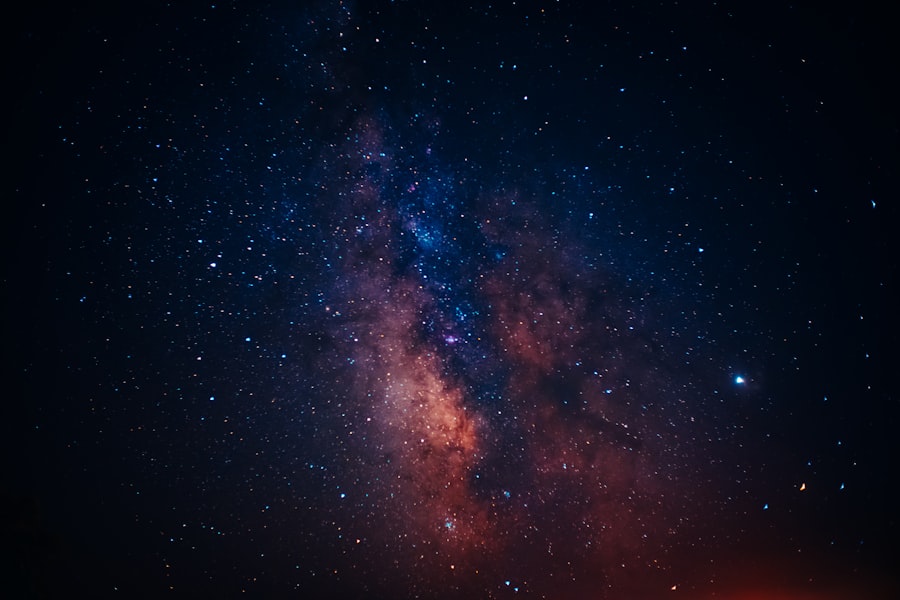
While simply capturing light provides an image, understanding the nature of that light is where spectroscopy comes in. Spectroscopy is the science of analyzing light based on its wavelength. When light from a celestial object passes through a prism or a diffraction grating, it separates into its constituent wavelengths, much like a rainbow. The resulting pattern of bright and dark lines, known as a spectrum, is a unique fingerprint of the object’s composition, temperature, and physical conditions. This is where the assignment of scientifically meaningful colors truly begins.
Emission and Absorption Lines: Cosmic Fingerprints
Every element in the universe emits and absorbs light at specific, characteristic wavelengths. When a gas is heated, its atoms become excited, and their electrons jump to higher energy levels. As these electrons fall back to their lower energy states, they emit photons of specific wavelengths, creating bright “emission lines” in the spectrum. Conversely, when light from a hot source passes through a cooler gas, the atoms in the cooler gas absorb photons at their characteristic wavelengths, creating dark “absorption lines” in the spectrum.
Identifying Elements in Distant Stars
By comparing the observed spectral lines of a celestial object to known spectral lines of elements on Earth, astronomers can determine which elements are present in that object. For example, the presence of certain patterns of red, green, and blue lines can indicate the presence of hydrogen, helium, or oxygen.
Temperature and Color: A Fundamental Relationship
The temperature of a celestial object is directly related to the peak wavelength of the light it emits, a principle described by Wien’s Displacement Law. Hotter objects emit light that peaks at shorter, bluer wavelengths, while cooler objects emit light that peaks at longer, redder wavelengths. This relationship is fundamental to assigning colors that represent temperature.
Blackbody Radiation: The Ideal Emitter
Many celestial objects, like stars, approximate “blackbodies,” which emit a continuous spectrum of light. The shape of this spectrum is determined solely by the object’s temperature. A hotter blackbody will appear bluer, while a cooler blackbody will appear redder.
Translating Wavelengths to Visual Colors: The Art and Science of False Coloring
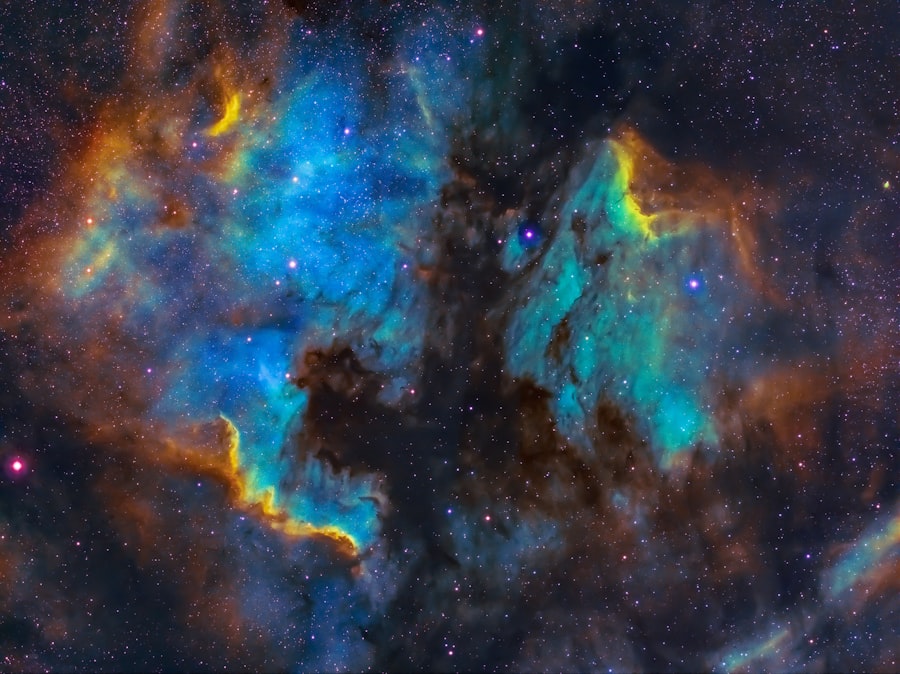
Once astronomers have collected data across various wavelengths and analyzed spectral information, they face the crucial step of translating this scientific data into images that humans can interpret visually. This is where the concept of “false coloring” or “pseudocoloring” becomes essential. Since much of the universe’s emission is invisible to our eyes, astronomers assign artificial colors to different wavelengths or spectral features to highlight specific scientific information.
The Visible Light Analogy: Natural Colors
In some cases, when observing in visible light, astronomers can assign colors that closely resemble what our eyes would perceive if they were sensitive enough. For example, a very hot star might appear bluish-white, while a cooler star might appear reddish. However, this is a simplification, as the full spectrum of visible light emitted by a star is much richer than what we can distinguish as distinct colors.
When What We See is (Almost) What We Get
For objects emitting strongly in visible light, like bright nebulae or galaxies, astronomers might use filters to capture light in specific visible bands (e.g., red, green, blue) and combine these images to create a “true-color” composite. This aims to represent the object as it might appear if our eyes could perceive its nuances.
False Coloring: Enhancing Scientific Understanding
The true power of assigning space colors lies in false coloring. This technique allows astronomers to represent information that is not visible.
- Mapping Temperature: Astronomers might assign blue to hotter regions, white to intermediate temperatures, and red to cooler regions. This allows for a quick visual assessment of temperature variations within an object.
- Highlighting Composition: Different elements or molecules can be assigned distinct colors. For instance, areas rich in hydrogen might be colored red, oxygen green, and sulfur blue, a common scheme used for nebulae.
- Revealing Invisible Phenomena: Objects emitting primarily in infrared or X-rays are invisible in visible light. False coloring allows these emissions to be visualized, revealing structures and processes hidden from optical observation. For example, infrared images showing warm dust clouds might be rendered in reds and oranges.
The Importance of Context and Legend
It is crucial that astronomical images using false colors come with a legend or explanation. This clarifies what each color represents, preventing misinterpretation. Without this context, a beautiful cosmic image could be misleading.
In the fascinating world of astronomy, scientists often employ advanced techniques to assign colors to space images, transforming raw data into visually stunning representations of celestial phenomena. This process not only enhances our understanding of the universe but also captivates the imagination of the public. For a deeper insight into the methods and technologies behind these vibrant images, you can explore a related article on this topic at Freaky Science. By utilizing various wavelengths of light, researchers can reveal hidden details about stars, galaxies, and other cosmic entities, making the vastness of space more accessible to everyone.
Case Studies: Decoding Cosmic Colors in Action
| Aspect | Details |
|---|---|
| Process | Scientists assign colors to space images using specialized software and techniques. |
| Reason | Color assignment helps to highlight different elements in the images, such as gases, dust, and stars. |
| Tools | Scientists use tools like Photoshop, Lightroom, and specialized astronomical image processing software. |
| Accuracy | Color assignment is done carefully to ensure that the final image accurately represents the astronomical object or phenomenon. |
To illustrate the practical application of assigning space colors, let’s examine a few iconic examples from astronomy. These case studies demonstrate how different wavelengths and spectral features are translated into visually informative images.
The Pillars of Creation: A Nebula’s Secrets Revealed
The iconic “Pillars of Creation” image, taken by the Hubble Space Telescope, showcases a star-forming region within the Eagle Nebula. While the Hubble image captures visible light, it utilizes false coloring to emphasize the complex interplay of gas and dust.
Visible Light and Infrared Insights
The initial Hubble images in visible light might highlight the glowing gases and the dense structures of the pillars. However, to truly understand the star formation process, astronomers turn to infrared observations. Infrared light can penetrate the dense dust clouds that obscure the nascent stars within the pillars. By assigning colors to these infrared wavelengths, scientists can visualize the warm dust and the young, embedded stars, revealing the ongoing process of stellar birth. Red hues might represent cooler dust, while bluer colors could indicate hotter regions or newly formed stars.
Galaxy Evolution: Colors as Clues to Stellar Populations
The color of a galaxy provides a fundamental clue to the types of stars it contains and its overall evolutionary stage.
Blue Galaxies: Young and Active
Galaxies that appear predominantly blue are typically young and actively forming stars. These galaxies are rich in hot, young, blue giant stars. This blueness is a direct representation of the emission from these massive, short-lived stars.
Red Galaxies: Old and Quiescent
Conversely, galaxies that appear redder are generally older and have ceased or significantly slowed their star formation. They are dominated by older, cooler, red dwarf stars and red giants. The reddish hue is a direct consequence of the light emitted by these cooler stellar populations.
Beyond Simple Color: Spectral Analysis of Galaxies
While overall color gives a general indication, detailed spectral analysis is needed to understand the precise composition and star formation history of a galaxy. By analyzing the specific wavelengths of light emitted, astronomers can identify different stellar populations and even the presence of active galactic nuclei.
Supernova Remnants: Tracing the Explosive Aftermath
Supernova remnants, the expanding shells of gas and debris left behind after a star explodes, are often vibrant and colorful displays.
Elemental Signatures in Cosmic Explosions
The colors in supernova remnant images often correspond to the emission of specific elements. For instance, the bright red in many images comes from the emission of hydrogen. Oxygen can contribute greenish hues, and sulfur can add reddish-orange tones.
X-ray Emissions and Shockwaves
X-ray observations of supernova remnants reveal extremely hot gas and powerful shockwaves. These invisible X-rays are false-colored, often in blues or purples, to highlight the energetic processes occurring within the remnant, providing insights into the physics of stellar explosions.
The Future of Space Color: Advancing Our Cosmic Understanding
As astronomical instruments become more powerful and sensitive, and as our understanding of physics deepens, the way we assign and interpret space colors will continue to evolve. The pursuit of accurate and informative color representations is not merely an aesthetic exercise but a vital component of scientific discovery, pushing the boundaries of our comprehension of the cosmos.
Higher Resolution and Wider Spectral Coverage
Future telescopes will offer even higher spatial resolution, allowing us to discern finer details within celestial objects and assign colors to smaller, more localized phenomena. Simultaneously, enhanced spectral coverage, extending further into the ultraviolet and gamma-ray parts of the spectrum, will unlock new avenues for understanding energetic cosmic events and exotic matter.
Multi-Wavelength Astronomy: A Holistic View
The increasing emphasis on multi-wavelength astronomy—combining data from telescopes operating across the entire electromagnetic spectrum—is revolutionizing our understanding. By overlaying and analyzing images from different wavelength regimes, each assigned its own informative color scheme, astronomers can build a more complete and nuanced picture of celestial objects and phenomena.
Machine Learning and Artificial Intelligence
The sheer volume of data generated by modern telescopes is immense. Machine learning and artificial intelligence are increasingly being employed to assist in the analysis of this data, including the automated assignment and optimization of false-color schemes. These algorithms can help identify subtle spectral features and optimize color palettes for maximum scientific insight.
Unveiling the Universe’s Hidden Colors
Ultimately, the assignment of space colors is an ongoing process of scientific exploration. It’s a testament to human ingenuity, a constant effort to translate the invisible into the visible, to find patterns in the cosmic chaos, and to decode the universe one wavelength, one spectral line, and one scientifically meaningful color at a time. These assigned colors are not just pretty pictures; they are the visual language of discovery, a testament to our enduring quest to understand our place in the vast and wondrous cosmos.

The Space Photos Are Real—But Your Eyes Would See This
FAQs
1. How do scientists assign colors to space images?
Scientists assign colors to space images using a process called “false color imaging.” This involves assigning colors to different wavelengths of light that are not visible to the human eye, such as infrared or ultraviolet.
2. What is the purpose of assigning colors to space images?
Assigning colors to space images helps scientists and researchers to visualize and interpret data collected from telescopes and other space observation instruments. It allows them to identify different elements, gases, and phenomena in space.
3. What factors determine the colors assigned to space images?
The colors assigned to space images are determined by the specific wavelengths of light detected by the instruments used to capture the images. Different wavelengths correspond to different colors, and scientists use this information to create false color images.
4. How do scientists ensure accuracy when assigning colors to space images?
Scientists ensure accuracy when assigning colors to space images by using calibration techniques and referencing known standards. They also collaborate with experts in the field to validate their color assignments and interpretations.
5. Can the colors in space images be altered or enhanced?
Yes, the colors in space images can be altered or enhanced to highlight specific features or phenomena. However, scientists are careful to clearly label and disclose any alterations made to the original images for transparency and accuracy.