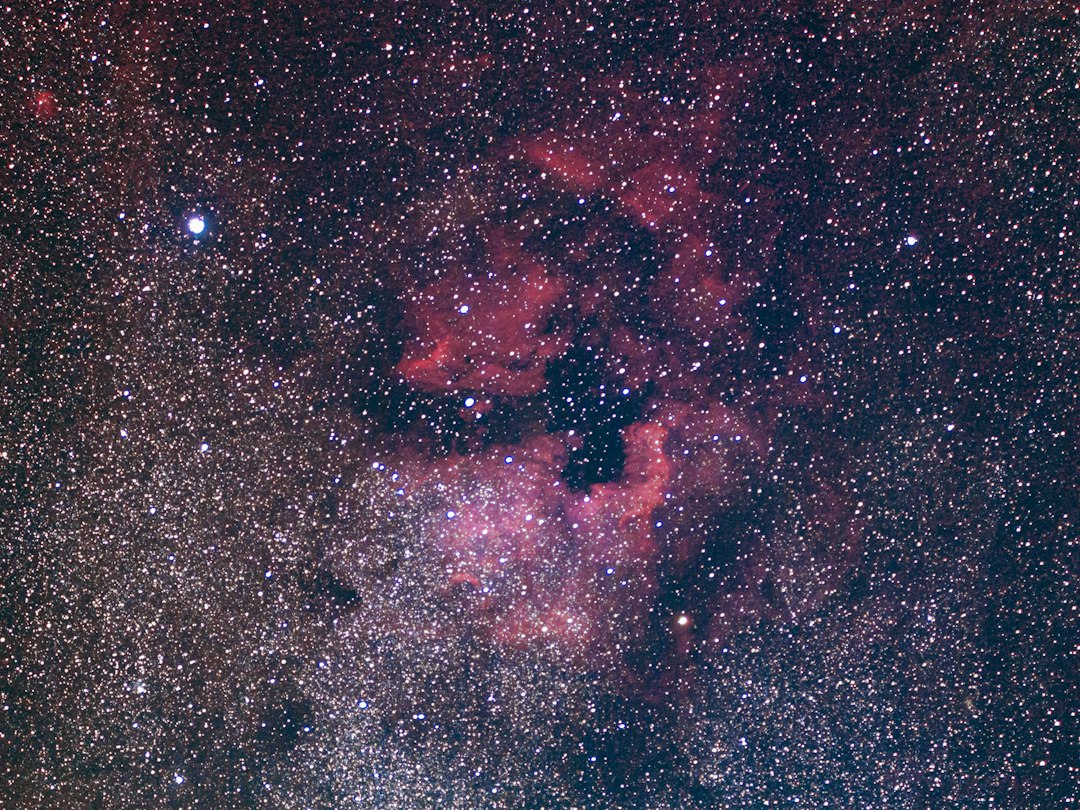
Unlocking the Universe: Understanding Astronomical Filters
The night sky, a vast canvas dotted with celestial wonders, has captivated humanity for millennia. From the earliest stargazers charting constellations to modern astronomers peering into the deepest reaches of space, the quest to understand our universe has been a relentless pursuit. While telescopes gather light, it is often the humble astronomical filter that acts as the key, unlocking specific secrets within that light and revealing details invisible to the naked eye. These specialized devices are not mere accessories; they are fundamental tools that dramatically enhance our ability to study the cosmos, allowing us to dissect the light from distant objects and decipher the physical processes that govern them. Understanding astronomical filters is therefore crucial for anyone seeking to delve deeper into the intricacies of astrophysics, from the amateur enthusiast to the professional researcher. This article will explore the fundamental principles behind astronomical filters, their various types, and the critical role they play in unlocking the universe’s secrets.
Light, as we commonly perceive it, is a single entity. However, in the realm of astronomy, light is a complex phenomenon composed of a spectrum of electromagnetic radiation, each with its own wavelength and energy. The visible spectrum, the portion of this radiation detectable by the human eye, is but a small sliver of the entire electromagnetic spectrum, which also includes radio waves, microwaves, infrared radiation, ultraviolet radiation, X-rays, and gamma rays. Each celestial object emits or reflects light across various parts of this spectrum, carrying with it information about its composition, temperature, motion, and environment.
Astronomical filters are designed to selectively transmit or block specific wavelengths of light. They achieve this by exploiting the physical properties of materials and their interaction with photons. The fundamental principle behind most astronomical filters is interference or absorption.
Wavelengths and the Electromagnetic Spectrum
Before delving into filters, it’s essential to grasp the concept of the electromagnetic spectrum. This spectrum is ordered by wavelength, with longer wavelengths at one end (radio waves) and shorter wavelengths at the other (gamma rays). Visible light sits in the middle, with red light having the longest visible wavelength and violet light the shortest. Different astronomical phenomena emit or absorb light preferentially at certain wavelengths, making them detectable only when observing in those specific regions of the spectrum. For instance, the intense heat of a star might manifest strongly in visible and ultraviolet light, while the faint glow of interstellar gas clouds might be dominated by emission in specific infrared or visible lines.
Interference Filters: The Power of Thin Films
Interference filters, often referred to as bandpass filters, are the workhorses of astronomical observation. Their operation relies on the principle of constructive and destructive interference of light waves. These filters are typically constructed from multiple thin layers of dielectric materials with different refractive indices, deposited on a transparent substrate. The thickness and arrangement of these layers are meticulously controlled to create specific optical path differences.
When light strikes the filter, it is reflected and transmitted at each interface between layers. The light that is transmitted through all the layers will have undergone multiple reflections and refractions. At specific wavelengths, these multiple paths will cause the light waves to be in phase, leading to constructive interference and strong transmission of that particular wavelength. Conversely, at other wavelengths, the waves will be out of phase, resulting in destructive interference and near-complete blockage of those wavelengths.
Constructive and Destructive Interference in Action
The precise thickness of each layer in an interference filter dictates the wavelengths that will interfere constructively. By carefully designing the stack of layers, astronomers can create filters that transmit a narrow band of wavelengths (narrowband filters) or a broader range (broadband filters). The reflectivity of the filter surfaces also plays a role, contributing to the overall transmission profile.
Refractive Index and Layer Thickness: The Precision Dance
The refractive index of a material describes how light propagates through it. By alternating materials with high and low refractive indices, and by controlling the thickness of each layer to be a fraction of the desired wavelength, engineers can precisely tune the interference effects. This precision is paramount; even minute deviations in layer thickness can shift the transmission band, rendering the filter unsuitable for its intended purpose.
Absorption Filters: Simpler but Effective
Absorption filters operate on a more straightforward principle: they absorb light of specific wavelengths. These filters are often made from colored glass or plastics that contain specific chemical compounds which absorb photons within a defined range of wavelengths. For example, a red filter will absorb most of the blue and green light, allowing predominantly red light to pass through.
Chemical Compounds and Their Light-Absorbing Properties
The specific chemical composition of the glass or plastic determines the wavelengths that will be absorbed. Different elements and compounds have unique electronic structures that interact with photons of particular energies (and thus wavelengths). By carefully selecting these materials, manufacturers can create filters that block unwanted light while transmitting the desired wavelengths.
Limitations of Absorption Filters
While simpler to manufacture, absorption filters often have broader transmission bands compared to interference filters and can introduce their own subtle spectral features. They are generally less efficient in terms of transmission of the desired wavelengths and can be susceptible to degradation over time, particularly when exposed to intense light. Nevertheless, they remain valuable tools for certain applications, especially in less demanding observational scenarios or when cost is a significant factor.
Astronomical filters play a crucial role in enhancing the visibility of celestial objects by selectively allowing certain wavelengths of light to pass through while blocking others. This process helps astronomers and astrophotographers to capture clearer images and gather more detailed information about distant stars, galaxies, and nebulae. For a deeper understanding of how these filters function and their applications in astronomy, you can read more in this related article at Freaky Science.
Types of Astronomical Filters and Their Applications
The diverse nature of celestial objects and the phenomena they exhibit necessitates a wide array of astronomical filters. Each type is designed to isolate specific spectral features or suppress unwanted light, enabling astronomers to focus on particular aspects of their targets.
Broadband Filters: Capturing General Light
Broadband filters, as their name suggests, allow a relatively wide range of wavelengths to pass through. These are often referred to as “color filters” in amateur astronomy. They are typically used for general imaging and visual observation, providing a broad overview of an object’s appearance.
RGB Filters: Mimicking Human Vision
Red, Green, and Blue (RGB) filters are the most common type of broadband filters. By capturing images through each of these filters separately and then combining them in post-processing, astronomers can create full-color images of celestial objects that closely resemble how they might appear to the human eye if our vision were more sensitive. This allows for the aesthetically pleasing representation of nebulae, galaxies, and star clusters, while also revealing subtle color variations that hint at the underlying physics.
Luminescence Filters: Focusing on Brightness
While not strictly broadband in the same sense as RGB, some filters are designed to transmit a significant portion of the visible spectrum, primarily to capture brightness or luminance information. These filters are often used to create detailed grayscale images that can then be combined with color images to enhance sharpness and detail.
Narrowband Filters: Isolating Emission Lines
Narrowband filters are perhaps the most powerful tools for studying faint nebulae and other objects that emit light at specific, discrete wavelengths. These filters have very narrow transmission bands, typically only a few nanometers wide, allowing them to isolate the light emitted by specific atoms or ions within a celestial object.
Hydrogen-Alpha (H-alpha) Filters: The Red Glow of Star Formation
The most widely used narrowband filter is the Hydrogen-alpha (H-alpha) filter. Hydrogen, the most abundant element in the universe, emits light strongly at a wavelength of 656.3 nanometers when its electron transitions from a higher energy state to a lower one. This emission is a hallmark of ionized hydrogen, which is abundant in star-forming regions, planetary nebulae, and supernova remnants. H-alpha filters allow astronomers to capture the intricate structures and dynamics of these regions, even in the presence of significant light pollution, as they effectively block out all other wavelengths.
Oxygen-III (OIII) Filters: The Greenish Hues of Nebulae
Oxygen-III (OIII) filters isolate the emission from doubly ionized oxygen, which occurs at wavelengths of 495.9 nm and 500.7 nm. These emissions are often seen as greenish or bluish-green in nebulae and are characteristic of older, more evolved planetary nebulae and some supernova remnants. OIII filters are invaluable for revealing the delicate structures and shells within these objects that might otherwise be obscured by brighter, broadband light.
Sulfur-II (S-II) Filters: Unveiling the Reddish Tones
Sulfur-II (S-II) filters target the emission from singly ionized sulfur at a wavelength of 672.4 nm. This emission is typically reddish in color and is often found in regions of active star formation alongside H-alpha emissions. By combining images taken with H-alpha, OIII, and S-II filters, astronomers can create stunning false-color images (often referred to as the “Hubble Palette”) that reveal the distribution of different ionized elements and provide insights into the physical conditions within nebulae.
Specialized Filters: Beyond the Common
Beyond broadband and narrowband filters, a variety of specialized filters cater to specific astronomical needs, addressing challenges like atmospheric interference, unwanted light sources, and the study of particular spectral features.
Light Pollution Filters: Cutting Through the Haze
Modern cities are awash in artificial light, which scatters off the atmosphere and severely degrades the quality of astronomical observations. Light pollution filters are designed to block the specific wavelengths of light emitted by common artificial sources, such as mercury-vapor and sodium-vapor streetlights, while allowing the wavelengths of astronomical interest to pass through. These filters are a game-changer for astronomers living in or near urban areas, enabling them to capture images that would otherwise be impossible.
UHC (Ultra High Contrast) Filters: A Compromise for Nebulae
Ultra High Contrast (UHC) filters represent a compromise between broadband and narrowband filters. They typically transmit light from the H-alpha and OIII emission lines, offering a significant improvement in contrast for nebulae compared to broadband filters, but with a wider passband than dedicated H-alpha or OIII filters. This makes them a versatile choice for observing a range of nebulae with less demanding equipment.
Narrowband Planetary Filters: Studying Planetary Atmospheres
While often associated with deep-sky objects, narrowband filters also find application in planetary astronomy. By isolating specific emission lines in the atmospheres of planets, astronomers can study their composition, temperature, and dynamics. For example, filters targeting methane absorption bands can reveal features in the atmospheres of outer planets.
Polarization Filters: Unraveling Light’s Orientation
Polarization filters are used to measure the polarization of light. Light becomes polarized when it is reflected off a surface or scattered by particles. By analyzing the degree and angle of polarization, astronomers can deduce information about the composition and structure of the reflecting or scattering material. This is particularly useful for studying the dust in nebulae and the atmospheres of planets.
Calibration Filters: Ensuring Data Accuracy
In the realm of professional astronomy, calibration filters are essential for ensuring the accuracy and reliability of scientific data. These filters are used to uniformly attenuate light from a known source, allowing astronomers to measure the response of their instruments and correct for any variations. This process is critical for comparing observations taken at different times or with different instruments.
The Importance of Filters in Different Observational Contexts
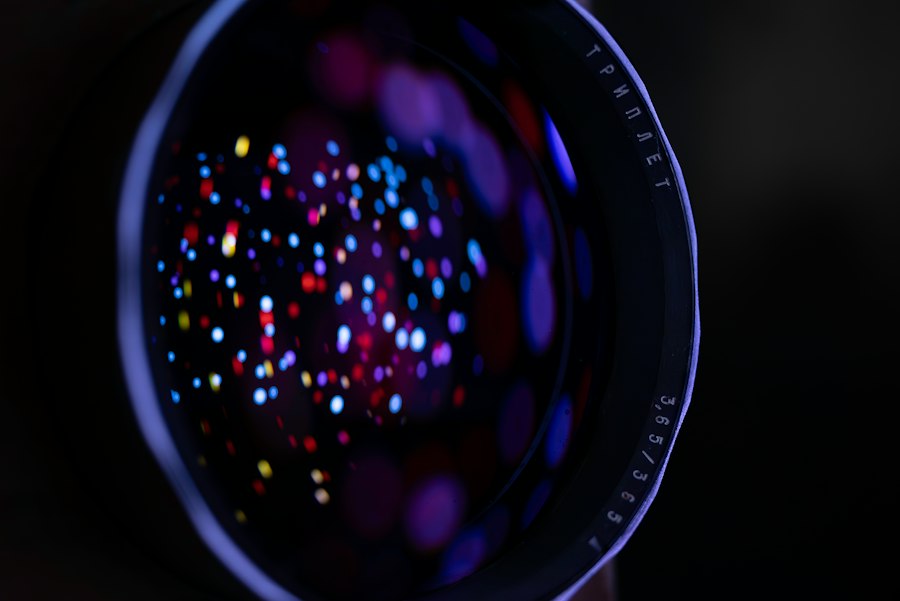
The impact of astronomical filters is profound and spans across various observational contexts, from amateur stargazing to cutting-edge astrophysical research. Their ability to isolate specific wavelengths of light is fundamental to extracting meaningful data from the cosmos.
Amateur Astronomy: Enhancing Visual and Photographic Experiences
For amateur astronomers, filters are transformative tools. Visually, they can bring faint nebulae and galaxies into better view, revealing details that are imperceptible without them. In astrophotography, filters are indispensable. Light pollution filters allow for the capture of deep-sky objects from suburban skies, while narrowband filters enable the creation of stunning, high-contrast images of nebulae that showcase their intricate structures and colors. The ability to image in specific emission lines also opens up new avenues for exploration and artistic expression.
Bringing Faint Objects to Life
Without filters, many faint nebulae appear as dim, amorphous smudges, if visible at all. H-alpha and OIII filters can dramatically increase their visibility and reveal intricate filamentary structures, gas streams, and star-forming cores that would otherwise remain hidden. This allows amateurs to engage with the universe on a deeper level, appreciating the complex processes at play in distant celestial nurseries.
Astrophotography Breakthroughs
The advent of affordable, high-quality narrowband filters has revolutionized amateur astrophotography. Enthusiasts can now capture images that rival those produced by professional observatories decades ago. The ability to isolate specific elements allows for the creation of false-color images that highlight different chemical compositions and physical conditions within nebulae, leading to scientifically informative and visually spectacular results.
Professional Astronomy: Unlocking Astrophysical Secrets
In professional astronomy, filters are not merely enhancements; they are essential scientific instruments. They are used in conjunction with sophisticated spectrographs and cameras on large telescopes to gather precise data about celestial objects.
Studying Stellar Nurseries and Star Formation
Narrowband filters, particularly H-alpha and S-II, are critical for studying the processes of star formation. By mapping the distribution of ionized hydrogen and sulfur in nebulae, astronomers can identify active star-forming regions, measure the temperature and density of the gas, and understand the feedback mechanisms from newly born stars.
Analyzing Galactic Evolution and Interstellar Medium
Filters are used to study the composition and dynamics of the interstellar medium (ISM) – the gas and dust between stars. By observing the emission and absorption lines of various elements, astronomers can trace the chemical enrichment of galaxies over time, understand how gas is recycled, and investigate the processes that trigger or inhibit star formation.
Investigating Exoplanet Atmospheres and Dynamics
While often associated with deep-sky objects, filters are also crucial for studying exoplanets. By observing the light that passes through or is reflected by an exoplanet’s atmosphere, astronomers can use filters to isolate specific spectral signatures of molecules, providing insights into the atmospheric composition, temperature, and weather patterns of these distant worlds.
Understanding Supernova Remnants and Cosmic Phenomena
Filters play a vital role in studying the aftermath of stellar explosions – supernova remnants. By isolating the emission lines of different elements, astronomers can map the expanding shells of gas, determine the composition of the ejected material, and gain a better understanding of the energetic processes that occur during and after a supernova.
The Technicalities of Filter Performance and Selection
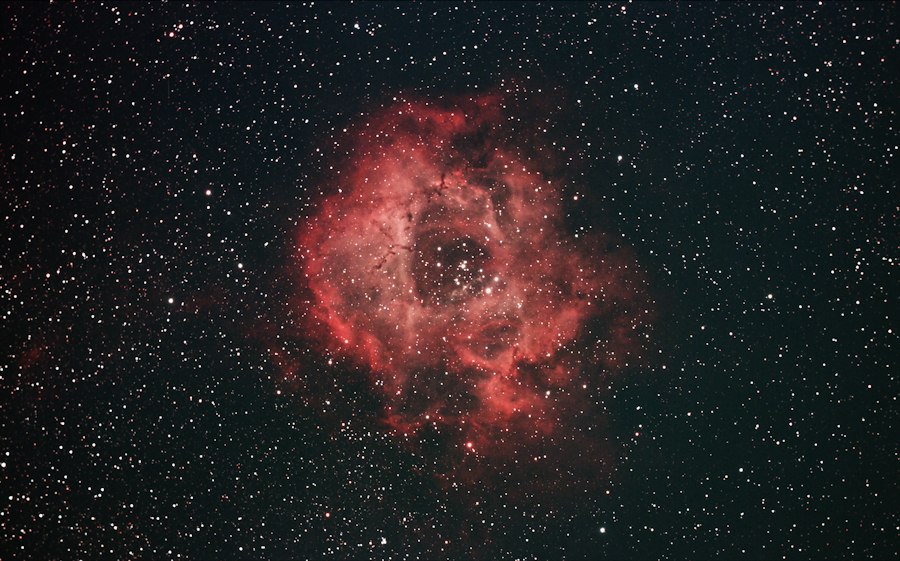
The effective use of astronomical filters requires an understanding of their technical specifications and how these relate to observational goals. Selecting the right filter for a specific task is crucial for achieving optimal results.
Transmission Curve: The Filter’s Spectral Fingerprint
Every filter has a unique transmission curve, which graphically represents its transmission efficiency across different wavelengths. This curve shows the peak transmission wavelength and the width of the transmission band (often measured as Full Width at Half Maximum or FWHM). Understanding the transmission curve is essential for knowing exactly which wavelengths a filter will pass and how efficiently.
Peak Transmission and Bandwidth (FWHM)
The peak transmission indicates the maximum percentage of light that the filter will allow to pass through at its designated wavelength. The bandwidth, or FWHM, quantifies the width of the transmission band. Narrowband filters have very small FWHM values (e.g., 3nm, 5nm), indicating a highly selective transmission. Broadband filters have much larger FWHM values.
Out-of-Band Rejection: Blocking Unwanted Light
Beyond the desired transmission band, filters must effectively reject light at all other wavelengths. This is known as out-of-band rejection. Poor out-of-band rejection can allow unwanted light sources, such as moonlight or light pollution, to contaminate the data, negating the filter’s intended purpose.
Coating Technologies: Enhancing Durability and Performance
The performance and longevity of astronomical filters are heavily influenced by the quality of their coatings. Advanced coating technologies are employed to optimize transmission, reduce reflections, and enhance durability.
Anti-Reflection Coatings: Minimizing Light Loss
Multiple anti-reflection (AR) coatings are applied to the surfaces of filters to minimize light loss due to reflection. This is particularly important for interference filters, where multiple reflections within the layers can lead to significant signal reduction. High-quality AR coatings ensure that the maximum amount of desired light reaches the sensor.
Hard Coatings: Protecting Against Damage
The delicate optical surfaces of filters are susceptible to scratches and other damage. Hard coatings, often made of materials like silicon dioxide or magnesium fluoride, are applied to protect the filter surface, ensuring its longevity and consistent performance over time.
Filter Materials and Substrates: The Foundation of Performance
The choice of materials used in filter construction is critical to their performance and application. The substrate, the transparent material on which the filter layers are deposited, and the materials used for the coatings themselves, all play a significant role.
Glass vs. Plastic Substrates
Glass substrates are generally preferred for high-quality astronomical filters due to their optical clarity, stability, and durability. However, for some less demanding applications or cost-sensitive products, plastic substrates may be used. The optical properties of the substrate can influence the overall transmission and spectral characteristics of the filter.
Dielectric vs. Metallic Coatings
Interference filters primarily utilize dielectric coatings, which are non-metallic materials. These coatings offer excellent control over transmission and reflection properties. Metallic coatings, while sometimes used, are generally less favored for astronomical filters due to their inherent absorption and potential for spectral distortion.
Astronomical filters play a crucial role in enhancing our observations of celestial objects by selectively allowing certain wavelengths of light to pass through while blocking others. This process not only improves contrast but also helps in reducing the effects of light pollution. For a deeper understanding of how these filters function and their applications in astronomy, you can explore a related article that delves into the intricacies of this fascinating topic. Check it out here to learn more about the science behind astronomical filters and their significance in modern observational techniques.
The Future of Astronomical Filters: Innovation and Discovery
| Filter Type | Function |
|---|---|
| Color Filters | Allow specific colors of light to pass through while blocking others |
| Narrowband Filters | Isolate specific emission lines from nebulae and other astronomical objects |
| Neutral Density Filters | Reduce the overall amount of light entering the telescope without affecting color |
| Polarizing Filters | Reduce glare and enhance contrast on the surface of the Moon and planets |
The field of astronomical filter technology is constantly evolving, driven by the relentless pursuit of deeper insights into the universe. Innovations in materials science, manufacturing techniques, and detector technology are paving the way for even more sophisticated and powerful filtering capabilities.
Multi-Bandpass Filters and Tunable Filters
The development of multi-bandpass filters, which can simultaneously transmit multiple specific wavelengths, and tunable filters, whose transmission characteristics can be adjusted in real-time, promises to revolutionize observational strategies. These technologies will allow astronomers to gather more information from a single observation, streamlining data acquisition and enabling more complex astrophysical investigations.
Advanced Detector Integration: A Symbiotic Relationship
The integration of advanced filters directly with highly sensitive astronomical detectors is another exciting frontier. This could lead to more compact and efficient observational systems, reducing light loss and improving signal-to-noise ratios. Imagine a detector where specific spectral regions are already isolated by integrated filtering elements, offering immediate insights without the need for separate filter wheels.
Space-Based Astronomy and Specialized Filters
As space-based observatories continue to push the boundaries of our cosmic understanding, specialized filters designed for the unique conditions of space – vacuum, radiation, and extreme temperatures – will become increasingly important. These filters will need to withstand harsh environments while maintaining their precise optical performance, enabling unprecedented views of distant galaxies, exoplanets, and the early universe. The development of filters for specific wavelength ranges, such as far-infrared or ultraviolet, will be crucial for unlocking the secrets of cosmic evolution.
The Ongoing Quest for Deeper Understanding
Astronomical filters, from the simplest colored glass to the most advanced nanostructured dielectric layers, are fundamental tools that empower us to unravel the mysteries of the cosmos. By allowing us to dissect the light from celestial objects, they reveal hidden details, identify chemical compositions, and illuminate the physical processes that shape our universe. As technology advances, so too will the capabilities of astronomical filters, promising to unlock even more profound secrets from the vast expanse of space, continuing humanity’s enduring quest to understand our place within it.

The Space Photos Are Real—But Your Eyes Would See This
FAQs
What are astronomical filters?
Astronomical filters are specialized optical filters used in astronomy to enhance the visibility of specific wavelengths of light or to block out unwanted light from celestial objects.
How do astronomical filters work?
Astronomical filters work by selectively transmitting or blocking certain wavelengths of light. They are designed to enhance the contrast and visibility of specific features on celestial objects, such as planets, stars, and nebulae.
What are the different types of astronomical filters?
There are several types of astronomical filters, including color filters, narrowband filters, broadband filters, and polarizing filters. Each type is designed to serve a specific purpose, such as enhancing the visibility of certain features or reducing the effects of light pollution.
What are the benefits of using astronomical filters?
Astronomical filters can improve the visibility and clarity of celestial objects by reducing the effects of atmospheric distortion, light pollution, and unwanted glare. They can also enhance the contrast and detail of specific features on astronomical targets.
How are astronomical filters used in telescopes and cameras?
Astronomical filters are typically mounted on the eyepieces of telescopes or on the lenses of cameras to selectively filter the light entering the optical system. They can be easily swapped out to accommodate different viewing conditions and astronomical targets.