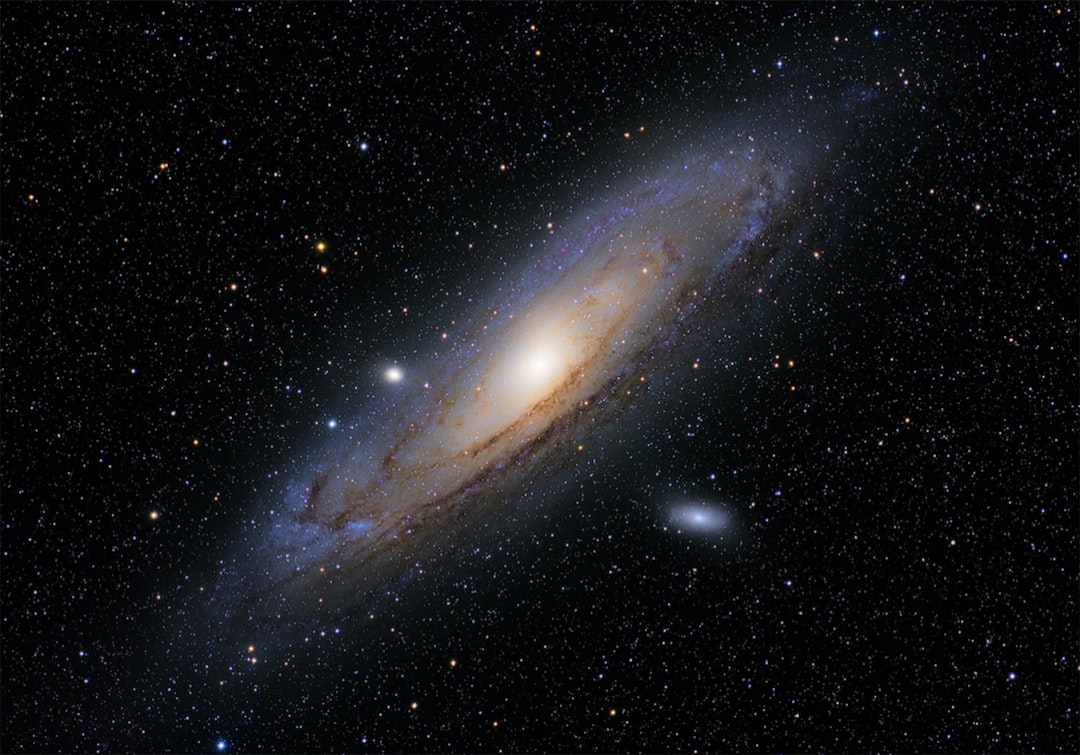
The universe, a canvas of cosmic wonders, often presents itself to us through captivating images. While visible light telescopes capture the familiar hues of stars and nebulae, a deeper, more energetic realm exists, invisible to our naked eyes. This is the domain of X-rays, and the images produced by X-ray observatories are strikingly colorful, far more so than we might initially expect. These vibrant displays are not merely artistic embellishments; they are essential tools that unlock profound secrets about the cosmos, allowing scientists to “see” the invisible and understand phenomena that would otherwise remain hidden. The vibrant colors in X-ray space images are not an inherent property of the X-rays themselves but are assigned by scientists to represent different energy levels and the composition of the celestial objects they observe. This color coding is a crucial interpretive layer, transforming raw data into a narrative of cosmic processes.
What are X-rays?
X-rays are a form of electromagnetic radiation, like visible light, radio waves, and gamma rays, but with significantly higher energy and shorter wavelengths. They fall between ultraviolet light and gamma rays on the electromagnetic spectrum. The energy of electromagnetic radiation is directly proportional to its frequency and inversely proportional to its wavelength. X-rays possess energies typically ranging from 0.1 to 100 kiloelectronvolts (keV). This high energy allows X-rays to penetrate matter that is opaque to visible light, such as the outer layers of stars, interstellar dust clouds, and even the human body, making them invaluable in medical imaging.
Cosmic Sources of X-rays
The universe is a prolific producer of X-rays. These high-energy photons are generated in extreme environments and by energetic processes. Some of the most significant sources include:
Stellar Phenomena
- Supernova Remnants: When massive stars exhaust their nuclear fuel, they explode in spectacular events called supernovae. The shockwaves from these explosions heat surrounding gas to millions of degrees Celsius, accelerating particles to near-light speeds and producing intense X-ray emissions. These remnants, like the Crab Nebula, are some of the brightest X-ray sources in the sky.
- White Dwarfs and Neutron Stars: These are the dense remnants of stars. When matter accretes onto their surfaces, either from a companion star or within binary systems, it is compressed and heated, leading to powerful X-ray bursts. The accretion process onto neutron stars, in particular, can generate some of the most energetic X-rays observed.
- Stellar Flares: Even relatively ordinary stars can experience powerful flares, releasing bursts of energy that include X-ray emissions. These flares are akin to solar flares on our own Sun, but can be much more intense on other stars.
Galactic and Extragalactic Phenomena
- Black Holes: Both stellar-mass black holes and the supermassive black holes at the centers of galaxies are voracious consumers of matter. As gas and dust spiral into a black hole, they form an accretion disk. Friction and gravitational forces within this disk heat the material to incredibly high temperatures, making it a potent source of X-rays. These X-rays are often emitted just before the material crosses the event horizon.
- Active Galactic Nuclei (AGNs): These are extremely luminous regions at the centers of some galaxies, powered by accreting supermassive black holes. The intense gravitational pull and the resulting accretion disk produce vast amounts of energy across the electromagnetic spectrum, including powerful X-ray emissions.
- Galaxy Clusters: The largest known structures in the universe, galaxy clusters, are composed of hundreds or even thousands of galaxies bound together by gravity. The vast amounts of hot gas (plasma) that permeate the space between these galaxies are heated to tens of millions of degrees Celsius by the gravitational interactions and shocks, making galaxy clusters some of the brightest and largest X-ray emitting objects in the universe.
The Challenge of Observing X-rays
Observing X-rays from space is a significant engineering feat. Earth’s atmosphere is a formidable barrier, absorbing almost all incoming X-rays. To study these cosmic X-ray sources, specialized telescopes must be placed in orbit above the atmosphere. These telescopes utilize precisely engineered mirrors and detectors designed to capture and analyze high-energy photons. The data collected by these instruments are then translated into visual representations that scientists can interpret.
X-ray space images often display a range of colors that can be misleading to the untrained eye, as these colors do not represent the actual hues of the objects being observed. Instead, they are the result of data processing techniques that translate X-ray data into a visual format that is easier for humans to interpret. For a deeper understanding of this fascinating topic, you can explore the article on the science behind these colorful images at Freaky Science.
The Art and Science of False-Color Imaging
Why Not Just Show Raw Data?
The raw data from an X-ray telescope is not an image in the traditional sense. It is a collection of detected photon counts, each with an associated energy and arrival time. To make this data comprehensible and to highlight specific scientific information, scientists employ false-color imaging. This process involves assigning colors to different properties of the X-ray emissions, transforming abstract numerical data into a visually intuitive representation.
Mapping Energy to Color
The most common way colors are assigned in X-ray astronomy is by mapping different energy ranges of X-rays to different colors. This is analogous to how we perceive visible light, where different wavelengths correspond to different colors (red for longer, lower-energy wavelengths, and blue for shorter, higher-energy wavelengths).
Different Energy Bands, Different Hues
- Low-Energy X-rays (Soft X-rays): These are typically assigned warmer colors, such as red and orange. They often originate from cooler, less energetic phenomena.
- Medium-Energy X-rays: These might be represented by green or yellow.
- High-Energy X-rays (Hard X-rays): These are usually depicted in cooler colors like blue and violet. They indicate more energetic and extreme cosmic events.
By using this color scheme, scientists can quickly identify regions within an X-ray image that are emitting X-rays of different energies. For instance, a supernova remnant might show a distinct blue core (high-energy X-rays) surrounded by red and orange outer shells (lower-energy X-rays), suggesting different physical processes at play in different regions.
Beyond Energy: Mapping Elements and Temperatures
While energy is the primary driver for color assignment, scientists can also use color to represent other crucial physical properties derived from the X-ray spectrum. The spectrum of X-rays emitted by an object is not uniform; it contains characteristic lines and continuum emissions that are unique to the elements present and their physical conditions.
Spectral Signatures and Elemental Abundances
- Emission Lines: When atoms are heated to high temperatures, their electrons can be excited to higher energy levels. As these electrons fall back to lower energy levels, they emit photons of specific energies, creating distinct “lines” in the X-ray spectrum. The presence and intensity of these lines can reveal the chemical composition of the emitting gas. For example, strong iron K-alpha lines indicate the presence of hot iron.
- Plasma Temperature: The overall shape of the X-ray spectrum, particularly the distribution of energies and the presence of certain emission lines, is highly dependent on the temperature of the emitting plasma. By analyzing the spectrum, scientists can determine the temperature of the gas, which can range from millions to hundreds of millions of degrees Celsius.
When these spectral properties are analyzed, scientists can assign colors based on the abundance of specific elements or the inferred temperature of the plasma. For example, an image might use one color to highlight regions rich in iron, another for oxygen, and a third for the hottest plasma. This allows for a far more detailed understanding of the physics at play.
Unveiling Cosmic Secrets Through Color
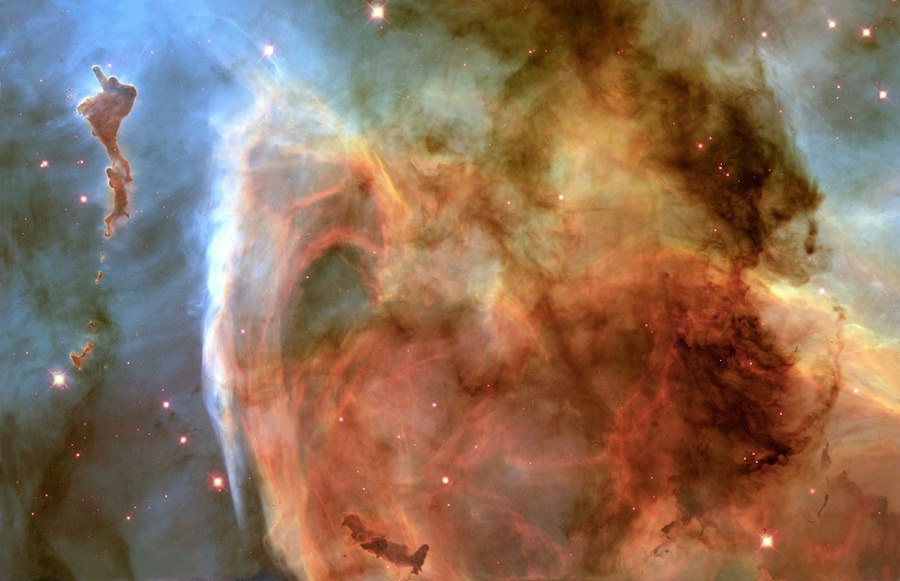
Decoding Supernova Remnants
The colorful X-ray images of supernova remnants are a prime example of how false-color imaging enhances our understanding. By observing the distribution of different energy X-rays and the spectral signatures of elements, scientists can piece together the violent history of a stellar explosion.
The Violent Aftermath of Stellar Death
- Shock Waves and Particle Acceleration: The intricate patterns of color in a supernova remnant image often reveal the path of shock waves propagating through the interstellar medium. High-energy X-rays, depicted in blue, are often found where particles are being accelerated to extreme speeds.
- Elemental Fingerprints: Different colors can highlight the distribution of heavy elements synthesized within the star and ejected during the explosion. Observing the location of elements like iron, oxygen, and silicon can reveal how the star’s internal structure was disrupted and mixed.
- Interactions with the Interstellar Medium: The colors can also show how the expanding remnant is interacting with the surrounding gas and dust, creating shock fronts and compressing material.
Investigating the Heart of Black Holes
Black holes, the enigmatic cosmic objects that warp spacetime, are powerful X-ray emitters. Their accretion disks, where matter spirals in, reach extreme temperatures and release vast amounts of energy. X-ray images are crucial for studying these celestial engines.
Accretion Disks and Relativistic Jets
- Inner and Outer Disk Dynamics: The colors in an X-ray image of an accreting black hole can differentiate between the hotter, inner regions of the accretion disk and the cooler, outer regions. This provides insights into the flow of matter and energy.
- Relativistic Jets: Some black holes launch powerful jets of plasma that travel at nearly the speed of light. X-ray observations, often revealed by specific color signatures, can trace the emission from these jets as they interact with their surroundings.
- Quenching and Outflows: The X-ray emission can also reveal feedback mechanisms where the black hole’s activity influences the surrounding galaxy, potentially “quenching” star formation.
Mapping the Intergalactic Medium in Galaxy Clusters
Galaxy clusters, the largest gravitationally bound structures in the universe, are filled with diffuse, hot gas that emits intensely in X-rays. These observations are vital for understanding the evolution of large-scale cosmic structures.
The Cosmic Web and Dark Matter
- Intracluster Medium (ICM) Properties: The colors in X-ray images of galaxy clusters reveal the temperature and density distribution of the ICM. This hot plasma, often millions of degrees Celsius, is a significant component of the cluster’s mass.
- Merger Events: The shape and structure of the X-ray emission can indicate past or ongoing merger events between galaxy clusters, creating shock waves and turbulence.
- Probing Dark Matter: While X-rays don’t directly reveal dark matter, the distribution of the hot gas, which is primarily influenced by the gravitational pull of the cluster’s total mass (including dark matter), can be used to map the underlying dark matter distribution.
The Technology Behind the Colors

The Role of Space Telescopes
The captivating X-ray images we see are the product of sophisticated space-based observatories. These instruments are designed to detect and analyze high-energy photons, overcoming the limitations of Earth’s atmosphere.
Key X-ray Observatories
- Chandra X-ray Observatory: Launched by NASA, Chandra is renowned for its exceptional spatial resolution, allowing it to capture incredibly detailed X-ray images. Its ability to precisely pinpoint X-ray sources has been instrumental in studying black holes, supernova remnants, and galaxy clusters with unprecedented clarity.
- XMM-Newton (X-ray Multi-Mirror Mission): This European Space Agency (ESA) mission is equipped with a suite of instruments that provide broad spectral coverage and good sensitivity, making it ideal for studying the hot gas in galaxy clusters and the X-ray emission from a wide range of astronomical objects.
- NuSTAR (Nuclear Spectroscopic Telescope Array): NuSTAR focuses on observing the high-energy (hard) X-ray portion of the spectrum, which is crucial for studying the most energetic phenomena, such as the environments around supermassive black holes and the early universe.
- Swift: While Swift is a multi-wavelength observatory, its X-ray telescope is particularly adept at rapidly detecting and observing transient X-ray sources, such as gamma-ray bursts and X-ray binaries, allowing for follow-up observations to understand their immediate after-effects.
Data Processing and Visualization
The journey from raw X-ray data to a vibrant, informative image is a complex process involving specialized software and skilled scientists.
From Pixels to Pictures
- Calibration and Background Subtraction: Raw data from the telescope’s detectors undergoes rigorous calibration to correct for instrumental effects. Background noise from various sources is also meticulously subtracted.
- Spectral Analysis: For each region of the sky observed, the X-ray spectrum is analyzed to determine the energy distribution of photons. This analysis is crucial for inferring temperature, composition, and the presence of specific elements.
- Image Construction: Based on the spectral analysis, different energy bands or spectral features are assigned specific colors. These colored data points are then combined to create the final false-color image. The choice of color palettes is often guided by scientific conventions and the desire to highlight particular features of interest.
X-ray space images often display vibrant colors that can be quite striking, and this phenomenon is explained in detail in a related article. These colors are not representative of the actual colors of celestial objects but are instead a result of the way X-ray data is processed and visualized. By assigning different colors to various energy levels of X-rays, scientists can highlight specific features and phenomena in the universe. For more insights on this topic, you can read the full article here.
Beyond Aesthetics: The Scientific Significance of Color
| Reason | Explanation |
|---|---|
| Energy Levels | X-ray space images are colorized to represent different energy levels of the X-ray photons detected by the telescopes. |
| Enhanced Visualization | Colorization helps to enhance the visualization of different elements and phenomena in the X-ray images, making them easier to interpret for scientists and the public. |
| Composite Images | Colorization is often used to create composite images by combining X-ray data with data from other wavelengths, such as visible light or infrared, to provide a more comprehensive view of celestial objects. |
| Artistic Representation | Colorization can also be used for artistic representation and to convey the beauty and complexity of the universe to the general audience. |
A Universal Language for Cosmic Phenomena
The colors in X-ray images are more than just pretty pictures; they are a critical tool for scientific communication and discovery. They provide an intuitive way to convey complex information about energetic processes that are invisible to our eyes.
Enhancing Accessibility and Understanding
- Facilitating Collaboration: By using standardized color conventions, scientists across different institutions and countries can easily interpret each other’s work, fostering collaboration and accelerating research.
- Educating the Public: False-color X-ray images have become powerful educational tools, capturing the public’s imagination and making the wonders of the universe accessible to a broader audience. They demonstrate that the cosmos is far more dynamic and energetic than what we can see with our visible light telescopes.
- Guiding Further Research: The visual cues provided by these colored images often lead to new questions and hypotheses, guiding astronomers in planning future observations and experiments. For example, a peculiar color distribution might suggest the presence of an unknown physical process or a new type of celestial object.
The Future of X-ray Astronomy and Colorful Discoveries
As technology advances, future X-ray observatories will offer even greater sensitivity, higher resolution, and broader spectral coverage. This will undoubtedly lead to even more stunning and scientifically rich X-ray images, revealing new frontiers in our understanding of the universe.
Pushing the Boundaries of Knowledge
- Higher Resolution and Sensitivity: Next-generation telescopes will be able to resolve finer details and detect fainter X-ray sources, allowing us to study more distant and less luminous objects. This will provide deeper insights into the early universe and the formation of the first stars and galaxies.
- Polarization Measurements: Future missions may also incorporate the ability to measure the polarization of X-rays. This property, related to the orientation of the electromagnetic wave, can provide additional information about the magnetic fields and the physics of particle acceleration in extreme cosmic environments.
- Multi-Messenger Astronomy: The integration of X-ray observations with other forms of cosmic messengers, such as gravitational waves and neutrinos, will usher in a new era of multi-messenger astronomy. This combined approach will offer a more comprehensive understanding of catastrophic cosmic events.
In conclusion, the vibrant colors that adorn X-ray space images are not a matter of artistic license but a fundamental aspect of scientific interpretation. They are the language through which we decipher the energetic secrets of the universe, allowing us to probe the extreme environments of black holes, witness the explosive aftermath of supernovae, and map the vast cosmic web of galaxy clusters. These colorful representations are indispensable tools that bridge the gap between invisible physics and visible understanding, continuously expanding our cosmic horizons and deepening our appreciation for the dynamic and awe-inspiring universe we inhabit.

The Space Photos Are Real—But Your Eyes Would See This
FAQs
1. Why do X-ray space images have colors?
X-ray space images are often colorized to represent different energy levels of X-rays detected by the telescopes. This colorization helps scientists and researchers to visualize and interpret the data more effectively.
2. How are the colors in X-ray space images determined?
The colors in X-ray space images are determined based on the energy levels of the X-rays detected. Typically, lower energy X-rays are represented as red, medium energy as green, and high energy as blue, creating a false-color image.
3. What is the significance of colorizing X-ray space images?
Colorizing X-ray space images allows scientists to distinguish between different energy levels of X-rays, which can provide valuable information about the composition, temperature, and density of celestial objects such as stars, galaxies, and black holes.
4. Are the colors in X-ray space images true representations of the objects being observed?
No, the colors in X-ray space images are not true representations of the objects being observed. They are artificially assigned to different energy levels of X-rays to aid in interpretation and analysis.
5. How do colorized X-ray space images contribute to our understanding of the universe?
Colorized X-ray space images help scientists and researchers to study and understand the complex processes and phenomena occurring in the universe, such as supernova remnants, active galactic nuclei, and other high-energy astrophysical sources. This contributes to our overall understanding of the universe and its evolution.