
You’re lying on a crisp, cool operating table. The sterile scent of the hospital fills your nostrils, a familiar yet unnerving aroma. The mask is placed over your face, and a gentle voice instructs you to breathe deeply. As the anesthetic takes hold, a profound sense of detachment washes over you. The world outside fades, and you descend into a state of profound unconsciousness. But what exactly happens to you when you’re under anesthesia? This is the enduring mystery of consciousness under anesthesia, a frontier of science that continues to puzzle and fascinate.
When you’re under general anesthesia, the prevailing scientific understanding is that your brain activity dramatically shifts, essentially shutting down the mechanisms responsible for conscious awareness. It’s not just a matter of falling asleep; it’s a complex pharmacological manipulation of neuronal function.
The Disruption of Integrated Information
One of the leading theories in consciousness research, Integrated Information Theory (IIT), posits that consciousness arises from the ability of a system to integrate information. Under anesthesia, this integration is believed to be severely compromised.
Neuronal Connectivity Severed
Your brain, when awake and aware, is a bustling network of interconnected neurons firing in complex patterns. Anesthetics act by disrupting these connections, preventing information from flowing freely between different brain regions. Imagine a vast city with all its communication lines suddenly cut; the city still exists, but its ability to function as a cohesive whole is lost.
Reduced Global Workspace Capacity
Another influential model, the Global Workspace Theory, suggests that consciousness involves information being broadcasted to a wide network of brain areas, making it accessible for processing. Anesthetics appear to diminish this global workspace, effectively silencing the widespread sharing of information that underpins your awareness.
The Selective Silencing of the Cortex
The cerebral cortex, particularly its outer layer, is widely regarded as the seat of higher-level cognitive functions, including consciousness. Anesthetics are known to disproportionately affect the activity of cortical neurons.
Inhibitory Neurotransmitter Surge
Many anesthetics work by enhancing the activity of inhibitory neurotransmitters like GABA. This surge of inhibition essentially dampens neuronal firing, making it harder for signals to propagate and for complex processing to occur. Think of it as turning down the volume on your brain’s internal dialogue.
Disruption of Excitation-Inhibition Balance
Consciousness is thought to rely on a delicate balance between excitatory and inhibitory neural activity. Anesthetics throw this balance out of whack, leaning heavily towards inhibition, which can lead to a loss of awareness.
An intriguing exploration of consciousness during anesthesia can be found in the article titled “The Mystery of Consciousness Under Anesthesia” on Freaky Science. This article delves into the complex interactions between brain activity and consciousness, shedding light on how anesthetic agents alter perception and awareness. For a deeper understanding of this fascinating subject, you can read the full article here: The Mystery of Consciousness Under Anesthesia.
The Phantom of Awareness: Echoes in the Unconscious
Despite the scientific consensus on the profound effects of anesthesia, anecdotal reports and some scientific observations suggest that fragments of awareness might persist in the unconscious depths. These instances, though rare and often debated, add a layer of intrigue to the mystery.
The “Awareness Under Anesthesia” Phenomenon
You might have heard stories, or even experienced yourself, moments of unexpected recall from an operative procedure. These are often referred to as “awareness under anesthesia” events, and they present a significant challenge to our current understanding.
Intraoperative Recall: A Patient’s Perspective
Imagine the scenario: you’re supposed to be completely out, yet you have a vague, unsettling memory of hearing sounds, feeling pressure, or even experiencing emotions during your surgery. This is intraoperative recall, and while it’s thankfully uncommon, it raises profound questions about the depth of unconsciousness achieved.
The Role of Anesthetic Depth
The depth of anesthesia is crucial. If the anesthetic dose is insufficient, or if there are periods of reduced anesthetic effect, the possibility of awareness increases. This is why anesthesiologists meticulously monitor your vital signs and adjust anesthetic levels throughout a procedure.
Measuring the Unmeasurable: The Search for Signals
Scientists are actively seeking ways to detect any residual signs of consciousness, even when you appear to be deeply unconscious. This involves looking for subtle patterns in brain activity that might indicate some form of processing.
Evoked Potentials: Tracing Neural Pathways
Techniques like evoked potentials involve presenting stimuli, such as a sound or a light, and then measuring the brain’s electrical response. Under anesthesia, these responses are often significantly blunted, but researchers are exploring whether specific patterns might still emerge, indicating some level of sensory processing.
Brain Oscillations: The Rhythmic Language of the Brain
Your brain communicates through rhythmic electrical activity, known as oscillations. Different brain states are associated with distinct patterns of these oscillations. Some research suggests that under anesthesia, certain oscillatory patterns might persist, hinting at a reduced, but not entirely absent, form of neural organization.
Beyond the Brain: Unraveling the Anesthetic Mechanism
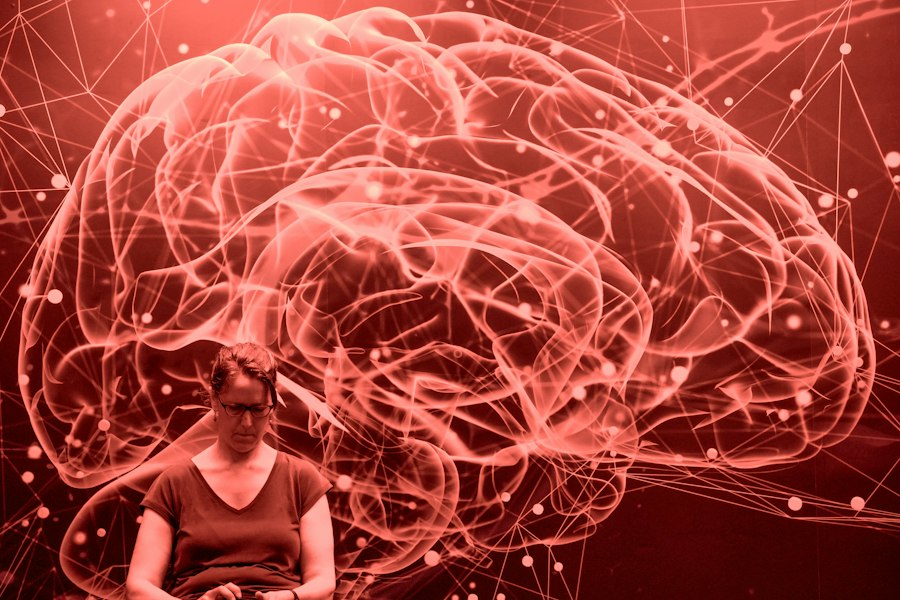
The mystery of consciousness under anesthesia isn’t just about what happens in your brain, but also about how anesthetics achieve their remarkable effects. The precise molecular targets and mechanisms are still being elucidated.
The Molecular Symphony of Unconsciousness
Anesthetics are not a single entity; they are a diverse class of drugs, each with its unique way of interacting with your brain’s intricate molecular machinery.
Targeting Ion Channels: The Gatekeepers of Neuronal Communication
Many anesthetics exert their effects by binding to and modulating ion channels, which are proteins that control the flow of ions across neuronal membranes. By altering the function of these channels, anesthetics can profoundly influence neuronal excitability.
GABA-A Receptors: The Primary Targets
The gamma-aminobutyric acid (GABA) system is a major player in neural inhibition. Many anesthetics, particularly benzodiazepines and propofol, enhance GABAergic transmission, leading to a widespread dampening of brain activity.
NMDA Receptors: The Gates of Excitation
Conversely, some anesthetics, like ketamine, work by blocking N-methyl-D-aspartate (NMDA) receptors, which are involved in excitatory neurotransmission. This disruption of excitation also contributes to the loss of consciousness.
Beyond Ion Channels: Emerging Targets
While ion channels are well-established targets, research is uncovering other molecular players involved in anesthetic action, including G protein-coupled receptors and synaptic proteins.
The Synaptic Crossroads: Where Information is Transmitted
The synapse is the tiny gap between neurons where chemical signals are passed. Anesthetics have significant effects on synaptic transmission, the very process by which information is communicated.
Altering Neurotransmitter Release
Anesthetics can influence the release of neurotransmitters from the presynaptic neuron, either increasing or decreasing the amount of chemical messenger that crosses the synapse.
Modulating Receptor Sensitivity
Even if neurotransmitters are released, anesthetics can change how effectively postsynaptic neurons respond to them by altering the sensitivity of their receptors.
The Unanswered Questions: Navigating the Fog

Despite significant advancements, the mystery of consciousness under anesthesia remains a rich landscape of unanswered questions.
Defining Consciousness: A Moving Target
A fundamental challenge is the very definition of consciousness. If we can’t perfectly define it in the conscious state, how can we definitively say when it’s absent?
The Spectrum of Awareness
Is consciousness an all-or-nothing phenomenon, or does it exist on a spectrum? Could there be a dimmer switch rather than an on/off button for consciousness under anesthesia?
The Role of Subjectivity
Consciousness is inherently subjective. We can measure brain activity, but we can’t directly access another person’s inner experience. This makes definitively proving or disproving residual awareness incredibly difficult.
Predicting and Preventing Awareness: The Clinician’s Dilemma
For anesthesiologists, the primary concern is ensuring patient safety and comfort. Understanding the nuances of consciousness under anesthesia is critical for this.
The Art and Science of Anesthesia Management
Anesthesia management is a delicate balance. Too little anesthetic can lead to awareness; too much can have adverse effects. Anesthesiologists rely on a combination of patient monitoring, drug knowledge, and clinical experience to navigate this complex terrain.
The Future of Anesthetic Monitoring
New technologies are being developed to better assess the depth of anesthesia and predict the likelihood of awareness. These advancements aim to provide anesthesiologists with more precise tools to ensure a smooth and unconscious experience for every patient.
Research into the effects of anesthesia on consciousness has revealed intriguing insights into how our awareness can be altered during surgical procedures. A related article discusses the complex relationship between brain activity and consciousness in the context of anesthesia, shedding light on what happens to our perception of reality when we are under its influence. For a deeper understanding of this fascinating topic, you can read more in this article.
The Philosophical Implications: What Does It Mean to Be “You”?
| Stage of Anesthesia | Consciousness Level | Brain Activity |
|---|---|---|
| Stage 1: Analgesia | Reduced awareness of pain | Decreased but still present |
| Stage 2: Excitement | Delirium and uncontrolled movement | Increased and irregular |
| Stage 3: Surgical Anesthesia | Unconsciousness and lack of response to stimuli | Stable and reduced |
| Stage 4: Medullary Depression | Depressed respiration and potential danger | Minimal or absent |
The mystery of consciousness under anesthesia extends beyond the scientific realm, touching upon profound philosophical questions about the nature of self and existence.
The Dissolution of Self
When you’re under anesthesia, your sense of self, your personal identity, seems to evaporate. What happens to that enduring sense of “you” when the neural scaffolding that supports it is temporarily dismantled?
The Continuity of Identity
Does your identity persist in some latent form, waiting to be reawakened? Or is it something that is entirely reconstructed each time you regain consciousness?
The Boundaries of the Self
Anesthesia blurs the lines between being and not-being. It forces us to confront the idea that our conscious experience is intimately tied to the physical workings of our brain.
The Nature of Reality and Experience
If your perception of reality is a construct of your brain, what happens to that reality when your brain is in an altered state?
The Anesthetic Altered State
Anesthesia is a profound altered state of consciousness, but it’s fundamentally different from dreams or hallucinations. It’s a state of profound absence, a void where subjective experience seems to cease.
The Unseen World of the Unconscious
The unconscious mind remains a vast and mysterious territory. Anesthesia offers a glimpse into this realm, though it’s a glimpse from the outside, looking in.
Ultimately, the mystery of consciousness under anesthesia is a testament to the complexity and wonder of the human brain. While science continues to unravel its secrets, the experience of drifting into unconsciousness and then returning to awareness remains a uniquely profound and personal journey, a fleeting encounter with the very essence of what it means to be conscious. As you lie there, breathing in the sterile air, you are participating in one of science’s most enduring enigmas, a silent testament to the power and fragility of your own mind.

You’re Not Asleep Under Anesthesia. So Where Do You Go?
FAQs
What is consciousness?
Consciousness refers to the state of being awake and aware of one’s surroundings, thoughts, and sensations. It involves the ability to perceive and experience the world around us.
What happens to consciousness during anesthesia?
During anesthesia, consciousness is temporarily suspended. Anesthesia drugs work by altering the brain’s activity, specifically targeting the areas responsible for consciousness and awareness. This results in a loss of sensation and perception, effectively rendering the individual unconscious.
Is consciousness completely eliminated during anesthesia?
While consciousness is significantly reduced or eliminated during anesthesia, it is important to note that the brain continues to exhibit some level of activity. This is why patients may still have dreams or experience fragmented memories during the period of anesthesia.
Can consciousness be regained after anesthesia wears off?
Yes, consciousness can be fully regained once the effects of the anesthesia wear off. As the drugs are metabolized and eliminated from the body, the brain gradually returns to its normal state, allowing the individual to regain consciousness and awareness.
Are there any risks to consciousness during anesthesia?
While anesthesia is generally safe, there are potential risks and complications, including the rare possibility of anesthesia awareness, where the patient may become conscious during surgery but is unable to move or communicate. Anesthesia providers take various measures to minimize these risks and ensure the safety of the patient.