You might have a microwave oven in your kitchen, a common appliance that heats food using electromagnetic radiation. At its heart lies a remarkable component: the magnetron. This article will delve into the fascinating world of microwave magnetrons, unraveling the magic that makes your food warm up in minutes.
Imagine a tiny, powerful device that generates waves invisible to the human eye, yet capable of making water molecules dance and heat your leftovers. That, in essence, is your microwave oven’s magnetron. It’s not a complex black box; rather, it’s a testament to clever engineering that harnesses fundamental principles of physics.
What Exactly is a Magnetron?
At its core, a magnetron is a high-power vacuum tube. Think of it as a specialized electron tube designed for a singular purpose: to generate microwave radiation. It’s not a simple resistor or capacitor; it’s a dynamic device where electrons, magnetic fields, and resonant cavities work in concert to produce those familiar heating waves. The term “magnetron” itself is derived from “magnet” and the Greek word “tron,” often used for electronic devices. This gives you a clue about its primary components.
A Brief History: From War Technology to Kitchen Staple
The magnetron’s journey to your kitchen is an interesting one. Its origins can be traced back to the 1920s and 1930s, with significant advancements made during World War II. The need for efficient radar systems, particularly for detecting enemy aircraft and submarines, spurred rapid development. Early magnetrons were bulky and less efficient, but they proved crucial to Allied victory. After the war, engineers recognized the potential of these microwave-generating devices for civilian applications. The development of more compact, efficient, and cost-effective magnetrons paved the way for their integration into domestic microwave ovens, revolutionizing how we cook and prepare food. It’s a prime example of military technology finding its way into everyday life, transforming domestic chores.
The Fundamental Principles at Play
The magic of the magnetron is rooted in two fundamental physics principles: the behavior of electrons in a magnetic field and resonance. When you switch on your microwave, a high voltage is applied to the magnetron. This voltage accelerates electrons emitted from a central cathode towards an anode. Simultaneously, strong permanent magnets create a powerful magnetic field that permeates the cavity. This magnetic field influences the path of the accelerating electrons, causing them to spiral.
The Role of the Vacuum Tube
The “vacuum tube” aspect of the magnetron is crucial. By operating in a vacuum, the magnetron ensures that the electrons are not impeded by air molecules. This allows them to travel freely and interact with the magnetic field and resonant cavities unimpeded, leading to the efficient generation of microwaves. Without the vacuum, the process would be far less effective, and the magnetron would likely fail.
Understanding how a microwave magnetron works is essential for grasping the principles behind microwave ovens and their efficient heating capabilities. For a deeper dive into the science of microwaves and their applications, you can explore a related article that provides insights into the technology and its impact on modern cooking. Check it out here: Freaky Science.
Anatomy of a Magnetron: A Closer Look at its Components
To truly understand the magnetron’s magic, you need to peek inside. It’s a meticulously designed assembly, with each part playing a vital role in the generation of microwave energy.
The Cathode: The Electron Source
At the very center of the magnetron lies the cathode. This is typically a heated filament, much like in an old-fashioned light bulb. When heated, the cathode emits electrons through a process called thermionic emission. Think of it as the initial spark, the source of the charged particles that will be manipulated to create microwaves. The temperature of the cathode is carefully controlled to ensure a consistent and sufficient supply of electrons.
The Anode: The Electron Collector and Resonator
Surrounding the cathode is the anode. This is not a simple metal plate; it’s a cylindrical block with a series of precisely machined cavities. These cavities are crucial for the generation of microwaves. The anode is held at a high positive potential relative to the cathode, attracting the emitted electrons. As the electrons spiral in the magnetic field, they pass by these cavities.
The Resonant Cavities: Where the Magic Happens
These carefully shaped cavities within the anode are the key to the magnetron’s operation. They are designed to resonate at specific microwave frequencies. As the spiraling electrons interact with the electric fields within these cavities, they induce oscillating currents. This interaction is similar to how a tuning fork vibrates at a specific frequency when struck. The cavities amplify and sustain these oscillations, converting the kinetic energy of the electrons into high-frequency electromagnetic waves – microwaves.
The Magnets: Guiding the Electron Flow
The powerful permanent magnets are an indispensable component. They are strategically placed around the magnetron to create a strong magnetic field. This field exerts a force on the moving electrons, forcing them into a circular or spiraling path. Without the magnetic field, the electrons would simply travel in a straight line from the cathode to the anode, and the resonant cavities would not be effectively stimulated. The strength and configuration of the magnets are critical for achieving the desired electron trajectory and efficient microwave generation.
The Output Waveguide: Directing the Energy
Once the microwaves are generated within the resonant cavities, they need to be directed out of the magnetron and towards your food. This is the job of the output waveguide. It’s a metallic channel that couples to one of the resonant cavities. The waveguide efficiently guides the high-frequency microwave energy from the magnetron to the antenna within the microwave oven cavity, where it can then be distributed to heat your food.
The Mechanism of Microwave Generation: Electrons in Motion
The intricate dance of electrons, magnetic fields, and resonant cavities is what makes the magnetron generate microwaves. It’s a process that sounds complex, but can be understood by breaking it down into distinct stages.
Electron Emission and Acceleration
When you turn on your microwave, a high voltage transformer provides the necessary electrical power. This voltage is applied across the cathode and anode. The cathode heats up and emits a cloud of electrons. These electrons are then strongly attracted to the positively charged anode and accelerate rapidly towards it.
The Lorentz Force at Work
As the electrons move towards the anode, they enter the powerful magnetic field. This magnetic field exerts a force on the moving charged particles, known as the Lorentz force. This force is perpendicular to both the direction of the electron’s motion and the direction of the magnetic field. The result is that the electrons don’t travel in a straight line. Instead, they are deflected and forced into a curved, spiraling path around the cathode.
Interaction with Resonant Cavities
The spiraling electrons periodically pass by the openings of the resonant cavities in the anode. As an electron cloud passes a cavity, it induces a changing electric field within that cavity. This changing electric field, in turn, influences the path of the electrons. This continuous interaction between the electrons and the cavities creates a self-sustaining oscillation. The energy of the moving electrons is transferred to the electromagnetic field within the cavities.
The Power of Resonance
The key to efficient microwave generation lies in resonance. Each cavity is precisely tuned to resonate at the desired microwave frequency (typically around 2.45 GHz for microwave ovens). When the electrons interact with the cavities at this resonant frequency, the oscillations are amplified. This is analogous to pushing a swing at its natural frequency, making it go higher with each push. The resonant cavities effectively “capture” and amplify the microwave energy generated by the electron oscillations.
The Feedback Loop: Sustaining the Microwave Emission
The magnetron operates on a principle of feedback. The oscillating electromagnetic field within the resonant cavities influences the movement of the electrons. This feedback mechanism ensures that the oscillations are sustained as long as the voltage is applied and the magnetic field is present. It’s a continuous cycle of electron manipulation and electromagnetic wave generation.
Microwave Radiation: How It Heats Your Food

Once the magnetron generates microwaves, they are channeled out and directed into the cooking cavity of your microwave oven. The way these invisible waves interact with your food is what leads to rapid heating.
The Role of Water Molecules
The primary reason microwave ovens are so effective at heating food is their ability to directly interact with water molecules. Most food items contain a significant amount of water. Water molecules are polar, meaning they have a slightly positive end and a slightly negative end. When exposed to the oscillating electric field of microwaves, these polar water molecules try to align themselves with the rapidly changing field.
Molecular Friction and Heat
This constant and rapid reorientation of water molecules creates friction between them. Imagine millions of tiny molecules rapidly spinning and bumping into each other. This molecular friction generates heat, which is then distributed throughout the food. This direct heating mechanism is why microwave cooking is so fast compared to conventional methods.
Penetration Depth
Microwaves penetrate food to a certain depth, typically a few centimeters. This allows for relatively even heating throughout the food item. However, thicker or denser foods may heat unevenly, with the outer layers cooking faster than the inner core. This is why stirring or rotating food during microwave cooking is often recommended.
Other Polar Molecules
While water is the primary target, other polar molecules present in food, such as fats and sugars, also contribute to the heating process by orienting themselves in the microwave field and generating heat. However, their contribution is generally less significant than that of water.
The “Sparking” Phenomenon: When Things Go Wrong
Occasionally, you might observe sparking or arcing inside your microwave. This usually occurs when metallic objects are placed inside. Metals reflect microwaves, and if a sharp edge of metal is present, it can concentrate the microwave energy, leading to electrical discharge and potentially damaging the magnetron or other components. It’s a clear indication that you should remove metallic items before operating the microwave.
Understanding how a microwave magnetron works can be quite fascinating, especially when you consider its role in everyday appliances. For a deeper dive into the science behind microwave technology, you might find this related article helpful. It explores the principles of electromagnetic radiation and its applications in various fields. You can read more about it here. This background can enhance your appreciation of how magnetrons generate the microwaves that heat your food efficiently.
Safety and Maintenance: Ensuring Your Magnetron’s Longevity
| Component | Function |
|---|---|
| Magnetron | Generates microwaves using a high voltage |
| Cathode | Emits electrons when heated |
| Anode | Accelerates electrons towards the resonant cavities |
| Resonant cavities | Converts electron kinetic energy into microwave radiation |
| Waveguide | Transfers microwaves to the cooking chamber |
Your magnetron, while robust, requires proper care to ensure its continued operation and your safety. Understanding its limitations and basic maintenance practices will extend its lifespan.
The Importance of Not Running Empty
Never operate your microwave oven with nothing inside. When the magnetron is activated without food to absorb the microwaves, the energy is reflected back into the magnetron. This can lead to overheating and damage to the magnetron and other internal components. Think of it as trying to run an engine without any fuel – it’s not designed for that.
Avoiding Metal Objects
As mentioned earlier, metallic objects are a no-go in a microwave. They reflect microwaves and can cause dangerous arcing. This not only poses a fire hazard but can also damage the magnetron. Be sure to use microwave-safe cookware, typically made of glass, ceramic, or microwave-safe plastic.
Cleaning and Ventilation
Keeping the inside of your microwave clean is important. Spilled food particles can absorb microwave energy, leading to hot spots and potential damage over time. Also, ensure that the ventilation slots on your microwave are not blocked. The magnetron generates heat during operation, and proper ventilation is crucial for dissipating this heat and preventing overheating.
Signs of Magnetron Failure
While magnetrons are generally durable, they do have a finite lifespan. If your microwave is no longer heating food effectively, or if you notice unusual noises like buzzing or humming that weren’t there before, it could be a sign that the magnetron is failing or has already failed. In such cases, it’s often more economical to replace the entire microwave rather than attempting a magnetron repair, as the cost of a replacement magnetron and the labor involved can be significant.
Professional Servicing
If you suspect a problem with your magnetron or any other internal component, it’s crucial to seek professional servicing. Microwave ovens contain high-voltage components that can be dangerous if handled improperly. Attempting to repair it yourself without the necessary knowledge and safety precautions can be hazardous.
The Future of Magnetron Technology
While the fundamental principles of the magnetron have remained consistent, ongoing research and development aim to improve its efficiency, reduce its size, and enhance its performance.
Improved Efficiency and Reduced Energy Consumption
Engineers are constantly working to make magnetrons more energy-efficient. This involves optimizing the design of the resonant cavities, improving electron beam control, and exploring new materials. More efficient magnetrons translate to lower energy consumption for your microwave oven, saving you money on your electricity bills.
Miniaturization and Advanced Designs
The trend towards smaller and more compact appliances is also influencing magnetron design. Researchers are exploring ways to create smaller, lighter, and more integrated magnetron systems. This could lead to sleeker microwave oven designs and even enable their integration into other kitchen appliances.
Solid-State Microwave Generation
While magnetrons are currently dominant, there is significant research into solid-state microwave generation technologies. These technologies use semiconductor devices to generate microwaves and offer potential advantages in terms of controllability, efficiency, and longevity. However, for high-power applications like microwave ovens, solid-state solutions are still in development and often more expensive.
Environmental Considerations
As with many technologies, there’s a growing focus on the environmental impact of magnetron production and disposal. Efforts are being made to develop more sustainable manufacturing processes and to explore options for recycling and refurbishing magnetrons.
In conclusion, the humble magnetron is a marvel of engineering. From its wartime origins to its indispensable role in your modern kitchen, it’s a testament to the power of understanding and harnessing fundamental physics. The next time you’re enjoying a warm meal, take a moment to appreciate the intricate dance of electrons and magnetic fields happening within that unassuming black box, the silent orchestrator of your culinary convenience.
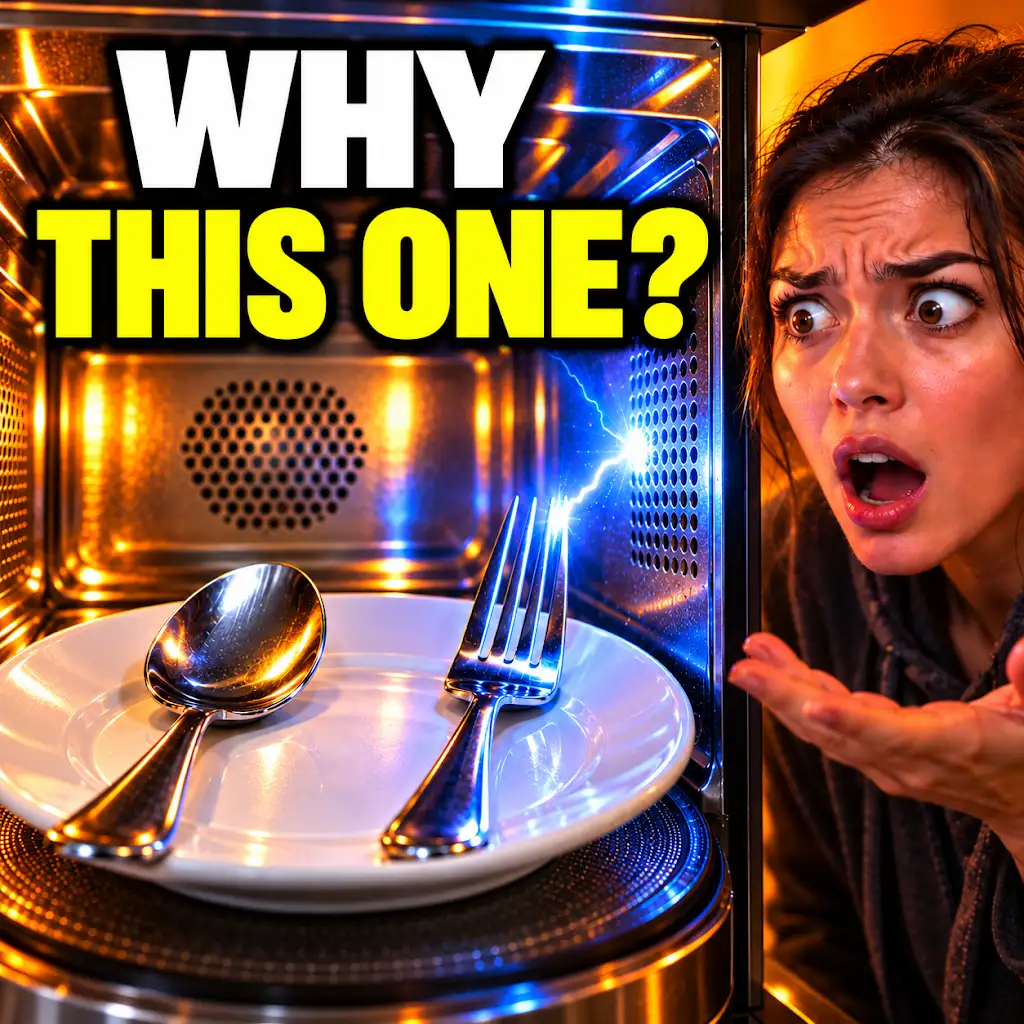
A Fork and a Spoon React Differently in a Microwave. Why?
FAQs
What is a microwave magnetron?
A microwave magnetron is a vacuum tube that generates microwaves using the interaction of electrons with a magnetic field.
How does a microwave magnetron work?
A microwave magnetron works by using a high voltage to accelerate electrons towards a series of resonant cavities, where they interact with a magnetic field to produce microwaves.
What is the role of a microwave magnetron in a microwave oven?
In a microwave oven, the microwave magnetron is responsible for generating the microwaves that heat the food by causing the water molecules in the food to vibrate and generate heat.
What are the components of a microwave magnetron?
The main components of a microwave magnetron include a cathode, an anode, resonant cavities, and a magnetron antenna.
Are there any safety concerns related to microwave magnetrons?
Microwave magnetrons can pose a safety hazard if mishandled or damaged, as they contain high voltage and can emit dangerous levels of microwave radiation. It is important to handle and maintain microwave ovens and their components according to manufacturer guidelines to ensure safety.