You’re standing in your kitchen, a cold meal in your hand, and you slide it into the microwave. A hum starts, a soft glow emanates from the window, and a few minutes later, a steaming, delicious dish awaits. But have you ever stopped to wonder about the magic behind that rapid transformation? The unsung hero of your quick meals is the magnetron, a rather ingenious device that converts electrical energy into the microwave radiation that heats your food. It’s not quite magic, but it’s certainly a fascinating piece of engineering.
At its core, a magnetron is a high-power vacuum tube. Think of it as a specialized electron tube designed to generate high-frequency electromagnetic waves, specifically microwaves. These aren’t just any waves; they’re precisely tuned to interact with water molecules, the primary component of most foods, causing them to vibrate and generate heat. The magnetron is the component responsible for producing these crucial microwaves. Without it, your microwave oven would just be a fancy, albeit empty, box.
What Exactly Are Microwaves?
Before diving into the magnetron’s inner workings, it’s important to grasp what microwaves are. They are a form of electromagnetic radiation, falling on the electromagnetic spectrum between radio waves and infrared radiation. Their wavelength is typically between one meter and one millimeter, and their frequency ranges from 300 MHz (0.3 GHz) to 300 GHz. The microwaves used in your oven are usually around 2.45 GHz, which is an ideal frequency for exciting water molecules.
The Electromagnetic Spectrum Explained
The electromagnetic spectrum is a vast range of all possible frequencies of electromagnetic radiation. It’s like a rainbow, but instead of visible light, it includes everything from the very low-frequency radio waves used for broadcasting to the extremely high-frequency gamma rays used in medical imaging. Microwaves are a specific band within this spectrum, invisible to the human eye but incredibly powerful in their ability to heat.
Why 2.45 GHz? The Science of Food Heating
The reason 2.45 GHz is the standard frequency for microwave ovens is due to its remarkable efficiency in heating water. Water molecules are polar, meaning they have a slight positive charge on one end and a slight negative charge on the other. When exposed to the oscillating electromagnetic field of microwaves, these polar molecules attempt to align themselves with the field. As the field rapidly flips back and forth, the water molecules are forced to rotate at an incredibly high speed, generating friction and thus heat. Other food components, like fats and sugars, also absorb microwave energy, but water’s strong dielectric properties make it the primary target for efficient heating.
The Journey of Electrical Energy to Microwave Radiation
Your microwave oven draws power from the wall socket, a relatively low-frequency AC (alternating current) electricity. This raw electrical energy then needs to be transformed and shaped into the high-frequency microwaves that cook your food. The magnetron is the final stage of this transformation, but it relies on several other crucial components to get the job done.
From Wall Socket to High Voltage
The first step in this energy conversion process involves taking the standard household electricity and stepping it up to a much higher voltage. This is typically achieved through a transformer. This high voltage is absolutely essential for powering the magnetron, as it provides the necessary electrical potential difference to accelerate electrons to the speeds required for microwave generation.
The Role of the Capacitor and Diode
Following the transformer, you’ll usually find a capacitor and a diode. The capacitor acts as an energy storage device, accumulating the high-voltage electrical charge. The diode, on the other hand, is a one-way valve for electricity. It rectifies the alternating current from the transformer into direct current, ensuring that the electrical pulses delivered to the magnetron are in the correct polarity and pulsed efficiently. This combination of a capacitor and diode creates the pulse of high-voltage DC power that the magnetron needs to operate.
A magnetron is a crucial component in microwave ovens, responsible for generating the microwaves that cook food. By converting electrical energy into microwave radiation, it allows for efficient heating and cooking. For a deeper understanding of how magnetrons work and their role in microwave technology, you can read a related article at Freaky Science. This article provides insights into the science behind microwaves and their practical applications in everyday life.
Inside the Magnetron: A Peek at the Core Components
The magnetron itself is a marvel of miniaturized engineering. It’s a cylindrical device, often with external cooling fins, that houses several key components working in harmony. Understanding these parts is crucial to appreciating how it generates those powerful microwaves.
The Cathode: The Source of Electrons
At the very center of the magnetron lies the cathode. This is typically a heated filament, much like the filament in an old-fashioned light bulb. When electricity flows through the cathode, it heats up, causing it to emit electrons through a process called thermionic emission. Think of it as a tiny, controlled electron gun. These freed electrons are the raw material for the microwave generation process.
Thermionic Emission: The Magic of Heated Electrons
Thermionic emission is the phenomenon where a material emits electrons when heated. The higher the temperature, the more electrons are emitted. In the magnetron, the cathode is precisely controlled to emit a steady stream of electrons when energized by the high-voltage pulse. This is the initial step in creating the electron cloud that will eventually interact with the magnetic field and the resonant cavities.
The Anode: The Electron Catcher and Accelerator
Surrounding the cathode is the anode. Unlike a simple anode in a vacuum tube, the anode in a magnetron is not a single piece. It’s a block of metal, often copper, with a series of precisely machined cavities or “resonators” running through it. The high voltage applied to the anode attracts the electrons emitted by the cathode. However, the magnetic field plays a crucial role in dictating their path.
Resonant Cavities: The Microwave Generators
The most distinctive feature of the magnetron’s anode is its array of precisely spaced cavities. These cavities are designed to resonate at a specific microwave frequency, much like a tuning fork resonates at a specific musical note. When electrons pass through these cavities in a controlled manner, they excite the electromagnetic field within them, generating microwaves. The number and shape of these cavities are critical to determining the output frequency of the magnetron.
The Magnets: Guiding the Electron Stream
Perhaps the most defining feature of a magnetron, and the source of its name, is the presence of powerful magnets. These magnets are typically ceramic or rare-earth magnets positioned around the exterior of the anode. Their primary purpose is to create a strong magnetic field within the vacuum tube, perpendicular to the path of the electrons. This magnetic field is what forces the electrons to travel in a curved or helical path, rather than in a straight line towards the anode.
The Lorentz Force: Bending Electron Paths
The interaction between the moving electrons and the magnetic field is governed by the Lorentz force. This force acts perpendicular to both the direction of the electron’s motion and the direction of the magnetic field. In the magnetron, this force causes the electrons to spiral around the cathode, sweeping across the faces of the anode’s resonant cavities. This spiraling motion is absolutely essential for the microwave generation process.
The Dance of Electrons and Fields: Generating Microwaves

The real magic happens when all these components work together. The magnetron is not just a collection of parts; it’s a dynamic system where electrons and electromagnetic fields engage in a precise dance to produce the desired radiation.
The Electron Cloud Formation
When the high-voltage pulse is applied, the heated cathode emits a cloud of electrons. Simultaneously, the strong magnetic field is in place. The electrons, instead of directly reaching the anode, are forced by the Lorentz force into a circular or spiral motion around the cathode. This creates a spinning cloud of electrons.
The Interaction with the Anode Cavities
As this electron cloud spins, it passes by the openings of the resonant cavities in the anode. The movement of these charged particles induces oscillating currents within the cavities. Because the cavities are designed to resonate at the desired microwave frequency, these induced currents excite and amplify electromagnetic fields within them. Think of it like a series of tiny antennas, each designed to emit at a specific frequency.
The Amplification Process
The key to the magnetron’s power lies in this self-sustaining oscillation. As the electrons sweep past the cavities, they impart energy to the electromagnetic fields within them. This energy then reinforces the fields, causing them to grow stronger. The magnetic field ensures that the electrons continue to interact with the cavities in a way that sustains and amplifies this oscillation, much like pushing a swing at the right moment to make it go higher.
Feedback Loop for Microwave Generation
This process creates a positive feedback loop. The oscillating electromagnetic fields within the cavities influence the motion of the electrons, and the electron motion, in turn, strengthens the fields. This continuous interaction leads to the generation of coherent microwave radiation at the resonant frequency of the cavities.
Extracting the Microwaves
Once the microwaves are generated within the resonant cavities, they need to be channeled out of the magnetron and into the microwave oven’s cooking chamber. This is achieved through a small antenna, often called a probe or antenna loop, which protrudes into one of the cavities. This antenna couples to the oscillating electromagnetic field and guides the microwaves out of the magnetron.
The Waveguide: Directing the Energy
The microwaves are then directed from the antenna through a metal tube called a waveguide. This waveguide is specifically shaped to efficiently transmit microwave frequencies. It acts like a conduit, carrying the powerful microwave energy from the magnetron to the oven cavity, where it can then interact with your food.
From Magnetron to Meal: The Journey Continues
The magnetron is just one piece of the puzzle in your microwave oven. The microwaves it produces need to be distributed effectively within the oven cavity to ensure even cooking.
The Stirrer or Turntable: Ensuring Even Heating
As the microwaves enter the oven cavity, they don’t automatically spread out evenly. This is why you’ll find either a rotating turntable or a metal fan-like device called a stirrer in most microwave ovens. The turntable rotates your food, exposing different parts to the microwave energy over time. A stirrer, on the other hand, reflects and scatters the microwaves within the cavity, helping to create a more uniform distribution of energy. Without these, you’d likely end up with hot spots and cold spots in your food.
The Physics of Standing Waves
Microwaves, like other electromagnetic waves, can create standing waves within an enclosed space like a microwave oven cavity. A standing wave is a wave pattern that appears to be stationary. If your food is placed in a particular spot, it might be in a “hot” spot of a standing wave, leading to overcooking, or a “cold” spot, leading to undercooking. The turntable and stirrer are designed to combat this phenomenon.
The Metal Cavity: Reflecting Microwaves
The interior of your microwave oven is made of metal. This metal acts as a Faraday cage, reflecting the microwaves back into the cooking cavity. This reflection is crucial because it prevents the microwaves from escaping the oven and also helps to create the standing waves that are then addressed by the stirrer or turntable. The metal walls essentially contain and bounce the microwave energy around, forcing it to interact with your food multiple times.
The Safety Aspect of Metal Enclosures
The metal enclosure is also a vital safety feature. It ensures that the high-power microwaves are contained within the oven. The door of the microwave also has a metal mesh screen, which is designed to block microwaves while still allowing you to see inside. The holes in the mesh are much smaller than the wavelength of the microwaves, effectively preventing them from passing through.
A magnetron is a crucial component in a microwave oven, responsible for generating microwave radiation that cooks food. This device converts electrical energy into microwave energy, which then heats the food by causing water molecules to vibrate. For a deeper understanding of how microwaves work and the science behind them, you can explore this informative article on Freaky Science, which delves into the fascinating principles of microwave technology and its applications in everyday life.
Maintenance and Longevity of Your Magnetron
| Function | Description |
|---|---|
| Generate microwaves | The magnetron is responsible for producing the microwaves that cook the food inside the microwave oven. |
| Convert electrical energy to electromagnetic waves | The magnetron uses electrical energy to create high-frequency electromagnetic waves, which are then emitted into the cooking chamber. |
| Control power levels | By adjusting the power supplied to the magnetron, the microwave oven can control the intensity of the microwaves and thus the cooking power. |
Magnetrons, like all electronic components, have a finite lifespan. While they are designed for durability, there are some factors that can influence their longevity, and some signs that might indicate it’s time for a replacement.
Signs of a Failing Magnetron
If your microwave is no longer heating food effectively, or if it’s making unusual noises like arcing or sparking, it could be a sign that the magnetron is failing. Another indicator might be a significant reduction in heating power, where food takes much longer to cook than it used to. Sometimes, a burning smell might also be associated with a failing magnetron, though this could also be from other internal components.
Troubleshooting Common Microwave Issues
When troubleshooting a microwave, it’s important to distinguish between issues related to the magnetron and those that might be caused by other components like the door interlocks, the control panel, or the power supply. If food isn’t heating at all, it’s a strong possibility that the magnetron is the culprit. However, if the microwave turns on but doesn’t heat, and you hear clicking sounds, it might be a different issue.
The Lifespan of a Magnetron
The lifespan of a magnetron can vary considerably depending on its quality, how it’s used, and the frequency of use. However, most magnetrons are designed to last for several thousand hours of operation. For an average household, this can translate to several years of reliable service. Frequent use, especially at high power settings, will naturally contribute to a shorter lifespan.
Factors Affecting Magnetron Performance
Several factors can impact a magnetron’s performance and lifespan. Overheating is a common enemy. If the cooling system of your microwave (often a fan) is not working efficiently, the magnetron can overheat, leading to reduced performance and a shorter lifespan. Using the microwave with a lot of metal objects inside, or running it with no food, can also put undue stress on the magnetron.
Replacing a Magnetron: A Professional Job
It’s crucial to understand that replacing a magnetron in a microwave oven is not a DIY project for the average consumer. Magnetrons operate at very high voltages, and there are significant safety risks involved in attempting to service this component without proper training and equipment. If you suspect your magnetron has failed, it’s always best to consult a qualified appliance repair technician. They have the expertise and safety precautions necessary to diagnose and replace the component correctly.
The magnetron might be a hidden hero, but its function is essential for the convenience and speed that microwave ovens offer. The next time you heat up a meal, take a moment to appreciate the intricate dance of electrons, magnetic fields, and resonant cavities that make it all possible. It’s a testament to the power of physics and engineering, right there in your kitchen.
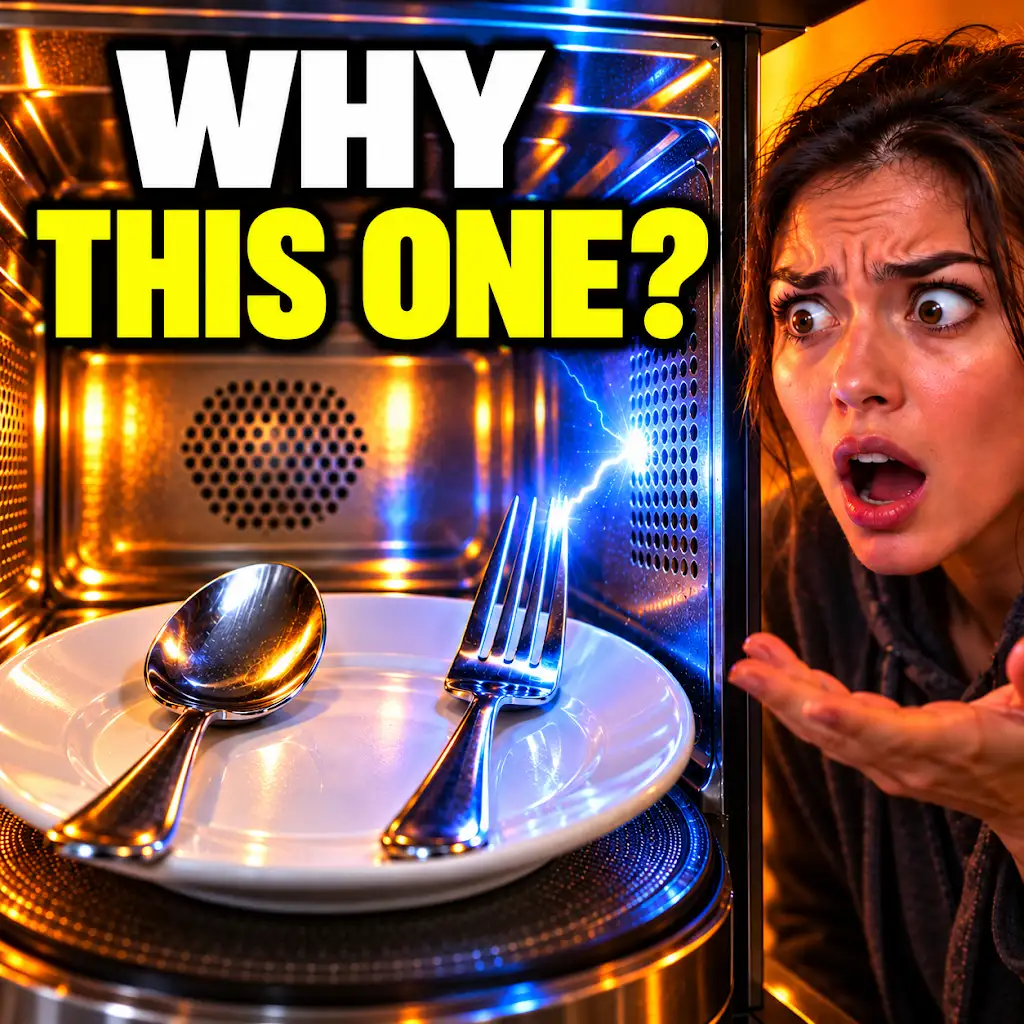
A Fork and a Spoon React Differently in a Microwave. Why?
FAQs
What is a magnetron in a microwave?
A magnetron is a high-powered vacuum tube that generates the microwaves used for cooking food in a microwave oven.
How does a magnetron work in a microwave?
The magnetron uses a magnetic field and an electric current to generate high-frequency microwaves, which are then directed into the cooking chamber of the microwave oven.
What role does the magnetron play in cooking food in a microwave?
The magnetron is responsible for producing the microwaves that penetrate the food and cause the water molecules within it to vibrate, generating heat and cooking the food.
Can a magnetron be replaced in a microwave?
Yes, a malfunctioning magnetron can be replaced in a microwave, but it should only be done by a qualified technician due to the high voltage and potential hazards involved.
What are the signs of a failing magnetron in a microwave?
Signs of a failing magnetron in a microwave can include uneven heating, unusual noises, or the microwave not heating food properly. If you suspect an issue with the magnetron, it’s best to have the microwave inspected by a professional.