You’re probably familiar with the hum of your microwave oven, a sound that signals the impending warmth of your leftovers or the quick creation of popcorn. But have you ever stopped to wonder what’s happening inside that metal box to cook your food so efficiently? It’s not magic, nor is it simply heat from a hidden element. The secret lies in a phenomenon called microwave cavity resonance. You’re about to dive deep into the fascinating physics that make your microwave oven such a culinary marvel.
This isn’t just about cooking; understanding microwave cavity resonance unlocks insights into various scientific and industrial applications. From particle accelerators to wireless communication, the principles at play are fundamental to how we manipulate electromagnetic waves. So, buckle up, because you’re about to unravel the intricate dance of electromagnetic energy that transforms your food.
Before you can truly grasp how a microwave cavity resonates, you need to understand what microwaves are. Think of them as a specific slice of the electromagnetic spectrum, sitting between radio waves and infrared radiation. They are, fundamentally, electromagnetic waves. This means they possess both electric and magnetic components that oscillate perpendicular to each other and perpendicular to the direction of wave propagation.
The Nature of Electromagnetic Waves
Imagine throwing a pebble into a perfectly still pond. You create ripples, waves that travel outwards. Electromagnetic waves are similar, but instead of water, they travel through a vacuum (or various media) at the speed of light. The key characteristics of any wave are its wavelength (the distance between successive crests or troughs) and its frequency (the number of waves that pass a point in one second). These two are inversely related: a shorter wavelength means a higher frequency, and vice-versa.
The Microwave Spectrum
Microwaves aren’t just one single frequency. They encompass a range of frequencies, typically from about 300 megahertz (MHz) to 300 gigahertz (GHz). Your microwave oven, however, operates at a very specific frequency: 2.45 GHz. This isn’t an arbitrary choice. It’s a frequency that has been scientifically determined to be particularly effective at exciting water molecules, the primary component in most foods, leading to efficient heating.
How Microwaves Interact with Matter
When microwaves encounter matter, they can do a few things: be reflected, be transmitted, or be absorbed. The absorption of microwave energy is what leads to heating. This absorption occurs when the oscillating electric field of the microwave wave interacts with polar molecules within the food, such as water. These molecules, having a slight positive charge on one end and a slight negative charge on the other, try to align themselves with the rapidly changing electric field. This rapid reorientation causes them to jostle and vibrate, generating heat through friction.
The Importance of Frequency for Heating
The 2.45 GHz frequency is a sweet spot because it’s efficiently absorbed by water molecules without being so high that it’s significantly reflected by the food’s surface or so low that it penetrates too deeply without sufficient absorption. This optimal interaction is crucial for the rapid and relatively uniform cooking you experience.
Microwave cavity resonance is a fascinating phenomenon that plays a crucial role in various applications, from telecommunications to medical imaging. For a deeper understanding of this topic, you can explore a related article that delves into the principles and applications of microwave cavities. This article provides insights into how these cavities are designed and how they function to enhance signal quality and efficiency. To read more, visit Freaky Science.
The Microwave Oven Cavity: A Metal Box of Tricks
Now that you have a handle on microwaves themselves, let’s turn your attention to the metal box where the magic happens – the microwave oven cavity. This isn’t just a random enclosure; its design is specifically engineered to exploit the properties of microwaves and create the conditions for efficient cooking.
The Reflective Nature of Metal
The interior walls of your microwave are made of metal. This is a critical design choice. Metals are excellent conductors of electricity, and when an electromagnetic wave, like a microwave, strikes a conductive surface, it induces currents within the metal. These induced currents, in turn, generate their own electromagnetic fields that oppose the incoming wave. The net effect is that the microwave is reflected. This reflective property is essential for trapping the microwaves within the cavity.
Preventing Microwave Leakage
Beyond reflecting microwaves internally, the metal walls also serve a vital safety function: they prevent microwaves from escaping the oven. Microwaves at the operating frequency can be harmful if exposed to living tissue for extended periods. The metal enclosure acts as a Faraday cage, effectively containing the electromagnetic radiation within the cooking chamber.
The Role of the Door Seal
While the metal walls are the primary barrier, the door also plays a crucial role. The door is typically made of metal with a glass viewing window. This window is covered with a fine metal mesh. The holes in the mesh are much smaller than the wavelength of the microwaves, effectively preventing them from passing through. The door also has a specialized gasket or seal that ensures a tight fit when closed, further minimizing any potential for leakage.
The Turntable: Addressing Uneven Heating
One of the persistent challenges in microwave cooking is achieving uniform heating. Because microwaves don’t always distribute evenly within the cavity, some spots might be overcooked while others remain undercooked. This is where the turntable comes in. By rotating the food, the turntable ensures that different parts of the food are exposed to varying intensities of microwave energy over time, leading to a more even cooking result.
Waveguide: Directing the Microwave Energy
The microwaves don’t spontaneously appear inside the cavity. They are generated by a component called a magnetron, located outside the cooking chamber. A specially designed metal tube called a waveguide channels the microwaves from the magnetron into the cavity. The waveguide is shaped and sized to efficiently transport the microwaves without significant loss of energy.
The Heart of the Matter: Resonance and Standing Waves

This is where the true brilliance of microwave cavity resonance comes into play. Simply reflecting microwaves around a box isn’t enough for efficient cooking. The cavity needs to be designed to create specific patterns of electromagnetic energy within it – patterns known as standing waves, which are a direct consequence of resonance.
What are Standing Waves?
Imagine plucking a guitar string. It vibrates at a fundamental frequency, but it also vibrates at higher frequencies called harmonics. These vibrations create patterns along the string where some points appear to be stationary (nodes) and others vibrate with maximum amplitude (antinodes). Standing waves in a microwave cavity are similar, but instead of a string, you have electromagnetic waves bouncing back and forth between the walls. When waves traveling in opposite directions interfere constructively, they create a pattern of high and low energy density that remains stationary in space – a standing wave.
The Condition for Resonance
Resonance occurs when the physical dimensions of the cavity are such that the wavelengths of the microwaves fit perfectly within the cavity, allowing them to reflect back and forth and interfere constructively. Think of it like pushing a child on a swing. If you push at the right rhythm (the resonant frequency), the swing goes higher and higher. In the microwave cavity, the microwaves are essentially “pushing” off the walls, and if the cavity dimensions are right, they reinforce each other, building up energy.
Cavity Modes: The Patterns of Resonance
A microwave cavity doesn’t just resonate at one single pattern. It can support several different resonant patterns, known as cavity modes. These modes are characterized by the specific distribution of electric and magnetic fields within the cavity. For example, some modes might have strong electric fields concentrated in the center, while others might have them along the walls. The specific mode(s) supported by the cavity depend on its dimensions and shape.
The Dominant Mode in Microwave Ovens
For typical microwave ovens, the dimensions of the cavity are designed to operate at what’s called the dominant mode. This mode is the lowest-frequency mode that the cavity can support. The dominant mode in a rectangular cavity like your microwave oven often results in a pattern where the electric field is strongest in certain locations and weakest in others. This is why you sometimes get hot spots and cold spots.
The Significance of the 2.45 GHz Frequency
The specific frequency of 2.45 GHz is chosen not only for its interaction with water molecules but also because it allows for a reasonable sized cavity to achieve resonance at this frequency. If you were to use a much lower frequency, you would need a much larger cavity to achieve resonance. Conversely, a much higher frequency would require a very small cavity. The 2.45 GHz frequency strikes a practical balance for a kitchen appliance.
The Interaction of Standing Waves with Food: Hot Spots and Cold Spots
You’ve learned that resonance creates standing waves, and these standing waves have specific patterns of high and low energy. Now, let’s explore how these patterns directly impact your cooking.
Energy Distribution and Food Placement
The standing wave patterns mean that the microwave energy is not uniformly distributed throughout the cavity. There are areas where the electric field is strong, leading to intense absorption of energy and rapid heating (hot spots). Conversely, there are areas where the electric field is weak, resulting in minimal energy absorption and slower heating (cold spots). This is the fundamental reason why some parts of your food might be perfectly cooked while others remain undercooked or even frozen.
Why Food Rotates
This is where the turntable becomes indispensable. By rotating the food, you’re effectively moving different parts of it through these areas of high and low energy. Over the course of the cooking cycle, the average exposure of all parts of the food to the microwave energy becomes more balanced, leading to a more even cooking result. Without the rotation, you would likely find significant temperature variations within your food.
The Challenge of Uniform Cooking
Despite the turntable, achieving perfectly uniform cooking in a microwave can still be a challenge, especially for irregularly shaped or dense foods. The complexity of the standing wave patterns within the cavity, combined with the varying microwave absorption properties of different food components (e.g., water content, fat content, density), contributes to this complexity.
Stirring and Rearranging: Enhancing Evenness
For even better results, you might find yourself stirring your food halfway through the cooking process or rearranging pieces. These actions are essentially manual attempts to counteract the uneven energy distribution. By stirring, you bring the cooler parts of the food into the areas where the microwaves are more intense, and vice-versa.
Advanced Microwave Designs
Some higher-end microwave ovens employ more sophisticated designs to improve energy distribution. This can include features like multiple antennas that generate microwaves from different angles or stirrers that physically move the microwaves within the cavity. These technologies aim to create a more uniform electromagnetic field, reducing the severity of hot and cold spots.
Microwave cavity resonance is a fascinating phenomenon that plays a crucial role in various applications, from telecommunications to medical imaging. Understanding how these cavities resonate at specific frequencies can enhance the efficiency of devices that rely on microwave technology. For a deeper exploration of this topic, you might find the article on microwave technology insightful, as it delves into the principles and applications of resonance in more detail. You can read it here.
Beyond Cooking: Applications of Microwave Cavity Resonance
| Aspect | Explanation |
|---|---|
| Resonance | Microwave cavity resonance occurs when the frequency of the microwaves matches the natural frequency of the cavity, causing constructive interference and amplification of the waves. |
| Cavity Design | The cavity is typically a metal box with reflective walls that allow the microwaves to bounce around inside, creating standing waves. |
| Standing Waves | When the microwaves bounce back and forth between the cavity walls, they create areas of high and low intensity, leading to resonance at specific frequencies. |
| Efficiency | Proper design and tuning of the cavity is crucial for efficient resonance and uniform heating of the food inside the microwave. |
While your kitchen microwave is the most common example, the principles of microwave cavity resonance extend far beyond food preparation. You’ll find these concepts at play in advanced scientific research and numerous industrial applications.
Particle Accelerators: Energizing Particles
In particle accelerators, like those used in physics research to study fundamental particles, microwave cavities play a critical role. High-power microwaves are used to create strong electric fields within resonant cavities. Charged particles, such as electrons and protons, are then injected into these cavities. As the particles pass through the oscillating electric fields, they gain energy, accelerating them to incredibly high speeds. The cavities are precisely tuned to resonate at frequencies that efficiently transfer energy to the particles.
Radar Systems: Detecting Objects
Radar systems, used for everything from air traffic control to weather forecasting and navigation, also rely on the principles of electromagnetic waves. While not always a “cavity” in the traditional sense, the antennas and transmission components of radar systems are often designed to operate at specific resonant frequencies to efficiently launch and receive microwave signals. The reflection of these signals off objects allows for detection and tracking.
Wireless Communication: Transmitting and Receiving Signals
The wireless technologies you use every day – Wi-Fi, Bluetooth, and cellular communication – all operate within the radio frequency and microwave portions of the electromagnetic spectrum. The antennas used in these devices, as well as the internal circuitry of transmitters and receivers, are designed to resonate at specific frequencies to efficiently send and receive information. This resonant behavior ensures maximum signal strength and minimizes interference.
Industrial Heating and Processing: Drying and Curing
Beyond cooking food, microwave energy is used in various industrial processes. This includes drying materials like paper, textiles, and wood, as well as curing certain types of plastics and composites. Microwave heating offers advantages such as rapid heating, selective heating (targeting specific materials within a mixture), and energy efficiency. The design of industrial microwave applicators often involves resonant cavities optimized for the specific material and process.
Medical Applications: Hyperthermia Treatment
In medicine, microwave technology is being explored for treatments like hyperthermia, where targeted heating of cancerous tumors is used to make them more susceptible to radiation therapy or chemotherapy. Resonant cavities can be used to deliver precise doses of microwave energy to specific areas of the body.
The Ubiquity of Resonance
The concept of resonance is a fundamental principle in physics, and its application in microwave cavities highlights how engineers and scientists harness these principles to create powerful and versatile technologies. Whether it’s the hum of your microwave or the complex machinery of a research facility, the underlying physics of resonance is often at work.
The Science Behind the Simplicity: Conclusion
You’ve now journeyed into the fascinating world of microwave cavity resonance, unveiling the science that makes your everyday microwave oven so effective. It’s a testament to how understanding fundamental physics – the nature of electromagnetic waves, the properties of materials, and the concept of resonance – can lead to practical and revolutionary technologies.
From the precise frequency of 2.45 GHz chosen for its interaction with water molecules to the reflective metal walls that trap and direct the energy, every aspect of the microwave cavity is engineered to create the conditions for efficient cooking. The formation of standing waves, a direct result of the cavity’s dimensions and the resonant frequency, is the key to concentrating microwave energy. While these standing waves can lead to uneven heating, the humble turntable and manual interventions help to mitigate this, ensuring your meals are cooked to perfection.
The principles you’ve explored extend far beyond your kitchen, impacting fields like particle physics, radar technology, wireless communication, and industrial processing. Microwave cavity resonance is not just a concept; it’s a powerful tool that scientists and engineers continue to leverage for innovation and advancement. So, the next time you hear that familiar hum, you’ll know that behind the convenience lies a deep and elegant scientific principle at play, transforming electromagnetic waves into delicious meals and driving technological progress. You’ve unveiled the microwave cavity resonance, and hopefully, gained a deeper appreciation for the science behind the simplicity.
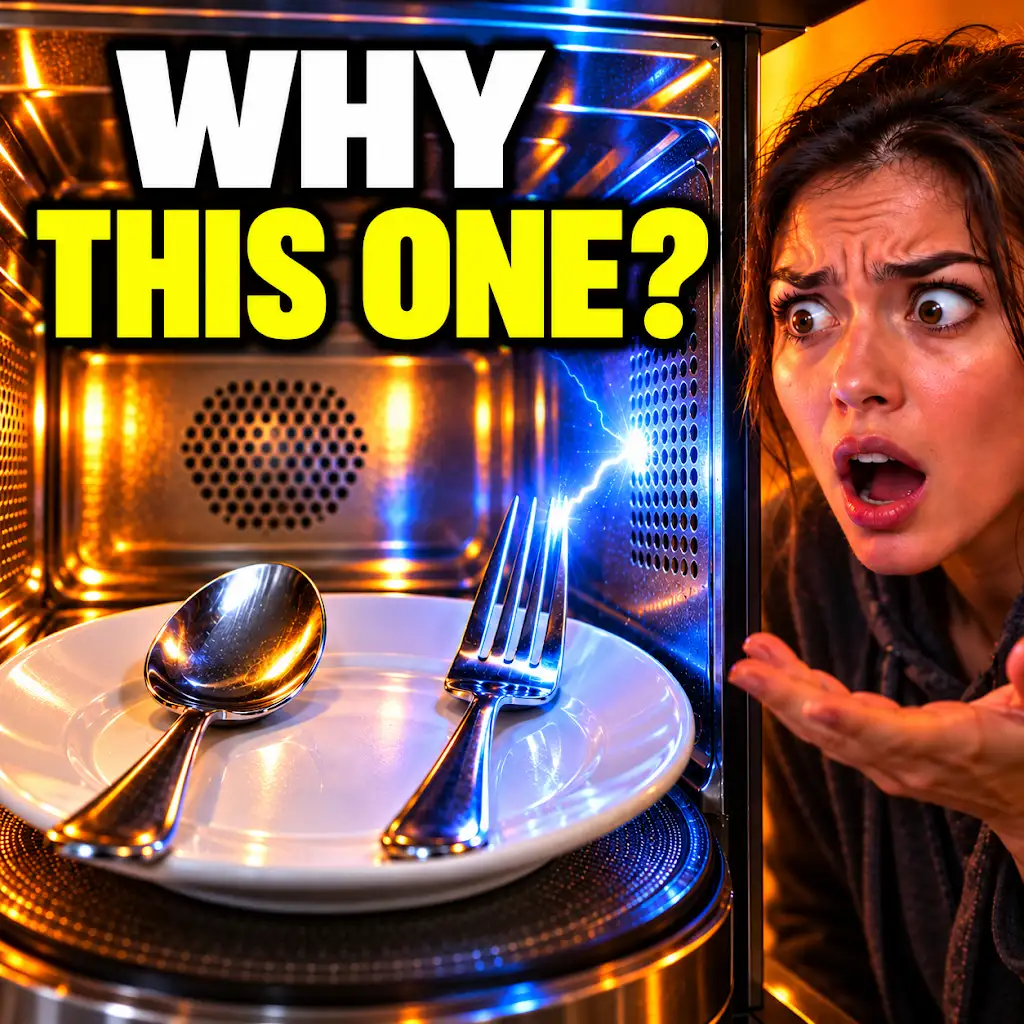
A Fork and a Spoon React Differently in a Microwave. Why?
FAQs
What is microwave cavity resonance?
Microwave cavity resonance is a phenomenon in which microwaves are trapped and oscillate within a closed metal cavity, creating standing waves at specific frequencies.
How does microwave cavity resonance work?
Microwave cavity resonance works by trapping microwaves within a metal cavity, where they bounce back and forth between the cavity walls. When the wavelength of the microwaves matches the dimensions of the cavity, resonance occurs, leading to the amplification of the microwave signal.
What are the applications of microwave cavity resonance?
Microwave cavity resonance is used in various applications such as microwave ovens, radar systems, particle accelerators, and communication systems. It is also utilized in scientific research and industrial processes.
What factors affect microwave cavity resonance?
The dimensions of the cavity, the frequency of the microwaves, and the material of the cavity walls are the main factors that affect microwave cavity resonance. Additionally, the presence of any foreign objects or disturbances within the cavity can also impact resonance.
How is microwave cavity resonance utilized in microwave ovens?
In microwave ovens, microwave cavity resonance is used to generate and amplify microwaves at a specific frequency. These microwaves then interact with the food, causing the water molecules to vibrate and generate heat, which cooks the food.