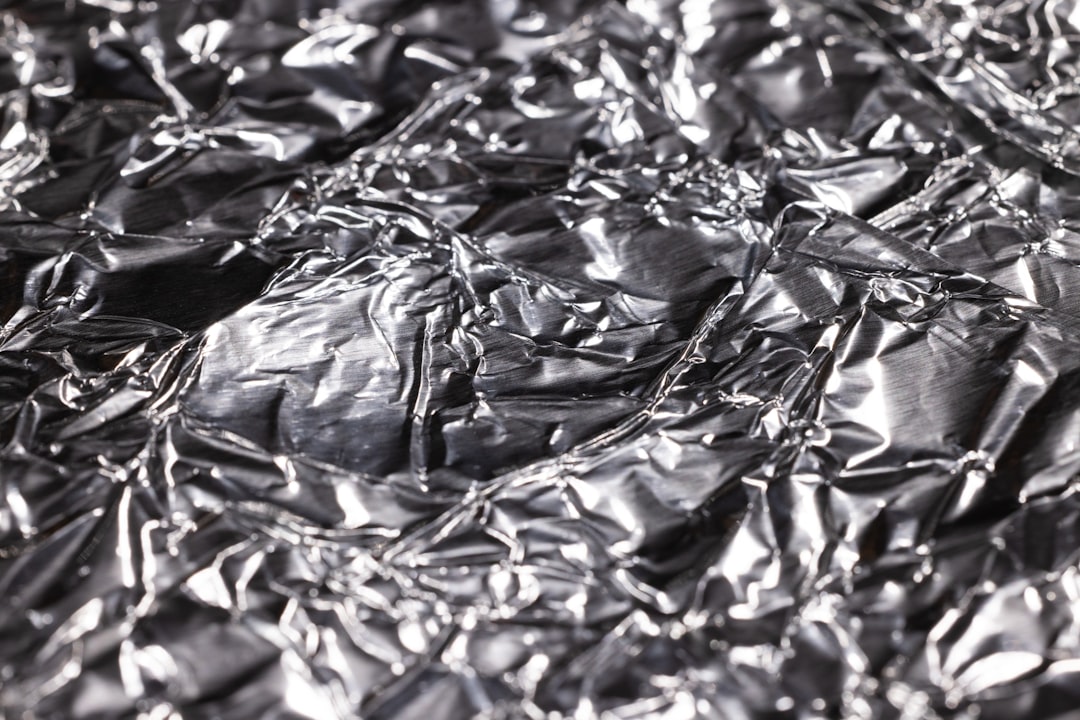
You’re probably already familiar with the way metal gleams, reflecting light and making everything look shiny. But have you ever stopped to think about what else that reflective property might extend to? It turns out, that same characteristic that makes your car’s chrome trim or a polished spoon so brilliant also applies to a much less visible form of energy: microwave radiation. Yes, metal isn’t just a visual reflector; it’s a powerful barrier and redirector of those high-frequency radio waves that power everything from your Wi-Fi to your microwave oven.
This article will delve into the fascinating world of metal’s reflective properties specifically for microwave radiation. You’ll discover why certain metals are better than others at this task, how this phenomenon is harnessed in various technologies, and even some unexpected everyday applications. Prepare to have your understanding of metal and microwaves expanded, revealing a hidden world of electromagnetic interactions.
At its core, the interaction between metal and electromagnetic waves, including microwaves, is all about electrons. Metals are characterized by a unique electron structure where valence electrons are not tightly bound to individual atoms but are instead free to move throughout the entire metallic lattice. You can think of these as a “sea of electrons” or an “electron gas.”
Electron Mobility: The Key to Reflection
This high degree of electron mobility is the crucial factor. When microwave radiation, which is essentially oscillating electromagnetic fields, encounters a metallic surface, these fields exert a force on the free electrons within the metal. The oscillating electric field of the microwave causes these electrons to accelerate and move back and forth. This rapid movement of charged particles, in turn, generates its own electromagnetic field.
The Outward Push: Canceling and Reflecting
Crucially, the electromagnetic field generated by the moving electrons is precisely out of phase with the incoming microwave radiation. This means that the induced field effectively cancels out the incoming field within the metal. Because the waves cannot penetrate deep into the conductor, they are largely reflected back outwards. This phenomenon is known as specular reflection, similar to how light reflects off a mirror. The smoother and more uniform the metallic surface, the more efficient and perfect this reflection will be.
Skin Depth: Why Microwaves Don’t Dive In
A key concept here is skin depth. This refers to the depth into a conductor to which an electromagnetic field can penetrate. For good conductors like most metals, especially at microwave frequencies, the skin depth is extremely small, often measured in micrometers or even nanometers. This means that the vast majority of the microwave energy is reflected off the surface, with very little actually making it into the bulk of the metal. You can visualize it as the microwaves “skimming” the surface of the metal.
Conductors vs. Insulators: A Stark Contrast
To understand why metal is so effective, consider the opposite: insulators. Insulating materials, like glass or plastic, have electrons that are tightly bound to their atoms and are not free to move. When microwaves encounter an insulator, there’s no significant electron movement to generate a canceling electromagnetic field. As a result, microwaves can penetrate these materials to a much greater extent, and they are either absorbed by the material (converting the energy into heat) or transmitted through it. This is why you can safely heat food in a glass bowl in a microwave oven, but you can’t do the same with a metal bowl.
Metal surfaces are known for their ability to reflect microwave radiation, a property that plays a crucial role in various applications, from microwave ovens to radar technology. For a deeper understanding of this phenomenon and its implications, you can explore a related article that delves into the science behind microwave reflection and its practical uses. To read more, visit this article.
Factors Influencing Reflectivity
While all good conductors will reflect microwaves to some degree, not all metals are created equal in this regard. Several factors influence the efficiency and nature of this reflection.
Conductivity: The Prime Determinant
The most significant factor is electrical conductivity. Metals with higher electrical conductivity offer less resistance to the movement of electrons. This means that electrons can oscillate more vigorously and generate a stronger, more effective opposing electromagnetic field. Common metals like copper, silver, and gold are excellent conductors and therefore excellent microwave reflectors. Aluminum and steel are also good reflectors, though their conductivity might be slightly lower than the noble metals.
Surface Properties: Smoothness Matters
Beyond bulk conductivity, the surface properties of the metal play a vital role. A smooth, polished surface will exhibit more efficient specular reflection, much like a mirror reflecting light. Roughness, imperfections, or even a thin layer of oxide or corrosion on the surface can scatter the microwaves, leading to less direct reflection and potentially some absorption or diffusion. This is why the quality of a metallic coating or surface treatment can impact its performance in microwave applications.
Thickness: Beyond the Skin Depth
While the skin depth is small, the thickness of the metal still matters up to a certain point. For effective reflection, the metal needs to be at least several skin depths thick. Thinner films of metal might exhibit some transparency or transmission, especially if they are not perfectly continuous. However, once the metal is thicker than a few skin depths, further increases in thickness generally have little to no impact on the reflectivity itself. The reflection is happening at the surface.
Frequency Dependence: A Complex Relationship
It’s important to note that the reflectivity of metals for microwaves isn’t entirely independent of frequency. While generally high across the microwave spectrum, there can be subtle variations. For very high frequencies or specific resonant frequencies, complex interactions can occur. However, for most practical applications in the common microwave frequency range (e.g., 2.45 GHz for microwave ovens), the general principles of high conductivity and surface smoothness hold true.
Alloying and Impurities: Subtle Changes
The presence of alloying elements or impurities within a metal can also subtly affect its conductivity and, consequently, its microwave reflectivity. For instance, even small amounts of less conductive materials can slightly reduce the overall reflectivity compared to a pure, highly conductive metal. This is a consideration in specialized applications where precise control over reflective properties is required.
Applications of Metal’s Reflective Properties

The ability of metal to reflect microwaves is not just a theoretical curiosity; it’s a fundamental principle underpinning a vast array of technologies that are integral to our modern lives.
Microwave Ovens: The Kitchen Workhorse
Perhaps the most ubiquitous application is the microwave oven. Inside your microwave, a magnetron generates microwaves, which are then directed into the cooking cavity. The walls of this cavity are typically made of metal. This metallic enclosure acts as a Faraday cage, preventing the microwaves from escaping and confining them within the oven. The metal walls then reflect these microwaves, bouncing them around the cavity. This continuous reflection ensures that the microwaves repeatedly interact with the food, exciting the water molecules within and generating heat through dielectric heating. Without the reflective properties of the metal walls, the microwaves would simply dissipate, and your food wouldn’t cook.
Electromagnetic Interference (EMI) Shielding: Protecting Sensitive Electronics
In the world of electronics, electromagnetic interference (EMI) is a constant concern. Devices generate electromagnetic radiation, and this radiation can interfere with the operation of other nearby electronic devices. EMI shielding is therefore crucial for ensuring the reliable functioning of everything from your smartphone to sensitive medical equipment. Metal enclosures, often made of aluminum or steel, are the primary means of achieving EMI shielding. These metallic boxes effectively reflect and absorb stray electromagnetic radiation, preventing it from escaping or entering the device. The effectiveness of the shielding is directly related to the conductivity and integrity of the metallic enclosure.
Radar Systems: Seeing with Microwaves
Radar, a technology that uses radio waves to determine the range, angle, or velocity of objects, relies heavily on the reflective properties of surfaces. Radar systems transmit microwave pulses, which then reflect off targets like aircraft, ships, or weather formations. The reflected microwaves are then detected by the radar receiver. The strength and characteristics of the reflected signal provide information about the target. While the reflecting surfaces in this case are the targets themselves (which can be made of various materials), the principle of reflection is key. More importantly, the components within the radar system, such as waveguides and antennas, are often constructed from metals to efficiently guide and transmit these microwave signals, reflecting them as needed.
Telecommunications: Guiding the Waves
In telecommunications, metal plays a crucial role in guiding and directing microwave signals. Waveguides, which are hollow metal conduits, are used to transmit microwave signals over distances. The inner walls of waveguides are typically made of highly conductive metals like copper or aluminum. The microwaves propagate through the waveguide by reflecting off these metallic walls, essentially bouncing along the path of the guide. This ensures that the signal energy is efficiently channeled from one point to another with minimal loss. Similarly, satellite dishes, which are designed to receive and transmit microwave signals to and from satellites, are made of parabolic metal reflectors. These precisely shaped metal surfaces concentrate incoming microwave signals onto a receiver or focus outgoing signals into a beam.
Antennas: The Gateway to Wireless Communication
Antennas are the devices that convert electrical signals into electromagnetic waves (transmission) and vice versa (reception). Many types of antennas, particularly those operating at microwave frequencies, utilize metallic elements. The shape and arrangement of these metallic components are designed to resonate with specific microwave frequencies and efficiently radiate or capture electromagnetic energy. The reflective properties of the metal are implicitly utilized in directing the radiation pattern of the antenna. For example, parabolic reflectors used in microwave point-to-point links are made of metal to efficiently focus a narrow beam of microwave radiation.
The Science Behind the Shield: Faraday Cages and Attenuation

The concept of metal acting as a barrier to microwaves often brings to mind the Faraday cage. This is a most pertinent example of metal’s reflective power in action.
The Faraday Cage: A Complete Reflection
A Faraday cage is an enclosure made of conductive material, typically a mesh or solid metal. Its effectiveness in blocking electromagnetic fields, including microwaves, stems directly from the principles we’ve been discussing. When an external electromagnetic field encounters the conductive material of the cage, it induces currents in the conductor. These induced currents generate their own electromagnetic field that opposes and cancels out the external field inside the enclosure.
Mesh vs. Solid: Hole Size Matters
While solid metal cages are highly effective, even mesh enclosures can provide significant shielding. The key factor for mesh is the size of the holes relative to the wavelength of the electromagnetic radiation. For effective shielding against microwaves, the holes in the mesh must be significantly smaller than the wavelength of the microwaves. If the holes are too large, the microwaves can “leak” through. This is why a metal mesh with small openings is used in microwave oven doors to allow you to see inside while still containing the microwaves.
Attenuation: The Strength of the Shield
The reduction in the intensity of an electromagnetic wave as it passes through a medium or is blocked by a barrier is known as attenuation. Metal enclosures provide a very high level of attenuation for microwaves. This attenuation is often measured in decibels (dB). A well-designed metal shield can attenuate microwaves by tens or even hundreds of decibels, meaning the microwave power is reduced by a factor of thousands or millions. This high attenuation is precisely what’s needed for effective EMI shielding and for preventing microwave leakage from devices like ovens.
Beyond Reflection: Absorption in Imperfect Shields
While reflection is the primary mechanism, it’s worth noting that in real-world scenarios, some microwave energy might also be absorbed by the metallic material itself. This absorption is generally less significant than reflection, especially for highly conductive metals. However, any imperfections in the metal, such as resistive losses or eddy currents, can contribute to a small amount of energy dissipation as heat. Furthermore, if the metallic enclosure isn’t perfectly sealed, or if there are gaps or apertures, some microwaves might penetrate and be absorbed by the contents or components within the shielded space.
Understanding how metal reflects microwave radiation is essential for various applications, from cooking to telecommunications. For a deeper exploration of this fascinating topic, you can read an insightful article that discusses the principles behind microwave technology and its interaction with different materials. This article provides a comprehensive overview of the science involved, making it a great resource for anyone interested in the subject. You can find it here: Freaky Science.
Everyday Manifestations and Practical Considerations
| Metal | Reflection of Microwave Radiation |
|---|---|
| Aluminum | Highly reflective |
| Copper | Highly reflective |
| Gold | Highly reflective |
| Silver | Highly reflective |
| Iron | Reflective |
You might not always be consciously thinking about it, but metal’s reflective properties for microwaves are at play in many everyday situations. Understanding these can help you make informed choices and even troubleshoot potential issues.
The Microwave Oven Dilemma: Why Metal is a No-Go
This is the classic example: placing metal in a microwave oven. While the oven walls reflect microwaves to cook your food, placing a metal object inside has a different, often problematic, outcome. The metal object acts as an efficient reflector, but if its shape is such that it concentrates the reflected microwaves, it can create hot spots or even arcing. The rapid build-up of electrical charge on sharp edges of metal can lead to sparks, which can damage the oven and are a fire hazard. The dense reflection also prevents microwaves from reaching the food evenly, leading to uneven cooking. This is why microwave-safe cookware is specifically designed not to interact negatively with microwaves.
The Foil Solution: Temporary Shielding
Aluminum foil is a common household item, and its metallic nature makes it an excellent reflector of microwaves. This is why it’s sometimes used for temporary shielding. For instance, if you’re trying to protect a particular area from microwave radiation, a layer of aluminum foil can offer some degree of protection. However, it’s important to be mindful of sharp edges and potential arcing, especially if you’re experimenting with this. It’s generally not recommended for prolonged or critical shielding applications without proper design.
RFID Blocking Wallets and Sleeves: Protecting Your Information
In our increasingly digital world, concerns about the unauthorized scanning of RFID (Radio-Frequency Identification) tags embedded in credit cards and passports have risen. Many RFID tags communicate using radio waves, including those in the microwave frequency range. RFID-blocking wallets and sleeves are often made with layers of metalized fabric or a thin metallic lining. This metallic layer acts as a barrier, reflecting the incoming radio waves and preventing them from reaching the RFID tag, thus protecting your sensitive information.
Wired vs. Wireless: The Interplay of Reflection and Transmission
Think about the difference between a wired internet connection and Wi-Fi. In a wired connection, the data is transmitted through electrical signals within metallic cables (like Ethernet cables). These cables are designed to contain and guide these electrical signals, with the metallic conductors playing a key role. Wi-Fi, on the other hand, uses radio waves transmitted through the air. While the devices themselves (routers, laptops, phones) have metallic components that influence how they send and receive these waves, the waves are largely transmitting through non-metallic mediums (air). The metallic components in your Wi-Fi router and devices act as reflectors and directors of these wireless signals, helping to shape the signal strength and coverage area.
The Importance of Grounding: Dissipating Unwanted Energy
In many electronic systems that deal with high-frequency signals, including microwaves, grounding is a critical concept. Grounding provides a path for unwanted electrical charges to dissipate safely into the earth. For metal enclosures used for EMI shielding, proper grounding is essential. It helps to drain away any induced currents that might build up, preventing them from interfering with the internal circuitry. While reflection is the primary mechanism for blocking external fields, grounding ensures that any residual energy or charge accumulation is managed effectively.
Future Frontiers and Advanced Applications
The understanding and manipulation of metal’s reflective properties for microwaves continue to push the boundaries of technology, leading to innovative applications and future possibilities.
Metamaterials: Engineering Electromagnetic Behavior
Metamaterials are a class of engineered materials that exhibit properties not found in naturally occurring materials. By carefully designing structures at sub-wavelength scales, often incorporating metallic elements in precise patterns, scientists can create materials that can manipulate electromagnetic waves in extraordinary ways. This includes creating materials with negative refractive indices, perfect absorbers, or cloaking devices. Many metamaterial designs rely on the resonant behavior of metallic structures to interact with microwaves, offering unprecedented control over their reflection, absorption, and transmission.
Advanced EMI Shielding Solutions
As electronic devices become smaller, more powerful, and more numerous, the need for advanced EMI shielding solutions grows. Researchers are exploring new metallic alloys, composite materials with embedded metallic nanoparticles, and intricate metallic mesh designs to achieve higher levels of shielding effectiveness in thinner, lighter, and more cost-effective packages. This is crucial for applications in aerospace, medical devices, and high-frequency communication systems.
Next-Generation Antennas and Wireless Systems
The development of advanced antennas that can dynamically steer beams, operate across multiple frequency bands, and achieve higher data rates is a key area of research. Metallic components, precisely shaped and controlled, are fundamental to these innovations. Concepts like reconfigurable antennas, which can change their properties based on the signal environment, often involve metallic elements that can be electrically tuned.
Thermal Management in High-Power Microwave Systems
While metals are excellent reflectors of microwave energy, they can also absorb some of it, leading to heating. In high-power microwave systems, such as those used in industrial heating or scientific research, efficient thermal management is essential. Understanding the interplay between reflection, absorption, and thermal conductivity of metallic components is crucial for designing systems that operate reliably and safely.
Space Applications: Protecting Satellites and Spacecraft
In the vacuum of space, satellites and spacecraft are constantly bombarded by various forms of electromagnetic radiation, including microwaves from terrestrial sources or from other spacecraft. Metallic shielding, often in the form of multi-layer insulation (MLI) with metallic coatings, plays a vital role in protecting sensitive electronics from this radiation. The reflective properties of these metallic layers help to deflect and absorb harmful electromagnetic energy, ensuring the long-term operational integrity of these critical assets.
In conclusion, the familiar gleam of metal is just the surface of its impressive capabilities. Its ability to reflect microwave radiation is a fundamental physical phenomenon that underpins much of our modern technological landscape. From the humble microwave oven to sophisticated radar systems and the ever-expanding realm of wireless communication, metal’s reflective properties are silently at work, shaping the invisible waves that connect and power our world. You’ve seen how electron mobility, conductivity, and surface properties all contribute to this crucial function, and how this understanding has led to a diverse array of applications that continue to evolve and innovate. The next time you see something made of metal, remember that it’s not just reflecting light; it’s also interacting with a whole spectrum of unseen energies.

A Fork and a Spoon React Differently in a Microwave. Why?
FAQs
What is microwave radiation?
Microwave radiation is a type of electromagnetic radiation with wavelengths ranging from one meter to one millimeter and frequencies between 300 MHz (0.3 GHz) and 300 GHz.
How does metal reflect microwave radiation?
Metal reflects microwave radiation due to its conductive properties. When microwaves encounter a metal surface, the free electrons in the metal material oscillate in response to the electric field of the microwaves, causing the microwaves to be reflected.
Why is metal used in microwave ovens?
Metal is used in the construction of microwave ovens to create a reflective surface that helps contain the microwaves within the oven cavity. This reflective surface helps to evenly distribute the microwaves and prevent them from escaping the oven.
Can all types of metal reflect microwave radiation?
Not all types of metal can effectively reflect microwave radiation. Metals with high electrical conductivity, such as aluminum and copper, are more effective at reflecting microwaves compared to metals with lower conductivity, such as stainless steel.
Are there any safety concerns related to metal and microwave radiation?
When using metal in a microwave oven, it is important to follow the manufacturer’s guidelines to ensure safety. Metal objects should not be placed directly in the microwave cavity, as they can cause arcing and potentially damage the oven. Additionally, metal containers or utensils should not be used unless specifically designed for microwave use.