
You might casually press a button, pop in your leftovers, and expect a perfectly heated meal in minutes. But have you ever stopped to wonder about the magic happening inside that humming box? It’s not magic, of course. It’s science, specifically the fascinating world of electromagnetic fields and how your microwave oven masterfully harnesses them. This isn’t just about convenience; it’s a testament to our understanding of physics and our ability to manipulate it for everyday benefit. Let’s dive deep into the science behind your kitchen countertop powerhouse.
At its core, your microwave oven is a sophisticated appliance that uses a specific type of electromagnetic radiation to cook food. This radiation falls within the microwave frequency range, typically around 2.45 gigahertz (GHz). Understanding this frequency is crucial, as it’s not arbitrary. This specific wavelength is particularly effective at interacting with water molecules, which are abundant in most foods.
The Magnetron: The Heart of the Microwave
The primary component responsible for generating these microwaves is the magnetron. Think of it as the engine of your microwave. It’s a vacuum tube that, when energized, produces high-frequency electromagnetic waves.
The Principles of Magnetron Operation
The magnetron works on a principle that combines principles of electron emission, magnetic fields, and resonant cavities. Electrons are emitted from a heated cathode within the vacuum tube. These electrons then travel outwards towards a central anode. A strong magnetic field, generated by permanent magnets surrounding the tube, forces these electrons to move in a curved path. This circular motion of electrons, as they interact with resonant cavities within the anode structure, creates oscillations at microwave frequencies. The energy is then channeled out of the magnetron via a waveguide.
Waveguides: Directing the Energy
Once generated, the microwaves need to be efficiently directed into the cooking cavity. This is the job of the waveguide, a hollow metal conduit. The waveguide is designed with specific dimensions to ensure that the microwaves travel from the magnetron to the oven cavity with minimal loss of energy. It essentially acts as a tunnel for the electromagnetic waves.
The Frequency Matters: Why 2.45 GHz?
The choice of 2.45 GHz is not accidental. It’s a frequency that resonates strongly with water molecules.
Water Molecules: The Key to Microwave Cooking
Water molecules (H₂O) are polar. This means they have a slightly positive charge on the hydrogen atoms and a slightly negative charge on the oxygen atom, creating a dipole. When exposed to an external electric field, like the one from microwaves, these polar molecules try to align themselves with the field.
Di-electric Heating: The Mechanism of Cooking
As the electromagnetic field oscillates rapidly (billions of times per second), the water molecules try to keep up, flipping back and forth to align with the changing field. This rapid rotation and vibration of water molecules create friction between them. It’s this friction, at a molecular level, that generates heat. This process is known as dielectric heating, and it’s the primary way your microwave cooks food.
Microwave ovens are fascinating appliances that utilize electromagnetic fields to heat food efficiently. By generating microwaves, these ovens excite water molecules in the food, causing them to vibrate and produce heat. For a deeper understanding of the science behind microwave technology and its applications, you can explore a related article on this topic at Freaky Science, which delves into the principles of electromagnetic fields and their impact on everyday life.
How Microwaves Interact with Food: A Molecular Dance
The science of how microwaves penetrate and heat food is fascinating. It’s not just about surface heating; the waves can penetrate to a certain depth, causing internal cooking.
Penetration Depth and Food Composition
The depth to which microwaves penetrate food depends on the food’s composition, particularly its water, fat, and sugar content.
Water Content: The Primary Heating Agent
Foods with high water content, like vegetables and fruits, are heated very efficiently. The water molecules readily absorb microwave energy and convert it into heat.
Fat and Sugar: Secondary Heating Agents
Fats and sugars also absorb microwave energy, though typically to a lesser extent than water. This contributes to the overall heating process, and can sometimes lead to uneven cooking if not managed properly. However, it’s important to note that microwaves don’t directly heat fat or sugar; they heat them through their interaction with water molecules within these substances.
Other Food Components
Proteins and carbohydrates also absorb some microwave energy, but generally less than water. The overall heating effect is a complex interplay of these factors.
The Phenomenon of Even Heating (and Sometimes Unevenness)
Ideally, microwaves would heat food perfectly evenly. However, in reality, this is often not the case, leading to those frustrating cold spots.
Standing Waves and Hot Spots
The microwaves within the oven cavity don’t just travel in a straight line. They bounce off the metal walls, creating patterns of constructive and destructive interference. These patterns result in areas of high and low microwave intensity, known as standing waves. Hot spots are areas where the microwave intensity is high, leading to faster heating, while cold spots are where the intensity is lower.
The Turntable’s Role: Distributing the Energy
This is precisely why most microwave ovens have a turntable. The turntable rotates the food, ensuring that different parts of the food are exposed to varying intensities of microwave energy over time. This constant movement helps to distribute the heat more evenly throughout the food, minimizing the impact of standing waves.
Stirring and Standing Time: Enhancing Evenness
Even with a turntable, some unevenness can occur, especially in larger or denser food items. Stirring food midway through the cooking process helps to redistribute heat. Furthermore, allowing food to “stand” for a few minutes after microwaving allows heat to equalize through conduction, further improving evenness.
Safety Features and the Containment of Electromagnetic Fields

While microwaves are a powerful tool, they are designed with safety as a paramount concern. The containment of these electromagnetic fields is crucial.
The Faraday Cage Principle: Keeping Microwaves Inside
The metallic interior of your microwave oven, along with the metal mesh in the door, acts as a Faraday cage. This is a fundamental principle of electromagnetism.
How a Faraday Cage Works
A Faraday cage is an enclosure made of conductive material that blocks external electromagnetic fields. When microwaves strike the metal walls of the oven, they are reflected back into the cavity. The metal mesh in the door has holes that are much smaller than the wavelength of the microwaves. This prevents the microwaves from escaping while still allowing you to see inside the oven.
The Door Seal: A Critical Component
The door seal plays a vital role in ensuring that no microwaves leak out. It creates an airtight and electrically conductive barrier between the oven cavity and the outside.
Interlock Switches: Preventing Operation When Open
Microwave ovens are equipped with safety interlock switches. These switches are designed to immediately cut off the power to the magnetron if the oven door is opened, even slightly.
The Function of Interlock Switches
These switches are a critical safety mechanism. They prevent the emission of microwaves when the oven is not fully closed, protecting users from potential exposure. Most microwaves have multiple interlock switches for redundancy, ensuring that if one fails, others will still prevent operation.
Radiation Levels and Compliance Standards
Microwave ovens sold commercially must meet strict government regulations regarding radiation leakage. These standards are in place to ensure that the levels of microwave radiation that might escape the oven are well below levels that could be harmful.
Regulatory Bodies and Testing
Organizations like the U.S. Food and Drug Administration (FDA) set these standards. Manufacturers are required to test their ovens to ensure they comply with these leakage limits throughout the product’s lifespan.
Beyond Heating: Advanced Microwave Oven Technologies

While heating food is the primary function, the technology behind microwave ovens has evolved, leading to more sophisticated features and enhanced cooking capabilities.
Combination Ovens: Adding Convection and Grilling
Many modern microwaves are combination ovens, integrating microwave heating with conventional oven elements (convection) and grilling functions.
Convection Cooking: Circulating Hot Air
Convection elements and fans circulate hot air within the oven cavity. This mimics the heating process of a traditional oven, allowing for browning, crisping, and baking of foods that might not achieve the desired texture with microwaves alone.
Grilling/Broiling: Direct Heat for Searing
Grill elements provide direct radiant heat from above, similar to a broiler in a traditional oven. This is excellent for searing meats, melting cheese, or achieving a crispy top.
Sensor Cooking: Intelligent Temperature Monitoring
Sensor cooking technology utilizes built-in humidity sensors to detect the amount of steam being released by the food. This allows the microwave to automatically adjust cooking time and power levels for optimal results.
How Humidity Sensors Work
As food heats up, it releases moisture in the form of steam. The sensors detect this steam, and based on the rate and amount of steam released, the microwave can infer how close the food is to being fully cooked. This eliminates the need for guesswork and manual time setting for many common foods.
Inverter Technology: Smoother Power Delivery
Traditional microwaves deliver power in pulses, switching the magnetron on and off. Inverter technology provides a continuous, steady stream of microwave energy at a set power level.
Benefits of Inverter Technology
This leads to more even cooking, as the food is not subjected to the on-off cycles. It also allows for more precise control over lower power settings, which are beneficial for delicate foods or defrosting.
Microwave ovens are fascinating appliances that utilize electromagnetic fields to heat food quickly and efficiently. By generating microwaves, these ovens excite water molecules in the food, causing them to vibrate and produce heat. If you’re interested in learning more about the science behind this technology, you can explore a related article that delves deeper into the principles of electromagnetic radiation and its various applications in everyday life. Check it out here for a comprehensive overview.
The Future of Microwave Ovens: Innovation and Evolution
| Aspect | Information |
|---|---|
| Electromagnetic Fields | Microwave ovens use electromagnetic fields to heat food by causing water molecules in the food to vibrate, producing heat. |
| Frequency | The frequency of the electromagnetic fields used in microwave ovens is typically around 2.45 gigahertz. |
| Safety | There are safety regulations in place to ensure that microwave ovens do not leak harmful levels of electromagnetic radiation. |
| Shielding | Microwave ovens are designed with metal shielding to contain the electromagnetic fields within the oven and prevent leakage. |
The science of microwave ovens is not static. Ongoing research and development continue to push the boundaries of what these appliances can do.
Enhanced Efficiency and Sustainability
Future microwave ovens may focus on even greater energy efficiency, reducing their environmental impact. This could involve improvements in magnetron design, better insulation, and smarter power management systems.
Greener Magnetrons and Power Supplies
Research is ongoing into more efficient magnetron designs that consume less energy. Similarly, advancements in power electronics could lead to more efficient power supplies for the magnetrons.
Smart Ovens and Connectivity
The integration of “smart” technology is transforming many kitchen appliances, and microwave ovens are no exception.
Wi-Fi Connectivity and App Control
Future microwaves might connect to Wi-Fi, allowing users to control them remotely via smartphone apps. This could enable preheating, adjusting cooking settings, and even downloading new cooking programs.
AI and Machine Learning for Cooking
Imagine a microwave that learns your cooking preferences and can suggest optimal cooking settings based on your past use. Artificial intelligence and machine learning could personalize the cooking experience, making it even more intuitive and effective.
New Heating Technologies
While microwaves are established, researchers are exploring complementary or alternative heating technologies that could be integrated into future ovens.
Induction and Infrared Integration
Combining microwave technology with induction or infrared heating could offer a wider range of cooking capabilities, allowing for faster, more efficient, and more precise results for a broader spectrum of foods. This could mean achieving both rapid microwave cooking and the browning and crisping effects of other heating methods in a single appliance.
In conclusion, your microwave oven is a marvel of applied physics. From the intricate workings of the magnetron to the precise control of electromagnetic fields, each component plays a vital role in transforming raw ingredients into delicious meals. As technology continues to advance, we can expect even more innovation, making these everyday appliances even smarter, more efficient, and more versatile. The next time you press that start button, take a moment to appreciate the incredible science at work within that humming metal box.
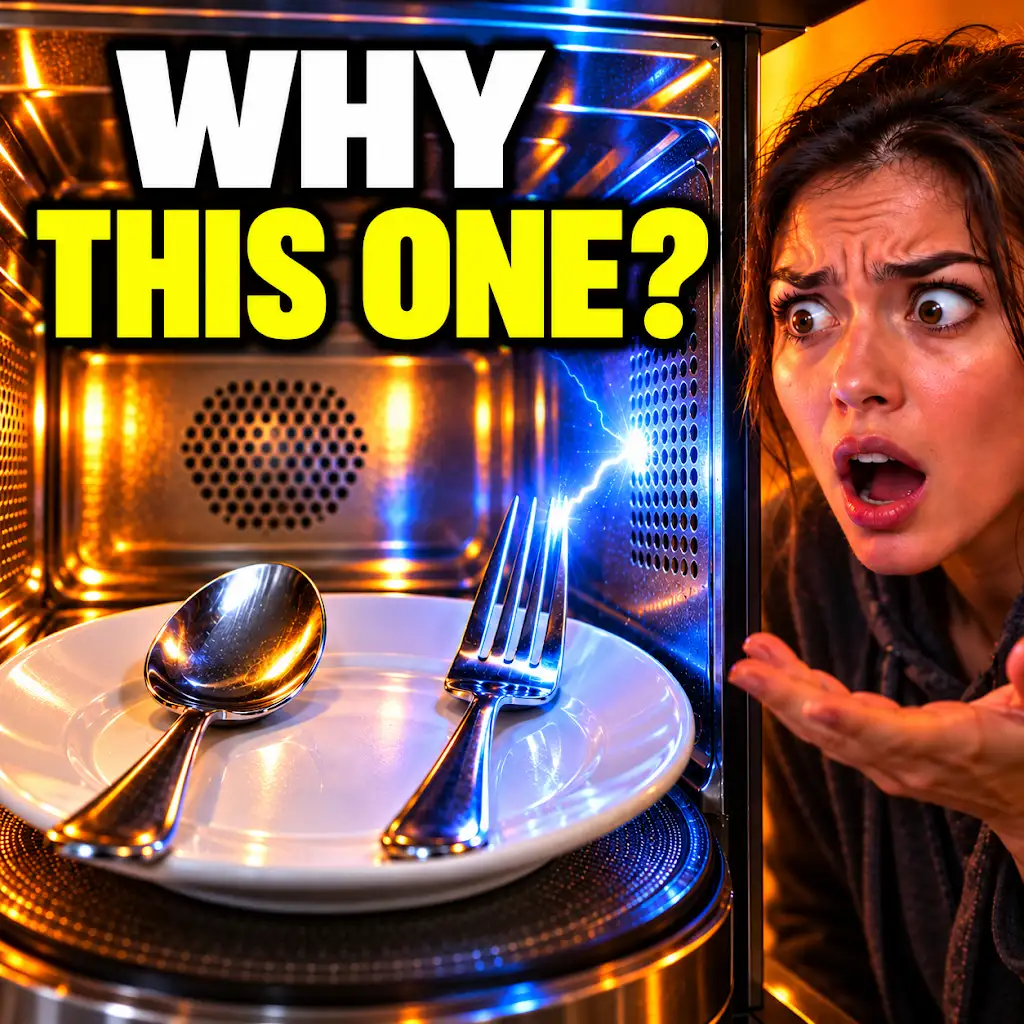
A Fork and a Spoon React Differently in a Microwave. Why?
FAQs
What is an electromagnetic field and how does it relate to microwave ovens?
An electromagnetic field is a physical field produced by electrically charged objects. Microwave ovens use electromagnetic fields to heat food by causing water molecules in the food to vibrate, generating heat.
How do microwave ovens generate electromagnetic fields?
Microwave ovens generate electromagnetic fields using a component called a magnetron, which converts electricity into high-powered radio waves.
Are there any health risks associated with microwave ovens and electromagnetic fields?
According to the World Health Organization, there is no evidence to suggest that exposure to the electromagnetic fields produced by microwave ovens poses any health risks.
What safety measures should be taken when using a microwave oven and its electromagnetic fields?
To ensure safety when using a microwave oven, it is important to follow the manufacturer’s instructions, avoid tampering with the oven’s internal components, and use microwave-safe containers.
Can electromagnetic fields from microwave ovens interfere with other electronic devices?
Microwave ovens can potentially interfere with nearby electronic devices that operate on the same frequency as the oven’s electromagnetic fields, such as Wi-Fi routers and cordless phones. It is recommended to keep such devices at a safe distance from the microwave oven while it is in use.