You’ve probably seen it. That unsettling blue-white flash, accompanied by a crackling sound, originating from your microwave oven. It’s the microwave electrical arc, a phenomenon that can be as startling as it is mysterious. But what exactly is happening inside that metal box when it sparks? You might be surprised to learn that it’s a complex interplay of electromagnetic forces, material properties, and even quantum mechanics. This isn’t just a random malfunction; it’s a fascinating display of applied physics that you, even without a physics degree, can begin to understand.
Before diving into the specifics of microwave arcs, let’s establish a fundamental understanding of what an electrical arc is in general. Imagine two conductive points, separated by an insulating medium – in most cases, air. When you apply a sufficiently high voltage across these two points, you’re essentially creating an electric field. Think of this electric field as a force pushing electrons. If this force is strong enough, it can overcome the insulating properties of the medium.
The Role of Voltage and Breakdown
The key to initiating an arc is reaching what’s called the “dielectric breakdown voltage.” For air, at standard atmospheric pressure, this voltage is quite high. You won’t typically see an arc in your everyday electrical outlets because the voltages involved, while significant, aren’t usually concentrated enough across a sufficient gap to cause a breakdown. However, in specific situations, like a lightning strike or, indeed, a microwave oven, these conditions can be met.
When the electric field strength exceeds the breakdown voltage of the insulating medium, something remarkable happens. Electrons, accelerated by the field, collide with atoms in the medium. These collisions can be energetic enough to knock other electrons free from their atoms, creating a cascade effect. This process is known as ionization.
Plasma: The Ionized State of Matter
The result of this widespread ionization is the creation of plasma. Plasma is often referred to as the fourth state of matter, distinct from solid, liquid, and gas. In plasma, you have a collection of ions (atoms that have lost electrons and thus carry a positive charge) and free electrons. This ionized gas is now electrically conductive, allowing current to flow. This flow of current, carrying energy and emitting light and heat, is what you perceive as an electrical arc.
Arc Propagation and Stability
Once an arc is initiated, it tends to be self-sustaining as long as the voltage source can maintain the necessary current. The heat generated by the arc further ionizes the surrounding medium, making it easier for the arc to continue. This is why arcs can be quite powerful and persistent. The arc itself creates a channel of conductive plasma, effectively lowering the resistance between the two points and allowing for a continuous flow of electricity.
Microwave electrical arcs are a fascinating phenomenon that occurs when microwaves create a conductive path through the air, leading to a discharge of electricity. This intriguing process is explored in detail in a related article on Freaky Science, which delves into the underlying principles of microwave technology and the conditions necessary for these arcs to form. For more information on this topic, you can read the article here: Freaky Science.
Microwaves: A Different Kind of Electrical Force
Now, let’s bring this understanding of electrical arcs into the context of your microwave oven. Microwaves are, as the name suggests, a form of electromagnetic radiation with wavelengths in the centimeter range. They are generated by a device called a magnetron, which essentially uses strong magnetic fields and electric fields to accelerate electrons, producing high-frequency radio waves.
The Magnetron and Waveguide
The magnetron is the heart of your microwave oven, but it’s not where the arcing typically occurs. The microwaves are then directed through a component called a waveguide, which is a hollow metal tube designed to efficiently transmit these electromagnetic waves. The waveguide typically feeds the microwaves into the cooking cavity of the oven.
The Cooking Cavity: A Metal Box
The cooking cavity itself is a Faraday cage, meaning its metal walls are designed to reflect microwaves. This reflection is crucial for containing the energy within the oven and ensuring efficient cooking. However, these reflective metal surfaces, combined with the presence of other conductive materials (like food or packaging), can create scenarios ripe for electrical arcing.
Frequency and Power
The specific frequency of microwaves used in most domestic ovens is around 2.45 GHz (gigahertz). At this frequency, the electromagnetic fields are oscillating very rapidly. The power output of a typical microwave oven can range from 700 to 1200 watts, meaning it’s delivering a significant amount of energy. When these powerful, rapidly oscillating electromagnetic fields interact with conductive materials in a confined space, the conditions for dielectric breakdown can be met.
The Culprits: What Causes Arcing in Your Microwave?
You’ve likely encountered microwave arcs due to specific items placed inside the oven. Understanding why these items cause problems is key to preventing them. It boils down to how they interact with the powerful electromagnetic fields.
Metallic Objects: The Primary Offenders
The most common cause of microwave arcing is the presence of metallic objects. This includes everything from silverware and aluminum foil to decorative metallic trim on plates and bowls. Metals are excellent conductors of electricity.
Sharp Edges and Points
The shape of metallic objects plays a significant role. Sharp edges, points, and thin metallic structures are particularly problematic. When microwaves hit a sharp edge, the electric field can become highly concentrated in that area. Imagine the electric field lines bunching up around a sharp point. This concentration of electric field strength can easily exceed the dielectric breakdown voltage of the air, initiating an arc. This is why a crinkled piece of aluminum foil is far more likely to arc than a smooth, large sheet. The crinkles create countless sharp edges.
Thin Foil and Small Metal Pieces
Thin metallic foil, like aluminum foil, is a prime example. It’s thin and easily deformed, creating numerous sharp edges and points. Furthermore, if a piece of foil is small and isolated, it can act as a resonant antenna for the microwaves. This means it can absorb a significant amount of microwave energy, becoming very hot and increasing the likelihood of an arc. Small, detached pieces of metal, even if not sharp, can also get caught in areas where electric fields are concentrated.
Imperfectly Conductive Materials
While pure metals are the most obvious culprits, other materials can also contribute to arcing under certain conditions.
Metalized Plastic and Ceramics
Many disposable food containers and some ceramic dishes have a thin layer of metalized plastic or metallic paint for decorative purposes. This thin metallic coating behaves similarly to aluminum foil, especially if it’s damaged or has sharp edges. These can be deceptive because they don’t look like solid metal.
Certain Foods with High Mineral Content
This is a less common but still possible cause. Some foods, particularly those with high mineral content, can exhibit some degree of conductivity. If these foods are in direct contact with a metallic object or are positioned in a way that concentrates the electric field, they can contribute to or even initiate an arc. Think of starchy foods that might become slightly conductive when heated.
Internal Microwave Oven Issues
Sometimes, the arcing isn’t due to what you put in the microwave but rather an internal problem with the oven itself.
Damaged Waveguide Cover
The waveguide cover is a protective shield inside the microwave cavity that prevents food particles from entering the waveguide and getting damaged. This cover is typically made of mica or a similar material. If this cover is damaged, cracked, or has food debris stuck to it, it can allow microwaves to escape and interact directly with metal components behind it, leading to arcing.
Loose or Damaged Interior Components
Any loose or damaged metallic component inside the microwave cavity can become a point of high electric field concentration. This could include parts of the fan assembly, internal wiring connections, or even damage to the cavity walls themselves.
The Physics of the Arc: How it Forms and What Happens
When the conditions are right, the microwave electrical arc is a rapid and energetic event. The process is a fascinating interplay of electromagnetic fields and matter.
Resonance and Field Enhancement
Microwaves, being electromagnetic waves, induce currents in conductive materials. When a metallic object is placed in the microwave cavity, these induced currents can become amplified, especially if the object’s size and shape are resonant with the microwave frequency. This resonance effectively concentrates the electrical energy at specific points on the conductor. Think of it like a tuning fork; if you strike it at its resonant frequency, it vibrates with much greater amplitude.
Dielectric Breakdown in Action
As we discussed earlier, the concentrated electric field at a sharp edge or point can exceed the dielectric strength of the air. This initiates the breakdown of air into plasma. The process is incredibly fast. Electrons are ripped from air molecules, and these newly freed electrons are then accelerated by the intense electric field.
The Plasma Channel and Current Flow
The ionized air forms a conductive plasma channel. This channel acts like a wire, allowing a significant current to flow between the conductive object and another conductive surface (often the microwave cavity wall or another metallic object). The energy of the microwaves is then rapidly transferred to this plasma, causing it to become intensely hot and emit light.
The Spark and Sound
The visible spark is the light emitted by the superheated plasma. The characteristic crackling sound is likely due to the rapid expansion of the air heated by the arc and possibly the rapid generation and dissipation of energy within the plasma. It’s a sound that signals a sudden release of energy.
Self-Limiting Nature (Sometimes)
In many cases, the arc is self-limiting. As the arc forms, it creates a conductive path. However, the intense heat of the arc can also vaporize or slightly alter the surface of the conductive material, or the arc itself can dissipate the energy too quickly for the magnetron to sustain it. This is why you often see a brief spark rather than a continuous, powerful arc. However, repeated arcing can cause damage to both the object and the microwave.
The phenomenon of microwave electrical arcs is a fascinating topic that delves into the interplay between electromagnetic waves and conductive materials. When metal objects are placed inside a microwave, they can create sparks due to the rapid oscillation of electric fields, leading to what is known as an electrical arc. For a deeper understanding of this intriguing subject, you can explore a related article that discusses the science behind these arcs in detail. This article provides insights into the mechanisms at play and the safety precautions one should consider when using microwaves. To learn more, visit this link.
Safety and Prevention: Keeping Your Microwave Arc-Free
| Aspect | Details |
|---|---|
| Phenomenon | Electrical arcs in microwave ovens |
| Cause | Formation of plasma due to high voltage |
| Temperature | Can reach up to 3000°C |
| Effect | Can damage the interior of the microwave |
| Prevention | Proper maintenance and avoiding metal objects |
The good news is that preventing microwave arcing is largely within your control, and understanding the causes is the first step.
The Golden Rule: No Metal (Unless Specifically Stated)
This is the most crucial rule. Unless the manufacturer’s instructions explicitly state otherwise for a specific item (like some microwave-safe cookware with minimal metallic accents designed to be safe), assume that any object containing metal will cause arcing.
Be Wary of Decorative Trim
Many plates, bowls, and mugs have decorative metallic bands or accents. Even if it’s a thin line, it’s enough to cause a problem. Always check the rim and any other embellishments for metal.
Aluminum Foil Caution
While aluminum foil can be used in microwaves for shielding purposes under very specific circumstances (like protecting thin edges of food from overcooking), it requires careful placement and knowledge. For general cooking, it’s best to avoid it altogether. If you do use it, ensure it’s smooth, well-shaped, and not touching the oven walls. Crinkled or bunched-up foil is a recipe for disaster.
Inspect Your Food Packaging
Many pre-packaged frozen meals or convenience foods come in packaging with metallic liners or elements. Always remove food from such packaging before microwaving. Read the instructions on the packaging carefully.
Avoid Overcrowding
While not a direct cause of arcing, overcrowding can increase the likelihood of conductive items touching each other or the oven walls, thus creating potential arc paths.
Regular Cleaning is Key
Keep the interior of your microwave clean. Food debris, especially greasy residue, can accumulate and become a point of weakness or a bridge for electrical current. Clean the interior walls, door seal, and turntable regularly.
Inspect Your Microwave for Damage
Periodically check the interior of your microwave for any signs of damage, such as cracks in the door seal, damage to the waveguide cover, or loose components. If you notice anything unusual, it’s best to have it inspected by a qualified technician.
When in Doubt, Take It Out
If you’re unsure whether an item is microwave-safe, err on the side of caution. It’s better to transfer your food to a known microwave-safe dish than to risk a dangerous arc.
When Arcing Happens: What to Do and What to Avoid
Even with the best precautions, an arc might still occur. Knowing how to react can prevent further damage and ensure safety.
Immediately Stop the Microwave
The most important first step is to immediately press the “Stop” or “Cancel” button on your microwave. Do not try to open the door while the arc is actively occurring, as this can expose you to intense light and potentially dangerous electrical currents.
Unplug the Microwave
Once the arc has stopped and you’ve opened the door, unplug the microwave from the power outlet. This completely removes the power source and prevents any further electrical activity.
Inspect the Cause
Carefully inspect the interior of the microwave and the item that was inside. Identify what caused the arc. Was it a piece of metal, damaged packaging, or something else?
Examine for Damage
After the microwave has cooled down, carefully examine the interior for any signs of damage. Look for burn marks, melted plastic, or any other indicators of heat damage. Pay close attention to the waveguide cover and the cavity walls.
Discard Damaged Items
If the item that caused the arc is damaged (e.g., melted, charred, or significantly altered), it’s best to discard it.
When to Seek Professional Help
If the arcing was significant, persistent, or if you notice any signs of damage to the microwave itself, it’s advisable to stop using it and have it inspected by a qualified appliance repair technician. Continued use of a damaged microwave can be a fire hazard.
Never Ignore Repeated Arcing
If your microwave starts arcing frequently, even with correct usage, it’s a strong indication of an internal problem and requires professional attention.
By understanding the science behind microwave electrical arcs – from the fundamental principles of electricity and plasma to the specific way microwaves interact with materials – you can become a more informed and safer user of this indispensable kitchen appliance. Remember, a little knowledge goes a long way in preventing those startling flashes and ensuring your microwave continues to serve you well.
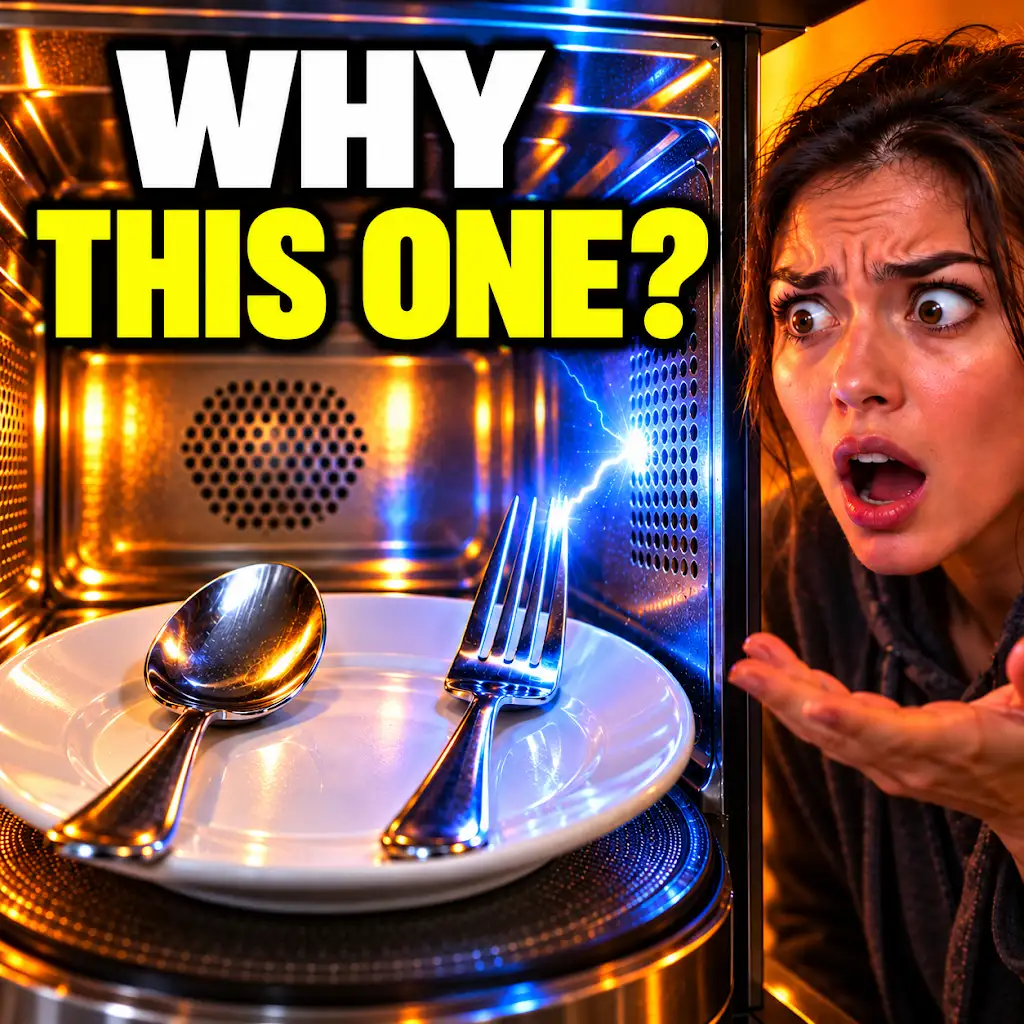
A Fork and a Spoon React Differently in a Microwave. Why?
FAQs
What causes electrical arcs in microwaves?
Electrical arcs in microwaves are caused by the buildup of electrical charge within the microwave cavity. This can occur when certain types of food or containers with metal components are placed inside the microwave.
Is it safe to use a microwave with electrical arcs?
No, it is not safe to use a microwave with electrical arcs. Electrical arcs can cause damage to the microwave and pose a fire hazard. It is important to stop using the microwave immediately if electrical arcs are observed.
How can electrical arcs be prevented in microwaves?
To prevent electrical arcs in microwaves, avoid placing metal objects or containers with metal components inside the microwave. Additionally, ensure that food items are properly covered with microwave-safe materials to prevent sparks and electrical discharge.
What are the potential dangers of electrical arcs in microwaves?
The potential dangers of electrical arcs in microwaves include damage to the microwave itself, risk of fire, and potential harm to the user if the electrical discharge comes into contact with the skin.
Can electrical arcs in microwaves be repaired?
Electrical arcs in microwaves should be addressed by a qualified technician. Attempting to repair the microwave without proper knowledge and expertise can be dangerous. It is recommended to seek professional assistance to address any issues related to electrical arcs in microwaves.