
You’ve likely encountered microwave ovens in your kitchen, a commonplace appliance that heats your food with invisible waves. But have you ever considered the extraordinary physics at play within that humming box? Beyond mere culinary convenience lies a fascinating realm of high-energy physics: microwave plasma. This isn’t just a technological marvel; it’s a fundamental state of matter, a superheated soup of charged particles, energized by the very same microwaves that reheat your leftovers. Exploring microwave plasma opens a window into extreme conditions, powerful forces, and a universe of scientific and technological applications that are, quite frankly, mind-boggling.
The Genesis of Microwave Plasma: More Than Just Heat
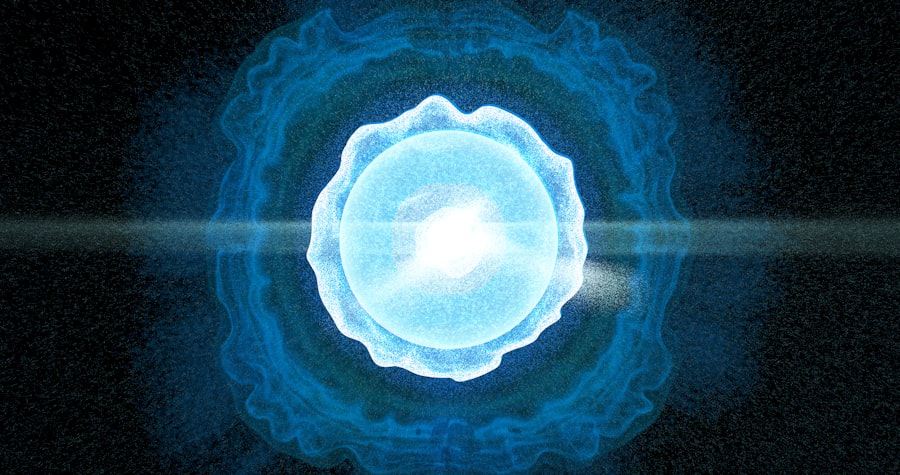
So, how does your everyday microwave transform into a plasma generator? It’s a question that delves into the very nature of matter and energy. At its core, microwave plasma is created when sufficient microwave energy is introduced into a gas. This energy doesn’t simply increase the kinetic energy of the gas molecules, like warming them up. Instead, it’s so potent that it begins to strip electrons away from their parent atoms.
Understanding the Fundamentals of Plasma
Before diving deeper into the microwave-specific process, it’s crucial to grasp what plasma actually is. Often referred to as the “fourth state of matter,” alongside solids, liquids, and gases, plasma is characterized by its ionized nature. This means a significant portion of its atoms have either gained or lost electrons, resulting in a collection of free electrons and positively charged ions. This collective of charged particles makes plasma electrically conductive and highly responsive to electromagnetic fields, setting it apart from ordinary gases.
The Role of Ionization
The key to plasma formation is ionization. In a gas, atoms and molecules are electrically neutral. When you inject enough energy, you overcome the electrostatic forces binding electrons to the atomic nucleus. This liberated electron then drifts through the gas, potentially colliding with other neutral atoms. If these collisions have enough energy, they can knock off another electron, creating a cascade effect. This self-sustaining process, where an initial ionization event triggers further ionization, is what leads to a plasma.
Plasma: An Electrically Charged Medium
The presence of a significant number of free charge carriers – electrons and ions – imbues plasma with unique electrical properties. Unlike neutral gases, plasma can conduct electricity. This conductivity is fundamental to many plasma applications, from lighting to fusion reactors. Furthermore, the collective behavior of these charged particles gives rise to collective phenomena, such as waves and instabilities, which are not observed in neutral gases.
The Microwave Contribution: High-Frequency Energy Delivery
Microwaves are electromagnetic waves with frequencies typically ranging from 300 MHz to 300 GHz. They are a form of non-ionizing radiation at lower frequencies, but at the power levels and frequencies commonly used to generate plasma, they become incredibly effective at delivering energy to gas molecules. The oscillating electric and magnetic fields within the microwaves interact with charged particles in the gas.
Electromagnetic Interaction with Gas
When microwaves propagate through a gas, their oscillating electric field exerts forces on any free electrons present. These electrons, being much lighter than ions, are accelerated rapidly by the electric field. As these energetic electrons collide with neutral gas atoms and molecules, they can transfer enough energy to cause ionization. This is the primary mechanism for creating microwave plasma: using the energy of the microwaves to accelerate electrons, which then ionize the gas.
Resonance and Power Absorption
The efficiency of plasma generation is highly dependent on the frequency of the microwaves and the properties of the gas. Certain frequencies can resonate with the natural oscillations of electrons in the gas, leading to very efficient energy absorption. This resonant coupling allows for the rapid creation of a high-energy plasma even at relatively low pressures. The power of the microwave source also plays a critical role; higher power levels translate to more energetic electrons and a denser, hotter plasma.
Microwave plasma is an intriguing subject that explores the interaction between microwaves and ionized gases, leading to various applications in fields such as materials science and medicine. For a deeper understanding of this phenomenon and its implications, you can read a related article on the topic at Freaky Science. This resource provides valuable insights into the principles of microwave plasma and its innovative uses in contemporary research.
The Anatomy of Microwave Plasma: More Than Just Glowing Gas
Once created, microwave plasma presents a visually striking and physically complex phenomenon. It’s not simply a hot gas; it’s a dynamic ensemble of particles behaving in ways that defy everyday intuition. Understanding its components and behavior is key to harnessing its power.
Plasma Species: The Building Blocks of the Glow
A microwave plasma isn’t a homogenous entity. It’s composed of several distinct types of particles, each playing a crucial role in its existence and properties.
Electrons: The Lightweights Driving Ionization
As mentioned, electrons are the primary agents of ionization. In a microwave plasma, they are the most energetic particles, constantly being accelerated by the microwave fields and colliding with other species. Their low mass allows them to respond quickly to the oscillating fields, making them the primary drivers of the plasma’s energy absorption.
Ions: The Positively Charged Remnants
When an electron is stripped from an atom or molecule, the remaining entity becomes a positively charged ion. These ions are much heavier than electrons and respond more sluggishly to the microwave fields. However, they are crucial for maintaining the overall charge neutrality of the plasma (on a macroscopic scale) and play a significant role in chemical reactions occurring within the plasma.
Excited Neutral Species: The Energy Stores
Not all energy transfer results in ionization. Collisions can also excite neutral atoms and molecules to higher energy states. These excited species are unstable and will eventually return to their ground state by emitting photons, which is the visible light you often associate with plasma. This excitation process is responsible for the characteristic glow of microwave plasma.
Radicals and Reactive Species: The Chemical Catalysts
Beyond simple ionization and excitation, microwave plasmas are teeming with highly reactive species, often referred to as radicals. These are atoms or molecules with unpaired electrons, making them chemically very active. These radicals are responsible for many of the unique chemical processing capabilities of microwave plasmas, as they can readily initiate or participate in chemical reactions.
Plasma Parameters: Quantifying the Extreme
To study and utilize microwave plasma, scientists and engineers need to quantify its properties. These parameters describe the extreme conditions within the plasma.
Electron Temperature and Density: The Core Metrics
Two fundamental parameters that define a plasma are its electron temperature and electron density. Electron temperature, often measured in electron volts (eV) or Kelvin, reflects the average kinetic energy of the electrons. Higher electron temperatures generally lead to more efficient ionization and excitation. Electron density refers to the number of free electrons per unit volume. A higher electron density means more charged particles available to interact with microwaves and participate in reactions.
Gas Pressure: The Environment’s Influence
The pressure of the background gas plays a critical role in microwave plasma formation and sustainment. At low pressures, microwaves can more easily penetrate the gas and ionize it, leading to the formation of a stable plasma. At higher pressures, collisions become more frequent, and the plasma can become unstable or extinguish itself unless higher microwave power is applied.
Degree of Ionization: How “Plasma-like” Is It?
The degree of ionization is the ratio of the number of ionized particles to the total number of particles in the gas. In microwave plasmas, this can vary widely, from weakly ionized plasmas where only a small fraction of the gas is ionized, to fully ionized plasmas where almost all particles are in an ionized state. This parameter significantly influences the plasma’s conductivity and reactivity.
The Science Behind the Glow: Physics in Action
The creation and behavior of microwave plasma are governed by fundamental physics principles, demonstrating the power of electromagnetic interactions and kinetic theory in extreme environments.
Electron Kinetics: The Dance with Microwaves
The motion of electrons within the oscillating microwave field is a central aspect of microwave plasma physics.
Acceleration and Collisions: The Energy Transfer Cycle
The electric field of the microwaves imparts energy to the free electrons. These electrons then move at high speeds, colliding with neutral gas atoms and molecules. These collisions are the workhorses of plasma generation, transferring energy from the electrons to the gas.
Energy Distribution Functions: Not All Electrons Are Equal
It’s important to note that not all electrons in a plasma have the same energy. The distribution of electron energies, known as the electron energy distribution function (EEDF), is a crucial characteristic of a plasma. In microwave plasmas, the EEDFs can be non-Maxwellian, meaning they don’t follow a simple Gaussian distribution. This complexity arises from the strong microwave fields and the specific collision processes occurring.
Plasma Waves and Instabilities: Dynamic Behavior
Microwave plasmas are not static. They are dynamic systems exhibiting wave phenomena and instabilities, showcasing the collective behavior of charged particles.
Electrostatic Waves: Collective Oscillations
The collective motion of charged particles in a plasma can give rise to various types of waves. Electrostatic waves, for example, involve the oscillation of electric fields driven by the displacement of charges. These waves can propagate through the plasma and transport energy and momentum.
Electromagnetic Waves: The Influence of Microwaves
The microwaves themselves are electromagnetic waves, and their interaction with the plasma can lead to phenomena like wave reflection, absorption, and transmission. This interaction is complex and depends on the plasma’s density and the microwave frequency.
Instabilities: The Plasma’s Unpredictability
Plasma can also be prone to instabilities, which are deviations from a stable equilibrium state that can grow over time. These instabilities can manifest in various ways, such as turbulence or oscillations, and can significantly impact plasma confinement and behavior. Understanding and controlling these instabilities is crucial for many plasma applications.
Harnessing the Power: Applications of Microwave Plasma
The unique properties of microwave plasma make it a versatile tool with applications spanning a wide range of scientific and industrial fields. From manufacturing to fundamental research, this high-energy phenomenon is proving invaluable.
Materials Processing: Shaping the Future
Microwave plasmas are revolutionizing how we create and modify materials, enabling new manufacturing processes and enhancing existing ones.
Surface Treatment and Cleaning: A Pristine Finish
The reactive species generated in microwave plasmas are excellent for cleaning and modifying material surfaces. They can remove organic contaminants, etch surfaces with high precision, or deposit thin films with controlled properties. This is crucial for industries like semiconductor manufacturing and aerospace.
Thin Film Deposition: Building Atom by Atom
Microwave plasmas can be used to deposit thin films of various materials, such as metals, ceramics, and semiconductors. The energetic ions and reactive species can break down precursor gases and deposit desired material onto a substrate. This is essential for creating coatings, electronic components, and optical devices.
Etching and Machining: Precision Without Physical Contact
In microelectronics fabrication, precise etching of materials is paramount. Microwave plasmas can be used to selectively remove material with extreme accuracy, creating intricate patterns on silicon wafers and other substrates without the need for direct physical contact, which can cause damage.
Environmental Applications: Cleaning Up Our World
The high reactivity of microwave plasmas also makes them effective for environmental remediation.
Waste Treatment and Destruction: Neutralizing Hazards
Microwave plasmas can break down hazardous chemical waste, including persistent organic pollutants and greenhouse gases, into less harmful substances. The intense energy within the plasma can disrupt strong chemical bonds, effectively destroying dangerous molecules.
Air and Water Purification: A Breath of Fresh Air
By generating reactive species, microwave plasmas can be used to remove pollutants from air and water. They can oxidize volatile organic compounds (VOCs) and other contaminants, leading to cleaner air and water supplies.
Scientific Research: Probing the Unknown
Beyond practical applications, microwave plasmas are invaluable tools for fundamental scientific research, allowing us to explore extreme conditions and test theoretical models.
Fusion Energy Research: The Quest for Clean Power
Microwave plasma is a key component in many fusion energy experiments. Powerful microwave heating systems are used to create and sustain the extremely hot plasmas required for nuclear fusion reactions, bringing us closer to a clean and virtually limitless energy source.
Space Propulsion: Reaching for the Stars
The high exhaust velocities achievable with some microwave plasma thrusters make them promising candidates for spacecraft propulsion. These thrusters can provide efficient and sustained thrust for long-duration space missions.
Fundamental Plasma Physics: Unraveling Complexity
Studying microwave plasmas allows physicists to investigate fundamental plasma phenomena, such as wave propagation, turbulence, and particle acceleration. This research contributes to our understanding of plasmas found throughout the universe, from stars to nebulae.
Microwave plasma is an intriguing area of research that explores the generation of plasma using microwave radiation, which has various applications in fields such as materials processing and environmental science. For those interested in learning more about the underlying principles and potential uses of this technology, a related article can provide valuable insights. You can read more about it in this fascinating article that delves into the science behind microwave plasma and its implications for future innovations.
The Future of Microwave Plasma: Continued Innovation and Discovery
The field of microwave plasma is far from reaching its zenith. Ongoing research and development promise even more exciting advancements and applications in the years to come.
Enhanced Control and Efficiency: Refining the Power
Researchers are continuously working to improve the control and efficiency of microwave plasma generation. This includes developing new microwave sources, optimizing plasma confinement techniques, and better understanding the underlying physics to achieve more precise control over plasma properties.
Novel Applications: Expanding the Horizons
As our understanding deepens, new and innovative applications for microwave plasma are bound to emerge. Imagine specialized medical treatments, advanced agricultural technologies, or entirely new material synthesis methods, all powered by this versatile form of plasma.
Bridging Fundamental Science and Technology: The Cycle of Progress
The interplay between fundamental plasma physics research and technological development will continue to drive progress in the field. Discoveries made in the laboratory will fuel new engineering solutions, and the challenges encountered in developing new technologies will inspire further fundamental investigations. The exploration of microwave plasma is a testament to the power of scientific inquiry and the boundless potential of high-energy phenomena. You’ve just scratched the surface of a field brimming with discovery, a testament to how even the most seemingly ordinary technologies can unlock extraordinary insights into the universe around us.

A Fork and a Spoon React Differently in a Microwave. Why?
FAQs
What is microwave plasma?
Microwave plasma is a type of plasma that is created using microwave energy to ionize gas molecules, producing a high-energy, reactive state of matter.
How is microwave plasma created?
Microwave plasma is created by introducing a gas, such as argon or nitrogen, into a chamber and then applying microwave energy to the gas, which ionizes the gas molecules and creates the plasma state.
What are the applications of microwave plasma?
Microwave plasma has a wide range of applications, including surface modification, thin film deposition, material synthesis, and plasma etching in industries such as semiconductor manufacturing, aerospace, and medical devices.
What are the advantages of using microwave plasma?
Some advantages of using microwave plasma include its ability to operate at lower pressures, its high energy efficiency, and its ability to create a uniform and controllable plasma environment.
What are some examples of microwave plasma technology in use?
Examples of microwave plasma technology in use include plasma-enhanced chemical vapor deposition (PECVD) for thin film coatings, plasma etching for microfabrication, and plasma sterilization for medical devices.