You’re probably familiar with the hum of your microwave oven, the way it heats food with invisible waves. But have you ever considered what happens inside that metal box when things go wrong? Beyond the convenient cooking, there’s a complex interplay of electromagnetic fields and materials, and when that balance is disturbed, you can encounter a phenomenon known as electrical breakdown. It’s not magic; it’s physics, and understanding it is crucial for both safety and appreciating the ingenious engineering that keeps your microwave functioning.
Electrical breakdown in a microwave isn’t like a traditional electric shock you might experience from a frayed wire. Instead, it refers to the point where the insulating properties of a material within the microwave cavity fail under the intense electromagnetic fields generated by the magnetron. This failure can lead to arcing, sparking, and potentially damage to your appliance. It’s a fascinating, albeit sometimes alarming, demonstration of the power of microwaves and the limits of the materials they interact with.
The Fundamentals of Microwave Energy
Before we delve into breakdown, you need a foundational understanding of how your microwave works. It’s not just about “waves.” It’s about specific frequencies and how they interact with matter.
The Magnetron: The Heart of the Microwave
Your microwave oven is powered by a device called a magnetron. This is a high-powered vacuum tube that generates microwave radiation. Think of it as a specialized light bulb, but instead of visible light, it emits electromagnetic waves at a specific frequency, typically around 2.45 GHz (gigahertz). This frequency is chosen because it’s particularly effective at exciting water molecules, causing them to vibrate and generate heat.
- How it works: The magnetron uses a combination of strong magnetic fields and electric fields to force electrons to move in circular paths. As these electrons move, they interact with resonant cavities within the tube, causing them to emit microwave radiation. This radiation is then channeled out of the magnetron and directed into the cooking cavity.
- Power output: The power of a microwave oven is measured in watts, indicating the rate at which it delivers energy. Higher wattage means more microwave energy is being produced and delivered to your food. This increased energy also means stronger electromagnetic fields within the cavity.
Microwave Cavity: The Controlled Environment
The metal box of your microwave is more than just a container. It’s a carefully designed resonant cavity. The metal walls are crucial because they reflect the microwave radiation. This reflection traps the microwaves within the cavity, allowing them to bounce around and interact with the food from multiple angles.
- Wave reflection: The conductive nature of the metal walls ensures that the electromagnetic fields don’t escape the cavity. This confinement is essential for efficient heating and also for safety.
- Standing waves: As microwaves bounce back and forth, they interfere with each other, creating patterns of high and low electric field strength known as standing waves. This is why you might notice that some parts of your food cook faster than others, as those areas are exposed to higher field strengths.
The Dielectric Heating Mechanism
The magic of microwave cooking lies in dielectric heating. When microwaves encounter polar molecules – like water, fat, and sugar – they cause these molecules to rapidly rotate back and forth, trying to align themselves with the oscillating electric field. This rapid rotation creates friction, which generates heat.
- Polar molecules: Water is the most abundant polar molecule in food. The constant dipole moment of water molecules makes them highly susceptible to the oscillating electric field of microwaves.
- Efficiency of heating: Not all materials are heated equally by microwaves. Materials that are good absorbers of microwave energy (like water) heat up quickly. Materials that are poor absorbers (like ceramics and glass) are heated indirectly by conduction from the food.
Electrical breakdown in a microwave occurs when the dielectric material, typically found in the microwave’s components, becomes conductive due to high voltage, leading to arcing and potential damage. This phenomenon can compromise the microwave’s functionality and safety. For a deeper understanding of the principles behind electrical breakdown and its implications in various devices, you can refer to a related article on this topic at Freaky Science.
The Science Behind Electrical Breakdown
Now that you understand the basics of microwave generation and interaction, let’s turn our attention to what happens when the electromagnetic fields become too intense for the surrounding materials to withstand.
Dielectric Strength: A Material’s Insulating Limit
Every insulating material has a limit to how much electric field it can withstand before it begins to conduct electricity. This limit is called its dielectric strength, and it’s typically measured in volts per meter (V/m) or kilovolts per millimeter (kV/mm). When the electric field strength in a material exceeds its dielectric strength, the material undergoes electrical breakdown.
- Definition: Dielectric strength is the maximum electric field intensity that an insulating material can withstand without losing its insulating properties.
- Factors influencing dielectric strength: The dielectric strength of a material can be influenced by several factors, including its composition, temperature, the presence of impurities, and the rate at which the electric field is applied.
- In a microwave context: In your microwave oven, the air within the cavity, as well as any food or packaging materials, are subject to the intense electric fields generated by the magnetron.
The Breakdown Process: From Insulation to Conduction
When the electric field strength within a material surpasses its dielectric strength, a cascade of events occurs, leading to breakdown.
- Ionization of molecules: The strong electric field can strip electrons from the atoms or molecules of the insulating material. This process is called ionization, and it creates free electrons and ions.
- Electron avalanche: These newly created free electrons are accelerated by the electric field and collide with other atoms or molecules, ionizing them and creating more free electrons. This process can quickly snowball into an “electron avalanche.”
- Formation of a conductive plasma: As the number of free electrons and ions increases dramatically, the material transitions from an insulator to a conductor. This highly ionized gas is often referred to as plasma.
- Arcing and sparking: The formation of this conductive plasma allows a sudden surge of current to flow, creating a visible arc or spark. This is the visual manifestation of electrical breakdown.
Common Scenarios Leading to Breakdown
While your microwave is designed to operate safely, certain conditions can push its internal components or the materials you place inside to their breakdown limits. Recognizing these scenarios is key to preventing problems.
Metal Objects: The Most Common Culprits
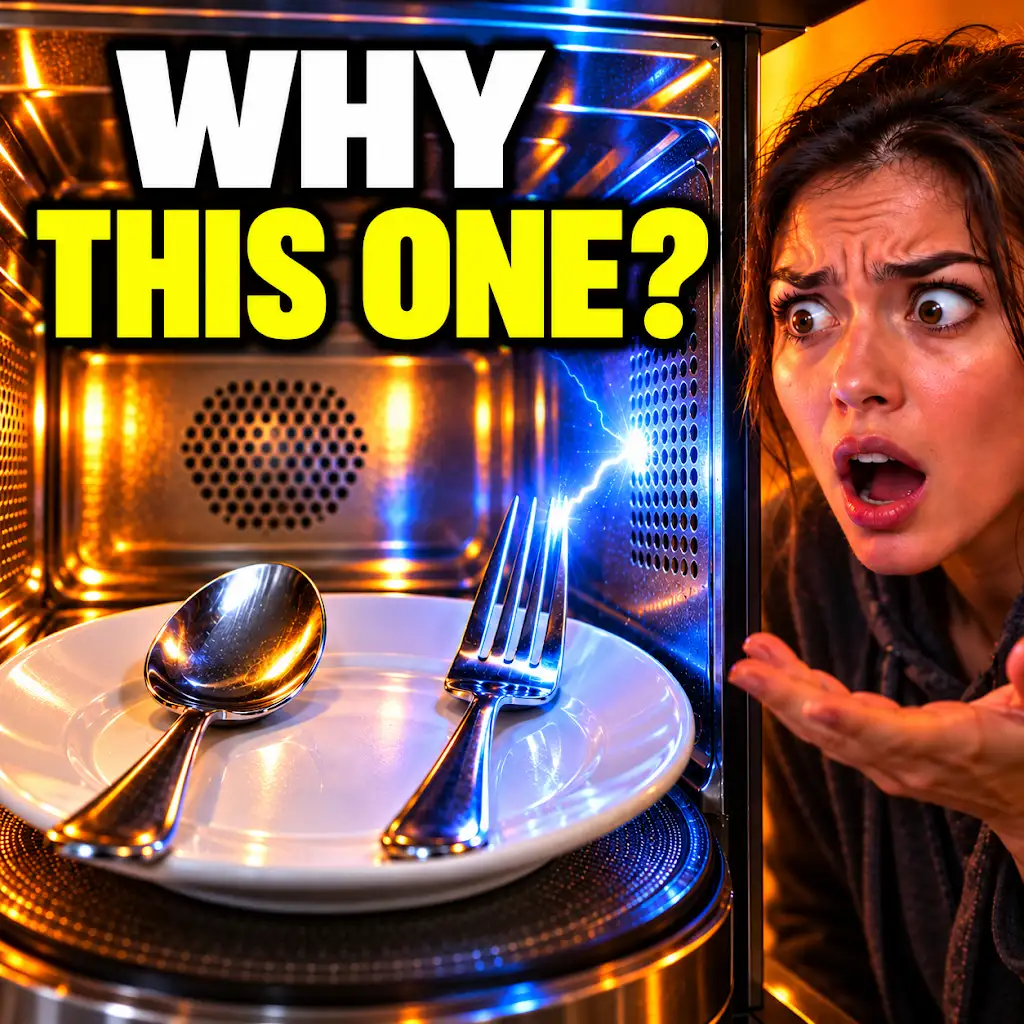
Perhaps the most well-known cause of microwave breakdown is the introduction of metal objects. Metal reflects microwaves, and when placed in a strong electric field, sharp edges or points can concentrate this field.
- Reflection and concentration: Sharp metal edges act like antennas, concentrating the electric field at their tips. This localized increase in field strength can easily exceed the dielectric strength of the surrounding air.
- Arcing: When the field strength at these points becomes high enough, it ionizes the air, leading to bright, often blue or white, sparks and arcing. This is the classic “sparking microwave” phenomenon.
- Thin metal vs. thick metal: Very thin metal, like the foil on some food packaging, is more prone to arcing because it can heat up and melt more quickly. Thicker metal might reflect the microwaves more generally, but sharp edges remain a significant risk.
- The “Faraday cage” effect: While the metal walls of your microwave oven form a Faraday cage, preventing microwaves from escaping, introducing metal inside the cavity disrupts this controlled environment and can lead to unintended interactions.
Non-Metallic Materials Under Stress
It’s not just metal that can cause problems. Certain non-metallic materials, under specific circumstances, can also lead to electrical breakdown.
- Materials with high conductivity or moisture content: While most plastics and ceramics are generally safe, materials with a high concentration of water or certain conductive impurities can become problematic. Think of extremely moist sponges or certain types of packaging that might contain metallic elements embedded within a non-metallic matrix.
- Sharp or pointed non-metallic objects: Similar to metal, sharp points on non-metallic objects can also concentrate electric fields, though typically to a lesser extent than metal.
- Overheating and charring: If a non-metallic material overheats due to prolonged microwave exposure or interaction with other components, it can degrade and its insulating properties can be compromised, leading to breakdown. Charred material becomes more conductive.
Faulty Components and Design Flaws
Sometimes, the issue isn’t with what you put in the microwave, but with the microwave itself.
- Damaged magnetron: A failing or damaged magnetron might produce uneven or excessively strong microwave fields, increasing the likelihood of breakdown in the cavity.
- Issues with the waveguide: The waveguide is the channel that directs microwaves from the magnetron to the cavity. Blockages or damage to the waveguide can cause reflected power to build up, potentially leading to breakdown.
- Cracked or damaged interior surfaces: If the interior coating or lining of the microwave cavity is damaged, it might expose underlying materials that are less resistant to microwave energy, leading to localized breakdown.
- Door seal integrity: While not directly causing breakdown within the cavity, a compromised door seal can allow microwaves to escape, potentially leading to safety hazards and a less efficient heating process, which could indirectly affect the balance of fields within.
The Consequences of Electrical Breakdown
When electrical breakdown occurs in your microwave, it’s not just a fleeting visual event. It can have tangible consequences for your appliance and potentially for your safety.
Damage to the Microwave Oven
The most immediate consequence of electrical breakdown is damage to the microwave itself.
- Damage to the magnetron: Arcing, especially if sustained, can send reflected power back into the magnetron, potentially damaging its delicate internal components. This is a common reason for a microwave to stop working altogether.
- Damage to the waveguide and stirrer fan: The intense heat and energy released during arcing can damage the waveguide, the stirrer fan (if present, which helps distribute microwaves), and other internal components that come into contact with the arc.
- Damage to the interior cavity: Repeated arcing can scorch and pit the interior walls of the microwave, making it difficult to clean and potentially weakening the structural integrity over time.
- Damage to the turntable and supports: If the arcing occurs near the turntable, it can damage the turntable itself or its rotating mechanism.
Fire Hazards
While less common, sustained electrical breakdown can indeed pose a fire risk.
- Ignition of materials: The intense heat generated by arcing can ignite flammable materials within the microwave cavity, such as food residues, paper towels, or certain types of packaging.
- Overheating of components: The uncontrolled flow of current during breakdown can lead to overheating of internal wiring and components, which in extreme cases could lead to a fire starting within the appliance.
- Importance of prompt action: If you notice sparking or arcing, it’s crucial to stop the microwave immediately and investigate the cause. Do not attempt to continue cooking if breakdown is occurring.
Potential for Harm
While modern microwaves have safety interlocks, it’s still important to be aware of potential risks.
- Exposure to microwave radiation: While the metal cavity is designed to contain microwaves, severe damage caused by breakdown could compromise this containment. However, this is a very rare scenario.
- Electrical shock hazard: If the internal wiring is damaged due to arcing or overheating, there could be a risk of electrical shock if you attempt to repair the appliance yourself without proper knowledge and safety precautions. This is why professional repair is often recommended.
Electrical breakdown in a microwave occurs when the electric field strength exceeds the dielectric strength of the material, leading to a sudden discharge of electricity. This phenomenon can cause damage to the microwave’s components and may even pose safety risks. For a deeper understanding of how electrical breakdown affects various devices, you can explore this insightful article on Freaky Science, which discusses related concepts in detail.
Preventing Electrical Breakdown: Your Role as the User
As a user, you have significant control over preventing electrical breakdown in your microwave. By following simple guidelines, you can ensure safe and efficient operation.
The “No Metal” Rule (with Nuances)
The most widely known rule is “no metal in the microwave.” While generally true, understanding the nuances is important.
- Smooth, rounded metal: Small amounts of smooth, rounded metal, like the handle of a ceramic mug, are generally not problematic. The concentration of the electric field at a smooth surface is less severe than at a sharp edge.
- Thin metal vs. thick metal: As discussed, thin metal foil is much more prone to arcing than thicker metal.
- Manufacturer recommendations: Always check your microwave’s instruction manual for specific guidance on what materials are safe to use. Some manufacturers may approve certain types of metal packaging for specific cooking tasks.
- When in doubt, leave it out: If you’re unsure whether a metal item is safe, it’s always best to err on the side of caution and avoid using it.
Choosing Safe Cookware and Packaging
Selecting the right materials for your microwave cooking is paramount.
- Microwave-safe labels: Look for dishes and containers labeled “microwave-safe.” This indicates they have been tested and are deemed suitable for microwave use.
- Glass and ceramics: Most glass and ceramic dishes are safe for microwave use, provided they don’t have metallic trim or decorations.
- Paper and plastic: Paper plates and bowls (without wax or plastic coatings that can melt) are generally safe for short heating periods. Certain plastics are specifically designed for microwave use; check the labeling. Avoid single-use plastic containers not designed for high heat.
- Avoid Styrofoam and certain plastics: Styrofoam can melt and warp under microwave heat, and some plastics can leach chemicals into your food.
Proper Usage and Maintenance
Beyond the materials you use, how you operate and maintain your microwave plays a vital role.
- Don’t operate an empty microwave: Running a microwave with nothing inside can lead to excessive energy buildup and potentially damage the magnetron. The microwaves need something to absorb their energy.
- Clean your microwave regularly: Food splatters and residues can become sites for arcing and can also degrade the interior surfaces over time. Regular cleaning ensures a safer environment.
- Inspect for damage: Periodically check the interior of your microwave for any signs of damage, such as scorch marks, pits, or cracks. Also, ensure the door seals are intact.
- Don’t attempt unauthorized repairs: If you suspect your microwave is malfunctioning or has sustained damage, do not attempt to repair it yourself unless you have the necessary expertise and safety knowledge. Contact a qualified appliance repair technician.
The Future of Microwave Technology and Breakdown Prevention
As technology advances, so too do the efforts to understand and mitigate electrical breakdown in microwave ovens. Engineers are constantly working to improve designs and materials.
Advanced Materials Science
The development of new materials with higher dielectric strengths and improved microwave absorption properties is an ongoing area of research.
- Ceramic composites: Researchers are exploring advanced ceramic composites that could offer better resistance to high electric fields and heat.
- Nanomaterials: The unique properties of nanomaterials are being investigated for their potential in creating more robust and efficient microwave components.
- Self-healing materials: While still in its early stages, the concept of self-healing materials could one day lead to microwave interiors that can automatically repair minor damage, preventing the onset of breakdown.
Smarter Microwave Design
Beyond materials, the design of the microwave cavity and its components is also evolving.
- Improved wave distribution: Innovations in waveguide design and the use of stirrer mechanisms or turntable technology are aimed at creating more uniform electric field distribution, reducing the likelihood of localized hotspots.
- Sensor technology: Future microwaves might incorporate sensors that can detect the presence of potentially problematic materials or abnormal field conditions and automatically adjust power or shut down the appliance.
- Integrated safety features: Designers are continually refining existing safety features and exploring new ones to ensure that even in the event of unusual circumstances, the risk of breakdown is minimized.
Education and Awareness
Ultimately, the most powerful tool in preventing electrical breakdown is user education. By understanding the principles at play, you can make informed decisions about how you use your microwave.
- Public awareness campaigns: Continued efforts to educate the public about safe microwave usage, particularly regarding the dangers of metal, can significantly reduce the incidence of breakdown.
- Clearer labeling and instructions: Manufacturers are responsible for providing clear and concise instructions regarding the safe use of their appliances and the types of cookware and packaging that are compatible.
- Technological literacy: As we interact with increasingly complex appliances, fostering a basic level of technological literacy can empower users to operate them safely and effectively.
Understanding electrical breakdown in microwaves isn’t just about avoiding a spark. It’s about appreciating the sophisticated interplay of physics that makes your appliance work and the potential consequences when that delicate balance is disrupted. By being mindful of the materials you use, how you operate your microwave, and by staying informed, you can ensure your appliance continues to heat your food safely and efficiently for years to come, without encountering the invisible barrier of electrical breakdown.
A Fork and a Spoon React Differently in a Microwave. Why?
FAQs
What is electrical breakdown in a microwave?
Electrical breakdown in a microwave occurs when the electrical insulation between two conductors breaks down, leading to a spark or arc. This can result in damage to the microwave and potential safety hazards.
What causes electrical breakdown in a microwave?
Electrical breakdown in a microwave can be caused by various factors, including high voltage, moisture or food particles inside the microwave, damaged or worn out components, and manufacturing defects.
How can electrical breakdown in a microwave be prevented?
To prevent electrical breakdown in a microwave, it is important to regularly clean and maintain the microwave, avoid using metal objects inside the microwave, and promptly address any signs of damage or malfunction.
What are the potential dangers of electrical breakdown in a microwave?
The potential dangers of electrical breakdown in a microwave include fire hazards, damage to the microwave itself, and the risk of electric shock to anyone nearby. It is important to address any electrical issues in a microwave promptly.
What should I do if I suspect electrical breakdown in my microwave?
If you suspect electrical breakdown in your microwave, it is important to unplug the appliance immediately and refrain from using it until it has been inspected and repaired by a qualified technician. Ignoring signs of electrical breakdown can lead to further damage and safety hazards.