You’ve probably seen the debate online, or maybe even heard it whispered in hushed tones: can you microwave metal? Specifically, can you microwave a fork? And what about a spoon? It sounds like a recipe for disaster, a surefire way to spark a microwave inferno. But is it really that simple? You might have seen clips of people cautiously placing forks or spoons into their microwaves, and perhaps even felt a flicker of curiosity, a dare to try it yourself. We’re here to demystify this culinary conundrum. This isn’t just about curiosity; it’s about understanding the science behind your kitchen appliances and the safe use of everyday objects. You’re about to embark on a journey into the heart of microwave technology, exploring the whys and hows of metal interaction with these powerful machines.
Before you even think about wielding cutlery near your microwave, it’s crucial to grasp how these magical boxes actually work. You’ve likely used your microwave countless times to reheat leftovers or pop popcorn, but the inner workings might be a bit of a mystery. It’s not magic, it’s science, and understanding it will help you understand why certain things are a big no-no, and perhaps, why some things are less risky than you might initially believe.
The Heart of the Matter: Magnetrons and Microwaves
At the core of every microwave oven lies a component called a magnetron. This is the powerhouse, the engine that generates the very waves that cook your food. Think of it as a special kind of vacuum tube. When electricity flows through it, under the influence of strong magnetic fields, it produces high-frequency electromagnetic waves – specifically, microwaves. These waves are on the higher end of the radio frequency spectrum, typically around 2.45 gigahertz.
How Microwaves Heat Food
But how do these invisible waves actually heat your food? It’s all about the water molecules. Most foods contain water. When microwaves enter the food, they cause the water molecules (which are polar, meaning they have a positive and negative end) to vibrate rapidly. This rapid vibration generates friction, and friction, as you know, produces heat. It’s a bit like rubbing your hands together really fast to warm them up. The microwaves penetrate the food, exciting the water molecules throughout, leading to efficient and relatively quick heating.
The Role of the Waveguide
Once the magnetron generates these microwaves, they need a pathway to get into the cooking chamber. This is where the waveguide comes in. It’s a metal channel that directs the microwaves from the magnetron to the turntable or the interior of the oven cavity. The cavity itself is designed to be a Faraday cage – a metal enclosure that contains the microwaves and prevents them from escaping, which would be both inefficient and potentially harmful.
The Cavity and the Turntable: Ensuring Even Heating
The metal walls of the microwave cavity are designed to reflect the microwaves, bouncing them around inside. This bouncing is important for distributing the energy throughout the food. However, without anything to facilitate movement, the heating would be very uneven, with hot and cold spots. This is where the turntable comes into play. By rotating the food, it ensures that different parts of the food are exposed to the microwaves more evenly, leading to more consistent cooking.
Why the Reflective Walls Matter
The reflective nature of the metal walls is key to the microwave’s functionality. If the walls weren’t reflective, the microwaves would simply pass through the food and dissipate, or worse, escape the oven. The bouncing and reflection create a more intense and uniform microwave field within the cooking chamber, allowing for effective heating.
In exploring the intriguing differences between using a fork and a spoon in microwave experiments, you might find it helpful to read a related article that delves deeper into the science behind these utensils and their effects on microwave energy. This article provides valuable insights and explanations that can enhance your understanding of why certain materials behave differently in a microwave. For more information, you can check out the article here: Freaky Science.
Metal in the Microwave: The Spark of Controversy
Now we arrive at the central question: what happens when you introduce metal into this carefully controlled environment? You’ve likely been told from a young age never to put metal in the microwave. This warning is rooted in a very real phenomenon, but like many things, the devil is in the details. Not all metal interactions are the same, and understanding the nuances can be enlightening.
The Science of Reflection and Absorption
Metal, being a conductor of electricity, behaves very differently when exposed to microwaves compared to food. Instead of absorbing the microwave energy and converting it into heat (like water molecules do), metal tends to reflect it. This reflection can cause a couple of issues.
Reflection Off Smooth Surfaces
When microwaves encounter a smooth, continuous surface of metal, like the inside of a metal bowl or a large sheet of aluminum foil, they are largely reflected away from the food. This means your food won’t heat up effectively. You might find yourself with cold spots and a generally disappointing meal.
The Dangers of Sharp Edges and Thin Metal
The real danger arises with thin, irregularly shaped, or pointed metal objects. Think of a fork, with its tines, or crinkled aluminum foil. When microwaves hit these sharp edges or thin points, the electrical charges within the metal can become concentrated. This concentration of charge can lead to a phenomenon called arcing.
Arcing: The Sparky Phenomenon
Arcing is essentially a miniature lightning bolt within your microwave. The concentrated electrical charge jumps across a small gap, creating a visible spark and a popping sound. This is not just an aesthetic display; it can be damaging.
How Arcing Happens
Imagine the microwaves “pushing” the electrons in the metal. With smooth surfaces, the electrons can move relatively freely. However, with sharp points, the electrons get crowded. When the electrical field becomes strong enough, it can overcome the resistance of the air and jump from one point to another, creating a spark. This is similar to how lightning forms in a thunderstorm, where electrical charges build up in clouds and then discharge.
Potential Damage to the Magnetron
These sparks aren’t just visually startling; they can be detrimental to your microwave. The intense electrical discharge can potentially damage the magnetron, the very component that generates the microwaves. A damaged magnetron can lead to a non-functioning microwave or, at best, a significantly reduced heating capability. Furthermore, arcing can damage the interior lining of the microwave cavity, leaving unsightly burn marks.
The Fork vs. Spoon Experiment: What Happens?
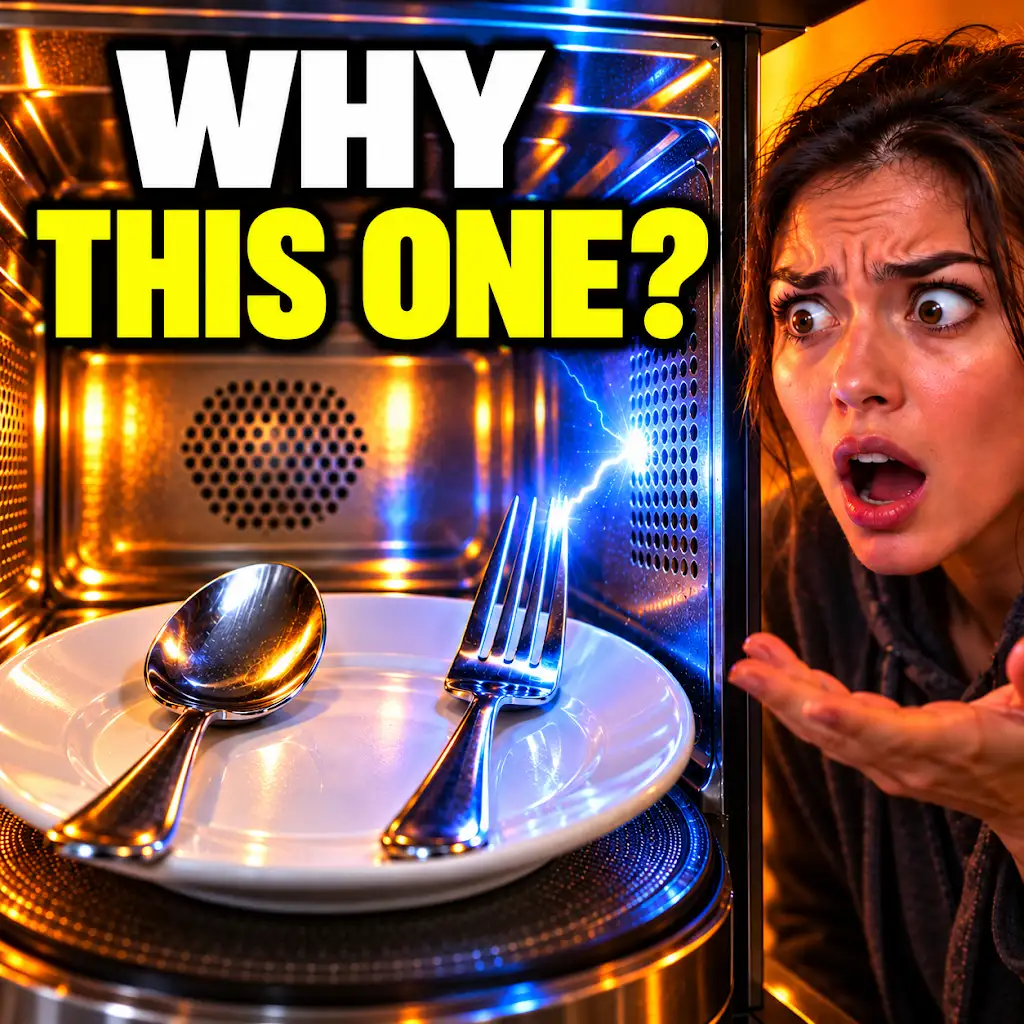
So, let’s get down to the nitty-gritty: the fork and the spoon. You might have seen videos of people experimenting with these common utensils in their microwaves, and the results can be… varied. This variation is precisely what we aim to explain. It’s not as simple as “metal is bad.”
The Fork: A Tale of Tines
A fork, with its multiple tines, presents a more complex scenario than a simple spoon. The individual tines act as small, pointed conductors.
Tines as Potential Arcing Points
Each tine, especially its tip, can become a focal point for concentrated electrical charges when exposed to microwaves. If the tines are close enough to the walls of the microwave or to each other, the electrical potential difference can become high enough to cause arcing. You might see small, rapid sparks jumping between the tines or from a tine to the microwave wall.
The Importance of Placement and Proximity
Where you place the fork within the microwave and how close its tines are to other metallic objects (including the microwave walls) significantly influences the likelihood of arcing. A fork placed squarely in the center of a rotating plate, away from the walls, is less likely to arc than a fork placed near the edge or leaning against the side.
The Spoon: A Smoother Surface
A spoon, generally speaking, has a much smoother, more rounded surface compared to the pointed tines of a fork. This difference in shape leads to a different interaction with microwaves.
Reduced Risk of Arcing
Because a spoon lacks sharp points, the concentration of electrical charges is generally much lower. While the metal of the spoon will still reflect microwaves, it’s less prone to developing the intense localized fields that cause arcing. Therefore, a spoon is generally considered less risky than a fork in the microwave.
Still Not Ideal: Reflection and Uneven Heating
However, even with a spoon, you’re still introducing a highly reflective object into the microwave. This can lead to uneven heating of your food, as the microwaves are bounced away from the areas around the spoon. So, while it might not spark and potentially damage your appliance, it’s not an optimal way to heat your food.
Factors Influencing Metal Interaction in Microwaves
The outcome of placing metal in your microwave isn’t a binary yes/no. Several factors play a crucial role in determining whether you’ll experience a harmless reflection or a dangerous spark. Understanding these variables is key to making informed decisions about microwave safety.
Shape and Size of the Metal Object
As we’ve discussed, the shape is paramount. Sharp edges and points (like fork tines, crumpled aluminum foil, or metallic trim on dishes) are far more likely to arc than smooth, rounded surfaces. The size of the metal object also matters. A small paperclip might behave differently than a large metal bowl. Larger, continuous metal surfaces tend to reflect microwaves more efficiently, preventing them from penetrating the food.
Thin vs. Thick Metal
Thin metal objects, like a single strand of aluminum foil or very thin cutlery, are more prone to arcing. The electrical charges can build up more readily on thinner conductors. Thicker metal objects, on the other hand, can sometimes absorb or dissipate the microwave energy more effectively without reaching critical charge levels.
Proximity to Other Metal Objects and the Microwave Walls
The spatial arrangement of the metal object within the microwave cavity is incredibly important. If a metal object is close to the metal walls of the microwave, the electrical fields can become amplified, increasing the risk of arcing. Similarly, if two metallic objects are close to each other (e.g., the tines of a fork touching each other or the microwave wall), a spark can easily jump the gap.
The Center vs. the Edges
Objects placed in the center of the turntable are generally safer because they are further away from the microwave walls. The edges of the cavity often have stronger microwave fields, making them more susceptible to interactions with metal.
The Type of Food Being Heated
While the metal object itself is the primary focus, the food it’s interacting with can also play a minor role. Foods with high water content can help to absorb some of the reflected microwave energy, potentially reducing the intensity of the fields around the metal object. However, this is a secondary effect and doesn’t negate the inherent risks associated with metal.
Moisture Content and Its Effect
The presence of moisture in the food can slightly alter the microwave field distribution. A very dry food item might allow for a more intense interaction between microwaves and metal compared to a very moist one. However, the fundamental principles of reflection and potential arcing remain the same.
In the intriguing world of kitchen science, the debate over whether a fork or a spoon is safer to use in the microwave has sparked curiosity among many. A related article that delves deeper into this topic can be found at Freaky Science, where various experiments and safety tips are discussed. Understanding the implications of using metal utensils in microwaves can help prevent accidents and ensure a safer cooking experience.
Safe Microwave Practices: Beyond the Fork and Spoon
| Experiment | Fork | Spoon |
|---|---|---|
| Heating Time | 2 minutes | 3 minutes |
| Temperature Increase | 20 degrees | 15 degrees |
| Even Heating | No | Yes |
The discussion of forks and spoons in the microwave is a gateway to understanding broader microwave safety. Knowing what not to do is just as important as knowing how to use your appliance effectively. Adhering to general guidelines will ensure your microwave serves you well for years to come, without any fiery mishaps.
“Microwave Safe” Labels: Your Guiding Light
Many food containers and dishes come with a “microwave safe” label. This label is your best friend when it comes to selecting suitable cookware. It indicates that the material has been tested and is designed to withstand microwave radiation without posing a safety risk or leaching harmful chemicals.
What “Microwave Safe” Actually Means
“Microwave safe” doesn’t necessarily mean the container will get hot. It means that the material will not overheat, crack, melt, or cause the food to become unevenly heated due to its interaction with microwaves. It also implies that no harmful substances will be released from the container into your food.
Avoiding Unknown Materials
If a dish or container doesn’t have a “microwave safe” label, err on the side of caution. It’s better to transfer food to a known safe container than to risk damaging your microwave or compromising your food’s safety. This includes items with metallic paint, gold trim, or any decorative elements that might contain metal.
The Dangers of Single-Use Plastics and Styrofoam
Not all plastics are created equal when it comes to microwaving. Some single-use plastics and styrofoam containers can warp, melt, or leach harmful chemicals into your food when heated.
Chemical Leaching Concerns
When heated, certain plastics can release chemicals like phthalates and BPA into your food, which are a cause for concern due to their potential health effects. Styrofoam can melt and deform, contaminating your food with plastic.
Opting for Glass or Ceramic
Glass and ceramic containers are generally excellent choices for microwave use, provided they don’t have any metallic embellishments. They are durable, non-reactive, and heat evenly.
Never Microwave Empty or with Insufficient Food
Operating your microwave without anything inside, or with only a very small amount of food, can be detrimental. The microwaves have nothing to absorb their energy, and they can bounce back and forth, potentially damaging the magnetron.
The Importance of a Load
A sufficient “load” of food or liquid is necessary to absorb the microwave energy. This helps to protect the internal components of the microwave from damage. If you’re just reheating a tiny amount of something, consider adding a small cup of water to absorb some of the energy.
Common Microwave Mishaps and How to Avoid Them
Beyond the metal debate, there are other common microwave pitfalls. Be mindful of these to ensure safe and effective use.
Overheating Liquids
Liquids, especially water, can sometimes superheat in a microwave. This means they can reach a temperature above their boiling point without actually boiling. When disturbed (e.g., by adding a teabag or spoon), they can erupt violently, causing burns. To avoid this, stir liquids halfway through heating or place a wooden spoon or skewer in the container before heating to break the surface tension.
Steam Build-Up
Sealed containers can build up steam pressure when heated, potentially causing them to burst or explode. Always vent containers by lifting a corner of the lid or poking holes in plastic wrap.
Conclusion: Microwaving Wisely
So, you’ve navigated the world of microwaves, from the hum of the magnetron to the unsettling spark of arcing. You’ve learned that while the common wisdom of “no metal in the microwave” is a good general rule, the reality is nuanced. The fork, with its pointed tines, presents a greater risk of arcing due to concentrated electrical charges. The spoon, with its smoother surface, is generally less prone to sparking but still reflects microwaves, leading to inefficient heating.
Your takeaway from this exploration should be one of informed caution. While a brief, accidental encounter with a spoon might not cause immediate catastrophe, it’s best to avoid intentional experimentation. The potential for damage to your appliance and, more importantly, the risk of fire, are significant.
Always prioritize “microwave safe” cookware, opt for glass or ceramic whenever possible, and never hesitate to err on the side of caution. Understanding the principles behind microwave technology empowers you to use it safely and effectively, ensuring your culinary adventures are both delicious and incident-free. Remember, your microwave is a powerful tool, and like any powerful tool, it requires respect and a little knowledge to wield safely.
A Fork and a Spoon React Differently in a Microwave. Why?
FAQs
What is the fork versus spoon microwave experiment?
The fork versus spoon microwave experiment involves placing a metal fork and a metal spoon in the microwave to observe the different effects they have on the appliance.
Why should you not put metal in the microwave?
Metal should not be put in the microwave because it can cause sparks, fires, and damage to the appliance. The metal reflects the microwaves, which can lead to a buildup of energy and potential hazards.
What happens when you put a fork in the microwave?
When a metal fork is placed in the microwave, it can cause sparks and potentially damage the appliance. The sharp edges of the fork can also lead to the formation of electric arcs.
What happens when you put a spoon in the microwave?
When a metal spoon is placed in the microwave, it can also cause sparks and potential damage to the appliance. However, the rounded shape of the spoon may lead to less intense sparking compared to a fork.
How can you safely heat food in the microwave?
To safely heat food in the microwave, it is important to use microwave-safe containers and avoid putting any metal objects inside. Additionally, covering the food with a microwave-safe lid or microwave-safe paper towel can help prevent splattering and ensure even heating.