
You’ve likely encountered arcing. Perhaps you’ve seen the dramatic blue flash of lightning, the crackle of static electricity jumping from your fingertip to a doorknob, or even the more subtle, yet equally concerning, spark inside a malfunctioning appliance. But when we talk about microwave arcing, you’re venturing into a realm where precision, control, and understanding the fundamental principles of physics become paramount. And at the heart of this understanding lies a surprisingly elegant, yet incredibly powerful, discipline: geometry.
You might not immediately connect the abstract shapes and angles you learned in school with the high-energy phenomena of microwave arcing, but the truth is, geometry is not just a helpful tool; it’s an indispensable foundation. From the very design of the microwave oven itself to the intricate pathways microwaves carve through the air, geometric principles dictate how these electromagnetic waves behave, how they interact with matter, and ultimately, when and where that dangerous arcing occurs.
This isn’t about solving Euclidean proofs for their own sake. This is about applying those same principles to prevent potentially catastrophic failures, ensure the safe and efficient operation of your kitchen appliance, and even push the boundaries of scientific research. You see, the space within your microwave isn’t just an empty box; it’s a carefully sculpted cavity, a precisely engineered environment where waves propagate, reflect, and interfere. And the rules governing this dance are deeply rooted in geometric relationships.
Understanding the Microwave Cavity: A Geometric Foundation
The cavity of your microwave oven is not just a random metal enclosure. It’s a resonant cavity, meticulously designed to efficiently contain and distribute microwave energy. This design is where geometry first asserts its dominance. Imagine the cavity as a three-dimensional shape, usually a rectangular prism. The dimensions of this prism are not arbitrary; they are calculated to resonate at the specific frequency of the microwaves generated by the magnetron – typically around 2.45 GHz.
The Role of Dimensions and Wavelength
The fundamental concept here is the relationship between the dimensions of the cavity and the wavelength of the microwaves. Microwaves, like all electromagnetic waves, have a specific wavelength. For your microwave oven to function effectively, the dimensions of the cavity need to be a multiple of half-wavelengths of the microwaves. This allows for standing waves to form within the cavity, which are crucial for efficient energy transfer to your food.
- Standing Waves: You can visualize standing waves as stationary waves that appear to vibrate in place. In a resonant cavity, these waves are formed by the constructive interference of microwaves reflecting off the metal walls. The points of maximum amplitude are called antinodes, and the points of minimum amplitude are called nodes. The food is placed in these antinodal regions to absorb the most energy.
- Cavity Resonators: The shape and size of the cavity determine its resonant frequencies. If the dimensions are not carefully chosen, the cavity won’t efficiently support the desired microwave frequency, leading to wasted energy and potentially uneven heating. Geometry dictates these precise relationships, ensuring the cavity acts as an efficient resonator.
Wave Propagation and Reflection: Geometric Paths
When microwaves enter the cavity, they don’t just travel in a straight line. They bounce off the metal walls, a process governed by the laws of reflection. These reflections are, you guessed it, geometric. The angle of incidence equals the angle of reflection. This continuous bouncing and reflection create a complex pattern of wave propagation within the cavity.
- Ray Tracing: A useful way to visualize this is through ray tracing. Imagine drawing straight lines representing the path of individual microwave rays. When a ray hits a wall, it bounces off at an equal and opposite angle, much like a billiard ball. The cumulative effect of these reflections creates a highly energetic and distributed field within the cavity.
- Interference Patterns: The overlapping of these reflected waves leads to interference. Where waves meet in phase, they constructively interfere, creating areas of high energy density. Where they meet out of phase, they destructively interfere, creating areas of low energy. Understanding these interference patterns, which are intrinsically geometric, is key to ensuring even heating and avoiding hot spots.
Understanding the role of geometry in microwave arcing is crucial for ensuring safety and efficiency in microwave technology. An insightful article that delves into this topic is available at Freaky Science, where the relationship between the shapes of materials and their interaction with microwave radiation is explored. This resource highlights how specific geometric configurations can either mitigate or exacerbate the risk of arcing, emphasizing the importance of design in microwave applications.
The Geometry of Potential Arcing Points
Arcing, in essence, is an electrical discharge – a sudden flow of electricity through a normally insulating medium, in this case, air. In a microwave oven, arcing is often a consequence of highly concentrated electromagnetic fields, and geometry plays a critical role in identifying and mitigating these high-field regions.
Sharp Corners and Edges: Field Concentrations
You might have noticed that microwave ovens often have rounded corners, especially in the areas where the door seals. This isn’t just for aesthetics. Sharp corners and edges act as points of high electric field concentration. Geometrically, a sharp point acts like an antenna, concentrating the electric field lines around it.
- Electrostatic Discharge: Similar to how lightning tends to strike tall, pointed objects, electric fields in a microwave cavity can concentrate at sharp metallic protrusions. These concentrations can become so intense that they exceed the dielectric strength of the air, leading to an electrical breakdown and arcing.
- Field Lines Visualization: Imagine electric field lines as emanating from positive charges and terminating on negative charges. At sharp points, these lines become much closer together, indicating a stronger electric field. This geometric feature makes these areas highly susceptible to arcing.
Metallic Objects and Their Geometric Interaction with Waves
The most common cause of arcing that you might encounter is placing metallic objects inside the microwave. The way these objects interact with the microwave field is a direct consequence of their geometry and how they reflect and absorb microwaves.
- Foil and Thin Metals: Thin metallic objects, like aluminum foil, can behave like antennas. Their shape and dimensions can resonate with the microwave frequency, leading to induced currents within the metal. These currents can become very strong, causing the metal to heat up rapidly and potentially melt or ignite. The edges of the foil are particularly prone to this effect.
- Tines and Utensils: Even seemingly innocuous metallic objects like the tines of a fork or the handles of utensils can cause problems. Their geometric shape can lead to localized reflections and field enhancements. If these geometric features align with the microwave field in a particular way, they can create a strong enough electric field to initiate an arc. The thinner and sharper the metallic protrusion, the higher the risk.
Waveguides and Antenna Couplers: Geometric Transmission Lines
Microwaves need to be guided from the magnetron to the cooking cavity. This is done using waveguides and antenna couplers, both of which are precisely engineered geometric structures. Their design is critical for efficient and safe power transfer.
The Geometry of Waveguides
Waveguides are hollow metal tubes, typically rectangular or circular in cross-section. Their dimensions are carefully chosen to allow microwaves of a specific frequency range to propagate efficiently along them, while preventing energy loss.
- Cutoff Frequency: Every waveguide has a cutoff frequency. Below this frequency, the microwaves will not propagate through the waveguide and will be attenuated. This cutoff frequency is determined by the dimensions of the waveguide. Geometrically, it’s related to how the wavelength of the microwave fits within the waveguide dimensions.
- Modes of Propagation: Within a waveguide, microwaves can propagate in different patterns, called modes. These modes are determined by the geometry of the waveguide and are represented by complex mathematical functions that describe the electric and magnetic field distributions. Certain modes are more efficient for power transmission than others.
Antenna Couplers: Bridging the Gap
The antenna coupler is the interface between the waveguide and the cooking cavity. It’s designed to efficiently launch the microwaves into the cavity, ensuring they are distributed as evenly as possible.
- Slit and Aperture Geometry: The shape and size of the aperture or slit through which microwaves enter the cavity are critical geometric parameters. They are designed to match the impedance of the waveguide to the cavity, minimizing reflections and maximizing power transfer.
- Polarization Control: The orientation and shape of the antenna coupler can also influence the polarization of the microwaves within the cavity. While not directly related to arcing in all cases, controlling polarization can contribute to more efficient and even heating, indirectly reducing the likelihood of localized energy build-ups that could lead to arcing.
Minimizing Arcing: Geometric Design Principles for Safety
The designers of microwave ovens employ a wealth of geometric knowledge to prevent arcing and ensure user safety. This involves meticulous attention to detail in every aspect of the oven’s construction.
Rounded Edges and Smooth Surfaces
As mentioned earlier, sharp edges are arcing magnets. To combat this, manufacturers utilize rounded edges and smooth transitions in critical areas of the oven cavity and door assembly.
- Eliminating Field Enhancements: By rounding off corners and edges, you effectively smooth out the electric field lines, preventing them from becoming excessively concentrated. This reduces the likelihood of exceeding the dielectric strength of the air.
- Dielectric Strength: Air, while an insulator, has a limit to the electric field it can withstand before breaking down. This limit is its dielectric strength. Geometric features that concentrate electric fields can easily push the field strength beyond this limit.
Cavity Tuning and Mode Stirring
Modern microwave ovens often incorporate features to ensure more even heating and reduce the chances of arcing by manipulating the microwave field distribution.
- Turntable: The turntable is a simple yet effective geometric solution. By rotating the food, it ensures that different parts of the food are exposed to varying levels of microwave energy, averaging out the heating process and preventing localized hot spots that could lead to arcing within the food itself.
- Mode Stirrers: Some ovens utilize a rotating fan-like device called a mode stirrer. This physical object is designed to reflect microwaves in a non-uniform way, constantly changing the interference pattern within the cavity. This dynamic alteration of the field distribution prevents the formation of persistent high-energy zones that are prone to arcing. The shape and placement of the mode stirrer are based on geometric considerations to achieve the desired effect.
Understanding the principles of geometry is crucial in preventing microwave arcing, a phenomenon that can lead to dangerous sparks and potential fires. The arrangement of objects within the microwave and their shapes can significantly influence how microwaves interact with them. For a deeper exploration of this topic, you can read more about the science behind microwave safety in this informative article on Freaky Science. By grasping the geometric factors at play, users can ensure safer microwave usage and avoid the risks associated with arcing.
Advanced Applications: Geometry in Microwave Science
Beyond the confines of your kitchen, the principles of geometry in microwave arcing are crucial for advanced scientific and industrial applications. Understanding these interactions allows for innovation and control in fields ranging from plasma physics to advanced materials processing.
Microwave Plasma Generation
Microwave plasmas are ionized gases created by the application of microwave energy. These plasmas have a wide range of applications, including surface treatment, sterilization, and even as a source of clean energy. The generation and control of these plasmas heavily rely on geometric considerations.
- Plasma Confinement: The shape of the chamber and the configuration of the microwave applicators are designed to confine the plasma and control its interaction with the microwave field. Geometric modeling is essential for predicting plasma behavior and optimizing reactor design.
- Field-Plasma Interaction: The interaction between the microwave field and the plasma is complex and depends on the geometry of both. Understanding how microwaves propagate and are absorbed within the plasma volume is critical for efficient plasma generation.
Microwave Heating and Processing of Materials
In industrial settings, microwaves are used for a variety of heating and processing applications, such as curing polymers, sintering ceramics, and drying materials. The efficiency and uniformity of these processes are highly dependent on the geometry of the heating chamber and the material being processed.
- Penetration Depth and Reflection: The depth to which microwaves penetrate a material is dependent on the material’s dielectric properties and the geometry of the microwave field. Understanding these geometric factors is crucial for designing effective heating profiles and preventing arcing within the material itself.
- Antenna Design for Industrial Applicators: The design of antennas and applicators for industrial microwave heating systems is a specialized field of geometry. They are tailored to the specific shape and properties of the materials being processed to ensure optimal energy delivery and minimize the risk of arcing.
In conclusion, as you stand before your microwave oven, ready to heat your meal, remember that its safe and efficient operation is a testament to the power of geometry. From the precise dimensions of its cavity to the carefully sculpted metallic components and the very nature of how waves interact, geometry is the silent architect of its functionality. It’s the invisible force that guides microwaves, prevents them from straying into dangerous territory, and ultimately, allows you to enjoy your warmed-up food without the dramatic, and potentially hazardous, spectacle of arcing. The next time you witness a spark or a flash, take a moment to consider the geometric principles that, when misapplied or misunderstood, can lead to such an event, and the immense effort that goes into ensuring they are applied correctly for your safety and convenience.
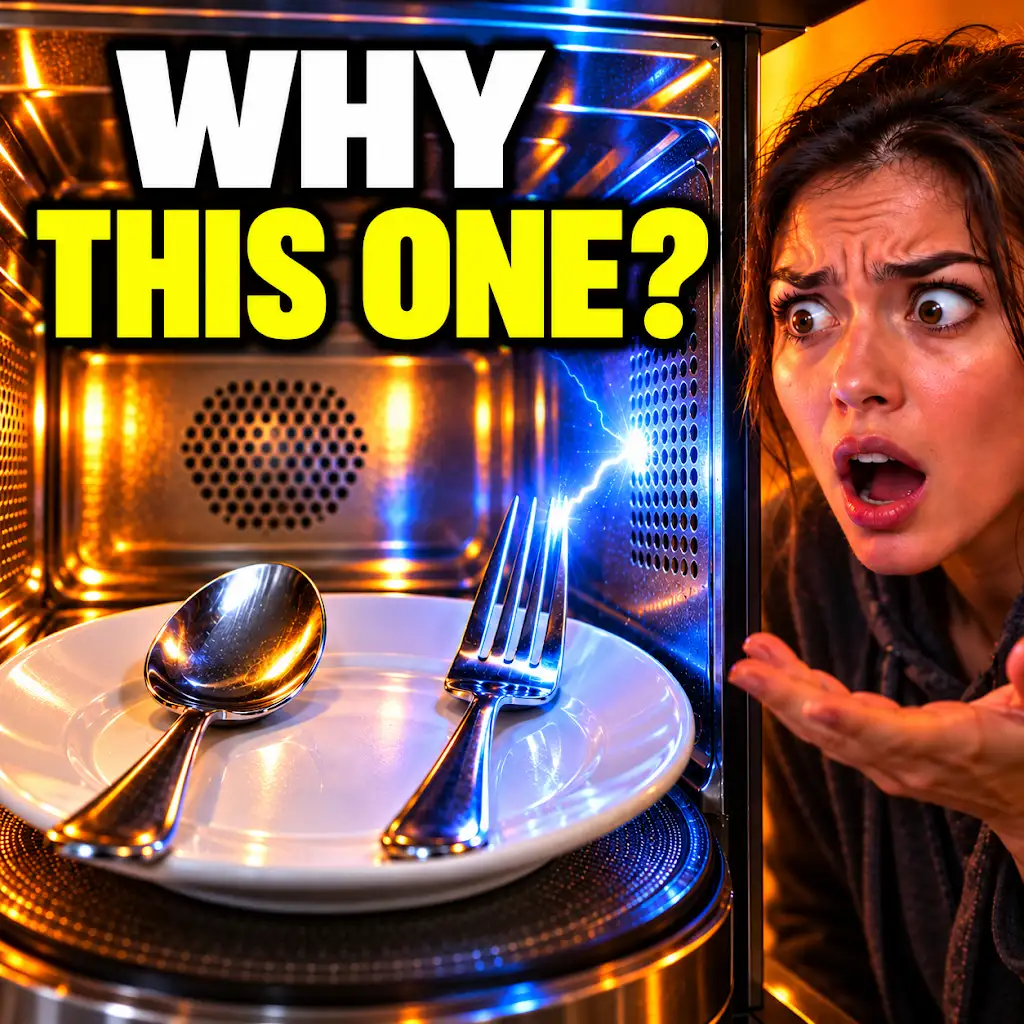
A Fork and a Spoon React Differently in a Microwave. Why?
FAQs

What is microwave arcing?
Microwave arcing is the phenomenon where sparks or electrical discharges occur within the microwave oven during operation. This can be caused by various factors such as metal objects inside the microwave, food with high metal content, or a damaged waveguide.
How does geometry affect microwave arcing?
The geometry of the microwave oven, particularly the shape and material of the waveguide, can affect the distribution of electromagnetic fields and the potential for arcing. Improperly designed or damaged waveguides can lead to concentrated electric fields and increased likelihood of arcing.
Why is it important to consider geometry in microwave design?
Considering geometry in microwave design is crucial to prevent arcing and ensure safe and efficient operation of the microwave oven. Proper geometry can help distribute the electromagnetic fields evenly, reducing the risk of arcing and improving the overall performance of the appliance.
What are the potential dangers of microwave arcing?
Microwave arcing can pose several dangers, including potential damage to the microwave oven, risk of fire, and exposure to harmful radiation if the waveguide or other components are compromised. It is important to address arcing issues promptly to avoid these hazards.
How can geometry be optimized to minimize microwave arcing?
Optimizing the geometry of the waveguide and other components in the microwave oven can help minimize arcing. This can be achieved through proper design, regular maintenance, and ensuring that the interior of the microwave is free from any metal objects or food with high metal content.