You’ve probably seen it in a cartoon, heard a cautionary tale, or maybe even experienced a little spark yourself. The image of metal in a microwave conjuring up sparks and potential fire hazards is deeply ingrained in our collective consciousness. But what’s really going on when you accidentally (or purposefully) put a fork in the microwave? This article will demystify the fascinating, and sometimes volatile, interaction between microwaves and metal, helping you to navigate your kitchen with a newfound understanding and a healthy dose of respect for both your appliance and your cookware.
The Science Behind the Kitchen Chaos
Before we delve into the specifics of metal, it’s crucial to grasp how a microwave oven actually works. Understanding this fundamental process will lay the groundwork for comprehending why metal behaves the way it does.
How Microwaves Cook Food
A microwave oven is essentially a box designed to generate and contain electromagnetic waves. These waves are a specific type of radiation, operating at a frequency of about 2.45 gigahertz (GHz). This frequency is particularly effective at interacting with water molecules, the primary component of most foods.
The Role of the Magnetron
The heart of every microwave oven is a device called a magnetron. This specialized vacuum tube takes electrical energy and converts it into high-frequency radio waves, the microwaves. These waves are then channeled through a waveguide into the cooking chamber.
The Turntable and Stirrer: Even Cooking
To ensure your food cooks evenly, the microwaves need to be distributed throughout the oven. This is achieved through a combination of a rotating turntable and a rotating metal fan called a stirrer. The turntable physically moves your food, exposing different parts to the microwaves, while the stirrer bounces the waves around, creating a more uniform energy field within the oven.
Dielectric Heating: The Magic of Vibration
When microwaves encounter food, they don’t heat it directly by imparting their own heat. Instead, they cause the polar molecules within the food, primarily water, to vibrate at an incredibly high speed. Imagine billions of tiny molecules rapidly shaking back and forth. This rapid vibration generates friction, and it’s this friction that produces the heat, cooking your food from the inside out. This process is known as dielectric heating.
Frequency Matters
The specific frequency of 2.45 GHz is crucial. At this wavelength, water molecules are highly susceptible to excitation. Other molecules in food, like fats and sugars, also absorb microwave energy to some extent, but water is the primary driver of the heating process. This is why foods with a higher water content tend to cook faster in a microwave.
Microwaves and their interaction with metal is a fascinating topic that has garnered much attention in the scientific community. For a deeper understanding of this phenomenon, you can explore the article available at Freaky Science, which discusses how microwaves can cause metal objects to spark and potentially damage the microwave itself. This article provides insights into the physics behind these interactions and offers practical advice on what materials are safe to use in a microwave.
Metal’s Unwanted Embrace: Why It’s a Problem
Now that you understand the basics of microwave operation, let’s explore why metal is such a unwelcome guest in this intricate dance of electromagnetic waves. The interaction is not a simple absorption; it’s a complex interplay of reflection and charge buildup that can lead to dramatic and potentially dangerous results.
The Reflective Nature of Metal
Unlike food molecules, which readily absorb and are excited by microwaves, metal surfaces are excellent reflectors of electromagnetic radiation. Think of a mirror reflecting light; metal acts in a similar fashion with microwaves. When microwaves hit a smooth, solid piece of metal, they bounce off.
The Faraday Cage Effect
This reflective property creates a phenomenon known as a Faraday cage. A Faraday cage is an enclosure made of conductive material that blocks external electromagnetic fields. In the context of a microwave oven, the metal walls of the oven itself form a Faraday cage, preventing the microwaves from escaping. However, when you introduce additional metal objects inside, they begin to interfere with the intended wave distribution.
Bouncing Waves and Hot Spots
Instead of being absorbed by your food, the microwaves are reflected by the metal. This reflection can cause the waves to bounce around erratically within the oven. This can lead to uneven cooking, with some areas becoming intensely hot while others remain relatively cool. More importantly, these reflected waves can be concentrated in certain areas, leading to excessive energy buildup.
Charge Buildup and Electron Excitation
The problem with metal goes beyond simple reflection. Metals are inherently conductors of electricity. When microwaves, which are electromagnetic waves, interact with metal surfaces, they can induce the movement of electrons within the metal.
The Electron Dance
Microwaves possess both an electric and a magnetic field. The electric field component of the microwave wave can push and pull the free electrons in the metal. This rapid oscillation of electrons creates an electrical current.
Accumulation and Discharge: The Spark
If these induced currents become sufficiently strong, and especially if there are sharp edges or points on the metal object, the electrons can accumulate in these areas. When the charge buildup becomes too great, the air around these points can become ionized, leading to a sudden discharge of electrical energy in the form of a spark or arc. This is the dramatic visual we often associate with metal in a microwave.
Different Metals, Different Behaviors
It’s important to note that not all metals behave identically. The conductivity and shape of the metal object play a significant role.
Specific Scenarios and Their Dangers
Understanding the general principles is good, but seeing how they apply in real-world kitchen scenarios will solidify your comprehension. These are the situations you need to be most aware of to ensure safety.
Thin, Crinkled, or Pointed Metal
This is where you’re most likely to see sparks. Think of aluminum foil, especially when it’s crumpled into balls or has sharp edges.
The Power of Sharp Edges
Sharp points and edges on metal objects are particularly problematic. These areas concentrate the induced electrical charges, making them prime locations for arcing. Imagine the tip of a fork or the crinkled edge of a piece of foil – these are hotbeds for spark generation.
Aluminum Foil Follies
While a flat, smooth sheet of aluminum foil might not cause immediate sparks, any crumpling or folding that creates edges dramatically increases the risk. Even small pieces of foil accidentally left on food can be a problem. The intense localized energy buildup can not only cause sparks but also damage the microwave’s internal components.
Thin Metal Containers
Many frozen meals come in thin, metallic or foil-lined trays. While some manufacturers might design these to be microwave-safe under specific conditions, it’s generally a good practice to remove food from these containers before microwaving. The thinness and potential for crinkling make them susceptible to arcing.
Metal Utensils and Cutlery
This is probably the most common mistake people make. A stray fork, spoon, or knife can lead to a spectacle.
The Fork Phenomenon
The tines of a fork are a classic example of pointed metal. Each tine can act as an antenna, accumulating charge and leading to sparks. The gaps between the tines can also create intense electric fields.
The Spoon’s Subtle Threat
Even seemingly smooth metal objects like spoons can cause issues. If a spoon is positioned in a way that creates a concentrated point of contact or if it has any imperfections, arcing can occur. The metallic sheen itself is a sign of reflectivity.
Knives: A Sharp Warning
Knives, with their sharp edges and often pointed tips, are particularly dangerous. The high concentration of charge on the blade and tip makes them extremely prone to arcing. Never, under any circumstances, place a knife in a microwave.
Metallic Trim on Dishes and Cookware
This is a more subtle, but equally important, hazard. Many decorative ceramic or porcelain dishes feature metallic bands or designs.
The Gold or Silver Lining
The gold and silver used for decorative trim on many plates and bowls are, in fact, made of real metal. When these items are placed in a microwave, the metallic trim will reflect the microwaves, potentially leading to sparks and damage. The microwave energy can also cause the metal to heat up significantly, potentially damaging the dish itself and creating a burn hazard.
Decorative Patterns and Edges
Even if not a continuous band, metallic patterns or even metallic glazes on the edges of dishes can pose a risk. Any area with a significant concentration of conductive material can cause problems. Always check your dinnerware for any metallic accents before microwaving.
When Metal Might Be Okay (With Extreme Caution)
While the general rule is to avoid metal, there are very specific, limited exceptions, usually involving commercially produced microwave-safe packaging designed with these interactions in mind.
Microwave-Safe Packaging Design
Some manufacturers have developed specialized packaging that incorporates metal in a way that is intended to be safe for microwave use. This often involves carefully engineered designs that aim to dissipate the microwave energy or shield certain areas from excessive buildup.
The “Crisping” Tray
You might have encountered “crisping” trays in some frozen meals. These often contain a layer of metal designed to absorb microwave energy and reflect it back onto the food, creating a crispier texture. However, even with these, there are usually specific instructions regarding placement and not to use them if damaged.
Following Manufacturer Instructions is Paramount
If a food product or container explicitly states it is microwave-safe and includes metal components, you must meticulously follow the manufacturer’s instructions. This often includes specific directions on how to position the item and what not to do. When in doubt, err on the side of caution and remove the item from its metallic packaging.
Damaging Your Appliance and Creating Hazards
The sparks are the most visible sign of trouble, but the interaction between metal and microwaves can have more insidious consequences for your appliance and your safety.
Internal Damage to the Magnetron and Waveguide
The reflected microwaves don’t just bounce around aimlessly; they can be directed back towards the magnetron or the waveguide.
Overheating and Component Failure
Excessive reflected energy can cause these components to overheat. The magnetron, being a high-power electronic device, is particularly susceptible to damage. This can lead to a premature failure of your microwave oven, requiring costly repairs or replacement.
Burn Marks and Pitting
The intense energy concentrated in arcs can cause burn marks and pitting on the internal surfaces of the microwave cavity. While these might be cosmetic initially, they can compromise the integrity of the oven’s lining and potentially lead to further issues down the line.
Fire Hazards and Smoke
The sparks are a precursor to more serious dangers. The heat generated by arcing can ignite food debris or packaging.
Igniting Food Particles
If there are any stray crumbs or bits of food clinging to the metal or the interior of the microwave, the intense heat from a spark can easily ignite them. This can lead to a small fire within your appliance.
Packaging Ignited
As mentioned earlier, thin metallic packaging or even certain types of paper liners can catch fire if exposed to excessive microwave energy and arcing.
Smoke and Smells
Even if a full-blown fire doesn’t occur, the intense heat and electrical discharge can produce smoke and unpleasant burning smells. This is a clear indicator that something is wrong and you should stop the microwave immediately.
Personal Injury Risks
While less common than appliance damage, there’s also a risk of personal injury.
Burns from Hot Surfaces
The metal object itself can become extremely hot during arcing. Attempting to remove a hot metal object from a sparking microwave can lead to severe burns.
Eye Injury from Arcs
While rare, direct exposure to the intense light of microwave arcing could potentially cause eye irritation or damage. It’s best to avoid looking directly at the sparks.
Microwaves are fascinating in how they interact with various materials, especially metals, which can lead to unexpected results when used in cooking appliances. For a deeper understanding of this phenomenon, you might find an insightful article on the topic at Freaky Science. This resource explores the science behind why metal objects can cause sparks and even damage to microwave ovens, shedding light on the underlying principles of electromagnetic waves and their behavior.
Safe Practices for Microwave Use
Now that you understand the risks, let’s focus on how to use your microwave safely and effectively. These are simple habits that will prevent you from experiencing the unpleasant side effects of metal-microwave interactions.
The Golden Rule: When in Doubt, Leave It Out
This is the most crucial piece of advice. If you’re unsure whether an item is microwave-safe, especially if it contains any metal, do not put it in the microwave. It’s not worth the risk.
Visual Inspection is Key
Before hitting the start button, take a moment to visually inspect your food and its container. Look for any metallic components, trimmings, or foil.
Read Labels and Instructions
Always read the labels on your food packaging and any instructions that come with your cookware. If it says “microwave-safe,” trust that. If it doesn’t, or if it has warnings, heed them.
What Is Microwave-Safe?
Knowing what materials are generally safe will give you confidence in your choices.
Glass and Ceramic (Without Metallic Trim)
Most standard glass and ceramic dishes are perfectly safe for microwave use, provided they do not have any metallic paint, trim, or accents. These materials are non-conductive and absorb microwave energy without reflection.
Microwave-Safe Plastics
Many plastic containers are designed for microwave use. Look for the “microwave-safe” symbol (often a wavy line with an icon of a microwave) on the bottom of the container. Be aware that some plastics can warp or melt at high temperatures, so always check the manufacturer’s recommendations for specific food items.
Paper Products (With Caveats)
Plain white paper towels and unbleached parchment paper are generally safe for covering food or for short cooking times. However, avoid paper with metallic inks, staples, or plastic coatings. Avoid using paper plates with decorative edges that might contain metal.
What to Avoid (Besides Metal)
There are a few other things you should steer clear of in your microwave:
Brown Paper Bags
These can ignite.
Styrofoam (Unless Specifically Labeled Microwave-Safe)
Some Styrofoam can melt and release chemicals.
Closed Containers
Pressure can build up, causing them to explode. Always vent or loosen lids on containers.
Nothing!
Never run your microwave empty. This can damage the magnetron.
Conclusion: A Safer, Smarter Kitchen
The interaction between microwaves and metal might seem like a complex scientific phenomenon, but at its core, it’s about understanding the basic principles of electromagnetism and the properties of different materials. By heeding the warnings, practicing safe habits, and always erring on the side of caution, you can ensure your microwave remains a convenient and safe tool in your kitchen. Remember, a little knowledge goes a long way in preventing sparks, damage, and potential hazards. So, next time you’re about to pop something in the microwave, take that extra second to ensure it’s metal-free, and enjoy the convenience without the worry.
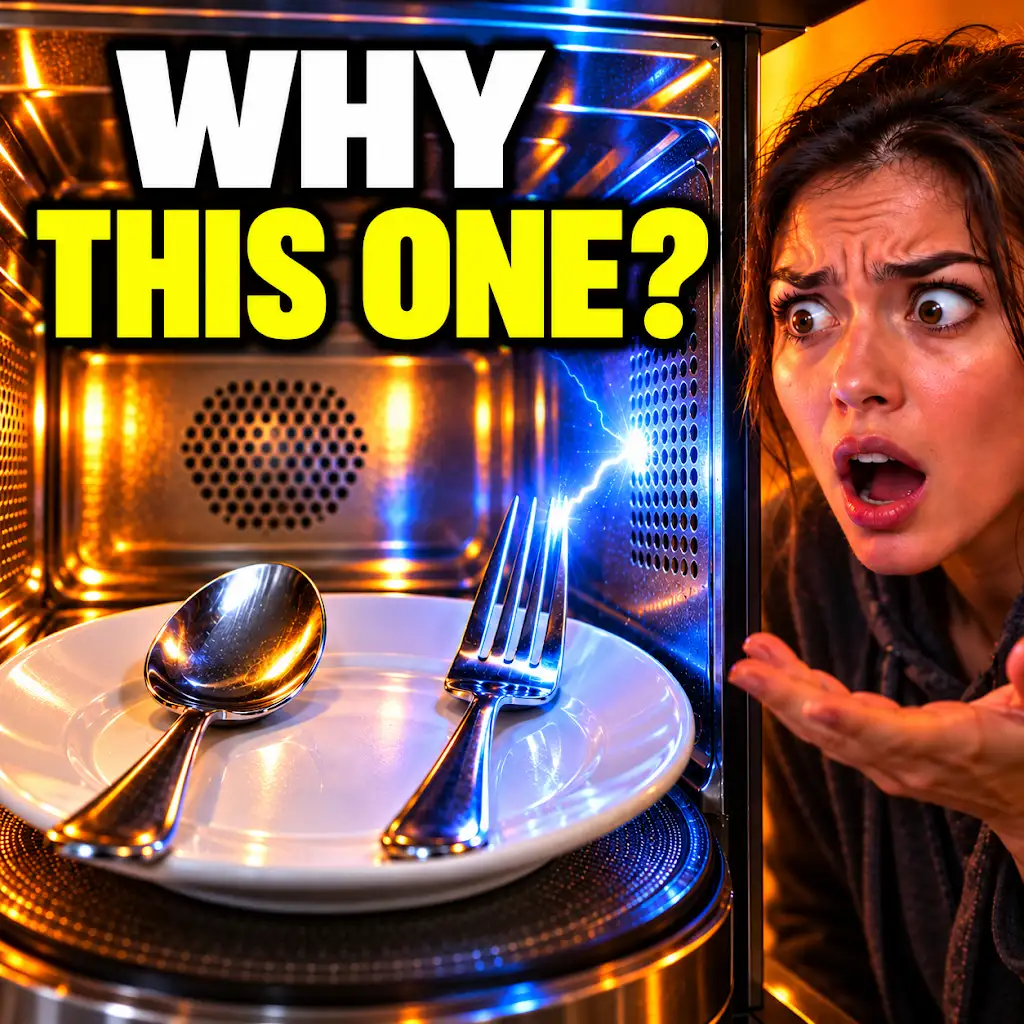
A Fork and a Spoon React Differently in a Microwave. Why?
FAQs
1. Can you put metal in the microwave?
Yes, it is generally not safe to put metal in the microwave as it can cause sparks, fires, and damage to the microwave.
2. How do microwaves interact with metal?
When metal is placed in the microwave, the microwaves cause the electrons in the metal to move back and forth rapidly, creating sparks and potentially causing damage to the microwave.
3. What types of metal should not be put in the microwave?
Any type of metal, including aluminum foil, metal containers, and metal utensils, should not be put in the microwave as they can cause sparks and damage.
4. Why does metal in the microwave cause sparks?
The sparks are caused by the rapid movement of electrons in the metal when exposed to the microwaves, creating a high voltage and potential for arcing.
5. Are there any exceptions to putting metal in the microwave?
Some microwaves come with specific metal racks or trays that are designed to be used in the microwave. These are safe to use as they are specifically designed to interact with microwaves without causing sparks or damage.