You’ve probably seen the warnings. The little cartoon graphic of a metal fork with a big red X through it. The stern instructions not to put foil or metal containers in your microwave. You might even have a vague idea that it’s a bad thing to do. But do you really know what happens when you put metal in a microwave? It’s a question that sparks curiosity, and understanding the science behind it can actually be quite fascinating. Forget the fear and embrace the knowledge. Let’s dive into the electrifying world of microwaves and metal.
Before we get to the metal, it’s essential to understand how your microwave oven actually works. It’s not just a glorified box that heats things up randomly. There’s a sophisticated process at play, and understanding this foundation will illuminate why metal becomes such a disruptive element.
How Your Microwave Heats Food
Your microwave oven relies on a component called a magnetron. This marvel of engineering generates electromagnetic waves, specifically in the microwave frequency range (typically around 2.45 gigahertz). These waves are then directed into the cooking cavity.
The Role of the Magnetron
The magnetron acts like a high-powered vacuum tube. It uses a combination of electric and magnetic fields to accelerate electrons. As these electrons move, they emit microwaves. These waves are channeled through a waveguide and then distributed within the oven.
Penetrating the Food: Water is Key
The magic of microwave cooking happens because of the way these waves interact with food. Most foods contain water molecules. Water molecules are polar, meaning they have a slightly positive charge on one end and a slightly negative charge on the other. When microwaves encounter these water molecules, they cause them to rapidly rotate back and forth, trying to align themselves with the oscillating electromagnetic field. This rapid rotation generates friction, and it’s this friction that produces heat. Think of it like vigorously rubbing your hands together to warm them up – it’s the same principle on a molecular level.
The Waveguide and Stirrer/Turntable
To ensure more even heating, microwaves are typically guided into the oven cavity through a waveguide. Inside the cavity, a stirrer fan (often hidden) or a rotating turntable helps to distribute the microwaves more uniformly, preventing “hot spots” and “cold spots” in your food. Without these mechanisms, you’d likely end up with parts of your meal scorching hot and others barely warmed.
When it comes to understanding the effects of placing metal in a microwave, it’s essential to explore various scientific insights. A related article that delves into this topic is available at Freaky Science, where you can learn about the reactions that occur when metal objects are exposed to microwave radiation. This article explains the potential hazards and the science behind why metal can cause sparks and even fires in microwaves, providing valuable information for safe cooking practices.
Metal’s Unwelcome Entrance: The Reflection Phenomenon
Now, let’s introduce our metallic interloper. When you place metal inside a microwave, the fundamental interaction between microwaves and the food is disrupted. Metals behave very differently than food in the presence of these high-frequency electromagnetic waves.
How Metals React to Microwaves
Metals are excellent conductors of electricity. This property is the root cause of the problems that arise. Unlike the water molecules in food that absorb and vibrate with microwaves, metal surfaces reflect them.
The Faraday Cage Effect
In a broader sense, the metal interior of your microwave oven acts as a Faraday cage, designed to contain the microwaves within. However, when you introduce additional metal objects, you’re essentially creating smaller, unintended Faraday cages or reflective surfaces within the cavity. These reflective surfaces bounce the microwaves around erratically.
Electrons on the Move
When microwaves strike a metal object, the electric field component of the wave causes the free electrons in the metal to move back and forth rapidly. This creates a surge of electrical current within the metal. This is where things start to get interesting, and potentially dangerous.
The Reflection and Scattering of Microwaves
Instead of being absorbed by the metal (which would generate heat, but not in the way you want), the microwaves are reflected. This reflection isn’t uniform or controlled. The microwaves bounce off the metal at various angles, scattering throughout the oven cavity.
Interference Patterns
This uncontrolled reflection can lead to complex interference patterns. Where reflected waves meet incoming waves, they can either reinforce each other (creating localized areas of very high microwave intensity) or cancel each other out. This means that the microwave energy isn’t being efficiently directed towards heating your food; it’s being bounced around and potentially concentrated in dangerous ways.
The Sparking Spectacle: Arcing and Corona Discharge
This is where the visually dramatic and potentially hazardous phenomena occur. The rapid movement of electrons in the metal, coupled with the concentrated microwave energy, can lead to spectacular displays of electrical discharge.
What Exactly is Arcing?
Arcing, also known as electrical arcing, is a type of electrical discharge. It happens when the electric field strength in a particular area becomes so high that it ionizes the air (or other insulating medium) between two conductors. This ionization creates a conductive path, allowing electricity to flow. In a microwave, this can happen between different parts of the metal object or between the metal object and the oven walls.
Thin Edges and Points are Prone to Arcing
The shape of the metal object plays a crucial role. Sharp edges, points, and thin pieces of metal have a higher concentration of electric field lines. This makes them more susceptible to reaching the ionization threshold for the air. Imagine water flowing down a stream; it speeds up and becomes more turbulent when it hits a narrow point or a sharp rock. The same principle applies to electric fields.
The Role of Sharp Edges on Utensils
Think about a fork. It has tines – thin, pointed ends. When microwaves hit these tines, the electrons are driven with great force. If the electric field becomes intense enough, it can “jump” across a gap, ionizing the air and creating a spark. This spark is essentially a mini-lightning bolt happening inside your microwave.
Corona Discharge: The Fuzzier Cousin of Arcing
Corona discharge is a more diffuse, less intense form of electrical discharge than arcing. It often appears as a faint glow, particularly around sharp points or edges. While less dramatic than a full-blown spark, it’s still an indication of high electric fields and can contribute to heating and potential damage.
Visible Evidence of Electrical Stress
The glowing phenomenon you might sometimes see around metallic objects in a microwave is often corona discharge. It signifies that the metal is under significant electrical stress due to the microwave energy. While it might not immediately set your oven ablaze, it’s a clear warning sign that something is not right.
Beyond the Sparks: Potential Damage to Your Microwave
The arcing and corona discharge aren’t just for show. They can have real, tangible consequences for your appliance. Your microwave oven, while designed to contain microwaves, isn’t built to withstand the kind of electrical stress that metal can induce.
Damage to the Magnetron
The magnetron is the heart of your microwave. The reflected and scattered microwaves, unable to be absorbed or dissipated safely, can bounce back towards the magnetron. This can cause overheating and premature failure of this expensive component. Think of it like shouting into a microphone continuously – eventually, the feedback can damage the internal components.
Overheating and Reduced Lifespan
The constant bombardment of reflected microwave energy can stress the magnetron beyond its operational limits, leading to reduced efficiency and ultimately, a shortened lifespan. It’s a cumulative effect; each time you put metal in, you’re contributing to its gradual degradation.
Damage to the Waveguide and Oven Cavity
The waveguide, which directs microwaves into the oven, and the interior walls of the oven cavity can also suffer damage. The intense localized heating caused by arcing can scorch or pit the metal lining of the oven. The reflected energy can also put stress on the waveguide.
Scorching and Pitting of Interior Surfaces
You might notice black marks or scorch spots on the interior walls of your microwave after an incident involving metal. This is direct evidence of the intense heat generated by the arcing. Over time, repeated incidents can lead to pitting and structural damage to the oven’s interior.
Fire Hazards: The Ultimate Consequence
In the worst-case scenario, the sparks generated by arcing can ignite any flammable materials present in the microwave. This could be food particles, paper products, or even certain types of plastic. This is why the warnings are so serious – a small spark can quickly escalate into a dangerous fire.
Ignition of Food Debris
Small crumbs or spills inside your microwave can act as kindling for the sparks. The intense heat of an arc can easily ignite these residues, leading to a fire that can spread rapidly. Regular cleaning of your microwave is therefore crucial, not just for hygiene but also for safety.
The Risk of a Catastrophic Failure
A significant fire inside a microwave can be difficult to extinguish and can cause extensive damage to the appliance and potentially surrounding areas. It’s a stark reminder of why following simple safety guidelines is so important.
When it comes to using a microwave, many people wonder about the effects of placing metal objects inside. A fascinating article on this topic can be found at Freaky Science, where you can learn about the science behind why metal can cause sparks and potentially damage your microwave. Understanding these reactions can help you avoid accidents and ensure safe cooking practices.
Understanding the Nuances: When Metal Might Seem Okay (But Still Isn’t)
| Metal | Behavior in Microwave |
|---|---|
| Aluminum foil | May cause sparks and potential fire hazard |
| Steel | May cause sparks and potential fire hazard |
| Copper | May cause sparks and potential fire hazard |
| Gold | May cause sparks and potential fire hazard |
You might have encountered situations where you’ve accidentally put a small piece of metal in, and nothing immediately catastrophic happened. This can lead to a false sense of security. However, it’s crucial to understand that even in these cases, the microwave is still being subjected to harmful conditions.
Thin Foil vs. Solid Metal Objects
There’s a common misconception about aluminum foil. While thin, smooth sheets of foil might not spark immediately if placed carefully and folded away from the oven walls, they are still reflective.
Smooth Foil vs. Crinkled Foil
Crinkled foil, with its sharp edges and uneven surfaces, is much more likely to arc. The irregularities create high electric field concentrations. Even smooth foil can cause issues if it’s too close to the oven walls or other metallic objects.
The “Safe” Use of Foil (with Extreme Caution)
Some manufacturers provide guidelines for using small amounts of smooth aluminum foil to shield certain parts of food from overcooking. However, these instructions often come with very specific caveats about placement, size, and the type of food being heated. It’s generally safer to avoid using foil altogether if you’re unsure.
Small Metal Components in Packaging
You might encounter small metal staples or metallic threads in some food packaging. While these might not cause immediate, dramatic arcing, they are still introducing metallic elements into the microwave environment.
The Cumulative Effect of Small Metallic Elements
The impact of these tiny metallic components might not be as visually striking as a fork, but they contribute to the overall stress on the microwave. Over time, the cumulative effect of these small disruptions can still contribute to wear and tear on the appliance.
The Importance of Manufacturer Guidelines
Ultimately, the safest approach is to always refer to your microwave oven’s instruction manual and the packaging of the food you are heating. Manufacturers design their appliances with specific safety parameters in mind, and deviating from these can lead to unexpected and potentially dangerous outcomes. They know best how their equipment is intended to be used. When in doubt, err on the side of caution. Your microwave (and your home) will thank you for it.
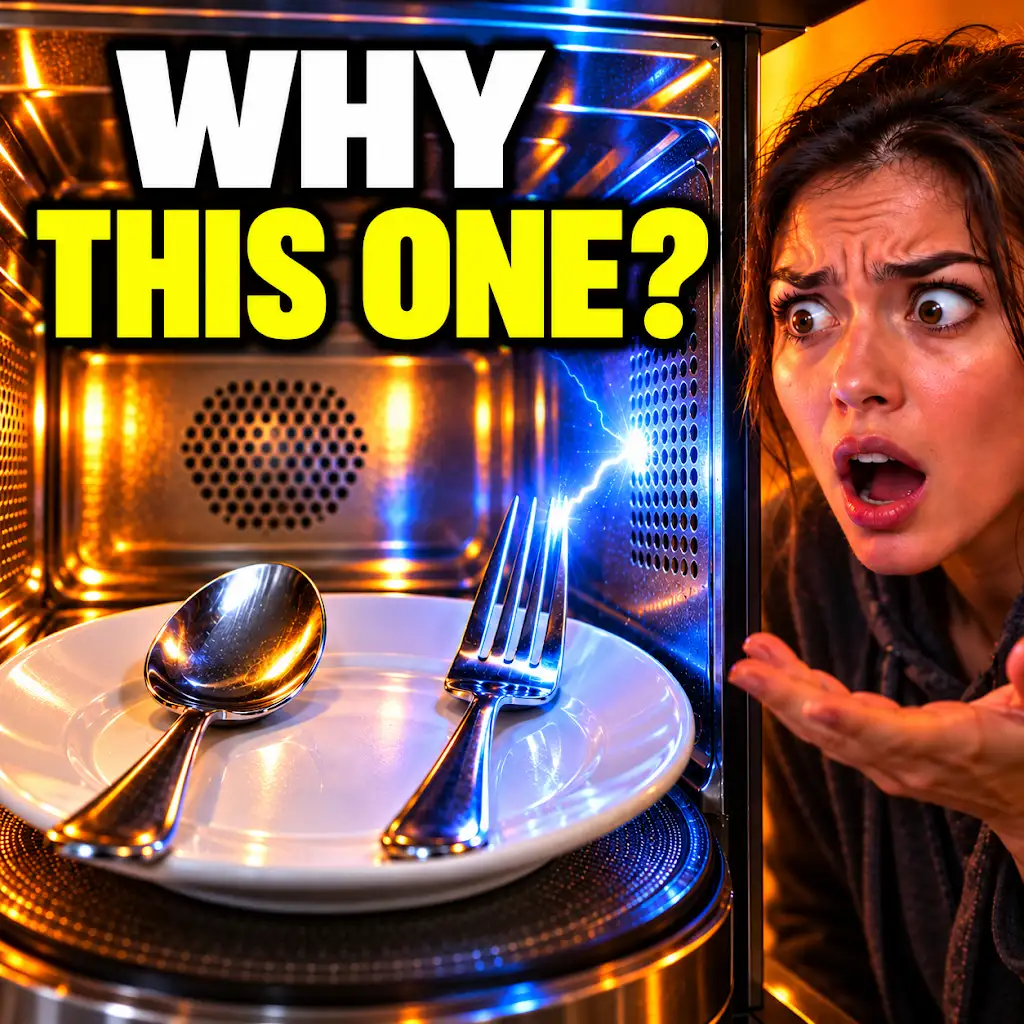
A Fork and a Spoon React Differently in a Microwave. Why?
FAQs
What happens if you put metal in a microwave?
Metal reflects microwaves, causing them to bounce around the inside of the microwave and potentially causing sparks. This can lead to damage to the microwave and pose a fire hazard.
Can any type of metal be put in a microwave?
No, it is not safe to put any type of metal in a microwave. This includes aluminum foil, metal containers, and metal utensils.
Why does metal spark in the microwave?
When metal is placed in a microwave, the electromagnetic field causes the electrons in the metal to move back and forth rapidly, creating sparks and potentially causing damage to the microwave.
Is it safe to use microwave-safe metal in a microwave?
Some metal items are labeled as “microwave-safe” and can be used in a microwave. These items are designed to be safe for use in a microwave and will not cause sparks or damage.
What should you do if metal accidentally gets put in the microwave?
If metal is accidentally placed in the microwave, it should be removed immediately. The microwave should be checked for any damage, and it should not be used until it has been inspected by a professional.