You’ve probably stood in front of that humming box, your trusty microwave, and wondered. Is it safe? Is it actually cooking your food or just zapping it into oblivion? You’ve heard the whispers, the dire warnings, the half-truths. Well, it’s time to put those anxieties to rest, to demystify the magic, and to bust some of those persistent microwave myths with the solid bedrock of physics. Forget the pseudoscience and the sensationalism; we’re going to dive into the science behind your culinary companion.
You see them as a convenience, a quick way to reheat leftovers or defrost that forgotten chicken. But what are these “microwaves” that are doing the heavy lifting? At their core, microwaves are a form of electromagnetic radiation, just like radio waves, visible light, and X-rays. The key difference lies in their wavelength and frequency.
The Electromagnetic Spectrum: A Family Resemblance
Think of the electromagnetic spectrum as a vast family reunion. Radio waves are the long-distance chatterers, infrared is the gentle warmth, visible light is what you see, and ultraviolet is the one with the sunburn potential. Microwaves occupy a specific, cozy spot within this spectrum, typically ranging from about 300 megahertz (MHz) to 300 gigahertz (GHz). This translates to wavelengths of about a meter down to a millimeter. Your microwave oven, specifically, operates at a frequency of around 2.45 GHz. This specific frequency is crucial for its cooking capabilities.
The Magnetron: The Heart of the Matter
So, where do these invisible waves come from? The unsung hero of your microwave is a device called a magnetron. You can’t see it, but it’s the engine that generates the microwave radiation. The magnetron uses a combination of magnetic and electric fields to force electrons to move in a circular path at high speed. This rapid movement, when interacting with cavities within the magnetron, produces high-frequency electromagnetic waves – our microwaves. These waves are then channeled through a waveguide into the cooking cavity.
Reflection and Absorption: The Dance of Energy
Once inside the cooking chamber, the microwaves begin their dance with your food. The metal walls of the microwave oven are designed to reflect these waves, bouncing them around to ensure more even distribution. However, the real magic happens when the microwaves interact with the food itself. Not all materials are created equal when it comes to microwaves.
- Metals: The Ultimate Reflectors: Metal surfaces, like the foil you might absentmindedly leave on a plate, are excellent reflectors. This is why you’re often warned against putting metal in the microwave. The reflected waves can bounce back to the magnetron, potentially damaging it. Furthermore, the concentrated electrical currents induced in sharp metal edges can lead to arcing, those dramatic blue sparks you’ve probably seen.
- Plastics and Glass: Mostly Transparent: Most plastics and glass are relatively transparent to microwaves. This means the waves pass through them with minimal absorption, allowing them to reach the food. However, it’s still important to use microwave-safe plastics, as some can leach chemicals into your food when heated.
- Water, Fat, and Sugar: The Prime Targets: The molecules in your food that are most susceptible to absorbing microwave energy are those with a polar nature, meaning they have a positive and negative end. Water, fat, and sugar molecules are prime examples. When a microwave is generated, it has an oscillating electric field. This field causes polar molecules in the food to rapidly rotate, trying to align themselves with the changing field.
Many people hold misconceptions about how microwaves work and their effects on food, leading to various myths that can be misleading. For a deeper understanding of these common microwave myths explained through the lens of physics, you can explore the article available at Freaky Science. This resource provides valuable insights into the science behind microwave cooking and debunks several prevalent myths, helping readers make informed decisions in the kitchen.
Myth 1: Microwaving Makes Food Radioactive
This is perhaps one of the most persistent and fear-inducing myths. The idea that your food somehow becomes infused with dangerous radiation after a stint in the microwave is simply not true, and it stems from a fundamental misunderstanding of how microwaves work.
Radiation vs. Radioactivity: A Crucial Distinction
It’s essential to differentiate between radiation and radioactivity. Microwaves are a form of non-ionizing radiation. This means they have enough energy to excite molecules and cause them to vibrate (which is how they heat your food), but not enough energy to knock electrons off atoms or molecules and create ions. Ionizing radiation, such as X-rays or gamma rays, has this higher energy and can damage DNA, leading to increased cancer risk.
Radioactivity, on the other hand, refers to the spontaneous decay of atomic nuclei, releasing energy in the form of particles or electromagnetic waves. This is a nuclear process, and it’s completely unrelated to the operation of a microwave oven.
How Microwaves Heat: It’s All About Friction
The heating mechanism in a microwave is akin to rubbing your hands together vigorously to warm them up. The oscillating electric field of the microwaves causes the polar molecules in your food, primarily water, to rotate back and forth at an astonishing rate (billions of times per second). This rapid rotation creates friction between the molecules, and this friction is what generates heat, cooking your food from the inside out (though often with some surface heating from conduction).
- Molecular Vibration, Not Transformation: The microwaves interact with the existing molecules in your food, causing them to vibrate. They do not change the atomic structure of the food itself, nor do they introduce any new radioactive isotopes. Once the microwave oven is turned off, the microwaves cease to exist, and the food is no longer being bombarded by them. There’s no lingering radiation.
- No Residue, No Infusion: Think of it like shining a flashlight on an object. The light illuminates the object, but the object doesn’t become “light-ified.” Similarly, microwaves energize the molecules in your food to generate heat, but they don’t leave behind any radioactive particles or become part of the food’s molecular structure.
Myth 2: Microwaving Destroys Nutrients
Another common concern is that microwaving is somehow inferior to other cooking methods when it comes to preserving the nutritional value of your food. While it’s true that some nutrient loss can occur with any cooking method, microwaving often performs remarkably well, and in some cases, even better than traditional methods.
Heat and Water: The Primary Culprits for Nutrient Loss
The main factors that contribute to nutrient degradation during cooking are heat and water. Water-soluble vitamins (like vitamin C and B vitamins) can leach out into cooking water, and heat-sensitive vitamins can be degraded by prolonged exposure to high temperatures.
Microwaving’s Advantage: Speed and Reduced Water Usage
Microwaves excel in two key areas that help preserve nutrients:
- Short Cooking Times: Microwaves cook food much faster than conventional methods like boiling or baking. Shorter cooking times mean less exposure to heat, thus minimizing the degradation of heat-sensitive nutrients.
- Reduced Water Requirement: Many microwave recipes call for little to no added water. This is a significant advantage because it drastically reduces the leaching of water-soluble vitamins into the cooking liquid. When you boil vegetables in a pot of water and discard the water, you’re also discarding a considerable amount of water-soluble nutrients. Microwaving, often steaming the food within its own moisture, keeps those nutrients contained.
Comparing Cooking Methods: A Closer Look
Let’s consider a few examples:
- Broccoli: Studies have shown that microwaving broccoli, particularly without added water, can preserve more vitamin C than boiling. Boiling can lead to significant leaching of vitamin C into the water. Steaming in a microwave also often results in better nutrient retention than boiling.
- Other Vegetables: Similarly, for many other vegetables, microwaving generally results in comparable or even superior nutrient retention compared to boiling or even baking. The key is to avoid overcooking and minimize the use of added water.
- Consideration for Certain Nutrients: While generally good, it’s worth noting that some very specific nutrients might be affected differently. However, the overall impact of microwaving on nutrient loss is often less than that of prolonged boiling or high-heat frying.
Myth 3: Microwaving Creates “Cold Spots” and Cooks Unevenly
You’ve probably experienced it: one part of your food is piping hot, while another is still lukewarm. This is the perceived “uneven cooking” that fuels this myth. While it’s true that microwaves can sometimes lead to uneven heating, it’s not an inherent flaw of the technology but rather a consequence of how the waves interact with food and the oven cavity.
The Wave Pattern: A Complex Dance
Microwaves in an oven don’t just blast food uniformly. They create a complex wave pattern within the cooking cavity. This pattern can result in areas of higher and lower energy intensity, leading to hot and cold spots.
Factors Contributing to Uneven Heating:
- Food Density and Composition: Different parts of your food will absorb microwaves at different rates. Denser areas or areas with more water will heat up faster.
- Shape and Size of Food: Irregularly shaped foods can shield certain parts from the microwaves.
- Stirring and Rotating: This is where manual intervention comes in. Because the microwave energy isn’t perfectly uniform, stirring or rotating your food halfway through the cooking cycle helps to redistribute the heat. This is precisely why many microwaves have turntables – to ensure the food is constantly moving through the wave pattern.
Busting the “Cold Spot” Myth with Physics and Practice:
- The Role of the Turntable: The rotating turntable is your best friend in achieving even cooking. It ensures that all sides of the food are exposed to different areas of the microwave field over time.
- Strategic Placement: For items that don’t fit well on the turntable or have irregular shapes, strategic placement within the cavity can also help. Placing denser parts closer to the center can promote more even heating.
- Stirring and Resting: For dishes like soups, stews, or casseroles, stirring halfway through the cooking time is crucial. After cooking, allowing the food to rest for a minute or two allows the heat to distribute evenly through conduction, further reducing any remaining temperature discrepancies.
- The “Standing Wave” Phenomenon: The uneven heating is sometimes referred to as a “standing wave” effect. Imagine dropping two pebbles into a pond; the ripples interact and create areas of constructive and destructive interference. Microwaves in the oven do something similar, creating hot zones and cooler zones. The turntable’s movement helps to average out this effect over time.
Many people have misconceptions about how microwaves work and their effects on food, which can lead to some common myths. For a deeper understanding of these myths explained through the lens of physics, you can check out this insightful article on Freaky Science. It delves into the science behind microwave cooking and clarifies why certain beliefs, like the idea that microwaves make food radioactive, are simply not true.
Myth 4: Microwaved Food is “Cooked” Differently and is Less Nutritious Because of It
| Myth | Explanation |
|---|---|
| Microwaves cook food from the inside out | Microwaves actually penetrate food and cause the water molecules to vibrate, generating heat throughout the food. |
| Microwaves destroy the nutrients in food | While some nutrients can be lost in any cooking process, microwaving is actually one of the best methods for preserving nutrients due to its short cooking times. |
| Microwaving food in plastic containers causes cancer | As long as the plastic is labeled as microwave-safe, it is safe to use in the microwave. The FDA regulates the safety of plastics for microwave use. |
| Microwaves create harmful radiation in food | Microwaves produce non-ionizing radiation, which is not harmful and does not make food radioactive. |
This myth often goes hand-in-hand with the nutrient destruction myth, but it focuses on the perceived difference in the “way” the food is cooked. The underlying idea is that microwaving uses some “unnatural” or inferior method of cooking that results in a less desirable outcome.
The Science of Heat Transfer: It’s All the Same End Result
Regardless of the cooking method, the ultimate goal of cooking is to raise the internal temperature of the food to a safe and palatable level. The primary mechanisms of heat transfer in cooking are conduction, convection, and radiation.
- Conduction: Heat transfer through direct contact. This is how a pan cooks food on a stovetop.
- Convection: Heat transfer through the movement of fluids (liquids or gases). This is how an oven bakes food.
- Radiation: Heat transfer through electromagnetic waves, like infrared radiation from heating elements or the sun.
Microwaves, as we’ve discussed, primarily cause heating through dielectric heating, which is a form of absorbing electromagnetic radiation and converting it into kinetic energy of molecules (heat).
Microwaving as a Form of Radiation Heating
In essence, microwaving is a very efficient form of radiation heating, but it’s a different type of radiation than the infrared radiation used in some conventional ovens. The key difference is that microwaves penetrate the food and excite water molecules within the food, leading to rapid internal heating. Conventional ovens heat the food primarily from the outside in through conduction and convection.
The “Cooked” Texture and Taste: Subjective vs. Objective
While the physics of heat transfer are objective, the perception of “cooked” food – its texture and taste – can be subjective.
- Moisture Content: Microwaved foods often retain more moisture because they cook faster and with less evaporation compared to some other methods. This can lead to a softer, more tender texture, which some people may perceive as “mushy” or “less cooked” if they are accustomed to the drier textures produced by baking or frying.
- Surface Browning: Microwaves themselves do not cause the Maillard reaction, the chemical process responsible for browning and flavor development on the surface of foods. This is why microwaved foods may lack that appealing golden-brown crust. However, this is a cosmetic and flavor aspect, not an indicator of being “uncooked” or less nutritious. You can achieve browning in a microwave by using microwave-safe cookware designed for browning or by finishing the food under a broiler or in a conventional oven.
- Nutrient Profile Remains: Crucially, the chemical and nutritional changes that occur during cooking are still happening in a microwaved meal. Proteins denature, carbohydrates gelatinize, and chemical reactions occur to make the food digestible and flavorful. These processes are driven by temperature, not by the specific mechanism of heat delivery.
Myth 5: Microwaves Can Cause Cancer
This is perhaps the most alarming myth, and thankfully, it’s also one of the most easily debunked by physics. The fear often stems from the association of “radiation” with cancer.
No Evidence of Cancer Causation
Decades of scientific research and numerous health organizations, including the World Health Organization (WHO) and the U.S. Food and Drug Administration (FDA), have concluded that microwave ovens are safe for use and do not cause cancer.
How Microwave Ovens are Designed for Safety:
- Shielding and Interlock Systems: Microwave ovens are designed with multiple safety features to prevent radiation leakage. The metal cavity acts as a Faraday cage, containing the microwaves. The door has a metal mesh that, from the outside, appears solid but allows you to see inside, while preventing microwaves from escaping.
- Interlock Switches: The oven will not operate if the door is not properly closed. There are typically multiple interlock switches that ensure the magnetron is only active when the door is sealed.
- Leakage Limits: Regulatory bodies set strict limits on the amount of microwave radiation that can leak from an oven. Modern microwave ovens far exceed these safety standards.
Understanding the Physics of Microwave Leakage:
- Rapid Decay: Microwave radiation intensity decreases very rapidly with distance from the source. Even if there were a minor leak, the radiation levels would be negligible at just a few inches from the oven.
- Non-Ionizing Nature: As previously discussed, microwaves are non-ionizing. They do not have the energy to damage DNA directly, which is the primary mechanism by which ionizing radiation can lead to cancer.
- Focus on Exposure: The concern with radiation and cancer is generally related to cumulative exposure to high levels of ionizing radiation. The levels of microwave radiation emitted from a properly functioning microwave oven are far too low and non-ionizing to pose such a risk.
What to Watch Out For (and What NOT to Worry About):
- Damaged Ovens: If your microwave oven has a damaged door seal, a broken hinge, or appears to be malfunctioning, it’s best to have it inspected or replaced. A damaged oven could potentially have higher leakage, but again, it’s still non-ionizing radiation.
- Standing Too Close: While not a significant risk due to the rapid decay, it’s always good practice to maintain a reasonable distance from any operating appliance.
- No Lingering Radiation: Once the oven is off, the microwaves are gone. There’s no residual radiation in the oven or the food.
Conclusion: Embrace Your Microwave with Confidence
Your microwave oven is a marvel of modern engineering, utilizing the principles of physics to provide a convenient and often healthy way to prepare food. The myths surrounding its use are largely based on fear, misinformation, and a misunderstanding of scientific concepts.
By understanding how microwaves work – the role of the magnetron, the interaction of waves with food molecules, and the importance of heat transfer – you can confidently dismiss the unfounded fears. Your food is not becoming radioactive, its nutrients are largely preserved, and the slight unevenness in cooking can be easily managed with simple techniques. And most importantly, your microwave oven is designed with robust safety features that have been extensively tested and proven to prevent harmful radiation exposure.
So, the next time you reach for that trusty appliance, do so with the knowledge that you’re harnessing the power of physics in a safe and effective way. Enjoy your perfectly heated meals, knowing you’ve busted those microwave myths with science.
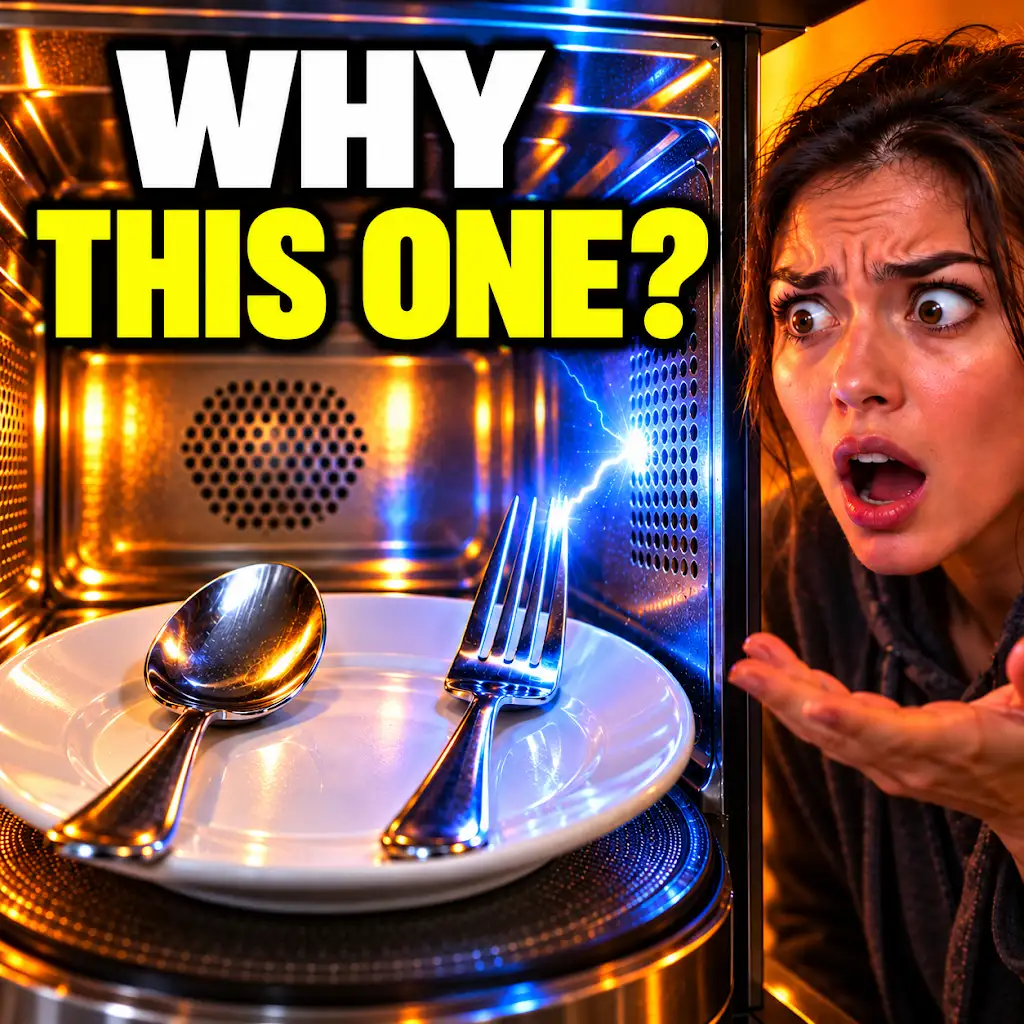
A Fork and a Spoon React Differently in a Microwave. Why?
FAQs
What are some common myths about microwaves?
Some common myths about microwaves include the idea that they can cause cancer, that they destroy nutrients in food, and that they can make food radioactive.
Do microwaves cause cancer?
No, microwaves do not cause cancer. Microwaves use non-ionizing radiation, which is not powerful enough to damage the DNA in cells and cause cancer.
Do microwaves destroy nutrients in food?
Microwaves can actually help preserve nutrients in food. Because they cook food quickly and with minimal water, they can help retain more nutrients than other cooking methods.
Can microwaves make food radioactive?
No, microwaves cannot make food radioactive. They use electromagnetic radiation to heat food, but this radiation does not make the food itself radioactive.
How do microwaves cook food?
Microwaves cook food by causing water molecules in the food to vibrate, which generates heat. This heat then cooks the food from the inside out.