
You know that sleek box humming in your kitchen, capable of transforming cold leftovers into steaming feasts in mere minutes? That’s your microwave oven, and it’s a marvel of physics you likely wield with casual confidence. But have you ever stopped to wonder how it actually works? Beyond the magic of instant heat lies a fascinating world of electromagnetic waves, resonance, and molecular interaction. Mastering microwave physics, not just in theory but in your daily life, can unlock a deeper understanding of this ubiquitous appliance, leading to more efficient cooking, better results, and perhaps even a little kitchen alchemy.
You interact with microwaves every single day, often without a second thought. They’re not just confined to your kitchen appliance; they’re the backbone of satellite communication, Wi-Fi signals, and even radar. But what exactly are microwaves?
Electromagnetic Waves: The Basics
Think of light. You see it, you feel its warmth, and it travels at an incredible speed. Microwaves are a part of the same electromagnetic spectrum as visible light, radio waves, and X-rays. The key difference lies in their wavelength and frequency. Microwaves are essentially shorter wavelengths of radio waves, typically ranging from about one meter down to one millimeter, corresponding to frequencies between 300 megahertz (MHz) and 300 gigahertz (GHz). This specific range is crucial for their ability to heat food effectively.
The Magic Frequency: 2.45 GHz
Your microwave oven operates at a specific, highly effective frequency: 2.45 GHz (gigahertz). Why this particular frequency? It’s a sweet spot. At this frequency, water molecules, which are abundant in most foods, absorb the microwave energy exceptionally well. This absorption is what drives the heating process. It’s a carefully chosen frequency that maximizes efficiency without causing undue damage to the microwave itself or posing significant health risks when the oven is properly sealed.
How Microwaves Enter Your Food
The microwaves are generated by a device called a magnetron inside your oven. Think of the magnetron as the engine of your microwave. It takes electrical energy and converts it into high-frequency electromagnetic waves. These waves are then channeled through a waveguide, a metal conduit, into the cooking cavity. The metal interior of your microwave acts like a Faraday cage, reflecting the microwaves and bouncing them around the cavity, ensuring they interact with the food from multiple angles.
For those interested in delving deeper into the fascinating world of microwave physics, a related article that provides further insights is available at this link: Everyday Microwave Physics Explained. This article breaks down the principles of how microwaves interact with different materials and the science behind their cooking capabilities, making complex concepts accessible to everyone.
The Heart of the Matter: How Microwaves Heat Food
This is where the real physics happens, and it’s surprisingly elegant. It’s not about brute force heat transfer like a conventional oven; it’s about molecular agitation.
Water, Water Everywhere: The Key Player
As mentioned, water is the primary target. A water molecule (H₂O) has a peculiar structure: the oxygen atom is more electronegative than the hydrogen atoms, meaning it pulls electrons towards itself. This creates a slight positive charge on the hydrogen atoms and a slight negative charge on the oxygen atom, making the water molecule a tiny dipole.
The Dance of the Dipoles: Dielectric Heating
When microwaves, which are oscillating electromagnetic fields, enter the food, they interact with these polar water molecules. The oscillating electric field of the microwaves exerts a force on the charged ends of the water molecules, causing them to try and align themselves with the field. As the microwave field oscillates back and forth billions of times per second (2.45 billion times, to be precise!), the water molecules are forced to twist and turn, trying to keep up. This rapid molecular rotation and friction generate heat. It’s like rubbing your hands together very, very quickly; the friction creates warmth.
Beyond Water: Other Polar Molecules
While water is the primary absorber, other polar molecules present in food, such as fats and sugars, also contribute to the heating process. They too have uneven charge distributions and can be agitated by the microwaves, although generally to a lesser extent than water. This is why foods with higher water content tend to heat faster and more evenly.
Penetration Depth: Not Always Uniform
It’s important to understand that microwaves don’t penetrate infinitely deep. The penetration depth depends on the material. In water-rich foods, microwaves can penetrate a few centimeters. This means that the outer layers of food are heated directly by the microwaves, and then the heat is conducted inwards to the center. This is why sometimes the outside of your food might be hotter than the inside, especially in denser items.
Factors Influencing Microwave Heating
You’ve probably noticed that not all foods heat up the same way in your microwave. Understanding these variations can help you achieve better results.
Size and Shape Matter
The size and shape of your food directly influence how effectively it absorbs microwave energy. Smaller, more uniformly shaped items will heat more evenly than larger, irregularly shaped ones. Think about heating a whole potato versus a diced potato. The diced potato offers more surface area for microwaves to interact with and less distance for heat to travel internally.
Density and Composition: The Role of Water Content
As we’ve discussed, water content is paramount. Foods with high moisture levels, like vegetables and soups, will heat faster and more thoroughly than drier items like bread or certain baked goods. The density of the food also plays a role; denser foods may require longer cooking times as the microwaves have to work harder to penetrate and the heat conduction is slower.
Placement and Arrangement: The Art of Strategic Cooking
How you arrange your food in the microwave can significantly impact the outcome. Placing denser items towards the outside of the turntable and lighter, more delicate items towards the center can promote more even heating. This is because the outer edges of the microwave cavity tend to receive more intense radiation. Stirring or rotating food midway through cooking is often recommended to equalize temperatures and prevent cold spots.
The “Shielding” Effect: Understanding What Doesn’t Heat Well
Certain materials and components within food don’t interact well with microwaves.
Metal: The Enemy of the Microwave
You’ve likely been warned about putting metal in the microwave, and for good reason. Metal reflects microwaves. This reflection can lead to arcing (sparks) as the electrical charges build up. While small amounts of smooth, thin metal might not cause immediate disaster, it’s best to avoid it entirely. Any metal that can create a sharp edge or a large surface area is particularly problematic.
Certain Plastics and Styrofoam: Beware of Melting
Not all plastics are microwave-safe. Those not designed for microwave use can melt or leach chemicals into your food when heated. Always look for the “microwave safe” symbol on food packaging and containers. Some styrofoam containers can also degrade.
Dry and Low-Water Foods: The Challenge of Heating
Foods that are very dry or have very low water content, such as crackers or some types of bread, will not heat effectively in a microwave. They lack the water molecules needed to absorb the microwave energy and generate heat. Microwaving them might even make them tougher or chewier.
Microwave-Safe Materials: Your Kitchen Arsenal
Navigating the world of microwave cooking means understanding which materials are your friends and which are your foes.
Glass and Ceramic: Generally Safe Havens
Most glass and ceramic dishes are excellent choices for microwave cooking. They are generally microwave-transparent, meaning the microwaves pass through them relatively unimpeded, allowing them to reach the food. However, it’s worth noting that some glazed ceramics can contain metal elements that might cause issues, so always check if unsure.
Microwave-Safe Plastics: Your Convenient Companions
Many plastics are now specifically designed to be microwave-safe. These plastics have been tested to ensure they won’t melt, warp, or leach harmful chemicals into your food when exposed to microwave radiation. Always check for the “microwave safe” label.
Paper Products: With Caution
Plain white paper plates and towels can often be used in the microwave for short periods, particularly for reheating. They can absorb excess moisture and prevent splattering. However, avoid paper products with metallic inks or embellishments. Recycled paper products can also sometimes contain tiny metal fragments.
Why Some Containers Heat Up
You might have noticed that sometimes your “microwave-safe” glass or ceramic dish can get quite hot. This isn’t because the microwaves are directly heating the container. Instead, it’s usually due to the hot food transferring its heat to the container through conduction. This is a normal part of the cooking process.
If you’re curious about the fascinating principles behind how microwaves work in our daily lives, you might find the article on Freaky Science particularly enlightening. It delves into the science of microwave ovens, explaining how they utilize electromagnetic waves to heat food efficiently. Understanding these concepts can enhance your appreciation for this common kitchen appliance and its underlying technology.
Beyond Heating: The Versatile Nature of Microwaves
| Concept | Explanation |
|---|---|
| Microwave Frequency | Microwaves have frequencies ranging from 300 MHz to 300 GHz. |
| Microwave Heating | Microwaves cause water molecules in food to vibrate, generating heat. |
| Microwave Interference | Metal objects can cause interference with microwaves, leading to sparks. |
| Microwave Safety | It’s important to use microwave-safe containers to avoid harmful chemicals leaching into food. |
While heating leftovers is the most common use, your microwave’s physics can be harnessed for a surprising array of culinary tasks.
Defrosting: A Controlled Approach
Defrosting in a microwave is a balancing act. You want to raise the temperature of frozen food just enough to allow it to be cooked, without actually cooking it. Many microwaves have dedicated defrost settings that cycle the magnetron on and off, and often adjust power levels. This pulsed approach helps to prevent the outer layers from cooking while the inside remains frozen.
Steaming: A Healthy and Quick Method
You can effectively steam vegetables and other foods in your microwave. Place the food in a microwave-safe dish with a small amount of water, cover it (allowing for steam to escape), and microwave on high. The water heats up, producing steam that cooks the food. This method retains nutrients and moisture.
Reheating: The Art of Evenness
Reheating is where microwave physics truly shines, but also where uneven heating can be a frustration. By understanding the principles of penetration depth and heat distribution, you can improve your reheating game. Arranging food in a ring shape, stirring halfway through, and covering loosely are all techniques that leverage microwave physics for better results.
Cooking Specific Foods: Unleashing Microwave Potential
Beyond simple reheating, microwaves are surprisingly capable for cooking certain dishes. For instance, you can cook potatoes, make mug cakes, or even prepare scrambled eggs. The key is to understand the food’s composition and adjust cooking times and power levels accordingly. For example, dense foods that require longer cooking might benefit from lower power settings and occasional stirring to prevent overcooking the exterior.
Troubleshooting and Tips for Optimal Microwave Use
Even with a good understanding of the physics, you might encounter occasional issues. Here are some common problems and how to solve them.
Cold Spots: The Ever-Present Challenge
Cold spots are a direct result of uneven microwave distribution or shielding effects.
Stirring and Rotating: Your First Line of Defense
As mentioned, stirring or rotating your food partway through cooking is the most effective way to combat cold spots. This helps to redistribute the heat and expose different parts of the food to the microwave energy.
Arranging Food Strategically: The Power of Placement
Placing food in a ring or donut shape on the turntable can help prevent the center from remaining cold. The microwaves tend to be less intense in the very center of the cavity.
Using Microwave-Safe Covers: Trapping Heat
Using a microwave-safe cover, such as a vented lid or microwave-safe plastic wrap with a corner lifted, can help trap steam and encourage more even heat distribution.
Overcooking and Undercooking: The Balancing Act
Achieving the perfect doneness requires a careful balance of power and time.
Start with Shorter Times: It’s Easier to Add Heat
When in doubt, start with a shorter cooking time and check your food. You can always add more time if needed. It’s much harder to fix overcooked, dried-out food.
Understand Power Levels: Not Just “High”
Many microwaves offer adjustable power levels. Lowering the power setting can be beneficial for delicate foods or for more gradual, even cooking. It allows the microwaves to penetrate more deeply without scorching the exterior.
Let Food Stand: Continued Cooking
Many foods continue to cook for a short period after being removed from the microwave due to residual heat. Allowing your food to stand for a minute or two can help equalize temperatures and finish the cooking process.
Odors and Cleaning: Maintaining Your Appliance
Microwave ovens can sometimes develop unpleasant odors.
Cleaning Promptly: Prevention is Key
Wipe up spills and splatters immediately. This prevents food particles from drying and becoming difficult to remove, and also reduces the chance of them becoming a source of odors.
The Vinegar or Lemon Trick: Natural Deodorizers
A simple and effective way to deodorize your microwave is to place a microwave-safe bowl filled with water and a few tablespoons of white vinegar or lemon juice inside. Microwave on high for several minutes until the water boils and steam fills the cavity. Let it stand for a few minutes, then wipe down the interior with a damp cloth. The steam loosens grime and the vinegar or lemon helps neutralize odors.
By understanding the fundamental physics at play within your microwave oven, you can move beyond simply pressing buttons and start truly mastering its capabilities. It’s about appreciating the invisible forces, understanding molecular interactions, and making informed choices about how you use this indispensable kitchen tool. So, the next time you’re heating up your lunch, take a moment to marvel at the science behind that steaming meal – you’re a microwave physicist in your own right!
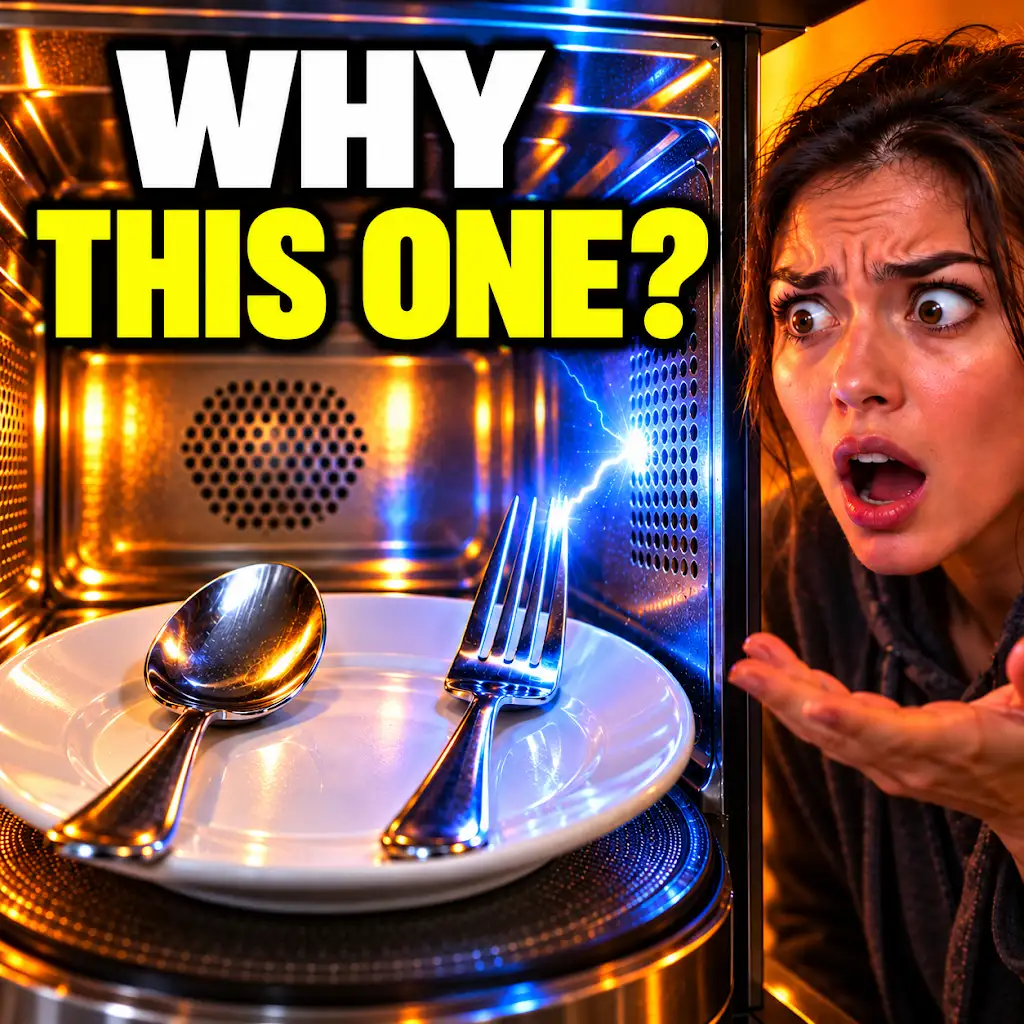
A Fork and a Spoon React Differently in a Microwave. Why?
FAQs
What is microwave physics?
Microwave physics is the study of the behavior and properties of microwaves, which are a form of electromagnetic radiation with wavelengths ranging from one meter to one millimeter.
How do microwaves heat food?
Microwaves heat food by causing water molecules within the food to vibrate, generating heat through friction. This process is known as dielectric heating.
What safety precautions should be taken when using a microwave?
To ensure safety when using a microwave, it is important to use microwave-safe containers, avoid heating certain materials like metal or plastic not labeled as microwave-safe, and follow the manufacturer’s instructions for proper use.
How does a microwave oven work?
A microwave oven works by producing microwaves through a magnetron, which are then distributed throughout the oven’s interior. These microwaves interact with the food, causing the water molecules to vibrate and generate heat.
What are some common applications of microwave technology?
Microwave technology is commonly used in microwave ovens for cooking and heating food, as well as in communication systems, radar, medical treatments, and industrial processes such as drying and curing materials.