You might think of your microwave as a culinary shortcut, a magical box that zaps your leftovers into steaming meals in mere minutes. But beneath its utilitarian facade lies a surprisingly bizarre and fascinating world of physics, chemistry, and engineering. Prepare yourself, because we’re about to dive deep into the peculiar science that makes your microwave oven tick.
At the heart of your microwave’s magic are invisible electromagnetic waves, specifically those in the microwave frequency range. This isn’t a new phenomenon; radio waves and visible light are also part of the electromagnetic spectrum. What makes microwaves unique is their specific wavelength and frequency, which happen to be incredibly effective at interacting with water molecules, the most abundant component in most foods.
The Magnetron: The Heartbeat of the Microwave
You can’t have microwaves without a magnetron. This is the powerhouse, the device that generates these essential waves. Think of it as a highly specialized vacuum tube. Inside, a filament heats up, releasing electrons. These electrons are then forced to spiral by powerful magnets. As they spiral, they interact with a resonant cavity, essentially a precisely shaped metal chamber, causing them to oscillate at a specific microwave frequency – typically around 2.45 gigahertz (GHz). This oscillation is what generates the microwaves that then flood your oven. It’s a complex interplay of electricity, magnetism, and electron behavior, all working in concert to produce the invisible energy that heats your food. The design of the magnetron is a marvel of electrical engineering, optimized for efficiency and power output.
Frequency and Wavelength: A Delicate Dance
The 2.45 GHz frequency isn’t arbitrary. It’s chosen because it’s an ideal spot on the electromagnetic spectrum. At this frequency, the microwave’s energy is efficiently absorbed by water molecules. This absorption is crucial. If the frequency were too high, the microwaves might penetrate the food too deeply without effectively heating it, or they might be absorbed by the oven’s walls. If the frequency were too low, the microwaves wouldn’t interact as strongly with water molecules, leading to inefficient heating. The wavelength associated with this frequency is about 12.2 centimeters. This wavelength plays a role in how the microwaves propagate within the oven cavity, which we’ll explore further.
The Electromagnetic Field: A Dance of Perpendicular Forces
Electromagnetic waves are characterized by oscillating electric and magnetic fields that are perpendicular to each other and to the direction of wave propagation. In your microwave, these fields are what interact with your food. The electric field is particularly important here. Water molecules, with their slightly positive and negative ends, are polar. When subjected to the oscillating electric field of the microwaves, these polar molecules try to align themselves with the changing field. This constant reorientation, or “wiggling,” is what generates heat through friction.
The strange science of microwave ovens has fascinated many, revealing the intricate ways in which they heat food and the peculiar phenomena that can occur during their operation. For those interested in exploring this topic further, a related article can be found at Freaky Science, which delves into the unexpected effects and unique properties of microwaves, shedding light on the science behind this common kitchen appliance.
The Molecular Mambo: How Microwaves Really Cook
This is where the “bizarre” really kicks in. Microwaves don’t cook your food by simply making it hotter in a general sense. They engage in a molecular dance that directly agitates the very building blocks of your meal.
Dielectric Heating: The Core Mechanism
The primary way microwaves heat food is through a process called dielectric heating. This refers to the heating of a material when it’s placed in an oscillating electric field. As we touched upon, water molecules are the key players. Their polar nature makes them highly susceptible to this electric field. Imagine millions of tiny magnets trying to flip back and forth billions of times per second. This rapid movement generates kinetic energy, which we perceive as heat. It’s a direct conversion of electromagnetic energy into thermal energy at the molecular level.
The Role of Polar Molecules: More Than Just Water
While water is the star of the show, other polar molecules found in food, such as fats and sugars, also contribute to microwave heating, though generally to a lesser extent. Fats, for example, have a slightly polar nature due to the presence of carbonyl groups. Sugars, with their hydroxyl groups, are also polar. This is why fatty foods and those high in sugar can sometimes cook faster or differently than leaner, less sugary options in a microwave.
Intermolecular Friction: The Heat Generator
The continuous reorientation of polar molecules causes them to bump into each other. This is intermolecular friction. The more collisions, the more kinetic energy is transferred, and the hotter the food becomes. It’s a very efficient process, especially when there’s a high concentration of water molecules. Think of it like rubbing your hands together rapidly – the friction generates heat. Microwaves are essentially making the molecules within your food do that at an incredibly high speed.
Penetration Depth: A Tale of Layers
Microwaves don’t penetrate infinitely into food. Their penetration depth is limited, typically to about 1-2 centimeters in most foods. This means that the heat generation primarily occurs in the outer layers of your food. The inner parts are then cooked by conduction from the outer layers. This is why sometimes you might find the edges of your microwaved food piping hot while the center is still a bit cool.
Uneven Heating: The Hot Spot Phenomenon
This limited penetration depth, combined with the way microwaves bounce around inside the oven cavity, leads to a phenomenon you’re probably all too familiar with: uneven heating. Hot spots and cold spots are common. The electromagnetic waves can interfere with each other, creating areas of high and low energy density. This is why rotating turntables and stirrer fans are essential components of microwave ovens – they aim to distribute the microwave energy more evenly throughout the oven cavity and your food.
Conduction vs. Microwave Heating: A Contrast in Cooking
Unlike conventional ovens that heat food primarily through convection (moving hot air) and conduction (direct contact with hot surfaces), microwaves bypass much of this. They directly excite molecules within the food. This is why microwaved food often has a different texture than conventionally cooked food. It lacks the browning and crisping that comes from the Maillard reaction and caramelization, which require higher surface temperatures than microwaves typically achieve in a controlled manner.
The Bouncing Waves: Navigating the Oven Cavity
The interior of your microwave is more than just a metal box; it’s an engineered environment designed to manage the behavior of electromagnetic waves.
The Metal Box: A Faraday Cage in Action
The metal walls of your microwave oven act as a Faraday cage. This means they reflect electromagnetic waves. This is crucial for several reasons. Firstly, it keeps the microwaves contained within the oven, preventing them from escaping and posing a potential hazard. Secondly, it allows the microwaves to bounce around inside the cavity, effectively reflecting them back into the food and increasing the chances of absorption. The metal walls are conductive, and electromagnetic waves induce currents in conductors, which then generate opposing fields that reflect the incoming waves.
The Turntable: A Simple Yet Genius Solution
As mentioned, uneven heating is a major challenge. The rotating turntable is a simple yet brilliant solution. By rotating the food, it exposes different parts of the meal to both areas of high and low microwave intensity. Over time, this rotation helps to average out the heating, leading to a more uniformly cooked dish. It’s a practical application of understanding wave interference.
The Stirrer Fan: An Alternative Approach
Some microwave ovens, particularly older or commercial models, use a stirrer fan. This is a rotating metal blade located in the ceiling of the oven cavity. It’s designed to reflect and scatter the microwaves in a more random pattern, further promoting even heating. Instead of rotating the food, it rotates the waves themselves, aiming to distribute the energy more broadly.
Wave Interference: The Cause of Hot Spots
The microwaves generated by the magnetron enter the oven cavity and bounce off the metal walls. As these reflected waves travel, they can interfere with each other. When waves are in phase (their crests and troughs align), they reinforce each other, creating areas of higher energy intensity – your hot spots. When they are out of phase (the crest of one aligns with the trough of another), they cancel each other out, leading to areas of lower energy intensity – your cold spots. Understanding wave interference is key to understanding why microwave ovens can heat so unevenly.
Beyond Water: The Bizarre Interactions with Different Foods

While water is the primary target of microwave energy, other components in your food can behave in surprisingly different ways, leading to some peculiar outcomes.
Fats and Oils: Different Heating Dynamics
Fats and oils are less polar than water but still have some polar characteristics. They absorb microwave energy, but generally less efficiently than water. This can lead to interesting cooking dynamics. For example, foods with a high fat content might appear to cook faster because the fat itself heats up, and then transfers that heat to other components. However, the actual dielectric loss of fats at microwave frequencies is lower than that of water. This can also contribute to uneven cooking, as the microwave energy might “tunnel” through the fat to reach more watery components.
Sugars: Caramelization and Burning
Sugars are polar and readily absorb microwave energy. This can lead to rapid heating and browning, especially in sugary glazes or sauces. In some cases, this can lead to overcooking or even burning if not carefully monitored. The rapid heating of sugars can also contribute to a different textural outcome compared to conventional cooking, often resulting in a chewier or stickier texture.
Metals: The Danger Zone
This is one of the most well-known “bizarre” aspects of microwave science, and for good reason. Metal reflects microwaves. When you put a metal object in a microwave, the microwaves bounce off it intensely. This can create arcs of electrical discharge – sparks! This is because the electric field of the microwaves can induce strong currents in the metal, and when these currents become concentrated, they can exceed the breakdown voltage of the air, causing a visible spark. This can damage the magnetron and even start a fire. Certain types of metal, like thin, crinkled foil, are particularly prone to sparking due to the sharp edges concentrating the electric field.
The Case of the “Browned” Microwave Meal
You’ve probably seen those microwave meals with a little silver crisping tray. These trays are designed with specific shapes and materials to interact with microwaves and generate enough heat through induction and reflection to achieve a degree of browning and crisping that wouldn’t otherwise happen. It’s a clever workaround to the inherent limitations of microwave cooking.
Ceramics and Glass: Mostly Inert Companions
Most ceramics and glass are generally inert in a microwave. They don’t contain many polar molecules that readily absorb microwave energy. This is why they are safe to use as cookware. However, there are exceptions. Some ceramics can contain metallic glazes or impurities that can cause them to heat up or spark. Always check if a dish is microwave-safe.
The strange science of microwave ovens has fascinated many, revealing how these appliances use electromagnetic waves to heat food quickly and efficiently. For those interested in exploring more about the quirky aspects of everyday technology, you might find this article on Freaky Science particularly intriguing, as it delves into the unexpected phenomena that occur in our daily lives.
The Curious Effects: From Steaming to Superheating
| Metrics | Data |
|---|---|
| Frequency | 2.45 GHz |
| Power Output | 600-1200 watts |
| Efficiency | 60-70% |
| Heating Mechanism | Dielectric heating |
| Penetration Depth | 1-2 inches |
The way microwaves interact with food can lead to some intriguing and sometimes unexpected phenomena.
Steam Generation: The Silent Cooker
As microwaves heat water molecules within food, they generate steam. This steam is trapped within the food, effectively steaming it from the inside out. This can lead to very tender results, but also to pressure buildup, which is why puncturing food before microwaving is often recommended, especially items with skins like potatoes or sausages. The rapid generation of steam can cause these items to burst if not vented.
The Power of Pressure: Why Puncturing Matters
The build-up of steam pressure inside a sealed food item can be significant. When this pressure exceeds the structural integrity of the food, it can result in an explosion. This is why you’ll often see instructions to “vent” or “pierce” foods like baked potatoes, sausages, or even eggs before microwaving. This allows the excess steam to escape safely.
Superheating: A Silent Danger
Superheating is a phenomenon where a liquid can be heated beyond its boiling point without actually boiling. This can happen in a microwave if the liquid is very pure and the container has a smooth surface, preventing the formation of bubbles that would normally initiate boiling. The liquid remains dangerously hot and can erupt violently when disturbed, for example, when you reach in to remove it or add something to it. This can cause severe burns. Using a slightly roughened container or adding a non-metallic object like a wooden spoon can help prevent superheating.
Avoiding the Exploding Cup: Tips for Safe Heating
To avoid superheating, always use a container with a slightly rough surface, or place a wooden stirrer or a non-metallic utensil in the liquid while heating. Stirring the liquid periodically during the heating process can also help. Never overheat liquids in the microwave.
The Bizarre Case of the Frozen Food “Melting”
You’ve likely experienced this: you put a frozen meal in the microwave, and some parts seem to melt and cook while others remain frozen. This is a direct consequence of uneven heating and the varying compositions of the frozen meal. The components with higher water content will absorb microwave energy more readily and heat up faster, leading to that patchy thawing and cooking effect.
The Future of Microwave Science: Beyond the Kitchen
The science behind microwave ovens is not just confined to making our lives easier in the kitchen. It has broader implications and ongoing research.
Industrial Applications: More Than Just Leftovers
Microwave technology is used in a surprising array of industrial applications. It’s employed in the drying of materials, the curing of polymers, the sterilization of medical equipment, and even in the chemical synthesis of certain compounds. The ability to rapidly and selectively heat materials makes microwaves a valuable tool in many manufacturing processes.
Advanced Heating Techniques: Precision and Control
Researchers are continuously developing more advanced microwave heating techniques. This includes using controlled microwave fields to achieve more precise and uniform heating, minimizing hot spots and improving efficiency. This could lead to more sophisticated industrial processes and even improved methods for food processing and preservation.
Safety and Research: Evolving Understanding
While microwaves are generally considered safe when used as intended, ongoing research continues to refine our understanding of their interaction with biological tissues and the environment. This research ensures that microwave technology remains safe and effective as it evolves. The focus is on understanding any potential long-term effects and optimizing safety protocols for both consumer and industrial use.
So, the next time you zap your dinner, take a moment to appreciate the complex and rather bizarre science at play. Your humble microwave oven is a testament to the power of invisible waves, molecular dances, and clever engineering, transforming raw ingredients into your next meal with a fascinating, and often surprising, scientific flourish.
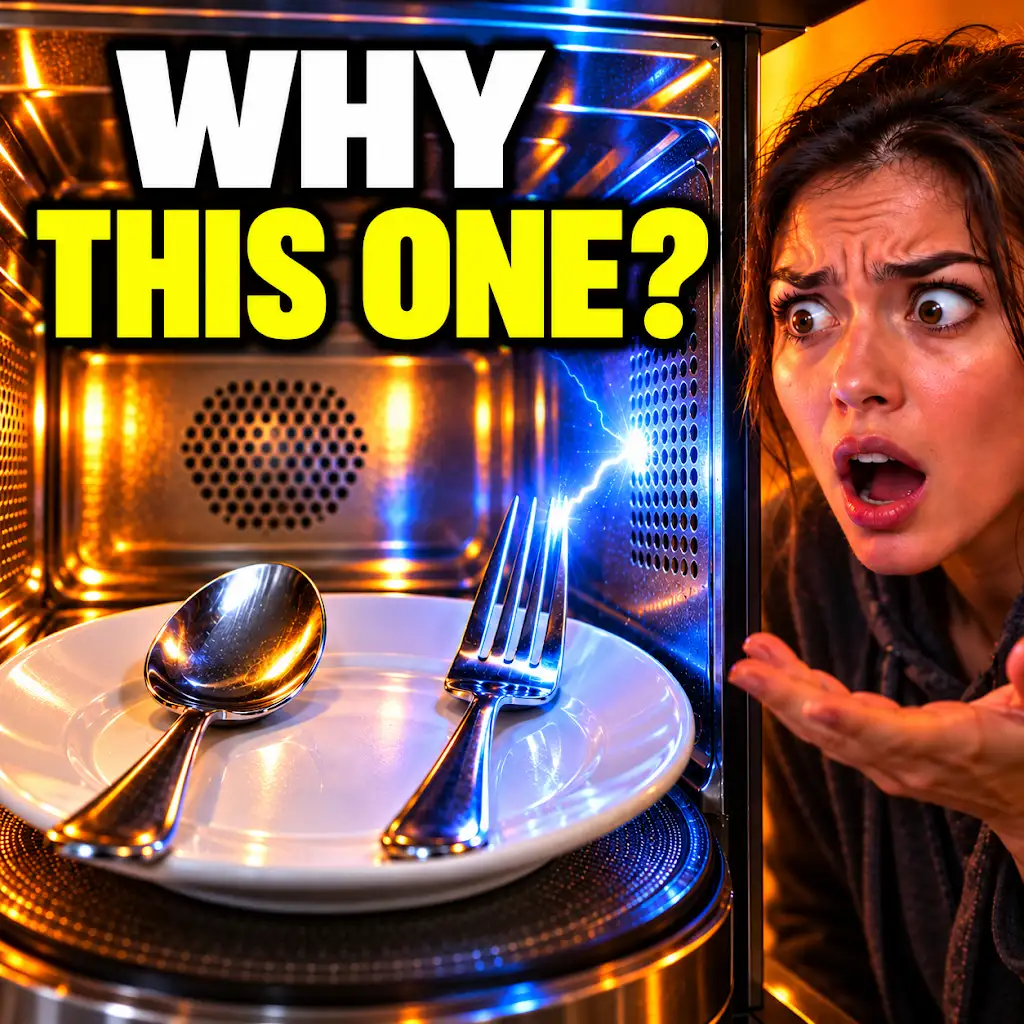
A Fork and a Spoon React Differently in a Microwave. Why?
FAQs
What is the strange science behind microwave ovens?
Microwave ovens use a form of electromagnetic radiation called microwaves to heat and cook food. These microwaves cause water molecules in the food to vibrate, generating heat and cooking the food from the inside out.
How do microwave ovens heat food so quickly?
Microwaves are able to penetrate the food and cause the water molecules to vibrate, which in turn generates heat. This process allows for rapid and even heating of the food.
Can microwave ovens change the chemical composition of food?
Microwaves can alter the chemical composition of food by breaking down certain nutrients and vitamins. However, the extent of these changes depends on factors such as cooking time and the type of food being heated.
Are there any safety concerns associated with microwave ovens?
Microwave ovens are generally safe to use, but it is important to follow the manufacturer’s instructions and avoid using containers or materials that are not microwave-safe. Additionally, it is important to use caution when removing hot food from the microwave to avoid burns.
What are some unusual uses for microwave ovens?
In addition to heating and cooking food, microwave ovens can be used for tasks such as sterilizing kitchen sponges, drying herbs, and even testing the moisture content of soil. However, it is important to exercise caution and follow proper guidelines when using a microwave for non-food purposes.