
You’ve probably experienced it. You’re trying to heat up leftovers, maybe a comforting bowl of soup or some pasta, and you pop it into the microwave. You set the timer, hit start, and then… confusion. You pull out your food, expecting uniform warmth, only to find pockets of scalding heat interspersed with lukewarm or even still-cold areas. These are your microwave hotspots, and they’re not just an annoyance; they’re a fascinating glimpse into the physics of how microwave ovens work, particularly when you’re dealing with water-rich objects.
The Invisible Dance of Microwaves
To understand these hotspots, you first need to understand what’s happening inside that metal box. Your microwave oven isn’t simply blasting your food with generic heat. Instead, it’s using a specific type of electromagnetic radiation – microwaves – to excite water molecules.
How Microwaves Generate Heat
- The Magnetron: The Heart of the Matter: The magic begins with a component called a magnetron. This is the workhorse that generates the microwaves. These waves are then directed into the oven cavity.
- Dielectric Heating: The Key Mechanism: Microwaves interact with polar molecules, the most abundant of which in most foods is water. Water molecules have a positive charge on one side and a negative charge on the other, making them dipoles. When exposed to the oscillating electric field of the microwaves, these water molecules rapidly try to align themselves with the changing field. This frantic jiggling and rotation creates friction, and friction, as you know, generates heat.
- The Power of Oscillation: The microwaves generated by the magnetron oscillate at a very high frequency, typically around 2.45 gigahertz. This means the electric field flips direction billions of times per second, causing the water molecules to twist and turn at an astonishing rate. It’s this rapid, chaotic movement that translates into thermal energy, cooking your food.
Microwave hotspots are a fascinating phenomenon often observed when heating water-rich objects in a microwave oven. This occurs because water molecules absorb microwave radiation more efficiently than other substances, leading to uneven heating and the formation of hot spots. For a deeper understanding of this topic, you can explore a related article that delves into the science behind microwave heating and its effects on various materials. Check it out here: Freaky Science.
Water: The Unsung Hero (and Occasional Villain) of Microwave Cooking
Water is the primary target for microwaves. The more water a food contains, the more efficiently it will absorb microwave energy and heat up. This is why foods with high water content, like fruits, vegetables, and soups, tend to cook quickly. However, this very abundance of water can also be the root cause of those frustrating hotspots.
The Ubiquitous Nature of Water in Food
- Molecular Structure and Polarity: As mentioned, water’s molecular structure makes it highly polar. This polarity is crucial for its interaction with microwaves. Other polar molecules in food, like fats and sugars, also contribute to heating, but water is the dominant player due to its prevalence and strong polarity.
- Varying Water Content: Different foods have vastly different water content. A ripe tomato, for example, is packed with water, while a piece of dry bread has very little. This variation directly influences how unevenly food will heat.
- The Role of “Free” vs. “Bound” Water: Not all water in food behaves the same way. “Free” water, which is not bound to other molecules or trapped within a rigid structure, is more mobile and can rotate more freely in response to microwaves, leading to quicker heating. “Bound” water, which is more structurally integrated, heats up more slowly. This difference can contribute to textural variations and uneven cooking.
The Microwave Cavity: An Environment of Standing Waves
The metal walls of your microwave oven are designed to reflect microwaves. This reflection, however, creates a complex pattern of energy distribution within the cavity, leading to the phenomenon of standing waves.
The Physics of Reflection and Interference
- Wave Reflection: When microwaves encounter the metal walls, they bounce off. This isn’t a simple, uniform reflection. The waves interact with each other.
- Constructive and Destructive Interference: Just like ripples on a pond, when waves meet, they can either reinforce each other (constructive interference) or cancel each other out (destructive interference). In a microwave oven, the reflected waves interfere with the incoming waves, creating areas where the microwave energy is concentrated (antinodes) and areas where it is weak or absent (nodes).
- Standing Waves Formed: These regions of high and low energy are called standing waves. They are stationary patterns of microwave intensity within the oven cavity. You can imagine them as stationary humps and dips in the microwave energy field.
- The Turntable’s Role: This is where the turntable comes in. By rotating the food, the turntable attempts to move the food through these high and low energy zones, averaging out the heating. Without a turntable, you would experience even more pronounced hotspots and cold spots.
Understanding Hotspots: Where Energy Peaks and Dips
The standing waves created by the interaction of microwaves with the oven cavity are the primary reason for those unpredictable hotspots. Areas of high microwave intensity, the antinodes, will heat up much faster than areas of low intensity, the nodes.
The Impact of Standing Waves on Food
- Concentrated Energy Zones: At the antinodes, the water molecules are bombarded with a significantly higher density of microwave energy. This leads to rapid and intense heating in these specific locations.
- Weak Energy Zones: Conversely, at the nodes, the microwave energy is significantly attenuated. The water molecules receive much less energy, resulting in much slower heating or even remaining cold.
- The “Checkerboard” Effect: If you were to visualize the microwave energy distribution, it wouldn’t be uniform. It would look more like a checkerboard or a ripple pattern, with alternating hot and cold spots.
- Food Geometry and Placement: The shape and placement of your food within the oven can also exacerbate these effects. A thicker or denser part of food placed in a high-energy zone will heat up disproportionately faster than a thinner part in a low-energy zone.
Microwave hotspots are often created by water-rich objects due to the way microwaves interact with water molecules. When exposed to microwave radiation, these molecules absorb energy and begin to vibrate, which can lead to uneven heating and the formation of hotspots. For a deeper understanding of this phenomenon, you can explore a related article that discusses the science behind microwave heating and its effects on various materials. This insightful piece can be found here. By examining the properties of water and its role in cooking, we can better appreciate the intricacies of microwave technology.
Strategies to Combat Hotspots: Achieving Even Heating
Fortunately, you’re not powerless against these microwave hotspots. Understanding the science allows you to employ strategies that promote more even heating and a more enjoyable culinary experience.
Practical Tips for Even Cooking
- Stirring and Rearranging: This is your most powerful weapon. Periodically stopping the microwave to stir, rotate, or rearrange your food is crucial. By moving the food around, you expose different parts of it to both high and low-energy zones, allowing for more uniform heat distribution.
- Covering Your Food: Using a microwave-safe lid or plastic wrap (vented to allow steam to escape) can help trap steam. This steam adds moisture to the food and contributes to more even heating. It also prevents drier areas from forming and becoming overheated while other areas remain cold.
- Arranging Food in a Ring: For larger or irregularly shaped items, arranging them in a circular or ring pattern on the plate can help. This allows the microwaves to reach the center more effectively and reduces the likelihood of the edges becoming overcooked while the center remains cold.
- Allowing for Standing Time: This is a critical but often overlooked step. After microwaving, allow your food to sit for a minute or two. During this “standing time,” the heat generated in the hotter areas will continue to conduct into the cooler areas, equalizing the temperature throughout the dish.
- Lower Power Settings: For more delicate foods or when you’re concerned about uneven heating, try using a lower power setting. This reduces the intensity of the microwaves, allowing for slower, more controlled heating and giving the heat more time to distribute evenly.
- Using Microwave-Safe Containers: The material of your container can also play a role. Certain plastics can absorb microwave energy and heat up themselves, potentially creating localized hotspots. Opt for glass or ceramic containers, which are generally more inert.
Beyond Water: Other Factors Influencing Microwave Hotspots
While water is the primary driver, other components within your food and even the microwave itself can contribute to uneven heating.
The Nuances of Food Composition and Microwave Technology
- Fat and Sugar Content: Fats and sugars also absorb microwave energy, though generally less efficiently than water. However, their distribution within the food can influence heating patterns. For example, a pocket of fat might heat up more rapidly than surrounding muscle tissue.
- Density and Thickness Variations: As discussed earlier, the density and thickness of food are critical. Thicker portions will take longer to heat through, and if placed in a high-energy zone, can become very hot on the outside before the inside is warm.
- Surface Area and Shape: The surface area exposed to microwaves can also influence heating. Irregularly shaped foods may have some parts that are more exposed to the direct microwave radiation than others.
- Microwave Oven Design and Age: The design of your microwave oven, including the placement of the magnetron and the wave guide, can affect the standing wave patterns. Older ovens might also have components that have degraded, potentially leading to less predictable heating.
- The “Hotspotting” Effect of Certain Ingredients: Some ingredients, particularly those with a high concentration of certain minerals or a different dielectric properties, can absorb microwaves differently. This is why you might notice that a dish with certain types of cheese or even some spices heats up in a particular way. For instance, some cheeses, with their fat and protein content, can concentrate heat in ways that can lead to surprisingly hot spots.
By understanding the intricate interplay between water-rich objects, the physics of microwave radiation, and the internal dynamics of your microwave oven, you can transform those frustrating hotspots into a more controlled and satisfying cooking experience. It’s not just about hitting a button; it’s about engaging with the science behind the convenience.
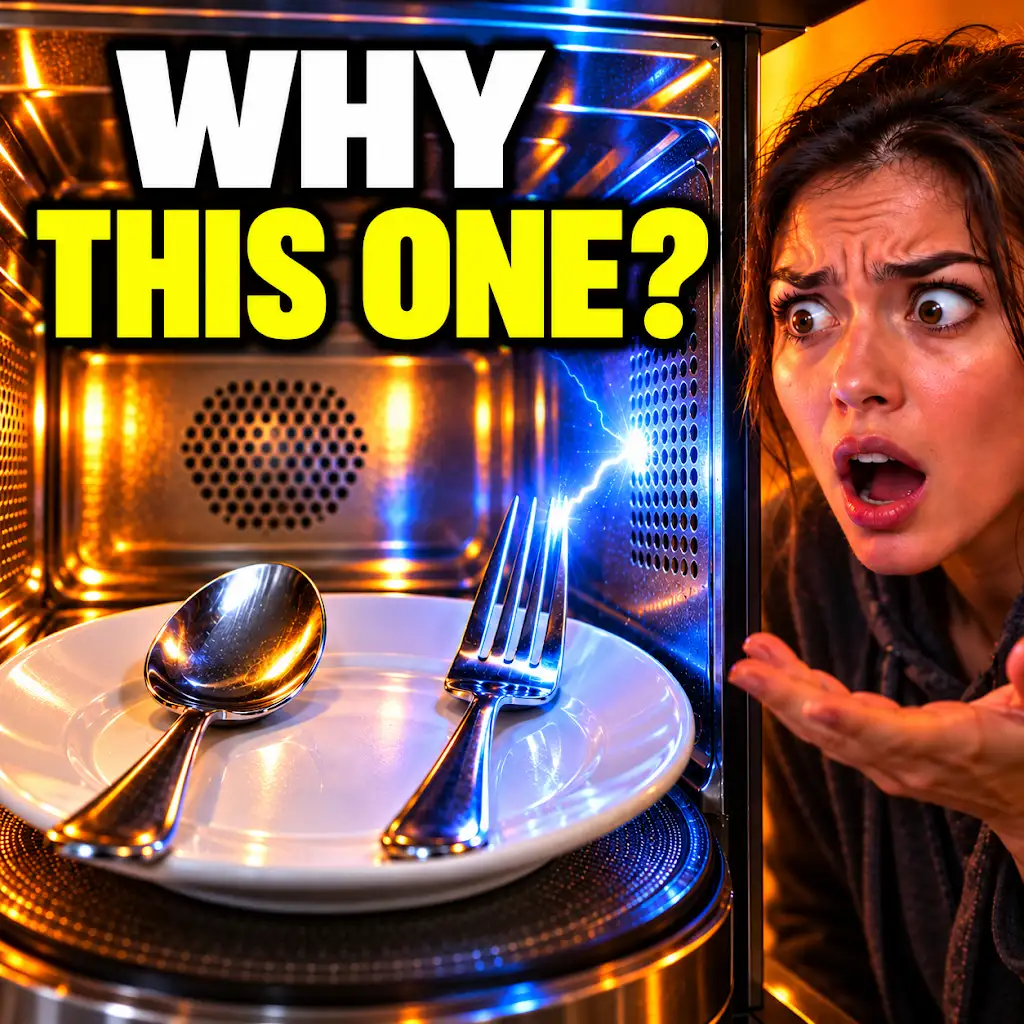
A Fork and a Spoon React Differently in a Microwave. Why?
FAQs
What are water-rich objects?
Water-rich objects are materials or substances that contain a high concentration of water molecules. This can include foods, liquids, and certain materials such as ceramics or plastics.
Why do water-rich objects create microwave hotspots?
Water-rich objects create microwave hotspots because water molecules are polar, meaning they have a positive and negative end. When exposed to microwaves, the water molecules rapidly align with the changing electric field, causing them to vibrate and generate heat. This localized heating can create hotspots within the object.
What types of materials can create microwave hotspots?
In addition to water-rich objects, other materials that can create microwave hotspots include certain fats and oils, as well as foods with uneven distributions of water or other polar molecules. Metallic objects should not be placed in a microwave as they can cause arcing and create dangerous hotspots.
Are microwave hotspots safe?
Microwave hotspots can be safe as long as the food or object is heated evenly and reaches a safe temperature throughout. However, uneven heating can lead to hotspots that may cause burns or uneven cooking. It is important to follow microwave cooking guidelines and use microwave-safe containers to minimize the risk of hotspots.
How can microwave hotspots be avoided?
To avoid microwave hotspots, it is important to stir and rotate food during cooking to promote even heating. Using microwave-safe containers and covering food with a lid or microwave-safe wrap can also help distribute heat more evenly and reduce the likelihood of hotspots.