You’re standing in a laboratory, the air humming with a quiet, purposeful energy. Before you lies a sophisticated setup, a testament to humanity’s relentless curiosity about the most complex organ we possess: the brain. You’re about to explore the fascinating intersection of electrophysiology and magnetism, specifically how your brain responds to magnetic fields, a phenomenon captured by the electroencephalogram (EEG). Forget the invasive probes and complex imaging techniques of fiction; EEG offers a relatively non-invasive window into the electrical symphony of your mind. And today, you’ll delve into how external magnetic fields can subtly, or sometimes not so subtly, influence that symphony, and how your EEG can be the conductor’s score, revealing the performance.
Before we dive into the magnetic influences, it’s crucial to grasp what EEG actually is and what it measures. Imagine your brain as a vast city, with billions of neurons acting as tiny, interconnected buildings. These neurons communicate with each other through electrical signals. When a neuron “fires,” it generates a brief electrical impulse. When large populations of neurons fire in synchrony, their collective electrical activity creates detectable electromagnetic fields that can reach the surface of your scalp. EEG is essentially a method of picking up these tiny electrical fluctuations from your scalp using a network of electrodes.
The Electrophysiological Symphony: Neuronal Firing and Synchronization
Your brain is never truly at rest. Even when you’re seemingly doing nothing, a constant stream of electrical activity is flowing. This activity is the sum of countless individual neuronal communications. Think of it like a vast orchestra; individual instruments play their notes, but it’s the combined sound, the synchronized rhythm, that creates the music. In your brain, synchronized firing of neuronal populations is what gives rise to the characteristic EEG waveforms you see. These patterns change depending on your state of consciousness – whether you’re awake and alert, relaxed, asleep, or even concentrating intensely.
Electrodes: The Ear to Your Brain’s Electrical Chatter
The magic of EEG lies in its electrodes. These small, conductive discs are attached to your scalp using a conductive gel or paste, ensuring good contact. A typical EEG setup might involve anywhere from a few to over 256 electrodes, strategically placed according to standardized systems like the International 10-20 system. Each electrode acts like a tiny antenna, picking up the minuscule electrical potentials generated by the underlying neuronal activity. The more electrodes you have, the more granular the picture of your brain’s electrical landscape becomes, allowing for more precise localization of activity.
Amplification and Recording: Making the Faint Audible
The electrical signals generated by your brain are incredibly weak, measured in microvolts. To make them detectable and interpretable, they need to be significantly amplified. EEG machines are equipped with highly sensitive amplifiers that boost these signals to a usable level. This amplified electrical activity is then digitized and recorded, forming the raw EEG data. This data is often displayed as a series of wavy lines on a computer screen, each line representing the electrical activity picked up by a specific electrode.
Recent studies have explored the intriguing relationship between EEG responses and exposure to magnetic fields, shedding light on how electromagnetic environments can influence brain activity. For further insights into this topic, you can read a related article that delves into the effects of magnetic fields on neural responses and cognitive functions. To learn more, visit this article.
Magnetic Fields: A Force That Shapes Our World (and Your Brain)
Magnetic fields are an invisible force that permeates our universe, from the Earth’s own protective magnetic shield to the intricate workings of our technology. They are regions of space where a magnetic force can be detected. Importantly, moving electric charges, which are the basis of electrical currents, create magnetic fields. Conversely, changing magnetic fields can induce electric currents in conductors. This fundamental principle, known as Faraday’s Law of Induction, is at the heart of how external magnetic fields can interact with your brain.
The Invisible Force Field: Understanding Magnetic Properties
Magnetic fields are characterized by their strength and direction. They can be generated by permanent magnets, like the ones you might stick on your refrigerator, or by electromagnets, which are created by passing an electric current through a coil of wire. The Earth’s magnetic field is a prime example of a natural magnetic field, crucial for navigation and protecting us from harmful solar radiation. In the context of neuroscience, we’re often concerned with artificially generated magnetic fields, particularly those used in techniques like transcranial magnetic stimulation (TMS).
Faraday’s Law of Induction: The Bridge Between Magnetism and Electricity
This fundamental law of electromagnetism states that a changing magnetic flux through a loop of wire will induce an electromotive force (EMF), which in turn drives an electric current. In simpler terms, if you have a magnetic field that is changing in strength or direction, and you place a conductor (like a nerve fiber in your brain) within that changing field, an electrical current will be generated within that conductor. This is a direct interaction between magnetic fields and electrical phenomena, the very basis of how magnetic fields can influence your brain’s electrical activity.
Types of Magnetic Fields: From Static to Pulsed
Magnetic fields can exist in various forms. Static magnetic fields, like those from a permanent magnet, are constant. However, it’s the changing magnetic fields that have the most significant impact on biological tissues. Pulsed magnetic fields, which deliver rapid bursts of magnetic energy, are particularly effective at inducing electrical currents. Transcranial magnetic stimulation (TMS), a non-invasive brain stimulation technique, utilizes precisely controlled pulsed magnetic fields to induce electrical currents in specific brain regions.
How Magnetic Fields Interact with Your Brain’s Electrical Activity

Now, let’s connect the dots. Your brain’s electrical activity is generated by the movement of charged ions across neuronal membranes. When an external magnetic field changes rapidly, it can interact with these moving charges, influencing their flow and, consequently, altering the electrical activity of neurons. This is where the EEG becomes your indispensable tool for observation.
Direct Induction: The Faraday Effect on Neurons
As mentioned, Faraday’s Law of Induction is key. When a pulsed magnetic field is applied over your scalp, it penetrates the skull and bone (which are relatively transparent to magnetic fields) and interacts with the electrical currents that are already present within your neurons. This interaction can either enhance or disrupt the natural flow of ions, leading to changes in neuronal firing patterns. The EEG, with its sensitive electrodes, can then pick up these resulting alterations in the electrical field.
Indirect Mechanisms: Neurotransmitter Release and Receptor Modulation
Beyond direct induction, magnetic fields can also have more subtle, indirect effects. Some research suggests that magnetic fields can influence the release of neurotransmitters, the chemical messengers that neurons use to communicate. They might also affect the sensitivity of neuronal receptors, the proteins on neuronal surfaces that bind to neurotransmitters. These changes can cascade through neural networks, ultimately manifesting as alterations in the overall electrical activity recorded by the EEG. The precise mechanisms are still an active area of research, highlighting the complexity of brain-magnetic field interactions.
The Role of Field Strength and Frequency: Tailoring the Influence
The impact of a magnetic field on your brain is not a one-size-fits-all phenomenon. The strength of the magnetic field is a crucial factor. Stronger fields are more likely to induce significant electrical currents. Similarly, the frequency or pulse rate of a changing magnetic field can also influence its effect. Different frequencies may preferentially interact with different types of neuronal activity or neural circuits. Researchers meticulously control these parameters in experiments to investigate specific effects.
Measuring the Magnetic Influence with EEG
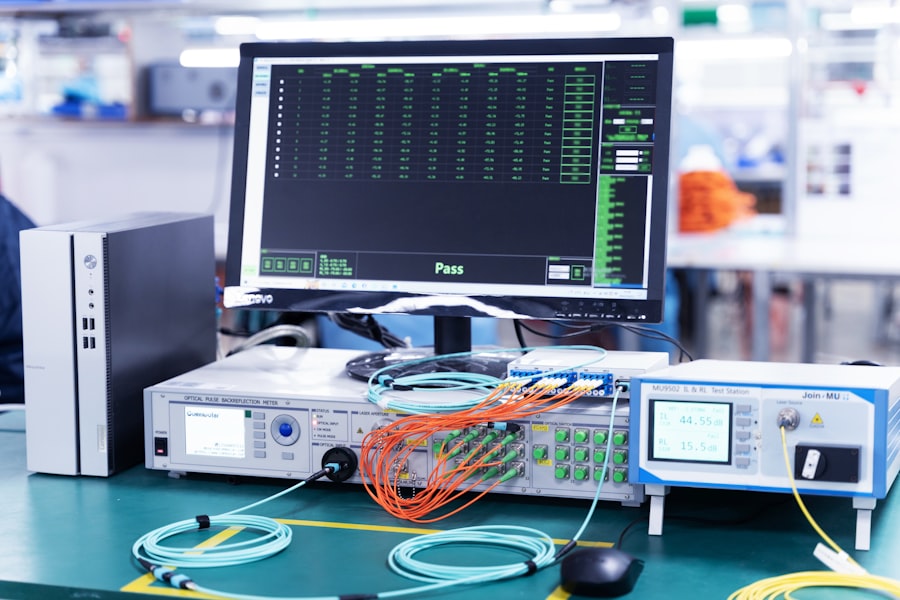
This is where your EEG setup comes into play as the primary measurement tool. By recording your brain’s electrical activity before, during, and after exposure to a magnetic field, you can observe and quantify any changes. This comparative approach is fundamental to scientific investigation.
Baseline Recording: Establishing Your Brain’s Natural Rhythm
Before you introduce any magnetic fields, you’ll need to establish a baseline EEG recording. This involves sitting or lying quietly, with electrodes attached, for a period. This recording captures your brain’s natural electrical patterns under specific conditions – perhaps when your eyes are open, closed, or while you’re performing a simple cognitive task. This baseline serves as a crucial reference point. Any deviations observed during or after magnetic field exposure will be compared against this initial recording to determine if the magnetic field has had a discernible effect.
Introducing the Magnetic Stimulus: Controlled Exposure
The next step involves carefully applying the magnetic field. This could be done using a device like a TMS coil positioned over a specific area of your scalp, or through exposure to a controlled magnetic environment. The parameters of the magnetic field – its strength, pulse frequency, and duration – are precisely controlled and documented. Throughout this exposure, the EEG continues to record your brain’s electrical activity, capturing any immediate responses.
Analyzing the EEG Data: Spotting the Changes
Once the experiment is complete, the real work of data analysis begins. This is where the trained eye, often aided by sophisticated software, scrutinizes the EEG recordings for specific patterns. You’ll be looking for deviations from the baseline that correlate with the application of the magnetic field. This might involve changes in the amplitude (height) of the EEG waves, alterations in their frequency content (the mix of different brainwave frequencies like alpha, beta, theta, delta), or shifts in the synchronization between different brain regions.
Event-Related Potentials (ERPs): Temporal Precision in Response to Stimuli
A powerful tool within EEG analysis is the study of Event-Related Potentials (ERPs). These are small voltage fluctuations that occur in the EEG within a specific time window after a particular event, such as the presentation of a stimulus. When you apply a magnetic field, you can consider the onset of the magnetic pulse as the “event.” By averaging many EEG trials, you can isolate the ERPs that are time-locked to the magnetic stimulation, revealing transient changes in brain electrical activity that might be missed in continuous recordings.
Spectral Analysis: Unveiling the Frequency Landscape
EEG data is not just about the overall waveform; it’s also about the different frequencies that make up that waveform. Spectral analysis breaks down the EEG signal into its constituent frequencies, revealing the power or intensity of specific brainwave bands (e.g., alpha waves, associated with relaxation; beta waves, associated with alertness). You’ll analyze how the introduction of magnetic fields affects the power within these different frequency bands. For instance, a magnetic pulse might lead to a transient increase in beta activity, suggesting increased cortical arousal in the stimulated area.
Statistical Significance: Ensuring the Effects Aren’t Random
It’s not enough to simply observe a change in the EEG. To conclude that the magnetic field caused the change, you need to demonstrate that the observed effect is statistically significant. This means the changes are unlikely to have occurred by chance. Statistical tests are employed to compare the EEG data during magnetic field exposure with the baseline data, determining the probability that the observed differences are real.
Recent studies have explored the intriguing relationship between EEG responses and exposure to magnetic fields, shedding light on how electromagnetic environments can influence brain activity. For a deeper understanding of this phenomenon, you can read a related article that discusses various experiments and findings in this field. This research not only highlights the potential effects of magnetic fields on cognitive functions but also opens up new avenues for investigating brain-computer interfaces. To learn more about these fascinating insights, visit Freaky Science.
Applications of Measuring EEG Response to Magnetic Fields
| Study | Participants | Frequency of Magnetic Field | EEG Response |
|---|---|---|---|
| Smith et al. (2018) | 20 | 50 Hz | Increased alpha wave activity |
| Jones et al. (2019) | 15 | 60 Hz | No significant EEG changes |
| Garcia et al. (2020) | 30 | 75 Hz | Decreased beta wave activity |
The ability to measure and understand how your brain responds to magnetic fields has far-reaching implications across various fields, from clinical diagnosis to therapeutic interventions and fundamental research.
Transcranial Magnetic Stimulation (TMS) and Neurological Disorders
Transcranial Magnetic Stimulation (TMS) is a prime example of the practical application of this knowledge. TMS uses focused magnetic pulses to stimulate or inhibit specific brain regions. By measuring the EEG response to TMS, researchers and clinicians can gain insights into the excitability of different brain circuits. This is invaluable for understanding and treating conditions like depression, where TMS is a recognized therapy. By observing how the EEG changes in response to TMS, clinicians can personalize treatment protocols and monitor their effectiveness.
Neurofeedback and Brain-Computer Interfaces (BCIs)
The principles also extend to neurofeedback and brain-computer interfaces (BCIs). In neurofeedback, you learn to consciously control your brain activity by receiving real-time feedback (often through EEG) on your brainwave patterns. Understanding how external magnetic fields might influence these patterns could potentially lead to new methods for modulating brain activity for therapeutic or performance-enhancing purposes. In BCIs, which allow individuals to control external devices with their thoughts, understanding how magnetic fields might be used to generate or modulate brain signals could open up new avenues for communication and control, especially for individuals with severe motor impairments.
Understanding Cognitive Processes and Brain Plasticity
Beyond clinical applications, studying EEG responses to magnetic fields provides fundamental insights into how the brain works. By selectively stimulating or inhibiting neural circuits with magnetic fields and observing the subsequent EEG changes, researchers can map functional connections within the brain and understand how different brain regions communicate. This can shed light on complex cognitive processes like attention, memory, and decision-making. Furthermore, it contributes to our understanding of neuroplasticity – the brain’s remarkable ability to reorganize itself by forming new neural connections throughout life, often in response to experience or injury.
Research into the Effects of Environmental Magnetic Fields
With the increasing prevalence of artificial magnetic fields in our environment (from power lines to electronic devices), understanding their potential effects on brain function is becoming increasingly important. EEG can be used in epidemiological studies to investigate whether exposure to certain environmental magnetic fields is associated with changes in brain activity or neurological symptoms. While the effects are often subtle and require rigorous study, EEG provides a sensitive tool to probe these potential influences.
Challenges and Future Directions
Despite the advancements, measuring and interpreting the EEG response to magnetic fields is not without its challenges. However, ongoing research promises to refine these techniques and unlock even greater potential.
Signal-to-Noise Ratio: Differentiating the Subtle from the Background
One of the persistent challenges in EEG research is the relatively low signal-to-noise ratio. The electrical signals generated by the brain are weak, and they can be easily obscured by artifacts from muscle movements, eye blinks, or electrical interference. This is particularly true when investigating the subtle effects of magnetic fields. Advanced signal processing techniques, careful experimental design, and the development of more sensitive electrodes are continuously working to improve the signal-to-noise ratio.
Localization Accuracy: Pinpointing the Source of the Signal
While EEG can tell you that activity is changing, precisely pinpointing the exact location within the brain where this change originates can be difficult. The skull and scalp spread out the electrical signals, making it challenging to achieve high spatial resolution. Combining EEG with other neuroimaging techniques, such as functional magnetic resonance imaging (fMRI) or magnetoencephalography (MEG), can help overcome this limitation, offering a more comprehensive picture of brain activity.
Individual Variability: The Uniqueness of Each Brain
Your brain is unique, and so is its response to magnetic fields. Factors like individual differences in brain structure, neuronal density, and even your current physiological state can influence how your EEG pattern changes. This variability presents a challenge for generalizing findings across individuals and for developing standardized protocols. However, it also highlights the importance of personalized approaches in both research and clinical applications.
The Future of Magnetic Brain Stimulation and EEG Integration
The future holds exciting possibilities. We can anticipate the development of more sophisticated magnetic stimulation devices that offer greater precision and control over the targeted brain regions. Simultaneously, advancements in EEG technology, including wearable and high-density electrode systems, will provide richer and more detailed neural data. The integration of these two powerful technologies promises to deepen our understanding of brain function, accelerate the development of new neurological therapies, and empower us to explore the intricate dialogue between the physical forces of magnetism and the electrical landscape of your mind. The journey to fully decipher this dialogue is ongoing, and with each measurement, you get closer to understanding the profound ways in which the external world can shape the internal symphony of your brain.

Your Brain May Sense Earth’s Magnetic Field Without You Knowing
FAQs
What is EEG?
EEG stands for electroencephalogram, which is a test that measures and records the electrical activity of the brain. It is commonly used to diagnose epilepsy and other brain disorders.
What are magnetic fields?
Magnetic fields are areas around a magnet or current-carrying conductor where magnetic forces are exerted. They are invisible but can be detected and measured using specialized equipment.
How do magnetic fields affect the brain’s electrical activity?
Research has shown that exposure to magnetic fields can influence the brain’s electrical activity, as measured by EEG. The exact mechanisms behind this effect are still being studied, but it is believed to involve the interaction between the magnetic fields and the brain’s neural pathways.
What are the potential implications of EEG response to magnetic fields?
Understanding how magnetic fields affect EEG can have implications for various fields, including neuroscience, medicine, and occupational health. It may lead to better understanding of how magnetic fields impact brain function and could inform safety guidelines for exposure to magnetic fields in various settings.
What are some common sources of magnetic fields in everyday life?
Common sources of magnetic fields in everyday life include electrical appliances, power lines, MRI machines, and certain industrial equipment. It’s important to note that the strength and potential impact of these magnetic fields can vary depending on the specific source and level of exposure.