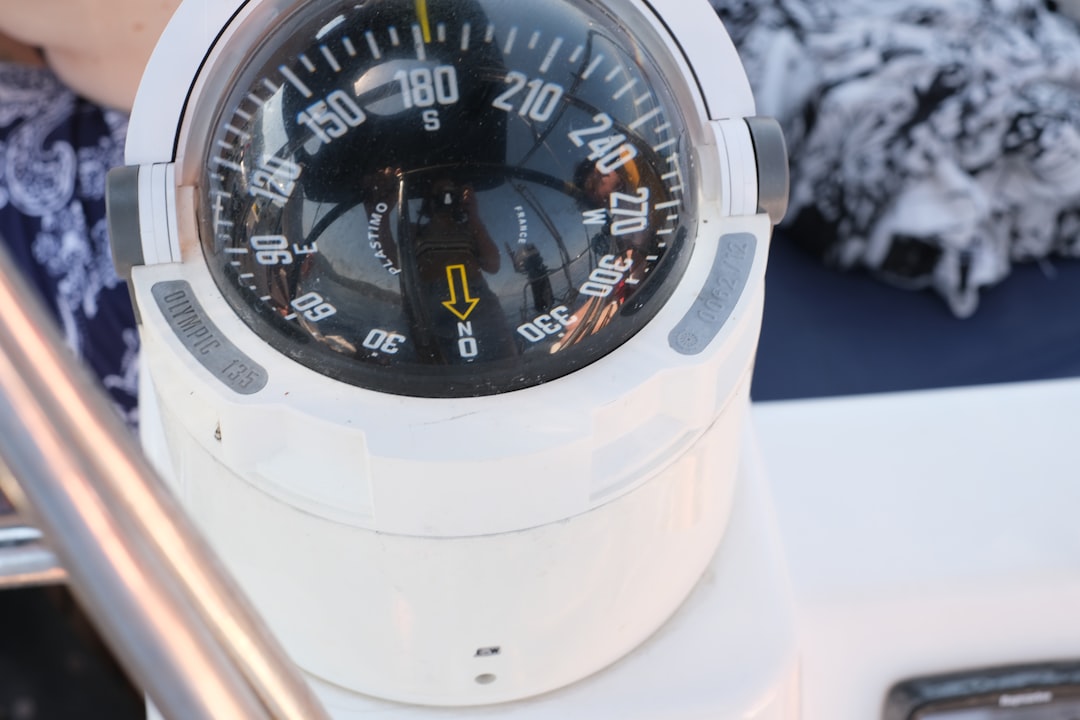
Imagine this: you’re lost in a dense forest, the sun obscured by a thick canopy. Yet, you feel a subtle, innate pull, a silent whisper guiding you in a particular direction. This isn’t some mystical intuition; it’s your body’s potential to sense the Earth’s magnetic field, a phenomenon that has captivated scientists for decades. You, like many other creatures, might possess an astonishing, often unconscious, ability to navigate using this invisible force. It’s a secret held within your very being, a biological compass waiting to be understood. This journey into human magnetic navigation will peel back the layers, exploring the evidence, the mechanisms, and the profound implications of this remarkable sense.
The Compelling Evidence: Are You a Magnetic Navigator?
The idea that humans might be able to sense magnetic fields is not new. Early observations, often anecdotal, hinted at this possibility. But in recent years, rigorous scientific investigation has begun to provide compelling, albeit complex, evidence. You might be surprised to learn just how much research is pointing towards your inherent magnetic abilities.
Early Observations and Anecdotal Accounts
Think back to any uncanny instances where you just knew which way to go, even without visual cues. Perhaps during a long road trip, you felt a persistent urge to turn left, even though your GPS indicated otherwise, and it turned out to be the correct route. These experiences, while easily dismissed as coincidence, are part of a larger tapestry of observations. Sailors, accustomed to the Earth’s magnetic poles for centuries, sometimes reported an intuitive sense of direction. While many of these accounts are subjective, they laid the groundwork for scientific inquiry.
The Rise of Experimental Proof
The scientific pursuit of human magnetoreception has intensified, moving beyond anecdotal evidence to controlled experiments. Researchers have designed ingenious studies to detect subtle human responses to magnetic fields. These experiments often involve exposing participants to specific magnetic field orientations and observing their reactions, from brainwave activity to behavioral changes. The challenge lies in isolating this subtle sense from other more dominant sensory inputs.
Distinguishing Magnetoreception from Other Navigational Cues
It’s crucial to differentiate magnetic sensing from other ways you might navigate. You rely on visual landmarks, the position of the sun or stars, memory of routes, and even sounds. Magnetic navigation, if it exists, is a distinct sensory modality, working in parallel or in conjunction with these other cues. Scientists have meticulously designed experiments to eliminate or control for these confounding factors, ensuring that any observed responses are indeed due to magnetic field interactions.
Recent advancements in human magnetic navigation research have opened up new possibilities for understanding how humans can interact with magnetic fields. A related article that delves deeper into this fascinating topic can be found at Freaky Science, where researchers explore the implications of magnetic navigation on human behavior and potential applications in various fields. This exploration not only highlights the scientific underpinnings of magnetic navigation but also raises intriguing questions about the future of human orientation and navigation.
Unraveling the Biological Mechanisms: Where Does Your Compass Reside?
If you do possess this magnetic sense, how does it work? Scientists are exploring several intriguing biological mechanisms that could be responsible for your internal compass. These theories often draw inspiration from the well-established magnetoreception found in animals like birds, bees, and even some mammals.
The Cryptochrome Hypothesis: Light-Dependent Magnetic Sensors
One of the leading hypotheses centers on cryptochromes, a class of photoreceptor proteins found in the eyes of many animals, including humans. These molecules are sensitive to blue light and are thought to undergo chemical reactions that are influenced by magnetic fields. The theory suggests that when light hits the cryptochromes in your retina, it initiates a process that generates pairs of molecules with unpaired electrons. The spin state of these electron pairs can then be influenced by the Earth’s magnetic field, altering the chemical reaction and, potentially, sending a signal to your brain.
The Role of Blue Light Sensitivity
Your eyes are remarkably adept at detecting light across a spectrum, but cryptochromes are particularly sensitive to blue light. Experiments have shown that the supposed magnetic sense can be modulated by light exposure, strengthening the link between cryptochromes and magnetoreception. This implies that your ability to sense magnetic fields might be more pronounced during daylight hours or when exposed to specific light conditions.
Potential Neural Pathways
If cryptochromes are indeed involved, the next question is how this magnetic information is transmitted to your brain. Researchers are investigating potential neural pathways that could carry these signals. This might involve specific nerve cells in the retina or connections to other sensory processing areas. The exact route is still a subject of intense research.
The Magnetite Hypothesis: Tiny Magnetic Crystals
Another compelling theory involves magnetite, a naturally occurring magnetic mineral. Tiny crystals of magnetite have been found in the tissues of various organisms, including humans. These crystals, when exposed to an external magnetic field, can exert physical forces on the cell structures they are embedded in. This physical displacement could then trigger nerve signals, acting as a direct magnetic sensor.
Presence of Magnetite in Human Tissues
Studies have identified magnetite particles in various human organs, including the brain, liver, and even the inner ear. The concentration and distribution of these particles are areas of active investigation. The hypothesis suggests that these particles might be strategically located to detect magnetic field changes.
Mechanotransduction of Magnetic Forces
The key to the magnetite hypothesis lies in mechanotransduction – the conversion of physical forces into biochemical signals. If magnetite crystals are attached to mechanosensitive ion channels or other cellular structures, their movement in response to a magnetic field could open or close these channels, leading to changes in electrical activity within the cell.
Other Emerging Theories and Considerations
While cryptochromes and magnetite are the most prominent hypotheses, scientists are not ruling out other possibilities. Research is exploring other biomolecules and cellular structures that might be sensitive to magnetic fields. The complexity of biological systems means that the answer might involve a combination of mechanisms or entirely novel discoveries.
The Neural Correlates: What Happens in Your Brain?
If you are indeed sensing magnetic fields, what’s happening in your brain when this occurs? Neuroscientists are employing advanced imaging techniques to try and pinpoint the neural activity associated with magnetoreception. The goal is to understand which brain regions are involved and how they process this potentially subtle sensory information.
Brainwave Activity and Magnetic Fields
Electroencephalography (EEG) is a common tool used to measure electrical activity in the brain. Researchers have conducted experiments where participants are exposed to changing magnetic fields while their brainwaves are monitored. Some studies have reported specific changes in brainwave patterns that correlate with the applied magnetic fields, suggesting a neural response.
Alpha and Theta Wave Modulation
Early research has focused on specific brainwave frequencies, such as alpha and theta waves. These are often associated with states of relaxation and introspection. Some findings suggest that the Earth’s magnetic field might subtly modulate these brainwave patterns, indicating a potential interaction with your neural activity.
The Challenge of Isolating Signals
A significant challenge in these studies is distinguishing genuine magnetic responses from other brain activity. Your brain is a remarkably complex organ, and numerous internal and external factors can influence its electrical signals. Isolating the subtle imprint of magnetic navigation requires sophisticated data analysis and carefully controlled experimental conditions.
Functional Magnetic Resonance Imaging (fMRI) Studies
Functional magnetic resonance imaging (fMRI) allows researchers to observe brain activity in real-time by measuring changes in blood flow. While fMRI has been less commonly used for direct magnetoreception studies due to the required magnetic shielding, some researchers are exploring its potential. This could offer a more localized view of which brain areas are activated.
Identifying Activated Brain Regions
If fMRI studies were to reveal consistent activation patterns in specific brain regions during magnetic field exposure, it would provide strong evidence for a dedicated neural network for magnetoreception. Researchers are hypothesizing about areas involved in spatial processing, navigation, and even sensory integration.
The Role of the Trigeminal Nerve
The trigeminal nerve, which serves the face and head, has also emerged as a potential candidate for transmitting magnetic sensory information. Some studies suggest that the magnetic field might interact with specialized nerve endings within this nerve, sending signals to the brain.
The Functional Significance: Why Would You Need This Sense?
The existence of magnetic navigation in humans raises a fundamental question: what is its purpose? While not as immediately apparent as our reliance on sight or hearing, this subtle sense could offer significant evolutionary advantages and play a role in our everyday lives in ways we haven’t fully appreciated.
Evolutionary Advantages in Early Humans
In the ancestral past, before the advent of modern navigation tools, the ability to sense magnetic fields could have been crucial for survival. Imagine early humans migrating across vast distances, exploring new territories, or finding their way back to familiar hunting grounds. A built-in compass would have been an invaluable asset.
Migration and Exploration
The Earth’s magnetic field provides a consistent global reference. This could have aided in long-distance migrations, allowing groups to maintain a general direction over many miles. It could have also facilitated the exploration of unfamiliar landscapes, reducing the risk of getting permanently lost.
Returning to Familiar Territories
The ability to sense magnetic north and south could have also helped individuals and groups return to known resources, such as water sources, food supplies, or safe shelters. This would have increased efficiency and reduced energy expenditure.
Potential Modern-Day Applications and Benefits
While you might not be trekking across continents without a map, magnetic navigation could still have relevance in your modern life, both consciously and unconsciously.
Enhancing Spatial Awareness and Orientation
Even if you’re not consciously “feeling” the magnetic field, it might be contributing to your subconscious spatial awareness and sense of orientation. This could play a role in how you navigate familiar environments, maintain a sense of direction within buildings, or even how you perceive distances and layouts.
Applications in Technology and Human Augmentation
Understanding human magnetoreception could pave the way for exciting technological advancements. Imagine wearable devices that tap into your innate magnetic sense to provide intuitive navigational cues. This could be particularly beneficial for individuals with certain sensory impairments or in situations where visual navigation is difficult.
Therapeutic and Cognitive Benefits
There’s also speculation about potential therapeutic benefits. Could stimulating or enhancing magnetic sense aid in rehabilitation for certain neurological conditions? Could it improve cognitive functions related to spatial memory and navigation? These are ambitious but intriguing possibilities.
Recent advancements in human magnetic navigation research have sparked interest in the potential applications of this technology in various fields. For those looking to explore this topic further, an insightful article can be found at Freaky Science, which delves into the implications of magnetic fields on human navigation and the fascinating experiments that have been conducted. This research not only enhances our understanding of human capabilities but also opens the door to innovative uses in areas such as robotics and augmented reality.
The Future of Human Magnetoreception Research: What Lies Ahead?
The field of human magnetic navigation is still in its nascent stages, brimming with unanswered questions and exciting avenues for future exploration. As scientific tools and understanding advance, we can anticipate significant breakthroughs in the years to come.
Refining Experimental Methodologies
One of the key challenges moving forward is the refinement of experimental methodologies. Researchers are continuously developing more sensitive and precise techniques to detect and measure subtle human responses to magnetic fields. This includes improved ways to control for confounding variables and to isolate the specific effects of magnetoreception.
Developing More Sophisticated Detection Tools
The development of new sensors and measurement devices will be crucial. This could involve more sensitive magnetometers, advanced neuroimaging techniques, and innovative ways to assess behavioral responses without conscious bias. The aim is to move from detecting potential hints of magnetoreception to obtaining definitive and repeatable evidence.
Addressing the Placebo Effect and Subjectivity
The subjective nature of some early findings has been a hurdle. Future research will focus on designing experiments that are less susceptible to the placebo effect and conscious suggestion. This will involve blinding participants and researchers to experimental conditions and using objective, quantifiable measures of response.
Investigating the Genetic and Developmental Aspects
Are some individuals born with a stronger magnetic sense than others? Research into the genetic and developmental underpinnings of magnetoreception could provide valuable insights. Understanding the genetic predispositions and developmental pathways involved could shed light on individual differences in this sense.
Identifying Genes Associated with Magnetoreception
If magnetoreception has a genetic component, identifying the specific genes involved would be a major breakthrough. This could involve comparative genomics, studying families with purported strong navigational abilities, and utilizing gene-editing technologies in model organisms.
Developmental Changes in Magnetic Sensitivity
How does magnetic sensitivity develop over a lifetime? Are there critical periods during childhood for its development? Exploring the developmental trajectory of this sense could reveal important information about its biological basis and potential for enhancement.
Interdisciplinary Collaboration and Global Research Efforts
Unlocking the secrets of human magnetic navigation will undoubtedly require a collaborative, interdisciplinary approach. Biologists, physicists, neuroscientists, psychologists, and engineers will need to work together, pooling their expertise and resources to tackle this complex puzzle.
Bridging the Gaps Between Disciplines
The success of this research hinges on effective communication and collaboration between different scientific fields. Physicists can contribute their understanding of magnetic fields, biologists can elucidate the biological mechanisms, and neuroscientists can map the neural pathways. Psychology will be essential in understanding the behavioral and perceptual aspects.
Establishing Standardized Protocols and Databases
To accelerate progress, establishing standardized experimental protocols and creating shared databases of findings will be crucial. This will allow researchers worldwide to build upon each other’s work, compare results more effectively, and avoid duplication of effort.
Your journey into the world of human magnetic navigation is just beginning. The subtle whisper of the Earth’s magnetic field might be a constant companion, influencing your sense of direction and orientation in ways you’re only starting to grasp. As scientists continue to probe the depths of this remarkable biological compass, you too can become more attuned to the invisible forces that shape your perception of the world. The secrets of your internal compass are waiting to be fully unlocked, revealing a profound connection between you and the planet you inhabit.

Your Brain May Sense Earth’s Magnetic Field Without You Knowing
FAQs
What is human magnetic navigation research?
Human magnetic navigation research is the study of how humans may have the ability to sense and navigate using the Earth’s magnetic field, similar to how some animals such as birds and turtles do.
What are some recent findings in human magnetic navigation research?
Recent findings in human magnetic navigation research suggest that humans may have a protein in the eyes that responds to magnetic fields, potentially playing a role in our ability to sense direction and navigate.
How is human magnetic navigation research conducted?
Human magnetic navigation research is conducted using a variety of methods, including behavioral experiments, brain imaging techniques, and genetic studies to understand the mechanisms behind any potential magnetic navigation abilities in humans.
What are the potential implications of human magnetic navigation research?
If humans are found to have the ability to sense and navigate using the Earth’s magnetic field, it could have implications for fields such as neuroscience, psychology, and even technology, as it may lead to new insights into human sensory abilities and navigation systems.
What are some challenges in human magnetic navigation research?
Challenges in human magnetic navigation research include the complexity of the human brain and sensory systems, as well as the need for rigorous experimental designs to conclusively demonstrate any magnetic navigation abilities in humans.