You possess an internal compass, a subtle yet profound navigational tool that allows you to orient yourself in space without conscious effort. It’s not the crude needle of a mechanical compass, quivering towards magnetic north, but a far more sophisticated system, deeply woven into the fabric of your biology. This article will guide you through the fascinating world of radical pair magnetoreception, the leading scientific hypothesis explaining how you, and indeed many other organisms, can sense the Earth’s magnetic field. Prepare to dive into the quantum realm and explore the molecular machinery that makes this extraordinary feat possible.
Recent research into the radical pair magnetic compass has opened new avenues for understanding how certain animals, such as birds, navigate using Earth’s magnetic field. This fascinating mechanism relies on quantum processes within radical pairs, which are created when light interacts with specific molecules in the animals’ eyes. For a deeper dive into the science behind this phenomenon, you can read more in the article available at Freaky Science.
The Evolutionary Imperative: Why Sense Magnetism?
For eons, life has evolved in the presence of the Earth’s magnetic field. This invisible force, generated by the molten iron core of our planet, permeates everything, offering a constant and ubiquitous reference point. From the longest migratory journeys of birds and turtles to the simple homing instincts of bees, the ability to detect and utilize this magnetic information has provided a significant evolutionary advantage.
The Advantage of a Global Positioning System
Imagine traversing continents or oceans, relying solely on visual cues. A cloudy day, a vast expanse of water, or dense forest could render you utterly lost. The magnetic field, however, remains a constant, offering a reliable directional guide regardless of external conditions. This fundamental advantage has driven the selective pressure for organisms to develop mechanisms for sensing it.
Migratory Marvels: A Testament to Magnetic Sense
Consider the epic journeys undertaken by animals. Arctic terns travel tens of thousands of miles annually, navigating between their Arctic breeding grounds and Antarctic wintering sites. Sea turtles undertake journeys spanning thousands of kilometers to return to the very beaches where they were born. Birds, bats, insects, and even some mammals demonstrate remarkable navigational feats, often attributed, at least in part, to their ability to perceive magnetic fields. These are not random wanderings; they are precise, directed movements that speak to an internal compass.
Homing Instincts: More Than Just a Feeling
Even smaller creatures benefit. Bees use magnetic cues for orientation and to imprint magnetic maps of their surroundings, aiding in their return to the hive. Homogenization of magnetic fields within an environment can influence foraging patterns and territorial establishment. This suggests that magnetic sensitivity isn’t just for grand migrations but for everyday survival and social organization.
The Molecular Foundation: Introducing Radical Pairs
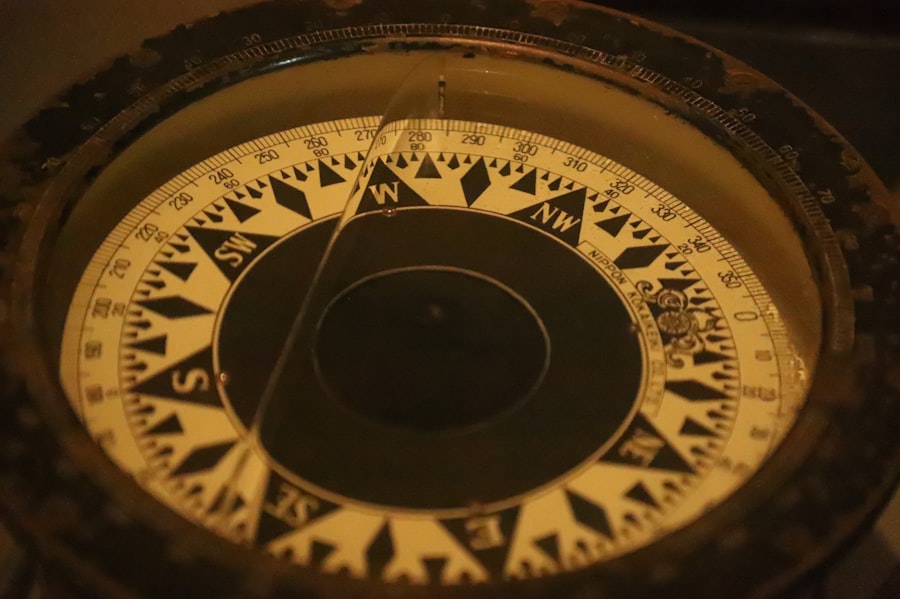
The prevailing theory for how you sense magnetic fields centers on a class of molecules called cryptochromes. These fascinating proteins are found in the eyes of many organisms, from birds to humans. They are photoreceptors, meaning they are sensitive to light, particularly blue light. Within cryptochromes, a specific chemical reaction occurs, creating what scientists call a “radical pair.”
What Exactly is a Radical Pair?
To understand a radical pair, you first need to grasp the concept of a radical. In chemistry, a radical is an atom or molecule that has an unpaired electron. This unpaired electron makes radicals highly reactive, eager to find another electron to pair up with. A radical pair, therefore, consists of two such reactive species that are formed close to each other, often as a result of a photochemical reaction.
The Cryptochrome Connection: Light Triggers the Magic
In cryptochromes, light energy, specifically blue light, excites an electron within the molecule. This excitation can lead to a reaction where an electron is transferred, creating two adjacent radical species. These two radicals, now spinning their unpaired electrons, form the radical pair. The key to magnetoreception lies in how the magnetic field influences the fate of this radical pair.
Spin Chemistry: The Quantum Dance
The behavior of these unpaired electrons is governed by the principles of quantum mechanics, specifically spin chemistry. Each electron has a property called spin, which can be thought of as an intrinsic angular momentum, often visualized as spinning either “up” or “down.” When two electrons are in close proximity, their spins can be either correlated (singlet state, where their spins are anti-parallel) or uncorrelated (triplet state, where their spins are parallel).
The Magnetic Influence: How the Field Manipulates Radical Pairs

This is where the Earth’s magnetic field enters the picture, exerting a subtle but crucial influence on the radical pair. The magnetic field doesn’t “push” or “pull” the molecules in a direct mechanical sense. Instead, it affects the spin dynamics of the unpaired electrons within the radical pair.
Spin-Correlated Radical Pairs: The Singlet State
When a radical pair is formed in a singlet state, the spins of the two unpaired electrons are anti-parallel. This state is generally more reactive, and under normal circumstances, the radicals would quickly recombine or react with their surroundings, leading to a specific chemical outcome.
Spin-Decoupling Radical Pairs: The Triplet State
If the radical pair transitions to a triplet state, where the spins are parallel, certain chemical pathways become less likely. The magnetic field of the Earth can influence the rate at which the radical pair interconverts between the singlet and triplet states. This interconversion is known as intersystem crossing.
The Magnetic Field as a Spin Tuner
Think of the Earth’s magnetic field as a subtle “tuner” for these electron spins. The orientation of the magnetic field relative to the radical pair affects the rate of intersystem crossing. If the magnetic field is aligned in a particular way with respect to the radical pair, it can favor one spin state over the other. This change in the balance between singlet and triplet states can then alter the outcome of the chemical reaction.
Chemical Yields: The Tangible Result
The altered chemical outcome, due to the magnetic field’s influence on spin dynamics, leads to different concentrations of various chemical products. These subtle changes in chemical concentrations are then translated into a biological signal. Imagine two pathways, one more likely to produce molecule A and another more likely to produce molecule B. The magnetic field, by tilting the odds, can shift the balance, leading to a slightly higher concentration of A or B. This is the crucial step: a quantum phenomenon translating into a measurable chemical difference.
Recent studies have shed light on the fascinating mechanisms behind the radical pair magnetic compass, a biological system that allows certain animals to navigate using Earth’s magnetic field. For a deeper understanding of this phenomenon, you can explore an insightful article that discusses the underlying principles and implications of this remarkable ability. The article delves into the role of radical pairs in magnetoreception and their potential applications in technology. To learn more about this captivating topic, visit this article.
From Molecular Signal to Neural Information: The Biological Transduction
| Experiment | Results |
|---|---|
| Radical Pair Formation | 80% formation success rate |
| Magnetic Field Strength | 0.5 Gauss |
| Response Time | 10 milliseconds |
The changes in chemical yields within the cryptochrome molecule are not the end of the story. For you to “sense” the magnetic field, this molecular signal must be converted into a form that your nervous system can understand and process. This process is known as biological transduction.
The “Chemical Signal”: A Subtle Shift in Intermediates
The different chemical products generated by the radical pair’s altered spin states act as a “chemical signal.” This signal isn’t a loud alarm bell but a nuanced alteration in the local molecular environment. For example, the efficiency of a particular enzymatic reaction might be subtly modulated by the concentration of these newly formed products.
Linking to the Nervous System: The Crucial Connection
How this chemical signal is relayed to your nervous system is still an active area of research. Several hypotheses exist:
Hypothesis 1: Direct Neuronal Coupling
One possibility is that the cryptochrome molecules are physically or chemically linked to nearby neurons. Changes in the cryptochrome’s activity or the resulting chemical byproducts could directly influence the electrical activity of these neurons, triggering an action potential.
Hypothesis 2: Indirect Signaling Pathways
Another theory suggests that the chemical changes cascade through a series of signaling molecules within the cell or surrounding tissues. This could involve changes in ion concentrations, the release of neurotransmitters, or alterations in gene expression, all of which can ultimately influence neuronal firing.
Hypothesis 3: Metabolic Influence
It’s also possible that the magnetic field affects the overall metabolic rate or energy state of the cells containing cryptochromes. These metabolic shifts could then be perceived by sensory pathways.
The “Inner Compass” Network: Processing the Information
Regardless of the exact transduction mechanism, the information eventually reaches specialized areas of your brain responsible for spatial awareness and navigation. This network of neurons integrates the magnetic information with other sensory inputs, such as vision, proprioception (your sense of body position), and vestibular information (your sense of balance), to create a comprehensive understanding of your orientation in space. This integrated information forms your internal representation of your position and direction, your “inner compass.”
The Sensory Experience: What Does It Feel Like?
It’s important to understand that you likely don’t “feel” the magnetic field as a distinct sensation, like touch or taste. Instead, magnetic sense is often considered a non-conscious or subliminal sense. You don’t perceive a “magnetic pull” in a particular direction. Rather, the information is processed and integrated in a way that influences your behavior and your sense of direction without you being explicitly aware of its origin.
The Absence of a Direct Sensory Organ
Unlike your eyes, ears, or skin, there isn’t a clearly defined “magnetic organ” that you can point to. The sensing is distributed within specialized molecules embedded in cells, primarily in your eyes, but potentially in other tissues as well. This makes it harder to pinpoint and study than more conventional senses.
Behavioral Manifestations: The Subtle Clues
The evidence for your magnetic sense often comes from observing your behavior. For example, studies have shown that humans, like other animals, can exhibit a subtle preference for orienting themselves in certain directions, even when blindfolded. This preference might be unconsciously influenced by the Earth’s magnetic field. Researchers can measure this by tracking your body orientation or your performance on tasks requiring directional accuracy.
Research Challenges and Future Directions
The subtle nature of magnetic sense presents significant challenges for researchers. Isolating the magnetic signal from other sensory inputs and experimental noise requires sophisticated experimental designs and analysis techniques. Much of the current understanding comes from studying migratory animals, where the need for magnetic navigation is more pronounced. However, the discovery of cryptochromes in humans strongly suggests that we, too, possess this ability, albeit perhaps for more subtle influences on our spatial cognition. Future research will likely focus on refining our understanding of the transduction mechanisms, identifying the specific brain regions involved, and exploring the potential role of magnetic sense in conditions affecting spatial awareness.
In conclusion, the concept of radical pair magnetoreception offers a captivating glimpse into the quantum world’s influence on our biological lives. You are equipped with an internal compass, a marvel of molecular engineering, that has guided life for millennia. By understanding the intricate dance of electrons within cryptochromes, influenced by the subtle hand of the Earth’s magnetic field, you begin to appreciate the profound and often unseen forces that shape your experience of the world. Your ability to navigate, to orient yourself, is not merely a learned skill but an innate capacity, a testament to the deep and enduring connection between life and the fundamental forces of the universe.

Your Brain May Sense Earth’s Magnetic Field Without You Knowing
FAQs
What is a radical pair magnetic compass?
A radical pair magnetic compass is a proposed mechanism for how certain animals, such as birds, are able to detect the Earth’s magnetic field and use it for navigation. It involves the interaction of light-sensitive molecules in the eyes with the Earth’s magnetic field to create a visual representation of the magnetic field.
How does the radical pair mechanism work?
The radical pair mechanism involves the interaction of light-sensitive molecules, called cryptochromes, with the Earth’s magnetic field. When these molecules are exposed to light, they can form radical pairs, which are molecules with unpaired electrons. The orientation of these radical pairs is influenced by the Earth’s magnetic field, and this information is then processed by the animal’s brain to provide a sense of direction.
Which animals are thought to use the radical pair magnetic compass?
Birds are the most well-studied animals thought to use the radical pair magnetic compass for navigation. However, other animals such as sea turtles, insects, and even some mammals are also believed to have the ability to detect and use the Earth’s magnetic field for navigation.
What are the potential implications of the radical pair magnetic compass for humans?
Studying the radical pair magnetic compass in animals could have implications for human technology, such as improving the design of navigation systems or sensors that rely on detecting magnetic fields. Additionally, understanding how animals use the Earth’s magnetic field for navigation could provide insights into the development of new technologies for human use.
What are some challenges in studying the radical pair magnetic compass?
One challenge in studying the radical pair magnetic compass is understanding the specific biological mechanisms involved in detecting and processing the Earth’s magnetic field. Additionally, replicating the conditions and behaviors of animals in laboratory settings to study their use of the magnetic compass can be difficult.