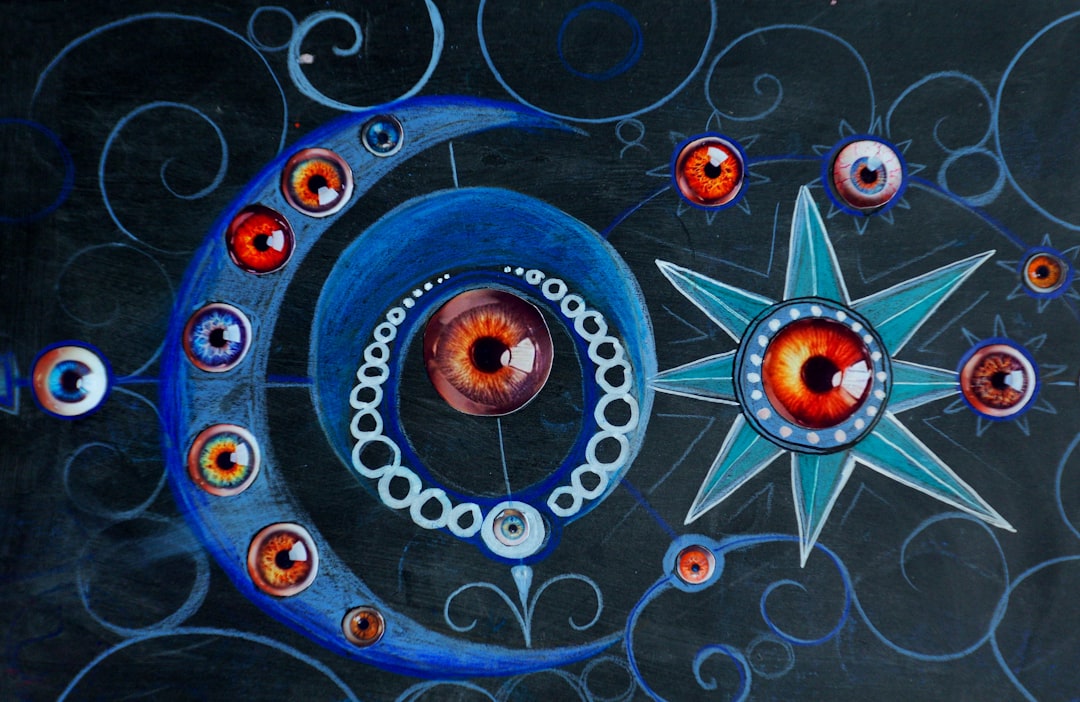
You stand on the precipice of an extraordinary journey, one that delves into the very essence of your being: the exploration of human perception and consciousness. This isn’t a scientific expedition with telescopes and microscopes, but rather an inward exploration, a quest to understand the architect of your reality, the silent conductor of your experiences. You are the observer and the observed, the canvas and the artist, painting the world with the hues of your awareness.
Your primary interface with the world is through your senses. These intricate biological marvels, often taken for granted, are the custodians of incoming information, the translators of external phenomena into the language your brain can understand. Consider the symphony of sensations that greet you each moment you open your eyes.
Vision: More Than Just Seeing
When you look at a vibrant sunset, are you truly just perceiving photons interacting with photoreceptor cells? Your visual system is a marvel of engineering. Light, a physical phenomenon, is captured by your eyes and transformed into electrical signals. This complex cascade involves the cornea and lens focusing light onto the retina, where rods and cones, specialized cells, convert light energy into neural impulses. These impulses then travel along the optic nerve to the visual cortex in your brain, where they are processed, interpreted, and ultimately form the image you perceive.
However, “seeing” is far more than mere optical registration. Your brain actively constructs your visual reality. It fills in missing information, anticipates patterns, and relies on your past experiences and expectations to make sense of what you are seeing. This is why optical illusions can so readily trick you; your brain’s predictive mechanisms are momentarily outmaneuvered by unexpected visual cues. The color you perceive isn’t an inherent property of an object but rather your brain’s interpretation of specific wavelengths of light. The depth you perceive isn’t just a geometric calculation; it’s a sophisticated interplay of binocular vision, monocular cues like relative size and occlusion, and your brain’s learned understanding of spatial relationships.
Audition: The Unseen World of Sound
The world hums, buzzes, sings, and roars. Your auditory system allows you to navigate this sonic landscape. Sound waves, vibrations in the air, enter your ear canal, causing your eardrum to vibrate. These vibrations are amplified by tiny bones in the middle ear and then transmitted to the cochlea in your inner ear. Within the cochlea, fluid movement stimulates thousands of tiny hair cells, each tuned to a specific frequency. These hair cells convert the mechanical vibrations into electrical signals, which are then sent to the auditory cortex for processing.
Your interpretation of sound is also deeply influenced by context and memory. The same musical note can evoke different emotions depending on its placement within a melody or your personal association with that sound. The recognition of a familiar voice isn’t just about deciphering phonemes; it’s a rich tapestry woven with the threads of past conversations and emotional connections. You distinguish between a threatening growl and a playful bark based on subtle nuances in pitch, rhythm, and timbre, all processed by your brain to predict potential outcomes.
Olfaction and Gustation: The Chemistry of Experience
These often-underestimated senses are powerful anchors to memory and emotion. Your olfactory receptors, located in your nasal cavity, detect airborne molecules, sending signals to the olfactory bulb, which has direct connections to the limbic system, the brain’s emotional center. This explains why a particular scent can instantly transport you back to a cherished childhood memory or evoke a strong emotional response.
Similarly, your taste buds on your tongue detect chemical compounds, sending signals about sweet, sour, salty, bitter, and umami. However, what you perceive as “flavor” is a complex integration of taste, smell, and even texture. The crunch of a potato chip or the smoothness of ice cream significantly contributes to your overall gustatory experience, demonstrating the interconnectedness of your sensory inputs. You don’t just taste food; you experience its entire sensory profile.
Somatosensation: The Language of Touch and Feeling
This umbrella term encompasses touch, pressure, temperature, pain, and proprioception (your sense of body position). Mechanoreceptors in your skin detect physical stimuli, sending signals to the somatosensory cortex. The intensity of a touch can range from the lightest caress to a painful stab, each conveying crucial information about your environment and your body’s state.
Proprioception is particularly fascinating. Without consciously thinking about it, you know where your limbs are in space. This constant flow of information from your muscles and joints allows you to maintain balance, coordinate movements, and interact with objects without needing to visually verify every action. You can reach for a cup of coffee in the dark because your proprioceptive system is providing a constant update on the position of your arm and hand.
Human perception and consciousness are fascinating subjects that delve into how we interpret the world around us and our own existence. A related article that explores these themes in depth can be found on Freaky Science, which discusses the intricate relationship between sensory experiences and conscious awareness. For more insights on this topic, you can read the article here: Freaky Science.
The Mind’s Canvas: Constructing Perception
Perception is not a passive reception of sensory data; it is an active, dynamic process of construction. Your brain takes the raw sensory input and imbues it with meaning, transforming it into the coherent and navigable world you experience.
Attention: The Spotlight of Awareness
You are constantly bombarded with sensory information, far more than you can consciously process. Attention acts as a filter, selectively focusing your awareness on certain stimuli while downplaying others. This remarkable cognitive mechanism allows you to prioritize information, allocate mental resources, and engage with the aspects of your environment that are most relevant to your current goals or interests.
Consider walking through a crowded street. Your senses are picking up the chatter of conversations, the rumble of traffic, the visual details of hundreds of individuals. Yet, you are likely focusing on the path ahead, perhaps listening for a specific person’s voice, or observing a particular shop window. Your brain has decided which streams of information are important and which can be largely ignored. This selective attention is crucial for avoiding cognitive overload and enabling purposeful interaction with the world.
Memory and Prior Experience: The Building Blocks of Understanding
The meaning you ascribe to sensory input is deeply intertwined with your past. Your memories provide the context and framework for interpreting new information. When you see a familiar face, your brain doesn’t just register the visual features; it instantly retrieves associated memories, emotions, and knowledge about that person.
This is why a smell can trigger a vivid flashback or why a piece of music can evoke a strong emotional response. Your brain is linking the current sensory experience to stored information, creating a richer, more nuanced understanding. Your prior experiences have shaped your expectations, and these expectations, in turn, influence how you perceive new stimuli. You might unconsciously look for patterns you’ve encountered before, or interpret ambiguous information in a way that aligns with your existing beliefs.
Top-Down vs. Bottom-Up Processing: A Collaborative Effort
Your perception is a constant dance between two modes of processing. Bottom-up processing starts with the raw sensory data and builds it up into a perception. For example, seeing a collection of lines and curves and gradually recognizing them as a face. Top-down processing, on the other hand, uses your existing knowledge, expectations, and context to interpret sensory input. If you are expecting to see a friend at a café, you might be more likely to interpret a fleeting glimpse of someone with similar hair as that friend, even if the visual details are not perfectly clear. These two processes work in tandem, each informing and shaping the other, creating the fluid and dynamic nature of your perceptual experience.
The Inner Landscape: The Elusive Nature of Consciousness

Beyond the realm of sensory input and its interpretation lies the enigma of consciousness. What is this subjective experience of “being”? It’s the awareness of yourself, your thoughts, your feelings, and your surroundings. It’s the feeling of “what it’s like” to be you.
The Hard Problem of Consciousness: Subjectivity and Qualia
Philosophers and scientists alike grapple with what is known as the “hard problem of consciousness.” This refers to the difficulty of explaining how physical processes in the brain give rise to subjective experience, or “qualia.” Why does the firing of neurons associated with seeing red create the experience of redness, rather than just a functional process?
You know what it’s like to feel joy, to taste chocolate, to experience the pang of sadness. These are qualia – the subjective, qualitative aspects of experience. While we can map the neural correlates of these experiences, the leap from the physical to the phenomenal remains a profound mystery. You can describe the chemical composition of chocolate, the neural pathways involved in pleasure, but can you truly convey the subjective taste experience to someone who has never tasted it? This inherent subjectivity is what makes consciousness so difficult to dissect.
Levels of Consciousness: From Wakefulness to Sleep
Your state of consciousness is not a monolithic entity; it exists on a spectrum. You experience varying degrees of awareness throughout your day and night.
Wakefulness and Alertness
When you are awake and alert, your brain is highly active, processing information and engaging with the external world. This is the state in which you typically perform most of your daily activities, make decisions, and interact with others. Your attentional capacity is high, and you are most attuned to your surroundings.
Sleep and Dreaming
During sleep, your consciousness shifts. While you may seem inactive, your brain remains busy consolidating memories, repairing tissues, and processing information in a different manner. REM sleep, in particular, is associated with vivid dreaming, where your conscious experience can be rich and immersive, yet disconnected from external reality. The narrative of dreams, often bizarre and illogical, offers a unique glimpse into the workings of your unconscious mind.
Altered States of Consciousness
Through practices like meditation, hypnosis, or the use of certain substances, you can induce altered states of consciousness. These states can involve profound shifts in perception, thought, and emotion, offering different perspectives on reality and the self. They highlight the plasticity of your conscious experience and the potential for it to be shaped and modified.
The Self: The Center of the Experiential Universe

At the heart of your conscious experience lies the concept of “self.” Who is this entity that is perceiving, thinking, and feeling? Is it a fixed entity, or something more fluid and constructed?
The Narrative Self: Weaving Your Life Story
A significant aspect of your selfhood is the narrative you construct about your life. This ongoing story, woven from memories, experiences, and interpretations, provides a sense of continuity and identity. You are the protagonist of your own life’s novel, constantly updating the plot, character development, and overarching themes. This narrative self helps you understand who you are, where you’ve come from, and where you are going.
The Embodied Self: The Body as the Foundation of Experience
Your consciousness is not an ethereal spirit separate from your physical form; it is deeply intertwined with your body. Your sense of self is anchored in your physical sensations, your bodily schema, and your interactions with the physical world. The feeling of your own heartbeat, the awareness of your limbs, the discomfort of hunger – these are all fundamental to your experience of being a self. The concept of the “embodied mind” suggests that your cognitive processes are not just confined to your brain but are distributed throughout your body, influencing your thoughts and perceptions.
The Illusion of a Unified Self: Multiple Selves and Shifting Identities
While you may feel like a single, unified self, research suggests that your sense of self might be more fragmented than you imagine. Your personality can shift depending on the context, the people you are with, and the roles you are playing. You might be a different “self” at work, with your family, or among your friends. This fluidity of self highlights the complex and dynamic nature of your identity. Furthermore, the concept of “multiple selves” suggests that different aspects of your personality might operate semi-independently, contributing to the overall tapestry of your being.
Recent studies in the field of cognitive science have shed light on the intricate relationship between human perception and consciousness, revealing how our sensory experiences shape our understanding of reality. For a deeper exploration of this fascinating topic, you can read more in this insightful article on the subject. The findings suggest that our perception is not merely a passive reception of stimuli but an active construction of our conscious experience. To delve further into this complex interplay, check out the article here.
The Boundaries of Perception: Subjectivity and Objectivity
| Aspect | Metrics |
|---|---|
| Sensory Perception | Visual, Auditory, Olfactory, Gustatory, Tactile |
| Consciousness | Self-awareness, Thought processes, Emotions |
| Attention | Selective attention, Divided attention, Sustained attention |
| Memory | Sensory memory, Short-term memory, Long-term memory |
| Perceptual Illusions | Optical illusions, Auditory illusions, Tactile illusions |
Your perception is inherently subjective, shaped by your unique biological makeup, your personal history, and your current internal state. This subjectivity is both a source of richness and a potential barrier to understanding.
The Subjectivity of Experience: The Private Theater of the Mind
Every individual experiences the world through their own private theater of the mind. While you might agree that a particular painting is beautiful, your experience of that beauty – the specific emotions it evokes, the memories it triggers – will be unique to you. Your perception of reality is not a mirror reflecting an objective world but rather a personalized interpretation.
The Pursuit of Objectivity: Shared Realities and Scientific Inquiry
Despite the inherent subjectivity of individual experience, humanity strives for a degree of objectivity. Science, through its rigorous methodologies and emphasis on empirical evidence, aims to uncover truths that transcend individual perspectives. The scientific method, with its emphasis on reproducibility and falsifiability, allows for the development of shared understandings and the construction of knowledge that can be verified by multiple observers.
The Limits of Perception: What Lies Beyond Our Grasp?
Are there aspects of reality that lie beyond the capacity of your senses and your conscious mind to perceive? The universe is vast and filled with phenomena that were once unimaginable, such as subatomic particles, distant galaxies, and the intricate workings of DNA. Your perception is limited by your biological apparatus and the current state of your scientific understanding. What other realms of existence might be waiting to be discovered, or perhaps, are fundamentally inaccessible to your current mode of being? This contemplation of the unknown encourages humility and a continuous drive for exploration, both outward and inward.

Your Brain May Sense Earth’s Magnetic Field Without You Knowing
FAQs
What is human perception?
Human perception refers to the way in which individuals interpret and make sense of sensory information from the environment. This includes the processing of visual, auditory, olfactory, gustatory, and tactile stimuli.
How does human perception work?
Human perception involves the reception of sensory input, the organization and interpretation of this information, and the subsequent behavioral response. This process is influenced by factors such as attention, memory, and individual differences.
What is consciousness?
Consciousness is the state of being aware of and able to perceive one’s surroundings. It involves the ability to experience sensations, thoughts, and emotions, as well as to have a sense of self and the passage of time.
How is consciousness related to human perception?
Consciousness and human perception are closely intertwined, as perception is a fundamental aspect of conscious experience. Our awareness and understanding of the world around us are shaped by our perceptual processes.
What are some factors that can influence human perception and consciousness?
Factors that can influence human perception and consciousness include attention, motivation, emotions, cultural background, past experiences, and cognitive biases. Additionally, neurological conditions and alterations in brain function can also impact perception and consciousness.