
You stand on the precipice of your own consciousness, a universe contained within the confines of your skull. For millennia, humanity has grappled with the fundamental question: what does it mean to perceive? You experience the world through a symphony of senses, each one a portal to reality. But these portals are not always clear, nor are they always complete. You are about to embark on a journey to explore the intricate, often baffling, limits of human perception, to understand the boundaries of what you can know and how you know it.
Your perception of reality is fundamentally shaped by the biological machinery you possess. These are the gates through which all incoming information must pass, and their inherent design dictates what information can even reach your awareness. It’s a remarkable system, honed by millions of years of evolution, yet it is far from perfect, and understanding its limitations is the first step in appreciating the subjective nature of your experience.
Vision: More Than Meets the Eye
Your eyes, those windows to the soul, are incredibly sophisticated organs, but they are also prone to blind spots, illusions, and limitations in what they can detect. The visible spectrum of light, the vibrant tapestry of colors you see, is but a tiny sliver of the electromagnetic radiation that permeates the universe.
The Electromagnetic Spectrum: A Narrow Band of Awareness
You perceive the world as a visual spectacle, a riot of color and form. Yet, this is only because your eyes are attuned to a specific range of electromagnetic wavelengths, the visible spectrum, which spans roughly from 400 to 700 nanometers. Beyond this narrow band lie vast territories of reality that remain invisible to you. Ultraviolet light, with its shorter wavelengths, can be felt as a warming sensation and is crucial for vitamin D production, yet you cannot see it. Similarly, infrared radiation, with its longer wavelengths, is experienced as heat, but its visual manifestation is a mystery to your eyes. Imagine a world where you could see the heat signatures of living beings, or the intricate patterns of radio waves that carry information across the globe. These are realms that exist just beyond your current perceptual grasp.
The Physiology of Sight: Pixels and Processing
The retina, at the back of your eye, is a marvel of biological engineering. It contains millions of photoreceptor cells – rods and cones – that convert light into electrical signals. Cones are responsible for color vision and detail in bright light, while rods are more sensitive to low light conditions and are crucial for peripheral vision. However, the arrangement of these cells, and the way the brain processes their signals, leads to inherent limitations. The optic disc, where the optic nerve leaves the eye, creates a natural blind spot in your visual field. Your brain, through a remarkable feat of inference and filling-in, typically masks this deficiency, creating a seamless visual experience. But if you focus on the right spot on a blank page, you can sometimes find it.
Illusions: When the Brain Plays Tricks
Optical illusions are a testament to the active, interpretive nature of your perception. They reveal how your brain constructs reality based on incoming sensory data, often making assumptions and employing shortcuts that can lead to misinterpretations. The Ponzo illusion, for instance, demonstrates how converging lines can make objects appear larger or smaller than they actually are, even when you know their true size. The Müller-Lyer illusion, where lines with outward or inward-pointing fins appear to be different lengths, highlights your brain’s tendency to interpret cues related to depth and perspective. These illusions are not flaws in your vision; rather, they are windows into the sophisticated, and sometimes fallible, algorithms your brain uses to make sense of the visual world. They show that what you see is not a direct recording of reality, but a constructed interpretation.
Hearing: The Symphony of Sound and Its Limits
Your auditory system allows you to navigate the world through sound, from the subtle rustling of leaves to the complex melodies of music. Yet, like vision, your ability to hear is constrained by the physical properties of sound waves and the biological limitations of your ears and brain.
The Range of Audibility: Frequencies You Miss
Just as you cannot see all electromagnetic radiation, you cannot hear all sound frequencies. The human ear is typically sensitive to sounds ranging from approximately 20 to 20,000 Hertz (Hz). Sounds below this range are infrasound, and those above are ultrasound. Elephants communicate using infrasound, traveling for miles through the ground, while bats use ultrasound for echolocation. You are oblivious to these entire sonic dimensions of the world. The aging process, known as presbycusis, also leads to a gradual loss of high-frequency hearing, making it harder to discern speech in noisy environments.
Binaural Hearing: The Power of Two Ears
Having two ears provides you with a remarkable ability to localize sound sources. By comparing the slight differences in the timing and intensity of sound arriving at each ear, your brain can triangulate the origin of a noise with impressive accuracy. This binaural hearing is essential for spatial awareness, helping you to identify threats and navigate your environment. However, it’s not perfect. Sounds directly in front of or behind you can be harder to pinpoint, and the accuracy diminishes with distance and the presence of background noise. Imagine a world where you could perceive sound not just as loudness, but as a fully three-dimensional phenomenon, with texture and depth.
Auditory Illusions: When Sounds Deceive
Just as optical illusions exist, so too do auditory illusions. The Tritone paradox, for example, involves pairs of musical tones that sound different depending on the listener’s language background and the order in which they are heard. This highlights how your brain’s interpretation of auditory input can be influenced by prior experiences and learned patterns. The Shepard tone, a series of ascending or descending tones that appear to ascend or descend endlessly, is another fascinating auditory illusion, demonstrating how your brain can create a sense of perpetual motion where none truly exists.
The exploration of the limits of human perception is a fascinating topic that delves into how our senses shape our understanding of the world. For a deeper insight into this subject, you can read the article titled “Understanding the Boundaries of Human Perception” available at this link. This article discusses various factors that influence our perceptual abilities and highlights the intriguing ways in which our brains interpret sensory information.
Beyond the Obvious: Other Sensory Frontiers
While vision and hearing are often considered your primary senses, your perceptual world is rich with input from other modalities, each with its own unique set of limitations and wonders.
Touch: The Unseen World of Texture and Pressure
Your sense of touch is a vital tool for interacting with your environment, providing information about texture, temperature, pressure, and pain. It’s an intimate connection to the physical world, yet it too has its boundaries.
The Limits of Tactile Resolution: What You Can Feel
Your skin, particularly your fingertips, is packed with mechanoreceptors that are sensitive to pressure and vibration. This allows you to discern incredibly fine details, like the texture of a silk thread or the subtle grain of wood. However, there’s a limit to this resolution. The two-point discrimination threshold, the minimum distance at which two distinct points of pressure can be felt as separate, varies across your body. Your fingertips are highly sensitive, but other areas, like your back, are much less so. You can’t feel the individual molecules that make up an object, only the collective physical properties they present.
Proprioception and Kinesthesia: The Sense of Your Own Body
Beyond direct tactile input, you possess proprioception and kinesthesia – senses that inform you about the position and movement of your own body. Proprioception tells you where your limbs are in space without looking, while kinesthesia provides information about your body’s movement. These senses are crucial for coordination, balance, and motor control. However, they can be fooled. Phantom limb sensations, where individuals feel sensations in a limb that has been amputated, demonstrate the complex interplay between the brain and the sensory nerves, and how the brain can continue to generate perceptions even in the absence of direct input.
Smell and Taste: The Chemical Detectors
Your senses of smell and taste are intimately linked, working together to create your experience of flavor. They are your chemical detectors, informing you about the composition of your environment and the food you consume.
The Olfactory Landscape: What You Can’t Smell
The human nose is capable of detecting thousands of different odors, but our olfactory abilities pale in comparison to those of many other animals. Dogs, for instance, have an olfactory system that is millions of times more sensitive than ours, allowing them to detect faint scents that are completely imperceptible to you. There are also many chemical compounds that have no discernible smell to humans, yet play a significant role in the environment.
The Gustatory Palette: The Limits of Taste
Your tongue has taste buds that detect five basic tastes: sweet, sour, salty, bitter, and umami. However, the experience of “flavor” is a complex interplay between taste, smell, and texture. While your taste buds have their limits, the richness of your perceived flavor is a testament to the brain’s ability to integrate information from multiple sensory sources. The way you perceive taste can also be influenced by factors like genetics, culture, and even your current emotional state, highlighting the subjective nature of this sense.
The Inner World: Cognitive Perceptual Limits

Beyond the physical limitations of your sensory organs, your perception is profoundly shaped by the workings of your own mind. Your beliefs, expectations, attention, and memory all act as filters and interpreters, shaping what you experience.
Attention: The Spotlight of Consciousness
You are bombarded with sensory information at every moment, yet you only consciously process a fraction of it. Attention acts as a spotlight, highlighting certain stimuli while relegating others to the background. This selective attention is crucial for preventing cognitive overload.
Inattentional Blindness: The Gorilla in the Room
The phenomenon of inattentional blindness, famously demonstrated by the “invisible gorilla” experiment, shows how you can completely miss obvious stimuli if your attention is focused elsewhere. When engaged in a task that demands a significant amount of cognitive resources, your brain can filter out even highly salient information that is not relevant to your current goal. This demonstrates that what you “see” is not simply what is there, but what you are attending to.
Change Blindness: The Unnoticed Shift
Similarly, change blindness illustrates your difficulty in detecting significant changes in a scene when your attention is briefly interrupted or diverted. This highlights how your perception is not a continuous, frame-by-frame recording of reality, but rather a more abstract and inferential process that relies on expectations and past knowledge.
Memory and Expectation: The Architects of Perception
Your past experiences and memories play a crucial role in shaping your present perceptions. Your brain constantly uses existing knowledge to make predictions and interpret incoming sensory data.
Top-Down Processing: The Power of Prior Knowledge
This “top-down” processing, where prior knowledge and expectations influence perception, can be both a benefit and a limitation. It allows you to quickly make sense of ambiguous situations and recognize familiar objects. However, it can also lead to biases and misinterpretations. If you expect to see something, you are more likely to perceive it, even if it’s not entirely present. This can manifest in everyday situations, from mishearing someone in a noisy room to seeing faces in inanimate objects.
Confirmation Bias: Seeking What You Believe
Confirmation bias, the tendency to favor information that confirms your existing beliefs, can further reinforce these perceptual biases. You may actively seek out or interpret information in a way that supports what you already think, making it harder to objectively evaluate new evidence.
Emotion and Motivation: The Feeling of What You See
Your emotional state and motivations can profoundly influence what you perceive and how you interpret it. When you are happy, the world may seem brighter; when you are anxious, potential threats may loom larger.
Mood Congruence: A Reflection of Your Inner State
Research suggests a phenomenon known as mood congruence, where your current emotional state influences the types of stimuli you are more likely to notice and recall. If you are feeling sad, you might be more attuned to negative stimuli in your environment. Conversely, a positive mood can lead you to focus on pleasant aspects of your surroundings.
The Perceptual Defense of Motivation
Your motivations can also act as perceptual filters. If you are highly motivated to achieve a particular goal, you may be more attuned to stimuli that are relevant to that goal and less aware of distractions. This can be advantageous in achieving success, but it can also lead you to overlook important information that might hinder your progress or challenge your desires.
The Unseen Realities: Perceptual Thresholds and Beyond
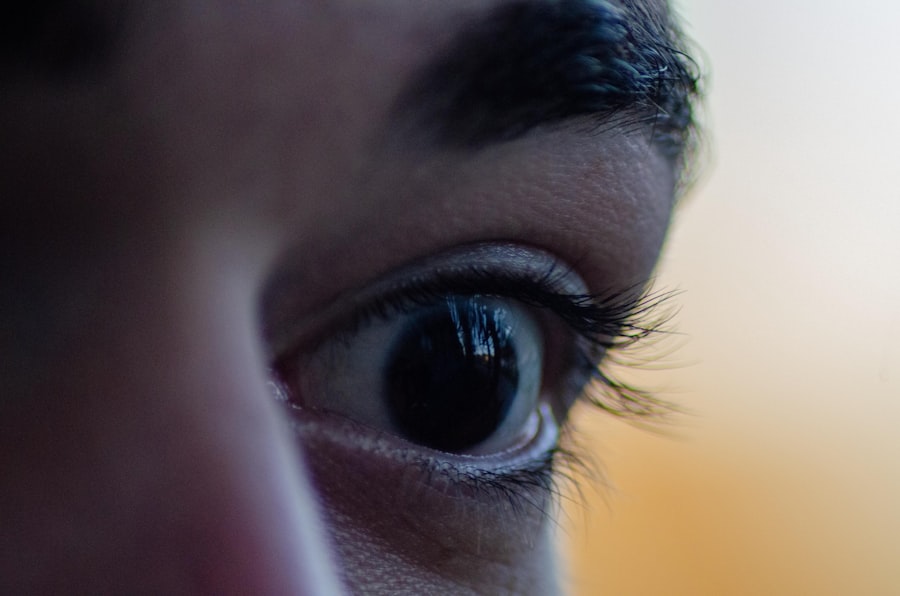
The limits of your perception are not always about missing information; sometimes, it’s about what you can’t consciously register. Your nervous system is constantly processing a vast amount of data, much of which never reaches your conscious awareness.
Subliminal Perception: The Whispers of the Unconscious
The concept of subliminal perception, the idea that you can be influenced by stimuli presented below the threshold of conscious awareness, has been a source of fascination and debate. While the extent of subliminal influence is often exaggerated, research does suggest that certain stimuli, when presented briefly and below conscious detection, can still have subtle effects on your thoughts, feelings, and behaviors.
The Limits of Subliminal Influence: Debunking Myths
It’s important to distinguish between genuine subliminal effects and the more sensational claims often made in popular culture. While subliminal messages might slightly influence preferences or attitudes in controlled laboratory settings, they are unlikely to compel you to perform actions against your will. Your conscious mind remains the primary arbiter of your decisions and actions.
The Unconscious Processing of Information
Even without explicit subliminal messages, your brain is constantly processing vast amounts of information unconsciously. This unconscious processing underpins many of your automatic behaviors, intuitions, and creative insights. It’s a silent engine of perception, shaping your conscious experience in ways you may not fully understand.
The Threshold of Sensation: What You Can and Cannot Feel
Every sensory system has a threshold of sensation, the minimum level of stimulation required to detect a stimulus. Below this threshold, the stimulus exists, but you are simply not aware of it.
Absolute Threshold: The Faintest Whisper
The absolute threshold is the minimum intensity of a stimulus that can be detected 50% of the time. For example, the absolute threshold for hearing is the faintest sound you can detect, and the absolute threshold for vision is the faintest light you can see. These thresholds are not fixed; they can be influenced by factors like attention, motivation, and fatigue.
Difference Threshold: Detecting Change
The difference threshold, also known as the just-noticeable difference (JND), is the minimum amount of change in a stimulus that can be detected. This concept, explored by psychophysicists like Gustav Fechner, highlights that you don’t perceive changes in absolute terms, but rather in relation to the existing stimulus. For example, you might notice the difference between a quiet room and a slightly louder room, but you might not notice the difference between a loud room and a slightly louder room.
The fascinating topic of the limits of human perception is explored in depth in a related article that discusses how our senses shape our understanding of reality. For those interested in delving deeper into this subject, you can read more about it in the article found at Freaky Science. This resource provides insights into how our brains interpret sensory information and the implications this has for our daily experiences.
Expanding the Boundaries: How We Push the Limits of Perception
| Aspect | Limit |
|---|---|
| Visual Acuity | Average human eye can distinguish two points if they are at least 0.4 mm apart at 25 cm |
| Color Perception | Human eye can perceive approximately 10 million different colors |
| Hearing Range | Human ear can detect sounds within the frequency range of 20 Hz to 20,000 Hz |
| Touch Sensitivity | Human skin can detect objects as small as 13 nanometers |
| Smell Differentiation | Human nose can distinguish between around 1 trillion different odors |
While your innate perceptual abilities have their limits, humanity has continually sought ways to extend and augment them. From simple tools to advanced technology, you are constantly striving to see, hear, and experience more.
Technology as a Perceptual Augmentation Tool
Technology has been instrumental in overcoming many of the limitations of your natural senses. Telescopes allow you to gaze at the distant cosmos, revealing celestial bodies invisible to the naked eye. Microscopes bring the microscopic world into view, unveiling the intricate structures of cells and microorganisms.
Imaging Technologies: Seeing the Invisible
Medical imaging technologies like X-rays, CT scans, and MRIs allow you to peer inside the human body without invasive procedures, revealing internal structures and anomalies. These technologies transform the unseen into the visible, providing invaluable diagnostic and research capabilities.
Sensory Substitution and Enhancement
Sensory substitution devices aim to replace one sense with another. For example, cochlear implants enable individuals with severe hearing loss to perceive sound by directly stimulating the auditory nerve. Similarly, research is exploring ways to translate visual information into tactile patterns for blind individuals, offering a new channel of perception. Beyond substitution, technologies are being developed to enhance existing senses, such as devices that can amplify faint sounds or improve night vision.
Altered States of Consciousness: Exploring the Inner Landscape
Altered states of consciousness, whether induced by meditation, psychedelics, or even intense physical exertion, can dramatically shift your perceptual experience. These states can lead to profound changes in your awareness of yourself, the external world, and the very nature of reality.
The Subjectivity of Mystical and Psychedelic Experiences
During mystical or psychedelic experiences, individuals often report heightened sensory awareness, a blurring of sensory modalities (synesthesia), and a profound sense of interconnectedness. Time may seem to warp, and the perceived boundaries between self and environment can dissolve. While these experiences can be deeply personal and transformative, their interpretation is often highly subjective and influenced by individual beliefs and expectations.
The Role of Meditation and Mindfulness
Practices like meditation and mindfulness encourage a heightened awareness of the present moment and a deliberate focus on sensory input. Through these practices, you can learn to observe your perceptions without judgment, to notice subtle sensations that you might otherwise overlook. This can lead to a richer and more nuanced experience of the world, even within the confines of your natural perceptual abilities.
The Philosophical and Scientific Quest
The exploration of human perception is not solely a scientific endeavor; it is also a deeply philosophical one. Philosophers have long pondered the nature of reality, the role of the observer, and the limits of human knowledge.
The Mind-Body Problem: Connecting the Inner and Outer
The age-old mind-body problem grapples with the relationship between your conscious experience (the mind) and the physical world (the body and its sensory inputs). Understanding the limits of perception is crucial to this debate, as it highlights how our subjective experience is constructed and influenced by the physical machinery of our brains and bodies.
The Quest for Objective Reality
The scientific pursuit of objective reality is inherently intertwined with understanding the limitations of subjective perception. By acknowledging the biases and constraints of our sensory systems and cognitive processes, scientists can strive for more objective measurements and interpretations of the world. This ongoing quest to understand both the objective world and our subjective experience of it continues to drive innovation and deepen our understanding of ourselves and the universe we inhabit.
You are a perpetual explorer, your consciousness a vast, uncharted territory. By understanding the limits of your perception, you gain a deeper appreciation for the richness and complexity of reality, and for the remarkable ways in which you construct your own unique experience of it. The journey never ends, for within you lies a universe waiting to be explored, one perception at a time.

You’re Emitting Light Right Now—So Why Can’t You See It?
FAQs
What are the limits of human perception?
Human perception is limited by the range of our senses, such as the ability to see only a certain range of light wavelengths and hear only a certain range of sound frequencies. Additionally, our brains can only process a certain amount of information at a time, leading to limitations in our ability to perceive and understand complex stimuli.
How does our perception of time and space have limits?
Our perception of time is limited by the speed at which our brains can process information, leading to potential inaccuracies in our perception of time intervals. Similarly, our perception of space is limited by the range of distances and sizes that our eyes and brains can accurately perceive.
What are the limitations of our visual perception?
Our visual perception is limited by factors such as the resolution of our eyes, the range of colors we can see, and the ability to accurately perceive depth and distance. Additionally, our brains can only process a certain amount of visual information at a time, leading to limitations in our ability to perceive complex visual scenes.
How does our perception of sound have limitations?
Our perception of sound is limited by the range of frequencies that our ears can detect, as well as the ability of our brains to accurately process and interpret complex auditory stimuli. Additionally, factors such as background noise and the direction of sound sources can impact our ability to perceive and localize sounds.
What are the limitations of our cognitive perception?
Our cognitive perception is limited by the capacity of our brains to process and interpret information, leading to potential inaccuracies and biases in our perception of the world. Additionally, factors such as attention, memory, and prior experiences can impact our ability to perceive and understand complex stimuli.