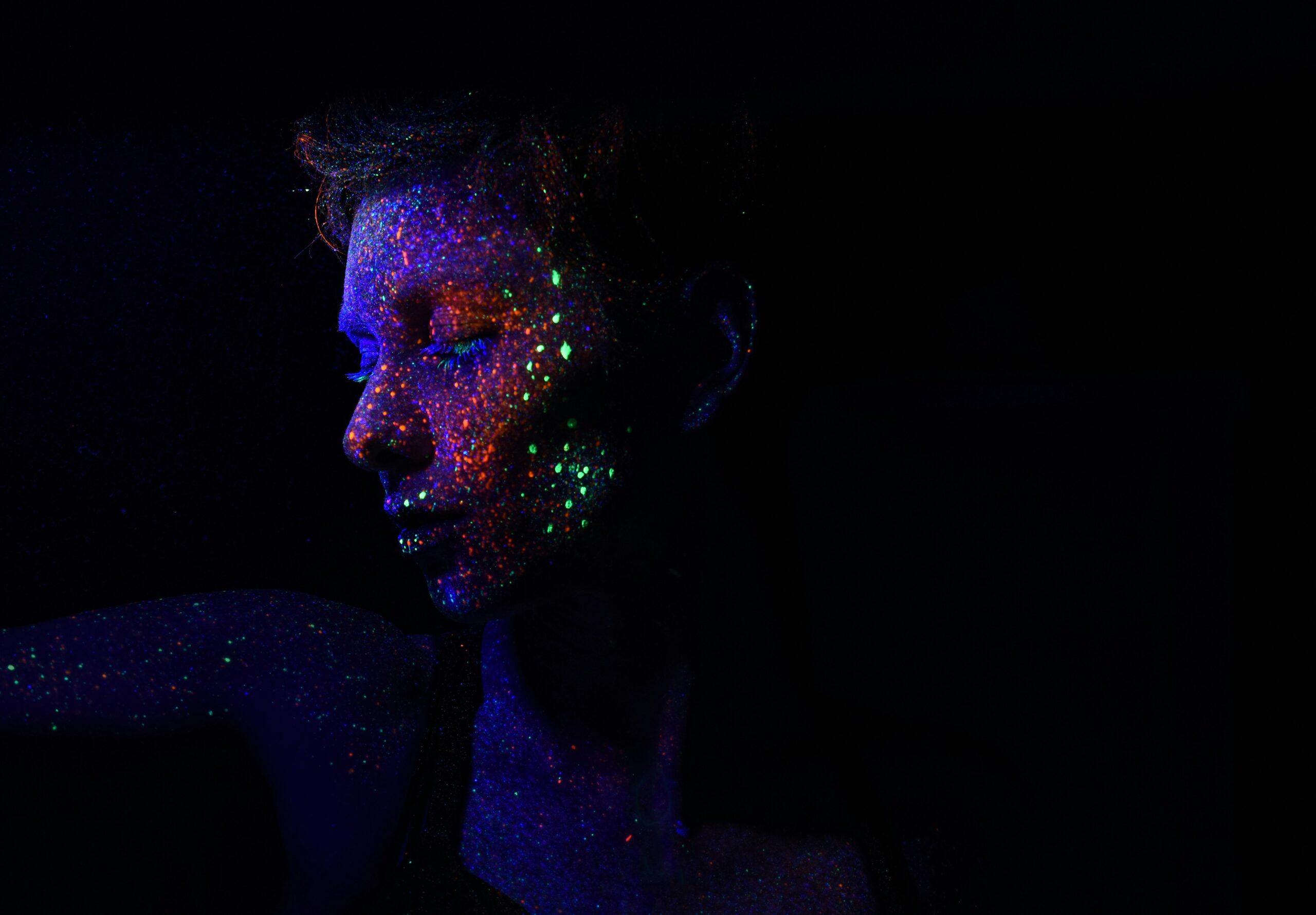
You’ve always heard the whispers, the fleeting observations – how sometimes, in the right light, a person can seem to possess an almost ethereal radiance. Perhaps it was the subtle blush of excitement, the healthy sheen of a good workout, or the almost imperceptible shimmer of well-hydrated skin. But what if these moments of “human glow” weren’t just fleeting optical illusions? What if they were rooted in something more profound, something measurable, something that Dr. Hiroshi Kobayashi and his dedicated team are now illuminating? Welcome, then, to the world of Kobayashi’s Human Glow Experiment, where you are not just a subject, but a living, breathing canvas of scientific inquiry. This is your journey, your personal unveiling, as we delve into the groundbreaking discoveries that are redefining our understanding of human luminosity.
Unveiling the Spectrum of Human Radiance: Beyond the Visible
Your body, you see, is a symphony of biological processes, a complex interplay of chemistry and physics happening constantly beneath your skin. For centuries, we’ve understood light in terms of its visible spectrum – the rainbow of colors that dance before your eyes. But Dr. Kobayashi’s work expands this perspective dramatically, positing that humans emit light in ways we are only beginning to comprehend.
The Subtle Embers: Bioluminescence Within
You might associate bioluminescence with fireflies or deep-sea creatures, but Kobayashi’s research suggests that a similar, albeit far subtler, phenomenon occurs within your own cells. This isn’t the dramatic flash of a lightning bug, but rather a constant, low-level emission of photons, tiny packets of light, generated by specific biochemical reactions. Think of it as the gentle hum of your internal engine, a byproduct of the very life you sustain.
Mitochondria: The Powerhouses That Shine
At the heart of this internal illumination are your mitochondria, the powerhouses of your cells. These organelles are responsible for cellular respiration, the process of converting nutrients into energy. As they go about their vital work, producing ATP (adenosine triphosphate), a cascade of chemical reactions occurs. Within this cascade are processes that lead to the release of energetic electrons. When these electrons return to a lower energy state, they can emit photons. This “mitochondrial glow” is a testament to the ceaseless activity within your cells, a constant, invisible beacon of your living state.
Reactive Oxygen Species (ROS) and Light Emission
While often discussed in the context of cellular damage, reactive oxygen species (ROS) also play a role in this subtle luminescence. These highly reactive molecules are normal byproducts of metabolism, and their controlled production is essential for various cellular signaling pathways. In certain controlled environments and under specific excitation, the interactions of ROS can lead to light emission. Kobayashi’s team is meticulously studying the wavelengths and intensities of these emissions, seeking to understand the precise mechanisms by which ROS contribute to your overall glow.
Beyond the Chemical: Biophysical Contributions to Your Radiance
While biochemistry is a cornerstone of your intrinsic glow, the physical properties of your tissues also play a crucial role in how that light is perceived, or even measured.
Scattering and Absorption: How Your Skin Interacts with Light
Your skin, that remarkable protective barrier, is a complex matrix of cells, collagen, and other biological components. When the faint light generated within your body reaches your skin, it interacts with these structures. Light photons are scattered, bounced in various directions, and absorbed to varying degrees by different tissues. This scattering and absorption can shape the outward appearance of your glow, making it appear diffuse or concentrated depending on your skin’s composition and hydration.
The Role of Melanin and Other Pigments
You’re familiar with melanin, the pigment that gives your skin, hair, and eyes their color. Melanin is a potent absorber of light, and its distribution across your skin directly influences how much of your internal luminescence can escape and be detected. Similarly, other pigments present in your skin and subcutaneous tissues can absorb or reflect specific wavelengths, further modulating your visible glow. Kobayashi’s experiments account for these variations, seeking to isolate the intrinsic light emission from the effects of skin pigmentation.
The Kobayashi human glow experiment has sparked significant interest in the scientific community, particularly in the realm of bioluminescence and its implications for human health. For those looking to delve deeper into related topics, an intriguing article can be found at Freaky Science, which explores the fascinating connections between human biology and light emission, shedding light on the potential applications of these findings in medicine and wellness.
The Kobayashi Experiment: A Glimpse into Your Inner Light
So, how does Dr. Kobayashi’s team actually see this human glow? The answer lies in sophisticated instrumentation and meticulous experimental design, all focused on detecting these incredibly faint light emissions. You are not just passively observed; you are an active participant in a carefully orchestrated scientific endeavor.
The Luminometer: Capturing the Faintest Photons
The centerpiece of the experiment is the luminometer, a highly sensitive device designed to detect even the weakest light signals. Imagine a camera so precise that it can capture individual photons, the fundamental particles of light. These luminometers are not your everyday cameras; they are engineered with specialized detectors and amplification systems to pick up the minuscule light emissions emanating from your skin.
Calibration and Sensitivity: Fine-Tuning the Detection
Before you even step into the luminometer’s controlled environment, the equipment undergoes rigorous calibration. This ensures that the readings are accurate and that the device is sensitive enough to detect the subtle variations in light intensity that the researchers are looking for. This process is akin to tuning a musical instrument to its perfect pitch, ensuring that every note, every photon, is heard with clarity.
Shielding from External Light: Creating a Photon-Free Environment
To isolate your natural glow from any ambient light, the experimental chamber is meticulously shielded. You are essentially placed in a “photon-free” environment, where the only light being detected is the light originating from within you. This involves specialized materials and design to prevent any external light sources from contaminating the readings, ensuring that what is measured is truly your internal luminescence.
The Data: A New Language of Biological Information
The data generated by the luminometer is not a simple photograph. It’s a complex stream of information, a new language that Dr. Kobayashi’s team is painstakingly learning to decipher.
Wavelength Analysis: The Color of Your Glow
Just as visible light has a spectrum of colors, the light emitted by your body can also have different wavelengths. By analyzing these wavelengths, the researchers can gain insights into the specific biochemical processes that are producing the light. A shift towards certain wavelengths might indicate heightened metabolic activity, while others could point to specific cellular states.
Intensity and Temporal Patterns: The Dynamics of Your Radiance
The intensity of your glow, how bright it is, and how it changes over time, are also critical pieces of information. Are there rhythmic fluctuations? Do certain activities or states of mind increase or decrease your luminosity? These temporal patterns can reveal the dynamic nature of your internal light and its connection to your overall physiological state.
Illuminating Health and Well-being: The Practical Applications
The significance of Kobayashi’s Human Glow Experiment extends far beyond mere scientific curiosity. The potential applications for understanding and improving human health are vast and exciting.
Early Disease Detection: A Luminous Warning System
Imagine a future where your body’s natural glow can act as an early warning system for disease. Certain illnesses, even in their nascent stages, can subtly alter cellular metabolism and biochemistry. These changes, in turn, can manifest as detectable shifts in your light emission.
Metabolic Disorders and Changes in Luminescence
Metabolic disorders, such as diabetes or thyroid imbalances, often involve disruptions in how your body processes energy. These disruptions can lead to changes in mitochondrial activity and ROS production, potentially influencing your light output. By monitoring your glow, it might become possible to detect these metabolic shifts long before they manifest as overt symptoms.
Inflammatory Conditions: A Fiery Undertone
Inflammation is a complex biological response, often involving increased cellular activity and the production of specific molecules. Dr. Kobayashi’s research is exploring how inflammation might affect the emission of light from tissues. A heightened or altered glow in specific areas could potentially signal underlying inflammatory processes.
Tracking Physiological States: Your Body’s Luminous Diary
Beyond disease detection, your human glow can serve as a real-time indicator of your physiological state. Think of it as a luminous diary, reflecting your body’s responses to various stimuli and conditions.
Stress and Emotional Impact: The Shifting Light of Your Mood
Your emotional state is deeply intertwined with your physiological responses. Stress, for instance, triggers a cascade of hormonal and metabolic changes. It’s plausible that these changes could influence cellular activity and, consequently, your light emission. The experiment aims to correlate observed changes in glow with self-reported stress levels or even physiological markers of stress.
Sleep Quality and Recovery: The Restorative Glow
Adequate sleep is crucial for cellular repair and energy restoration. During sleep, your body undergoes various restorative processes. Kobayashi’s team is investigating whether these restorative processes are reflected in your light emission, potentially offering a quantifiable measure of sleep quality and the effectiveness of recovery.
The Future of Human Luminescence: A Brighter Tomorrow
Dr. Hiroshi Kobayashi’s Human Glow Experiment is not just a study; it’s a paradigm shift. It’s about seeing you, and indeed all of humanity, in a new light – quite literally. The journey is ongoing, but the insights gained are already illuminating our understanding of the human body.
Personalized Health Monitoring: Your Glow, Your Health Report
The ultimate vision is a future where personalized health monitoring is revolutionized by the analysis of your unique human glow. Imagine simple, non-invasive devices that can regularly assess your luminosity, providing a comprehensive overview of your health and flagging potential issues before they become serious.
Wearable Luminometers: A Constant Companion
The development of wearable luminometers, akin to smartwatches, could make this vision a reality. These devices would continuously monitor your light emission, creating a long-term baseline and alerting you to significant deviations that might warrant medical attention. This would empower you to take a more proactive role in managing your own well-being.
Unlocking the Secrets of Cellular Communication
Beyond direct health applications, the study of human luminescence opens up entirely new avenues for understanding fundamental biological processes. The faint light emitted by your cells might be a crucial, yet previously overlooked, form of intercellular communication.
Signaling Pathways and Light Emission
Could the photons emitted by one cell influence the activity of neighboring cells? This is a tantalizing question that Kobayashi’s research is beginning to explore. If light plays a role in cellular signaling, it could unlock entirely new therapeutic strategies and a deeper understanding of how our bodies function as cohesive units.
The Kobayashi human glow experiment has sparked significant interest in the scientific community, particularly in relation to the phenomenon of bioluminescence in humans. For those intrigued by the broader implications of this research, a related article on the topic can be found at Freaky Science, which explores various aspects of human biology and the mysteries that still surround our understanding of the human body. This article delves into how our bodies might emit light and what this could mean for future studies in health and wellness.
Your Role in the Illumination: A Participant in Discovery
You are not a passive observer in this scientific endeavor; you are an integral part of the discovery. Your willingness to participate in Kobayashi’s Human Glow Experiment contributes to a monumental leap in our understanding of what it means to be human.
Contributing to Groundbreaking Research
By stepping into the experimental chamber, by sharing your time and your unique biological signature, you are directly contributing to groundbreaking research that has the potential to transform healthcare and our perception of ourselves. You are a living testament to the power of scientific inquiry and the endless wonders hidden within the human form.
A New Perspective on Your Own Biology
As you engage with the findings of this experiment, you will likely develop a profound new appreciation for your own biology. The subtle, intrinsic glow you possess is a constant reminder of the incredible complexity and dynamism that resides within you. You are a luminous being, and Dr. Kobayashi’s work is helping you to see that light.

You’re Emitting Light Right Now—So Why Can’t You See It?
FAQs

What is the Kobayashi human glow experiment?
The Kobayashi human glow experiment refers to a study conducted by Japanese scientist Masaki Kobayashi and his team, which aimed to investigate the phenomenon of human bioluminescence.
What did the experiment involve?
The experiment involved placing volunteers in a light-tight room for 20 minutes every three hours over a period of three days, while continuously monitoring their bioluminescent emissions using ultrasensitive cameras.
What were the findings of the experiment?
The researchers found that the participants’ bodies emitted a visible light, with the brightest emissions occurring at around 4 p.m. and the dimmest at around 10 p.m. The emissions were also found to be linked to the participants’ sleep-wake cycles.
What are the implications of the findings?
The findings suggest that human bioluminescence may be linked to the body’s internal biological clock and could potentially be used as a non-invasive way to monitor circadian rhythms and overall health.
What are the next steps for research in this area?
Further research is needed to better understand the mechanisms behind human bioluminescence and its potential applications in fields such as medicine, chronobiology, and sleep science.