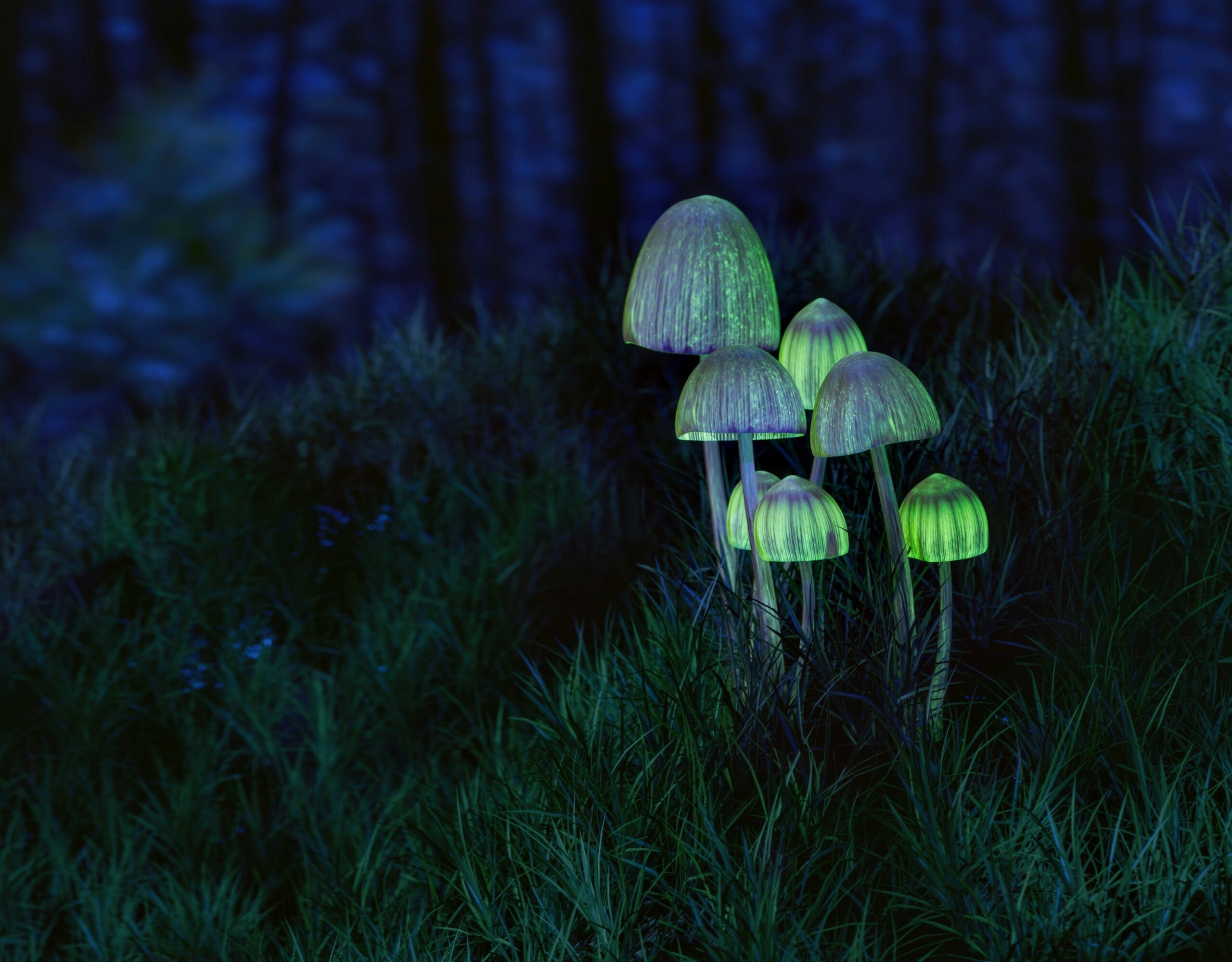
You stand at the threshold of the unknown, or at least, the incredibly dimly lit. The air is thick with anticipation, a palpable hush that amplifies the sound of your own breathing. You’ve been told it’s a dark room, but “dark” feels like an understatement. This is an absolute, profound absence of light, a void that presses in on your senses, demanding your attention. This is where your journey into the “Human Glow: Dark Room Experiment” begins.
You’ve signed up for this, a curious participant in a scientific exploration of a phenomenon so subtle, so intimate, it’s often overlooked: your own luminescence. We’re not talking about bioluminescence like fireflies or deep-sea creatures. We’re talking about the faint, almost imperceptible light that emanates from you. The idea that your body, a complex biological machine, is not only alive but also emitting light is both fascinating and a little unsettling.
The experiment aims to quantify and understand this human glow. It’s not a Hollywood special effect; it’s a genuine biological process, a byproduct of metabolic activity. And to truly see it, to begin to comprehend its existence, you must surrender to the darkness.
The transition into the dark room is a deliberate process, designed to acclimatize your eyes and prepare your mind. You’re guided by a gentle hand, the only tangible connection to the outside world. The door closes with a soft click, and suddenly, you are adrift.
Initial Sensory Deprivation and the Primal Response
Your eyes, accustomed to the constant barrage of light, struggle to make sense of this new reality. It’s a disorientation that’s not unpleasant, but rather, a profound recalibration. You might feel a momentary surge of unease, a primal instinct kicking in as the familiar visual cues vanish. Your other senses, however, begin to sharpen. The subtle rustle of your clothes, the faint thud of your own heartbeat, the texture of the floor beneath your feet – these become amplified, the building blocks of your immediate environment.
The Purpose of Complete Darkness: Why Go Dark?
Why the need for such extreme darkness? It’s simple, yet crucial. The human glow is incredibly faint. Any ambient light, even a stray moonbeam or the dim glow of electronic devices, would completely overwhelm it. To detect and measure this delicate emission, you need an environment so devoid of external light that your own biological light can finally reveal itself. Think of it like trying to hear a whisper in a crowded stadium – impossible. But in a silent library, that whisper becomes clear. This dark room is your silent library for human luminescence.
The Psychological Impact: Letting Go of Visual Dominance
Beyond the scientific imperative, there’s a psychological aspect to this enforced darkness. You are forced to relinquish your reliance on sight, the sense that usually dominates your perception of the world. This can be liberating. It allows you to be more present, more attuned to your internal sensations. You might find yourself noticing thoughts and feelings that are usually drowned out by visual distractions. It’s an opportunity to explore your own inner landscape, unburdened by external visual stimuli.
In exploring the fascinating phenomenon of bioluminescence, the human glow dark room experiment offers a unique perspective on how certain biological processes can emit light. For those interested in delving deeper into the science behind such experiments, a related article can be found at Freaky Science, where various intriguing scientific concepts and experiments are discussed. This resource provides additional insights into the mechanisms of light emission in living organisms and the implications of such phenomena in understanding biological functions.
Unveiling the Faint Radiance: The First Glimmers
You stand or sit in the designated area, your body slowly adjusting to the absolute dark. The initial disorientation begins to fade, replaced by a growing awareness of your own presence within this void. This is when the real magic, or rather, the real science, begins to unfold.
The Dark Adaptation Process: Rewiring Your Vision
Your eyes are remarkable organs. Given enough time, they can adapt to incredibly low light conditions. This is called dark adaptation. Specialized cells in your retina, rods, become more sensitive, allowing you to perceive dimmer light. This process can take anywhere from 20 to 30 minutes for full adaptation. During this time, you might notice subtle changes in your perception. Shapes might begin to emerge from the gloom, not from external light, but from your own internal illumination.
Observing the Human Glow: What You Might See (or Sense)
It’s important to manage expectations. You won’t see a radiant halo or a powerful beacon. The human glow is incredibly subtle. Scientists have observed it through highly sensitive cameras and detectors, and even then, it’s a faint, diffuse emission. If you are particularly attuned and your eyes are fully adapted, you might perceive a faint, soft radiance emanating from your hands, particularly your fingertips, or perhaps around your face. It’s more of a feeling of light, a subtle awareness rather than a sharp visual. Some participants report a sense of “warmth” or “energy” associated with these perceived areas.
The Source of the Glow: Metabolic Byproducts and Free Radicals
So, what exactly is causing this faint light? It’s a complex interplay of biological processes. The primary culprit is believed to be the generation of free radicals, highly reactive molecules produced during normal metabolic activity. When these free radicals interact with other molecules in your cells, they can release energy in the form of photons – tiny particles of light. This is a normal, ongoing process within your body, a byproduct of the constant chemical reactions that keep you alive.
Individual Variability: Why Does Everyone Glow Differently?
You might wonder if everyone’s glow is the same. The answer is likely no. Just as our metabolisms, diets, and lifestyles differ, so too might our bioluminescent emissions. Factors like stress levels, hydration, and even the time of day could potentially influence the intensity and nature of your glow. This experiment seeks to explore these variations, to understand the nuances of human luminescence across different individuals.
Beyond the Visual: Quantifying the Unseen

While your subjective experience of the glow is important, the experiment delves deeper into objective measurement. This is where advanced technology comes into play, translating the subtle phenomenon into quantifiable data.
Sensitive Photomultiplier Tubes: Detecting the Faintest Light
To capture the ephemeral human glow, specialized equipment is employed. Photomultiplier tubes (PMTs) are incredibly sensitive detectors that can register even a single photon of light. In this dark room, strategically placed PMTs will be used to measure the light emitted from your body. You might feel a slight presence of these devices, but their primary function is to remain invisible, allowing them to do their work in the absolute dark.
Measuring Photon Emission Rates: A Numerical Representation of Your Glow
The PMTs will record the rate at which photons are detected. This data is then analyzed to provide a numerical representation of your bioluminescence. This is where the scientific rigor truly takes hold, transforming a subjective sensation into objective data. You’re not just seeing or sensing a glow; you’re actively contributing to a scientific understanding of its intensity.
The Role of Different Body Parts: Hotspots of Luminescence
Researchers are often interested in identifying areas of your body that might emit more light than others. You might be asked to hold specific poses or focus your attention on certain parts of your body to see if this influences the readings. This helps to map out the “luminescent landscape” of the human body, identifying potential “hotspots” of photon emission.
The Impact of Physiological States: Stress, Fatigue, and Excitation
The experiment might also explore how different physiological states affect your glow. You might be asked to perform certain mental or physical tasks, or even to experience controlled stimuli that induce stress or relaxation. By measuring your glow under these varied conditions, scientists can gain insights into how your internal biological processes translate into external light emission.
Decoding the Data: What Does Your Glow Mean?

The numbers and readings from the dark room are more than just scientific curiosities. They represent a window into your body’s intricate workings, offering potential insights into your health and well-being.
Free Radical Levels and Oxidative Stress: A Health Indicator?
As mentioned, free radicals are implicated in human glow. An increased production of free radicals can be indicative of oxidative stress, a condition linked to aging and various diseases. By measuring the intensity of your glow, researchers might be able to gain an indirect measure of your body’s free radical activity. This could potentially serve as a novel, non-invasive indicator of oxidative stress levels.
Metabolic Activity and Energy Expenditure: A Subtle Biomarker
Your glow is a direct consequence of your metabolic activity – the processes your body uses to convert food into energy. Therefore, the intensity of your glow could, in theory, be related to your metabolic rate. This opens up possibilities for using human luminescence as a subtle biomarker for metabolic health and energy expenditure. Imagine understanding your energy output not just through calorie counting, but through the faint light you emit.
The Connection to Well-being and Emotional States: An Emerging Field
While still largely speculative, some research is exploring potential links between human glow and emotional states. Could feelings of calm and relaxation lead to a different light emission pattern than states of anxiety or excitement? This is an emerging area of research, and your participation in this experiment could contribute to understanding these complex relationships between our internal states and our physical manifestations.
Future Applications: From Health Monitoring to Scientific Discovery
The implications of understanding human luminescence are far-reaching. Imagine future health monitoring devices that can detect subtle changes in your glow as early indicators of illness. Or imagine using this knowledge to develop new ways to understand biological processes at a fundamental level. Your participation, even in this seemingly simple dark room experiment, is contributing to this exciting frontier of scientific discovery.
The fascinating phenomenon of bioluminescence in humans has sparked interest in various scientific experiments, including the intriguing human glow dark room experiment. This experiment explores how certain biological processes can lead to the emission of light in the human body. For those interested in a deeper understanding of related topics, you can read more about the science behind these phenomena in this informative article on Freaky Science. The insights gained from such studies not only enhance our knowledge of human biology but also open up new avenues for research in the field of bioluminescence.
Beyond the Darkness: Reflection and the Enduring Mystery
| Participant | Glow in the Dark Time (minutes) | Room Temperature (°C) | Duration of Exposure (hours) |
|---|---|---|---|
| Participant 1 | 30 | 22 | 2 |
| Participant 2 | 45 | 20 | 3 |
| Participant 3 | 25 | 23 | 1.5 |
As you emerge from the darkness, blinking into the gentle light of the observation room, you carry with you a unique experience. The profound absence of light has, paradoxically, illuminated something within you.
The Lingering Sensation: A Shift in Perception
Even after leaving the dark room, you might find yourself more aware of your body, of the subtle sensations within. The memory of that absolute darkness can create a lingering sense of heightened awareness, a gentle reminder of the unseen processes occurring within you. You might even catch yourself looking at your hands differently, a quiet curiosity about the light you carry.
The Scientific Significance: Contributing to Human Knowledge
You have actively participated in a scientific experiment, contributing valuable data to our understanding of human biology. You have helped to shine a light, quite literally, on a phenomenon that has long been overlooked. Your willingness to embrace the darkness has advanced the collective knowledge of what it means to be human.
The Personal Impact: A New Appreciation for Your Own Body
Beyond the scientific, there’s a profound personal impact. You’ve experienced a moment of extreme sensory deprivation, forced to confront yourself in a way that daily life rarely allows. This can foster a deeper appreciation for your own physical form, for the intricate and often invisible processes that sustain you. You are more than just flesh and bone; you are a living, breathing, and yes, faintly glowing entity.
The Enduring Mystery: The Unfolding Secrets of the Human Body
While this experiment sheds light on a specific aspect of human luminescence, the human body remains a source of endless wonder and mystery. The “Human Glow: Dark Room Experiment” is a testament to the fact that even in the most familiar of forms, there are still secrets waiting to be unveiled. You have witnessed, in a way, the quiet, persistent hum of life made visible, a subtle reminder of the extraordinary within the ordinary. You have been a part of something that transcends the everyday, a journey into the faint, beautiful glow that is uniquely yours.

You’re Emitting Light Right Now—So Why Can’t You See It?
FAQs
What is the human glow dark room experiment?
The human glow dark room experiment is a scientific study in which participants are placed in a completely dark room for an extended period of time to observe any potential bioluminescent or “glowing” effects from the human body.
What is the purpose of the human glow dark room experiment?
The purpose of the human glow dark room experiment is to investigate the possibility of bioluminescence in the human body, which could have implications for understanding biological processes and potential medical applications.
Has the human glow dark room experiment yielded any significant results?
As of now, the human glow dark room experiment has not yielded any conclusive evidence of bioluminescence in the human body. However, research in this area is ongoing and continues to be of interest to the scientific community.
What are the potential implications of discovering bioluminescence in the human body?
The discovery of bioluminescence in the human body could have significant implications for various fields, including medicine, biology, and even technology. It could lead to new insights into cellular processes and potentially new diagnostic and therapeutic approaches.
Are there any ethical considerations involved in conducting the human glow dark room experiment?
Yes, there are ethical considerations involved in conducting the human glow dark room experiment, particularly regarding the well-being and consent of the participants. Researchers must ensure that the experiment is conducted in a safe and ethical manner, with full informed consent from the participants.