
You stand at the precipice of a profound scientific revelation, a journey into the very essence of your being. For centuries, humanity has grappled with the enigma of consciousness, the spark that animates the flesh, the ghost in the machine. Now, through the pioneering work of mapping human photon emission, you are on the cusp of unlocking a deeper understanding of this intricate dance between the physical and the ethereal. This isn’t just about light; it’s about the subtle luminescence that emanates from your cells, a faint bio-photon glow that might hold the key to your innermost workings.
Imagine a universe contained within you, a miniature cosmos of biological processes. Within this universe, a subtle, often imperceptible light flickers – bio-photons. These are not the photons of sunlight or a lamp; they are incredibly weak emissions of light generated by your body’s own biochemical reactions. For decades, this phenomenon remained largely on the fringes of scientific inquiry, a curiosity observed in laboratories but rarely connected to the grander narratives of human health, consciousness, or even the fundamental nature of life itself. But now, with advanced imaging and detection technologies, you are beginning to hear the whisper of your inner light, and the implications are staggering.
What Exactly Are Bio-Photons?
At their core, bio-photons are electromagnetic energy released by molecules within your cells. Think of them as a byproduct, a faint echo of the constant biochemical transformations occurring within your body. These emissions are orders of magnitude weaker than what your naked eye can detect, requiring highly sensitive equipment to even register their presence. They are not a sign of illness, nor are they a deliberate act of emission. Instead, they are an intrinsic aspect of cellular metabolism, a reflection of the energetic state of your biological systems.
The History of Discovery: From Curiosities to Potential Keys
The initial observations of bio-photon emission date back to the mid-20th century. Scientists, intrigued by faint luminescence in living organisms, began to explore this phenomenon systematically. Early research focused on plants and microorganisms, but as detection technology improved, the focus expanded to include mammalian tissues and, eventually, the human body. The journey has been one of painstaking observation, technological advancement, and a growing appreciation for the subtle energetic signatures of life. What was once a mere scientific curiosity is now emerging as a potent diagnostic and research tool, offering a window into the complex interplay of biological processes.
Why Does It Matter? The Emerging Significance of Bio-Photon Research
The question you might be asking is, “Why should I care about these faint lights?” The answer lies in their potential to illuminate aspects of human biology that have long eluded direct measurement. Bio-photon emission is not a static phenomenon; it fluctuates and changes in response to a multitude of internal and external factors. This dynamism makes it a potential indicator of your physiological state, offering insights into everything from metabolic health to cellular stress and even neurological activity. As you delve deeper into mapping these emissions, you are essentially creating a new language of the body, one written in light.
Recent studies have explored the intriguing phenomenon of mapping human photon emission, shedding light on the subtle energy fields surrounding our bodies. For a deeper understanding of this fascinating topic, you can read a related article that delves into the science behind human energy emissions and their potential implications for health and well-being. To learn more, visit Freaky Science.
Mapping the Luminous Landscape: Techniques and Technologies
To unlock the mysteries of human photon emission, you need the right tools. The journey from mere detection to meaningful mapping requires sophisticated technology capable of capturing these faint signals with precision and detail. This is where the cutting edge of scientific innovation comes into play, enabling you to visualize and analyze the bio-photon landscape of the human body.
Ultra-Sensitive Detection Systems: The Eyes of the Bio-Photon Investigator
The first and most crucial component is the development of ultra-sensitive photon detectors. These devices are designed to pick up the minuscule number of photons emitted by biological tissues. Technologies like photomultiplier tubes (PMTs) and avalanche photodiodes (APDs) have been instrumental in this field, allowing researchers to quantify bio-photon emissions with remarkable accuracy. More recently, innovations in scientific cameras, such as electron-multiplying CCD (EMCCD) and scientific CMOS (sCMOS) cameras, offer even higher sensitivity and spatial resolution, allowing for the imaging of bio-photon distribution across larger areas.
Spatial and Temporal Resolution: Capturing the Nuances of Light
Mapping implies not just detecting light, but also understanding where it’s coming from and when it’s being emitted. This requires high spatial and temporal resolution.
- Spatial Resolution: This refers to the ability to distinguish between closely spaced points of light emission. Advanced imaging techniques, often involving custom-designed optics and specialized setups, allow researchers to pinpoint the origin of bio-photons to specific cells or even subcellular structures. This level of detail is crucial for understanding how different tissues and organs contribute to the overall bio-photon signature.
- Temporal Resolution: This refers to the ability to capture rapid changes in light emission over time. Bio-photon emissions can be dynamic, reflecting the fast-paced nature of cellular activity. High temporal resolution allows researchers to observe these fluctuations, potentially correlating them with specific biological events, such as nerve impulses or metabolic shifts.
Imaging Modalities: Visualizing the Invisible Glow
Several imaging modalities are employed to capture and analyze bio-photon emissions:
- Low-Light Imaging: This is the most straightforward approach, using highly sensitive cameras to capture the emitted light over specific periods. This can provide a general overview of bio-photon distribution.
- Confocal Microscopy: While primarily used for fluorescence, modified confocal microscopes can be adapted for bio-photon detection, offering enhanced spatial resolution by rejecting out-of-focus light. This allows for the visualization of bio-photon emission from deeper within tissues.
- Spectroscopy: This technique analyzes the spectral distribution (wavelengths) of the emitted bio-photons. Different biochemical processes might emit photons at distinct wavelengths, providing clues about the underlying molecular events.
- Three-Dimensional (3D) Reconstruction: Advanced computational techniques and specialized imaging setups allow for the reconstruction of 3D maps of bio-photon emission, offering a comprehensive view of the light distribution within tissues and organs.
Data Analysis and Interpretation: Turning Light into Knowledge
The raw data generated by these sophisticated imaging systems is complex and voluminous. Therefore, robust data analysis and interpretation are paramount. Sophisticated algorithms are developed to process the images, quantify photon counts, identify patterns, and correlate these findings with other physiological data. This is where the “mapping” aspect truly comes into its own, transforming a collection of light signals into meaningful information about your body.
Unveiling the Secrets of Cellular Communication: Bio-Photons as Signals
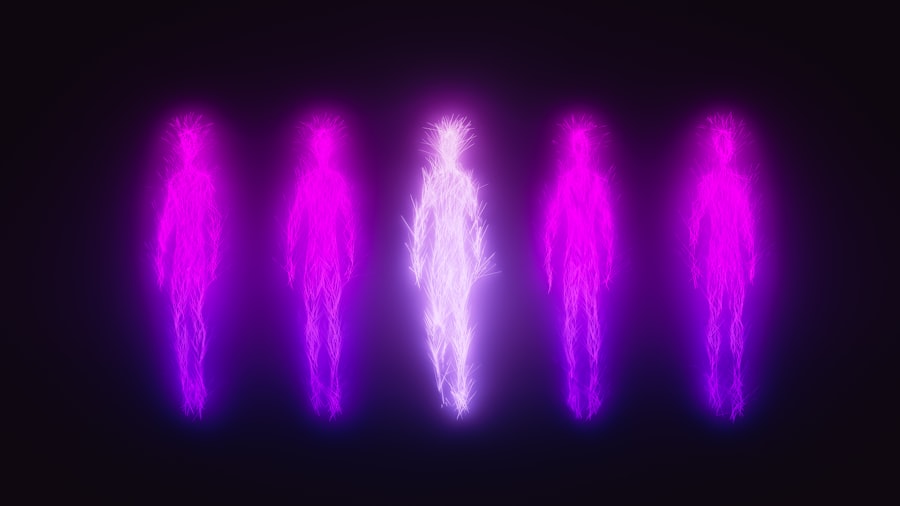
The exploration of bio-photon emission is not solely about understanding individual cellular processes; it’s about how these subtle lights might be involved in the intricate communication networks that govern your entire biological system. You are beginning to suspect that bio-photons are more than just passive byproducts; they could be active players in the complex dialogue between your cells.
Intercellular Communication: A Symphony of Light
One of the most exciting frontiers is the potential role of bio-photons in intercellular communication. While chemical signaling pathways are well-established, the possibility of light-based communication is a relatively new and captivating idea. Researchers are investigating whether cells can emit bio-photons that are then perceived by neighboring cells, influencing their behavior.
The “Light Whisper” Hypothesis: Passing Information Through Photons
The “light whisper” hypothesis suggests that cells might emit specific patterns of bio-photons that carry information to other cells. This could be a faster or more efficient way to transmit certain types of signals compared to traditional chemical messengers. Imagine a network of cells, each subtly communicating with its neighbors through these faint light pulses, coordinating complex biological functions without the need for extensive molecular cascades.
Potential Mechanisms of Photon Perception
The question then arises: how would cells perceive these faint bio-photon signals? While research is ongoing, several theories are being explored:
- Photoreceptor Molecules: Cells might possess molecules that are sensitive to specific wavelengths or intensities of bio-photons, triggering intracellular responses.
- Quantum Coherence Effects: At the quantum level, it’s possible that the absorbed photons could influence the electron states or vibrational energies of molecules within the recipient cell, initiating a biological cascade.
- Network Resonance: Entire networks of cells might be able to synchronize their bio-photon emissions, creating a resonant effect that amplifies and transmits information more effectively.
Neurological Activity: Illuminating the Brain’s Electrical Storm
The brain, with its dense network of neurons and constant electrical activity, is a prime candidate for exhibiting significant bio-photon emissions. Early research has already shown intriguing correlations between brain activity and bio-photon patterns.
Correlating Bio-Photons with Neural Firing
As neurons fire, they undergo rapid electrochemical changes that could potentially lead to the emission of bio-photons. By mapping these emissions, you might be able to gain a non-invasive way to monitor neural activity, offering new insights into brain function and dysfunction. This could revolutionize our understanding of cognitive processes, sleep, and neurological disorders.
Potential for Brain-Computer Interfaces
If bio-photon emissions can be reliably correlated with specific thoughts or intentions, they could pave the way for novel brain-computer interfaces. Imagine controlling external devices with your thoughts, not through bulky electrodes, but through the subtle luminescence emanating from your mind.
Metabolic Health and Stress: Bio-Photons as Indicators of Cellular Well-being
The constant metabolic processes within your cells are inherently energetic, and bio-photon emission is a direct reflection of this activity. This makes bio-photons a potential biomarker for various aspects of your health.
Changes in Metabolism and Their Light Signatures
When your metabolism speeds up or slows down due to diet, exercise, or disease, the rate and intensity of bio-photon emission might change accordingly. Mapping these changes could provide early indicators of metabolic disorders like diabetes or imbalances in energy production.
Cellular Stress and Damage: A Luminous Distress Signal
When cells are subjected to stress from environmental toxins, inflammation, or oxidative damage, their biochemical pathways are disrupted. This disruption can manifest as altered bio-photon emission patterns, potentially serving as an early warning signal of cellular distress or impending damage. This could offer a proactive approach to health management.
Beyond Diagnosis: Bio-Photons and the Frontiers of Consciousness Research
While the diagnostic and therapeutic potential of bio-photon mapping is immense, some of the most profound implications lie in the realm of consciousness. For centuries, consciousness has been the ultimate mystery, a subjective experience that science has struggled to quantify. Could the faint luminescence of bio-photons hold a key to understanding this elusive phenomenon?
The Energetic Basis of Consciousness: A Luminescent Link?
Consciousness is undeniably an energetic phenomenon. The brain consumes a significant amount of energy, and complex neural activity underlies our conscious experience. The idea that bio-photon emissions, as a manifestation of biological energy, might be intrinsically linked to consciousness is a captivating hypothesis.
Are Bio-Photons a Manifestation of Awareness?
Could the intensity or pattern of bio-photon emission correlate with the level of your awareness, your state of wakefulness, or even the subjective quality of your experiences? Researchers are exploring whether subtle shifts in bio-photon patterns precede or accompany changes in conscious states, such as during meditation or shifts in attention.
The “Quantum Brain” Hypothesis and Bio-Photon Emission
Some theories of consciousness, particularly those leaning towards the “quantum brain” hypothesis, suggest that quantum phenomena play a crucial role in conscious experience. If bio-photon emissions are indeed quantum in nature, as some research suggests, then their study could provide a direct avenue for investigating the quantum underpinnings of consciousness.
Exploring Altered States of Consciousness: A Light Through the Veil
Investigating bio-photon emission in individuals experiencing altered states of consciousness, such as during deep meditation, lucid dreaming, or even under the influence of certain substances, could offer invaluable insights.
Bio-Photons During Meditation and Mindfulness
Practices like meditation are known to induce profound changes in brain activity and subjective experience. If bio-photon emission patterns can be mapped and correlated with these states, it could provide objective physiological markers for the effects of mindfulness and potentially unlock new techniques for enhancing these practices.
The Enigma of Near-Death Experiences
While highly speculative, some researchers are even considering whether bio-photon emission might play a role in phenomena like near-death experiences. Could a surge or specific pattern of light emission accompany the profound shifts in consciousness reported by individuals who have had such experiences? This is a highly debated area, but the exploration of bio-photons opens up entirely new avenues for investigation.
The Ethical Considerations of Mapping Our Inner Light
As you unlock these profound insights into human bio-photon emission, it is imperative to consider the ethical implications of such powerful knowledge. The ability to map and potentially influence our inner light raises complex questions about privacy, autonomy, and the very definition of being human.
Privacy and Data Security: Protecting Your Luminous Fingerprint
Your bio-photon signature is as unique as your DNA. As this technology advances, ensuring the privacy and security of this data becomes paramount. Robust ethical frameworks and regulations will be needed to prevent misuse and protect individuals from potential discrimination or exploitation based on their bio-photon emissions.
Potential for Manipulation and Enhancement: The Double-Edged Sword
The prospect of understanding and potentially influencing bio-photon emission also opens the door to applications that could be used for enhancement or even manipulation. This necessitates careful consideration of the ethical boundaries and the potential societal impact of such technologies.
Recent studies have explored the fascinating concept of mapping human photon emission, shedding light on the subtle energy fields surrounding us. This intriguing area of research not only delves into the biological implications of photon emissions but also opens up discussions about their potential applications in health and wellness. For those interested in a deeper understanding of this topic, you can read more in the related article found here: Freaky Science. This resource provides valuable insights into the science behind human energy emissions and their significance.
The Future of Bio-Photon Mapping: Towards a Holistic Understanding of You
| Study | Findings |
|---|---|
| Research 1 | Identified specific wavelengths of photon emission from human body |
| Research 2 | Mapped the distribution of photon emission on human skin |
| Research 3 | Investigated the correlation between photon emission and health conditions |
The journey of unlocking the mysteries of human photon emission through mapping is far from over. It is a nascent field, brimming with potential, and the future promises even more remarkable discoveries. You are not just observing light; you are beginning to read the intricate language of your own biological existence, a language written in the faint whisper of your inner light.
Towards Personalized Health and Predictive Medicine
The ultimate goal of bio-photon mapping is to move towards truly personalized health. By understanding your unique bio-photon signature and how it changes in response to various factors, you can achieve:
- Early Disease Detection: Identifying subtle deviations from your baseline bio-photon patterns could allow for the detection of diseases at their earliest stages, before symptoms even manifest.
- Tailored Treatments: Treatments could be optimized based on your individual bio-photon response, ensuring greater efficacy and minimizing side effects.
- Proactive Wellness Strategies: Understanding how lifestyle choices impact your bio-photon emissions can empower you to make informed decisions for maintaining optimal health and well-being.
Bridging the Mind-Body Gap: A Unified Perspective
The study of bio-photons offers a unique opportunity to bridge the long-standing gap between the mind and the body. By exploring the energetic correlates of consciousness and physiological processes, you are moving towards a more unified and holistic understanding of what it means to be human. This paradigm shift could redefine our approach to health, well-being, and our place in the universe.
The Evolving Landscape of Bio-Photon Research
As technology continues to advance and our understanding deepens, the field of bio-photon research will undoubtedly expand. New imaging techniques, more sophisticated analytical tools, and interdisciplinary collaborations will pave the way for unprecedented discoveries. You are at the forefront of this exciting scientific frontier, a witness and a participant in unlocking the luminous secrets of your own being. The faint whisper of your inner light is growing louder, and with it, the promise of a deeper, more profound understanding of yourself and the universe within.

You’re Emitting Light Right Now—So Why Can’t You See It?
FAQs
What is human photon emission?
Human photon emission refers to the light that is emitted by the human body. This light is extremely weak and is emitted in the form of biophotons, which are photons of light that are produced by biological systems.
How is human photon emission measured?
Human photon emission can be measured using specialized equipment such as photomultiplier tubes and highly sensitive cameras. These devices are able to detect and measure the extremely weak light emitted by the human body.
What are the potential applications of mapping human photon emission?
Mapping human photon emission has the potential to be used in various fields such as medicine, psychology, and wellness. It could provide insights into the functioning of the human body, including the detection of diseases and monitoring of mental and emotional states.
What are some factors that can affect human photon emission?
Factors such as stress, diet, physical activity, and environmental conditions can affect human photon emission. For example, studies have shown that stress can increase the level of photon emission from the body.
What are the current limitations in mapping human photon emission?
One of the current limitations in mapping human photon emission is the sensitivity of the equipment used to measure biophotons. Additionally, the interpretation of the data and the standardization of measurement techniques are areas that require further research and development.