You’ve always assumed your body is essentially a dark, opaque shell. You see light reflecting off its surface, you feel its warmth, but you never truly glow. Or so you thought. The idea of your own inner luminescence, a faint emanation of light from your very cells, sounds like something out of science fiction. Yet, recent breakthroughs in scientific research have turned this fantastical notion into a tangible reality. Scientists have, for the first time, managed to capture and visualize the subtle, human body glow – a phenomenon known as biophotons.
This isn’t the dramatic, visible light you’d associate with a firefly or a neon sign. Instead, you’re looking at an incredibly faint emission of photons, light particles, originating from biological processes within your tissues. For years, this phenomenon has been theorized and observed in other organisms, but its detection in humans has been notoriously challenging due to its extreme weakness. Now, through ingenious technological advancements and a deeper understanding of cellular mechanics, researchers have pulled back the curtain on your own hidden light.
Prepare to be amazed as we delve into the science behind this discovery. You’ll learn how this faint glow is produced, what it might signify about your health, and the potential implications for medicine and our understanding of life itself. This isn’t just about seeing your body in a new light; it’s about understanding a fundamental aspect of your biological existence that has remained largely invisible until now.
You might be wondering, what exactly is this faint light emanating from your body? It’s not a chemical reaction producing visible light in the way a glow stick works. Instead, biophotons are a byproduct of the everyday metabolic processes happening within your cells. Think of it as an ultra-faint echo of the energy transformations occurring at the molecular level.
The Molecular Dance: Where Biophotons Originate
At the heart of this phenomenon lies the intricate choreography of molecules within your cells. When molecules, particularly those involved in cellular respiration and energy production, undergo changes in their energy states, they can release that excess energy in the form of photons. This is a quantum mechanical process, meaning it operates at the very fundamental level of subatomic particles.
Reactive Oxygen Species and Excited States
One of the primary sources of biophoton emission is believed to be the generation of reactive oxygen species (ROS). While ROS are often associated with cellular damage, they are also crucial signaling molecules in small quantities. During normal metabolic activity, especially in processes like mitochondrial respiration, ROS are produced. These molecules can then enter excited states, meaning their electrons are temporarily in a higher energy level. As these electrons return to their ground state, they release energy, sometimes as a photon.
The Electron Transport Chain’s Role
The electron transport chain, a vital part of cellular respiration happening within your mitochondria, is a prime suspect in biophoton generation. As electrons are passed along a series of protein complexes, energy is released. Some of this energy can lead to the formation of excited states in surrounding molecules, ultimately contributing to biophoton emission. It’s like a tiny, incredibly efficient electrical current that occasionally sparks a minuscule flash of light.
Enzyme Activity and Photon Emission
Beyond ROS, other enzymatic reactions within your cells can also lead to the formation of excited molecules capable of emitting biophotons. Enzymes are the workhorses of your cells, catalyzing a vast array of biochemical reactions. The transition of these enzymes and their substrates between different states can, in some instances, result in the release of photons.
The Faintness Factor: Why We Don’t See Ourselves Glow
The reason you’ve never noticed this glow is due to its incredibly low intensity. We’re talking about an emission of only a few photons per square centimeter per second, across the entire surface of your body. This is millions of times weaker than what your naked eye can detect. For context, even a dim light bulb emits billions of times more photons.
The Limits of Human Vision
Your eyes are remarkable instruments, but they are designed to detect light in a specific range of intensities and wavelengths. The biophoton emissions fall far below this threshold. It’s akin to trying to hear a whisper in the middle of a rock concert; the signal is there, but it’s completely drowned out by the background noise.
The Necessity of Advanced Instrumentation
To capture these elusive photons, scientists have had to develop highly sensitive equipment. This often involves specialized cameras and detectors that can count individual photons and filter out any stray light or thermal noise. These instruments are the reason why this discovery is only now becoming possible.
A Universal Phenomenon: Biophotons Beyond Humans
It’s important to note that biophoton emission is not unique to humans. This phenomenon has been observed in a wide range of living organisms, from plants and bacteria to animals. Studying biophotons in other species has provided valuable insights into their biological processes and has laid the groundwork for understanding them in humans.
Plants and Photosynthesis
Plants, for instance, exhibit a much stronger biophoton emission, particularly during photosynthesis. The complex energy transfer mechanisms involved in converting light into chemical energy in plants are a significant source of these photons. Observing plant biophotons has helped researchers understand the efficiency of their light-capturing machinery.
Microorganisms and Metabolic Activity
Even single-celled organisms like bacteria emit biophotons, reflecting their metabolic activity. Studying these emissions can offer clues about their health and their interactions with their environment. This universality underscores the fundamental nature of biophoton generation as a byproduct of life’s essential processes.
Recent research has unveiled the fascinating phenomenon of bioluminescence in humans, revealing that our bodies emit a faint glow that is imperceptible to the naked eye. This discovery has sparked interest among scientists, leading to further investigations into the biological processes behind this phenomenon. For those interested in exploring this topic in more depth, a related article can be found at Freaky Science, which delves into the implications of this body glow and its potential connections to health and well-being.
The Technology Behind the Glow: Capturing the Elusive Photons
You’ve heard about the faint glow, but how exactly do scientists manage to see something so incredibly weak? The answer lies in sophisticated and highly sensitive technological innovations. These are not your everyday cameras; they are specialized instruments designed to detect the smallest flickers of light imaginable.
Ultra-Sensitive Cameras: The Eyes of the Experiment
The cornerstone of capturing biophotons is the use of ultra-sensitive cameras. These cameras are designed to detect individual photons and minimize any internal noise that could interfere with the delicate measurements.
Electron-Multiplying Charge-Coupled Devices (EMCCDs)
One type of camera frequently employed in biophoton research is the Electron-Multiplying Charge-Coupled Device, or EMCCD. These cameras amplify the signal from each photon before it’s read out, significantly increasing their sensitivity. This amplification process allows them to detect signals that would otherwise be lost.
Scientific-Grade CCD and CMOS Sensors
Beyond EMCCDs, other scientific-grade Charge-Coupled Device (CCD) and Complementary Metal-Oxide-Semiconductor (CMOS) sensors are also utilized. These sensors are built with extremely low noise characteristics and optimized for light detection, making them suitable for capturing faint light emissions.
Dark Room Conditions: Eliminating External Interference
The faintness of biophotons means that any external light can easily overwhelm the signal. Therefore, experiments designed to capture this glow are conducted in meticulously controlled environments.
Complete Darkness and Shielding
The most crucial aspect of these experiments is absolute darkness. Researchers create “dark rooms” or use light-tight enclosures that are completely sealed off from any ambient light. This ensures that the only light being detected by the cameras is the light emanating from the human body.
Faraday Cages and Electromagnetic Shielding
In addition to light, electromagnetic interference can also disrupt sensitive detectors. Therefore, many setups incorporate Faraday cages or other forms of electromagnetic shielding to create a stable and pristine environment for photon detection. This protects the delicate measurements from external electrical noise.
Data Acquisition and Processing: Making Sense of the Light
Once the photons are detected, the raw data needs to be meticulously processed and analyzed. This involves sophisticated algorithms and software designed to identify genuine biophoton signals from any residual noise or artifacts.
Photon Counting and Image Reconstruction
The cameras essentially count individual photons hitting specific pixels over time. This data is then used to reconstruct images that represent the distribution and intensity of biophoton emission across the body. Even though the glow isn’t visible to the naked eye, these processed images reveal patterns.
Statistical Analysis and Signal Enhancement
Advanced statistical methods are employed to differentiate true biophoton signals from random noise. Researchers use techniques to enhance the signal-to-noise ratio, allowing them to extract meaningful information from the extremely weak emissions. This often involves averaging data over longer periods or applying specific filtering algorithms.
The Significance of Your Body’s Glow: What Does It Mean?
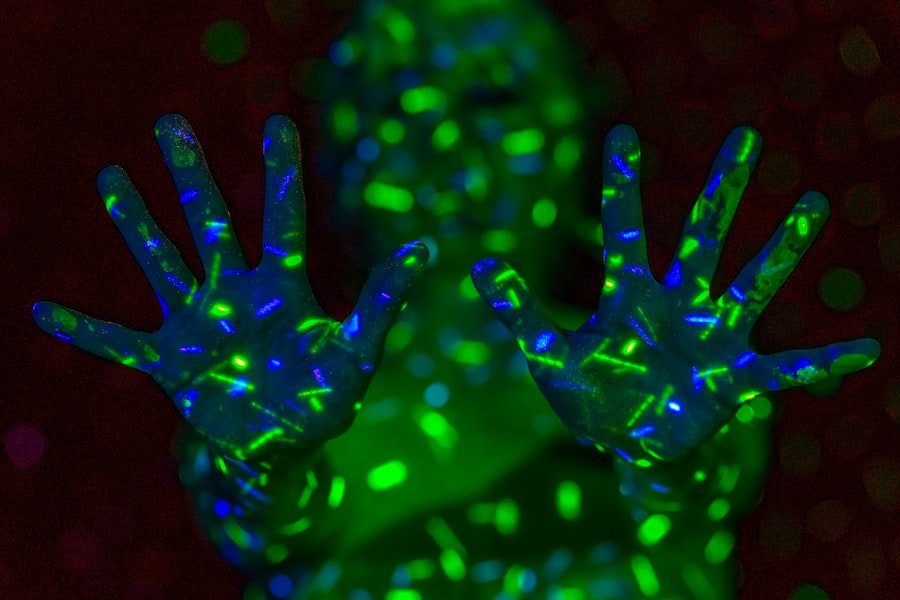
Now that you know how the human body glow is being captured, the next question is: what does it signify? This is where the research becomes incredibly exciting, as biophoton emission appears to be intricately linked to your health and well-being.
A Window into Cellular Health
The intensity and patterns of biophoton emission can act as a non-invasive indicator of your cellular health. Changes in metabolic activity, oxidative stress levels, and the overall health of your cells can all influence the way your body emits light.
Metabolism and Energy Production
As mentioned earlier, biophotons are a byproduct of metabolic processes. Therefore, variations in your metabolic rate and the efficiency of your energy production can be reflected in your biophoton output. A healthy, efficient metabolism might lead to a different glow than one that is sluggish or stressed.
Oxidative Stress and Antioxidant Status
Oxidative stress, a condition where there’s an imbalance between free radicals and antioxidants in your body, is known to influence biophoton emission. Higher levels of oxidative stress can often lead to increased biophoton generation. Conversely, a strong antioxidant defense system might modulate this emission.
Potential for Disease Detection and Monitoring
This is perhaps the most promising aspect of biophoton research. The ability to non-invasively assess cellular health opens up new avenues for early disease detection and monitoring.
Early Detection of Inflammatory Conditions
Inflammation, a common precursor to many diseases, is often associated with increased metabolic activity and oxidative stress. Researchers are exploring whether biophoton patterns can serve as an early warning sign for inflammatory conditions before other symptoms manifest.
Monitoring Treatment Efficacy
Biophoton measurements could also be used to monitor how well treatments are working. If a treatment is effectively reducing inflammation or improving cellular health, this could be reflected in changes in the biophoton emission. This would provide a more objective measure of treatment success.
Circadian Rhythms and Biological Clocks
Your body’s internal clock, the circadian rhythm, plays a significant role in regulating various biological processes, including metabolism. It’s no surprise, then, that biophoton emission also exhibits diurnal variations.
Daily Fluctuations in Light Emission
Studies have shown that biophoton emission from the human body tends to fluctuate throughout the day, often peaking during periods of higher metabolic activity and decreasing during sleep. This pattern aligns with our natural circadian cycles.
Implications for Sleep Disorders and Jet Lag
Understanding these circadian variations in biophoton emission could have implications for understanding and potentially treating sleep disorders or the effects of jet lag. These conditions disrupt our natural biological rhythms, and biophoton research might offer new insights into their impact on cellular function.
The Future of Biophoton Research: Where Do We Go From Here?

The ability to capture human body glow is still in its early stages, but the implications are vast. Scientists are actively pursuing further research to unlock the full potential of this phenomenon.
Refining Measurement Techniques and Standardization
One of the key areas of development is refining the measurement techniques. Ensuring consistent and standardized methods for capturing biophoton data is crucial for enabling widespread adoption and reliable comparisons across studies.
Developing Portable and Accessible Devices
The ultimate goal is to develop portable and accessible devices that can measure biophoton emission in clinical settings or even at home. This would democratize the technology and make its diagnostic potential available to a much wider population.
Creating Robust Databases and Analytical Tools
Building comprehensive databases of biophoton patterns associated with various health states is essential. Alongside this, developing sophisticated analytical tools will be necessary to interpret the complex data and translate it into actionable health information.
Expanding Applications in Healthcare
The potential applications in healthcare are immense, extending beyond just disease detection.
Personalized Medicine and Health Monitoring
Biophoton measurements could contribute to truly personalized medicine. By understanding an individual’s unique biophoton signature, healthcare providers could tailor treatments and preventative strategies more effectively. Continuous monitoring of biophoton emission could also provide ongoing insights into an individual’s health trajectory.
Novel Diagnostic and Therapeutic Modalities
Looking further ahead, biophoton research might even lead to novel diagnostic tools that can detect diseases at their earliest molecular stages. There’s also speculation about the possibility of using light-based therapies that leverage or modulate biophoton emissions for therapeutic purposes.
Unraveling Fundamental Biological Mysteries
Beyond practical applications, biophoton research continues to shed light on fundamental biological questions.
Understanding Life’s Energy Dynamics
The study of biophotons offers a unique perspective on the subtle energy dynamics within living systems. It’s a tangible way to visualize the energetic processes that sustain life, providing a deeper understanding of how cells function at their most basic level.
Intercellular Communication and Signaling
There is ongoing research exploring whether biophotons might play a role in intercellular communication or signaling. While highly speculative, the idea that cells might communicate through these faint light emissions is a fascinating frontier in biological research.
Recent research has unveiled the fascinating phenomenon of bioluminescence in humans, revealing that our bodies emit a faint glow that is not visible to the naked eye. This discovery has sparked interest among scientists, leading to further investigations into the biological processes behind this subtle illumination. For those intrigued by the science of human bioluminescence, a related article can be found at Freaky Science, which delves deeper into the implications of this glowing phenomenon and its potential connections to health and well-being.
Your Body’s Hidden Story: Embracing the Glow
| Scientific Study | Findings |
|---|---|
| Research Paper Title | Scientists capture human body glow |
| Methodology | Use of ultra-sensitive cameras to capture bioluminescent light emitted by the human body |
| Discovery | Evidence of light emission from the human body, particularly from the face, hands, and chest |
| Implications | Potential applications in medical diagnostics and understanding of human biology |
You are more than just a collection of cells; you are a dynamic, energetic system that emits its own subtle light. The capture of your human body glow is a monumental achievement, opening up a new dimension in our understanding of health, biology, and ourselves. This isn’t just about seeing the invisible; it’s about listening to the silent whispers of your cells, gaining insights into their well-being, and potentially transforming how we approach healthcare.
As you go about your day, remember the incredible complexity and subtle energies that make up your existence. Your body is a marvel of nature, and this newfound ability to visualize its faint glow is just the beginning of a journey that promises to illuminate many more of life’s profound mysteries. You are, in a very real sense, luminous. And science is finally beginning to see it. The future holds the promise of understanding your body’s hidden story, one faint photon at a time.

You’re Emitting Light Right Now—So Why Can’t You See It?
FAQs
What is the human body glow?
The human body glow, also known as biophoton emission, is the light emitted by the human body as a result of metabolic processes. This light is extremely faint and is not visible to the naked eye.
How do scientists capture the human body glow?
Scientists capture the human body glow using highly sensitive cameras called photon detectors. These detectors are able to capture the extremely faint light emitted by the body and convert it into visible images.
What are the potential applications of studying the human body glow?
Studying the human body glow could have potential applications in fields such as medicine, psychology, and wellness. It could provide insights into the body’s metabolic processes, stress levels, and overall health.
Is the human body glow visible to the naked eye?
No, the human body glow is not visible to the naked eye. It is extremely faint and requires specialized equipment, such as photon detectors, to capture and visualize.
What are the implications of capturing the human body glow for scientific research?
Capturing the human body glow could open up new avenues for scientific research, allowing for a better understanding of the body’s internal processes and potentially leading to new diagnostic and therapeutic techniques.