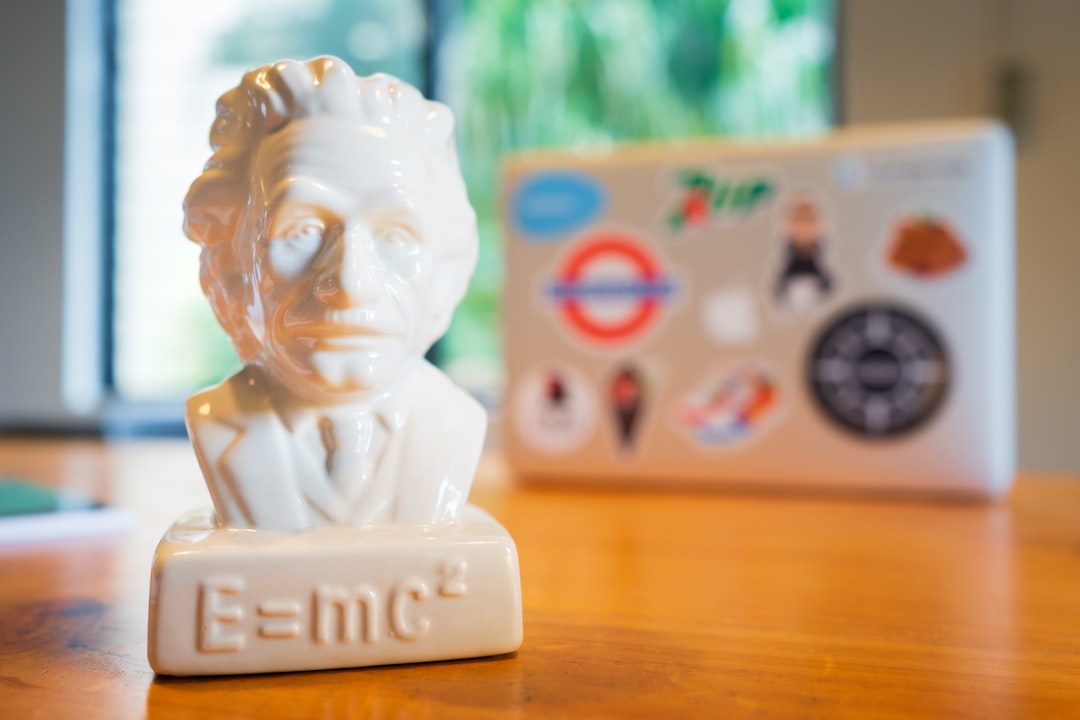
You’ve probably heard of Albert Einstein. His name is practically synonymous with genius, and his theories, especially the Theory of Relativity, are legendary. But what exactly is this theory that redefined our understanding of space, time, gravity, and the universe itself? It’s a concept that can seem daunting, steeped in complex mathematics and mind-bending ideas. Yet, at its core, relativity isn’t just abstract physics; it’s a profound way of looking at reality, a new lens through which you can perceive the cosmos. This article aims to demystify Einstein’s groundbreaking work, taking you on a journey to unlock the secrets of relativity, piece by piece.
In exploring the fascinating concept of Einstein’s theory of time, you may find it beneficial to read a related article that delves deeper into the implications of his theories on our understanding of the universe. This article provides a comprehensive overview of how time is perceived differently in various contexts, particularly in relation to speed and gravity. For more insights, check out this informative piece at Freaky Science.
The Universe Before Einstein: A Rigid Framework
Before Einstein came along, the universe was largely understood through the lens of Newtonian physics. This was a universe that operated with predictable, almost clockwork-like precision. Isaac Newton’s laws of motion and universal gravitation provided a remarkably successful framework for understanding how objects move and interact. However, this framework, while powerful, had a few fundamental assumptions that would eventually be challenged.
Absolute Space and Time
Newton posited the existence of absolute space and absolute time. Imagine a vast, unchanging stage upon which all events unfold. This was absolute space – a fixed, three-dimensional grid that existed independently of anything within it. Similarly, absolute time was a universal, constant flow, ticking away at the same rate for everyone, everywhere.
The Immutability of Time
For centuries, this was the common-sense view. Time was simply time. You experienced it, you measured it with clocks, and it marched forward relentlessly and uniformly. There was no suggestion that your experience of time could be different from someone else’s, or that it could be influenced by anything. This was the bedrock of classical physics, and it served us incredibly well for centuries.
Space as a Container
Similarly, space was seen as a passive container. It was the arena where matter and energy existed, but it didn’t actively participate in the dynamics of the universe. Think of a perfectly empty box; you can put things in it, move them around, but the box itself doesn’t change or affect what’s inside in any fundamental way.
The Speed of Light: A Growing Anomaly
Despite the success of Newtonian physics, a peculiar problem began to emerge concerning the nature of light. Experiments in the late 19th century, most notably the Michelson-Morley experiment, failed to detect a hypothesized medium called the “luminiferous aether” through which light was thought to propagate. This led to a conundrum: if there’s no aether, how does light travel? Furthermore, experiments consistently showed that the speed of light in a vacuum was always the same, approximately 299,792,458 meters per second, regardless of the motion of the source emitting it or the observer measuring it. This defied the common-sense rules of relative motion that governed everyday objects. If you throw a ball from a moving car, its speed relative to the ground is the speed of the car plus the speed you threw the ball. But light didn’t behave this way. This seemingly small anomaly was a crack in the edifice of Newtonian physics, a crack that Einstein would soon exploit to build something entirely new.
Special Relativity: The Fabric of Spacetime

In 1905, a young patent clerk named Albert Einstein published his “Annus Mirabilis” (Miracle Year) papers, one of which introduced the Special Theory of Relativity. This theory boldly discarded the notions of absolute space and time and, in their place, proposed a unified concept: spacetime.
The Two Postulates of Special Relativity
Einstein’s special relativity is built upon two fundamental postulates, which, while seemingly simple, have profound implications:
The Principle of Relativity
The first postulate states that the laws of physics are the same for all observers in uniform motion (i.e., not accelerating). This means that no matter how fast you’re moving at a constant speed in a straight line, the fundamental laws governing the universe will operate in exactly the same way for you as they do for someone standing still. There is no “absolute” frame of reference; all inertial frames are equivalent.
The Constancy of the Speed of Light
The second postulate is the game-changer: the speed of light in a vacuum is the same for all observers, regardless of their motion or the motion of the light source. This directly contradicts our everyday intuition. If you’re on a train moving at 100 mph and you shine a flashlight forward, you might expect the light to travel at the speed of light plus 100 mph. But it doesn’t. It travels at exactly the speed of light, no faster, no slower. This postulate is the key that unlocks many of the strange consequences of special relativity.
The Consequences: Time Dilation and Length Contraction
These two postulates, when taken together, lead to some truly mind-bending consequences that challenge our intuitive understanding of reality:
Time Dilation: Time is Not Absolute
One of the most astonishing predictions of special relativity is time dilation. This means that time is not absolute; its passage can depend on your relative motion. The faster you move, the slower time passes for you relative to a stationary observer. Imagine twins. If one twin embarks on a journey at near the speed of light and then returns to Earth, they will have aged less than the twin who stayed behind. This isn’t science fiction; it’s a mathematically proven consequence of the theory.
The Twin Paradox (and its Resolution)
The apparent paradox arises from the symmetry of relative motion. If motion is relative, why does one twin age less? The resolution lies in the fact that the traveling twin must accelerate at some point (to leave Earth, turn around, and return), breaking the symmetry of inertial frames. This acceleration is crucial and leads to the observable difference in aging.
Length Contraction: Space is Not Absolute Either
Just as time is relative, so is space. Length contraction is another consequence of special relativity, stating that an object moving at a high speed will appear shorter in the direction of its motion to an observer than it would appear to someone moving with the object. The faster the object moves, the more it contracts. This effect is only noticeable at speeds approaching the speed of light.
The Observer’s Perspective is Key
It’s crucial to remember that these effects are relative to the observer. The traveler on the spaceship wouldn’t feel time slowing down or their ship contracting. To them, everything would seem normal. It’s only when their measurements are compared to those of a stationary observer that these discrepancies become apparent.
E=mc²: The Ultimate Equation
Perhaps the most famous equation in the world, E=mc², also emerges from special relativity. This equation reveals a profound connection between energy (E) and mass (m), linked by the speed of light squared (c²). It tells us that mass and energy are interchangeable; mass can be converted into energy, and energy can be converted into mass. This concept underpins nuclear energy and explains the immense power released in nuclear reactions.
Mass-Energy Equivalence
This equivalence means that even a small amount of mass contains an enormous amount of potential energy, due to the large value of c². This has revolutionized our understanding of stellar processes, the Big Bang, and the very nature of matter and energy in the universe.
General Relativity: Gravity as Curvature

While special relativity revolutionized our understanding of space and time at high speeds, it didn’t incorporate gravity. Einstein spent another decade developing his General Theory of Relativity, which was published in 1915. This theory provides a radically new and elegant description of gravity.
Beyond Newton’s Force
Newton described gravity as a force acting instantaneously between objects with mass. However, this “action at a distance” concept, along with the idea of instantaneous influence, didn’t sit well with the speed limit of light established by special relativity. General relativity offers a different perspective.
Gravity as Geometry
Einstein proposed that gravity is not a force at all, but rather a manifestation of the curvature of spacetime. Massive objects, like stars and planets, warp or bend the fabric of spacetime around them, much like a heavy ball placed on a stretched rubber sheet creates a dip. Objects then follow the curves in spacetime, and this “falling” along these curves is what we perceive as the force of gravity.
The Analogy of the Rubber Sheet
Imagine a flat rubber sheet representing spacetime. If you place a bowling ball in the center, it creates a depression. If you then roll a marble across the sheet, it will curve towards the bowling ball, not because the bowling ball is pulling it, but because the marble is following the curvature of the sheet. This is analogous to how planets orbit stars.
Testing the Theory: Predictions and Confirmations
General relativity made several bold predictions that were later confirmed through observation and experiment, solidifying its status as our most accurate description of gravity:
The Bending of Starlight
One of the most famous predictions of general relativity is that light, despite having no mass, should be affected by gravity. Because gravity is the curvature of spacetime, light traveling near a massive object will follow the curved path of spacetime. This means that starlight passing near the Sun should be bent. This was famously confirmed during a solar eclipse in 1919 by Arthur Eddington, catapulting Einstein to global fame.
Gravitational Lensing
The bending of light by massive objects creates a phenomenon known as gravitational lensing. Light from distant galaxies can be bent around intervening massive objects, such as galaxy clusters, creating distorted, magnified, or even multiple images of the distant source. This has become a powerful tool for astronomers to study distant parts of the universe and understand the distribution of dark matter.
The Precession of Mercury’s Orbit
Another success of general relativity was its ability to explain an anomaly in the orbit of Mercury. For decades, astronomers had observed that Mercury’s orbit around the Sun didn’t quite follow the predictions of Newtonian physics. There was a slight, inexplicable shift in its orbital path over time, known as the precession of the perihelion. General relativity precisely accounted for this anomaly, providing strong evidence for its validity.
Gravitational Waves
General relativity predicts the existence of gravitational waves, ripples in spacetime caused by the acceleration of massive objects. These waves propagate at the speed of light and carry energy. For decades, their detection remained elusive. However, in 2015, the LIGO (Laser Interferometer Gravitational-Wave Observatory) experiment made the first direct detection of gravitational waves from the merger of two black holes. This monumental discovery opened a new window for observing the universe, allowing us to “hear” cosmic events.
Einstein’s concept of time has fascinated many, and if you’re interested in exploring this topic further, you might find a related article on the subject at Freaky Science. This resource delves into the intricacies of time as perceived in the context of relativity, offering insights that complement the understanding of how time is not a constant but rather a variable influenced by speed and gravity.
Everyday Implications of Relativity
| Concept | Explanation |
|---|---|
| Time Dilation | Time passes more slowly in strong gravitational fields or when moving at high speeds. |
| Time Travel | Theoretical possibility of moving backward or forward in time, as suggested by Einstein’s theory of relativity. |
| Space-Time Continuum | Combination of three dimensions of space with one dimension of time to form a four-dimensional continuum. |
While the concepts of relativity might seem confined to the realm of astrophysics and abstract physics, they actually have a surprising number of practical applications in our daily lives. You might not realize it, but you’re interacting with the consequences of relativity all the time.
Global Positioning Systems (GPS)
Perhaps the most ubiquitous example of relativity in action is the Global Positioning System (GPS) that you use in your car or on your smartphone. GPS relies on a network of satellites orbiting Earth. These satellites carry highly accurate atomic clocks that are synchronized with clocks on Earth. However, two relativistic effects need to be accounted for:
Special Relativity and Satellite Clocks
Due to the high speed of the satellites, time dilation (as predicted by special relativity) causes their clocks to run slightly slower than clocks on Earth.
General Relativity and Satellite Clocks
Conversely, the satellites are in a weaker gravitational field than clocks on Earth. According to general relativity, clocks in weaker gravitational fields run faster. The general relativistic effect is actually larger than the special relativistic effect.
The Necessity of Relativistic Corrections
Without accounting for both special and general relativistic effects, the timing errors would accumulate rapidly, rendering GPS systems useless within minutes. The fact that your GPS accurately guides you to your destination is a testament to the precision and accuracy of Einstein’s theories.
Particle Accelerators and High-Energy Physics
In particle accelerators, subatomic particles are accelerated to speeds very close to the speed of light. Here, the effects of special relativity are paramount. Particles gain significant mass as their speed increases, and their behavior is entirely governed by relativistic equations. Understanding these effects is crucial for designing and operating these complex machines, which are vital for fundamental research in physics.
Understanding the Universe
Beyond practical applications, relativity has fundamentally reshaped our understanding of the cosmos.
The Expanding Universe
General relativity provides the framework for understanding the large-scale structure and evolution of the universe. Einstein’s equations, when applied to the universe as a whole, predict that the universe is not static but is expanding. This prediction was later confirmed by Edwin Hubble’s observations.
Black Holes
The theory of general relativity predicts the existence of black holes – regions of spacetime where gravity is so strong that nothing, not even light, can escape. The study of black holes, which are now widely observed, is a direct consequence of general relativity and continues to be a vibrant area of astrophysical research.
The Future of Relativity: Unanswered Questions and New Frontiers
Despite its immense success, Einstein’s Theory of Relativity is not the final word on the universe. There are still profound questions and frontiers that contemporary physics is actively exploring.
The Quest for Quantum Gravity
One of the biggest challenges in modern physics is reconciling general relativity with quantum mechanics, the theory that governs the very small. These two highly successful theories appear to be incompatible at extreme scales, such as within black holes or at the moment of the Big Bang. Scientists are actively searching for a unified theory of quantum gravity that can explain these phenomena.
String Theory and Loop Quantum Gravity
Leading candidates for a theory of quantum gravity include string theory, which proposes that fundamental particles are actually tiny vibrating strings, and loop quantum gravity, which quantifies spacetime itself. These theories are still under development but offer promising avenues for understanding the universe at its most fundamental level.
Dark Matter and Dark Energy
General relativity describes the behavior of matter and energy, but our observations of the universe reveal that the matter and energy we can directly detect account for only a small fraction of the total. The existence of dark matter and dark energy, which constitute the vast majority of the universe’s content, is inferred from their gravitational effects, as described by general relativity. Understanding their nature is a major goal of modern cosmology.
Cosmological Constant and Beyond
Einstein himself introduced a cosmological constant into his equations to allow for a static universe, but later abandoned it when the universe was found to be expanding. However, the recent discovery of the accelerating expansion of the universe has led to a renewed interest in the cosmological constant, now often interpreted as a form of dark energy.
The Ultimate Fate of the Universe
Relativity, combined with observations of the expanding universe, allows us to explore potential scenarios for the ultimate fate of the cosmos. Depending on the nature of dark energy, the universe could continue expanding forever, eventually leading to a “Big Freeze,” or it could eventually collapse back in on itself in a “Big Crunch.”
Embracing the Relativity of Your Own Universe
Understanding Einstein’s Theory of Relativity isn’t just about comprehending complex physics; it’s about expanding your perspective on reality. It teaches you that our intuitive understanding, shaped by everyday experiences at low speeds and in weak gravitational fields, is only a partial picture of how the universe truly works.
Challenging Your Assumptions
Relativity encourages you to question your fundamental assumptions about space, time, and causality. It demonstrates that these concepts are not absolute but are intertwined and can be influenced by motion and gravity. This intellectual exercise can be profoundly liberating, opening your mind to new possibilities and ways of thinking.
The Beauty of Unified Theories
The elegance of general relativity, in particular, lies in its unification of gravity with the geometry of spacetime. It presents a universe that is not governed by mysterious forces acting at a distance but by the very fabric of reality itself being shaped and influenced by matter and energy. This sense of interconnectedness and underlying order can be deeply awe-inspiring.
A Journey of Continuous Discovery
The journey of understanding relativity is ongoing. While Einstein provided the foundational framework, scientists continue to build upon his work, pushing the boundaries of our knowledge. The ongoing quest for quantum gravity, the investigation of dark matter and dark energy, and the exploration of the universe’s origins and destiny are all direct descendants of Einstein’s revolutionary ideas.
You’ve now taken a significant step in unlocking Einstein’s time. You’ve glimpsed the universe through the lens of relativity, where space and time are

Einstein Says There Is No Universal “Now” in the Universe
FAQs
What is Einstein time explained?
Einstein time explained refers to the concept of time as explained by Albert Einstein’s theory of relativity. It explores how time is not absolute, but rather a relative concept that can be influenced by factors such as gravity and velocity.
How does Einstein’s theory of relativity impact our understanding of time?
Einstein’s theory of relativity revolutionized our understanding of time by proposing that time is not constant, but rather can be stretched or compressed depending on the observer’s frame of reference. This means that time can pass at different rates for different observers, depending on their relative motion and gravitational fields.
What are some real-world examples of Einstein’s time dilation?
Real-world examples of Einstein’s time dilation include the phenomenon of GPS satellites experiencing time dilation due to their high velocity and the gravitational time dilation observed near massive objects such as black holes.
How does time dilation affect space travel and the aging process?
Time dilation has significant implications for space travel, as astronauts traveling at high speeds or near massive objects will experience time passing at a different rate compared to those on Earth. This means that space travelers could age at a slower rate than people on Earth, leading to the “twin paradox” where one twin ages slower than the other after a space journey.
What are the practical applications of understanding Einstein’s time dilation?
Understanding Einstein’s time dilation has practical applications in fields such as GPS technology, where the effects of time dilation must be accounted for in order to accurately determine location and time. Additionally, it has implications for future space exploration and the development of advanced technologies.