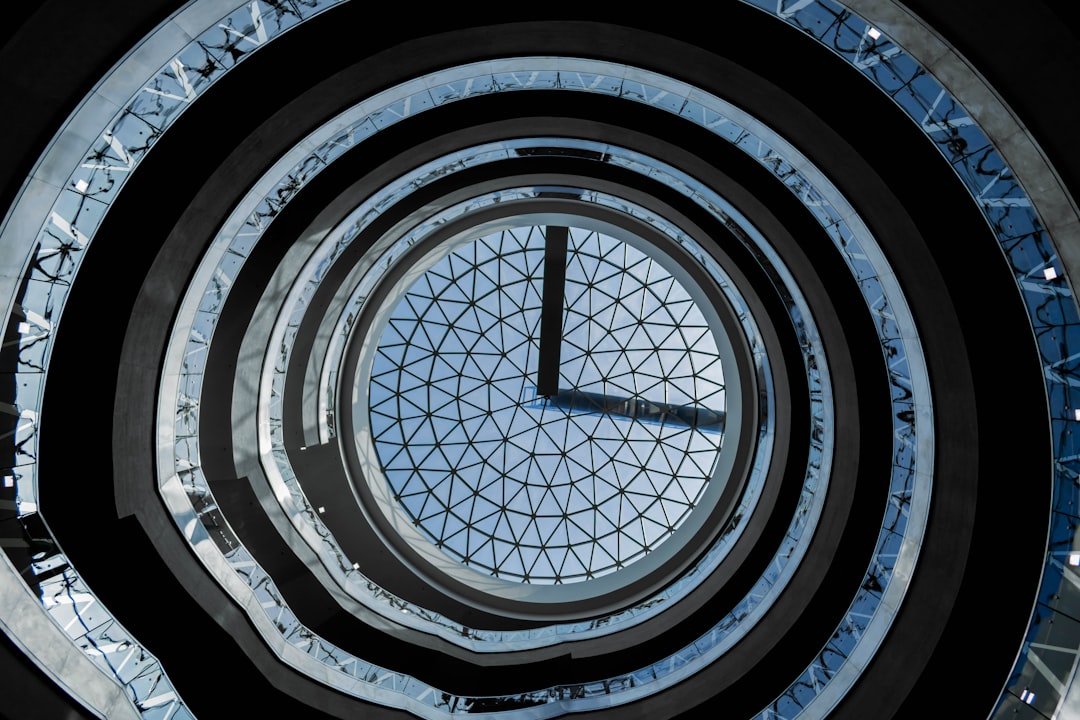
You stand at the precipice of understanding, gazing out at a universe that hums with an ancient, ineffable rhythm. It’s a rhythm you’ve always sensed, a whisper in the background of existence that hints at a grand design, a cosmic ballet choreographed by time itself. You’re not alone in this wonder. For millennia, humanity has grappled with the enigma of time, not just the ticking seconds on your wrist, but the profound, overarching chronology of the cosmos. This is the mystery of the cosmic clock, and you’re about to begin unraveling its intricate gears.
Your journey into the cosmic clock begins at its earliest, most foundational moments. It’s a story etched in the very fabric of reality, a tale of creation and the nascent stirrings of existence. Imagine yourself present at the very instant the universe burst into being. This isn’t just a metaphorical starting point; it’s the Big Bang, the singularity from which all matter, energy, and crucially, time, emerged.
The Singularity: A Point Before Time
Before the Big Bang, the concept of “before” itself loses meaning. There was no time as you understand it. All that exists, all that will exist, was compressed into an infinitely dense, infinitely hot point. Think of it as a cosmic seed, containing the potential for everything.
The Limits of Our Understanding
It’s crucial to acknowledge that this primal moment pushes the boundaries of your current scientific understanding. The laws of physics, as you know them, break down at the singularity. What happened within that point, or if there was even a “within,” remains one of the universe’s most profound unanswered questions.
Inflation: The Epoch of Explosive Growth
Following the Big Bang, the universe underwent a period of unbelievably rapid expansion, known as cosmic inflation. In a fraction of a second, the universe grew exponentially, stretching space itself. This wasn’t just a quickening of time; it was a fundamental reshaping of the temporal landscape.
The Seeds of Structure
This explosive growth played a vital role in establishing the conditions for the universe you observe today. Tiny quantum fluctuations, amplified by inflation, became the seeds for the large-scale structures like galaxies and galaxy clusters that you can now discern. These early, subtle variations were like the initial ticks of a nascent clock, setting the stage for future events.
The Cosmic Microwave Background: Echoes of Infancy
As the universe cooled, a pivotal moment arrived: the epoch of recombination. Protons and electrons finally combined to form neutral atoms, and the universe became transparent. This allowed light to travel freely for the first time, and those ancient photons, stretched and cooled by billions of years of expansion, are what you detect today as the Cosmic Microwave Background (CMB).
A Snapshot of the Early Universe
The CMB is your most direct window into the infant universe, a snapshot of its temperature and density fluctuations. Analyzing its intricate patterns allows you to infer properties of the early cosmos, including its age and its initial conditions. It’s like finding an ancient sundial, weathered but still bearing the marks of its original calibration, providing clues to the time it was first set.
In exploring the intriguing concept of whether the universe has a cosmic clock, one can delve deeper into related discussions about the nature of time and its measurement in the cosmos. A fascinating article that complements this topic can be found at Freaky Science, where various theories and scientific perspectives on timekeeping in the universe are examined. This resource provides valuable insights into how astronomers and physicists understand the passage of time on a cosmic scale, further enriching the conversation around the existence of a universal clock.
The Great March of Galaxies: Time on a Grand Scale
As the universe aged, gravity began to pull matter together, coalescing into the magnificent structures you see scattered across the cosmos. This grand march of galaxies isn’t just a visual spectacle; it’s a testament to the passage of immense spans of time.
The Formation of the First Stars and Galaxies
Gravity, acting on the density fluctuations imprinted in the CMB, began to gather hydrogen and helium gas. Under immense pressure and heat, the first stars ignited, bathing the nascent universe in starlight. These stars then congregated into the first galaxies, igniting the cosmic dawn.
A Cosmic Scaffolding
These early galaxies acted as a gravitational scaffolding, attracting more matter and growing over billions of years. You observe these ancient galaxies, or the remnants of their formation, through powerful telescopes, peering back in time to witness their formative stages. Each observation is a glimpse into a different epoch of cosmic history.
The Hubble Constant: The Universe’s Expanding Heartbeat
One of the most crucial measurements in understanding the cosmic clock is the Hubble Constant. This value quantifies the rate at which the universe is expanding. It’s like determining the speed of the cosmic pendulum.
Measuring the Cosmic Pace
By observing distant galaxies and measuring their recession velocity (how fast they are moving away from you) and their distance, astronomers can calculate this constant. The value of the Hubble Constant directly informs the age of the universe. A faster expansion rate implies a younger universe, and a slower rate suggests an older one.
Cosmic Evolution: Galaxies as Timekeepers
Galaxies themselves are not static entities; they evolve over cosmic time. They merge, grow, and change their stellar populations. By studying galaxies at different distances (and therefore, at different points in cosmic history), you can observe this evolutionary process.
Stellar Populations as Chronometers
The types of stars within a galaxy also act as natural chronometers. Older galaxies tend to be dominated by older, redder stars, while younger galaxies might host more massive, blue stars. Analyzing the spectral signatures of starlight allows you to estimate the age of stellar populations, providing a more granular understanding of galactic timelines.
The Deepest Rhythms: Stellar Lifecycles and Cosmic Cycles

Beyond the grand sweep of galactic evolution, the cosmic clock is also marked by the predictable, yet spectacular, lifecycles of stars. These celestial furnaces are not just sources of light; they are engines of creation and destruction, playing a vital role in the ongoing narrative of the universe.
Birth, Life, and Death of Stars: A Universal Cycle
Stars are born from nebulae, vast clouds of gas and dust. They spend most of their lives fusing hydrogen into helium in their cores, a process that generates immense energy and light. The duration of this stable phase depends on the star’s mass.
Massive Stars: Short, Brilliant Lives
More massive stars burn hotter and faster, living for millions of years. Their dramatic deaths, often in spectacular supernova explosions, are crucial for dispersing heavier elements, forged in their cores, into the cosmos. These elements are the building blocks for future stars, planets, and even life.
Sun-like Stars: Longer, Steadfast Journeys
Stars like your own Sun have much longer lifespans, on the order of billions of years. They eventually swell into red giants and then shed their outer layers, leaving behind a white dwarf. This slower, more gradual process also contributes to the chemical enrichment of the universe.
Supernovae: Cosmic Reset Buttons
Supernova explosions are not just dazzling displays; they are cosmic reset buttons. They are responsible for creating and distributing many of the elements heavier than iron that make up planets and living organisms. Without these explosive events, the universe would be a much simpler, less interesting place.
The Creation of Heavy Elements
You are literally made of stardust, the remnants of ancient stars that lived and died. The carbon in your body, the iron in your blood – all were forged in the hearts of stars and dispersed by supernovae. This connection highlights how deeply intertwined you are with the cosmic clock’s cycles of creation and destruction.
Stellar Clusters: Living Fossils
Open clusters, like the Pleiades, contain stars born from the same nebula at roughly the same time. By studying the distribution of stars in different evolutionary stages within a cluster, astronomers can accurately determine the cluster’s age. These clusters are like snapshots of stellar evolution frozen in time.
Globular Clusters: Ancient Time Capsules
Globular clusters, on the other hand, are ancient, dense collections of hundreds of thousands of stars, some of the oldest structures in the Milky Way. Their stars are incredibly old, offering crucial insights into the early universe and the history of our galaxy.
The Unseen Architects: Dark Matter and Dark Energy’s Temporal Influence

The most profound mysteries of the cosmic clock are not etched in visible light but in the unseen forces that govern the universe: dark matter and dark energy. These enigmatic components make up the vast majority of the cosmos and play a crucial, albeit mysterious, role in its temporal evolution.
Dark Matter: The Invisible Gravitational Glue
Dark matter, as its name suggests, does not interact with light. However, its gravitational influence is undeniable. It provides the extra gravitational pull needed to hold galaxies and galaxy clusters together, preventing them from flying apart.
Evidence for Dark Matter
The evidence for dark matter comes from various observations, including the rotation curves of galaxies (stars at the edges orbit much faster than expected if only visible matter were present) and the gravitational lensing of light from distant objects by galaxy clusters.
Shaping Cosmic Structures Over Time
The distribution of dark matter throughout the universe has played a significant role in the formation and evolution of cosmic structures. It acted as scaffolding, guiding the accumulation of visible matter and shaping the large-scale cosmic web. Without its gravitational influence, galaxies would likely not have formed as they have.
Dark Energy: The Accelerating Expansion
Dark energy is even more perplexing. It’s a mysterious force that is causing the expansion of the universe to accelerate. This discovery, made in the late 1990s, has revolutionized our understanding of cosmology.
The Cosmic Speed-Up
Imagine a ball thrown upwards; you expect it to slow down due to gravity. The universe, however, is behaving as if it has an anti-gravitational force pushing it apart at an ever-increasing rate. This is the influence of dark energy.
Implications for the Future of Time
The existence and nature of dark energy have profound implications for the ultimate fate of the universe and, consequently, for the future of cosmic time. Will the acceleration continue indefinitely, leading to a “Big Rip” where even atoms are torn apart? Or will its influence wane? These questions directly impact the projected timeline of cosmic history.
The Cosmic Web: A Dark Matter Framework
The large-scale structure of the universe, the cosmic web, is thought to be a direct manifestation of the underlying distribution of dark matter. This web of filaments and voids provides a framework within which galaxies and galaxy clusters form and evolve over billions of years.
Tracing the Threads of Time
By mapping the distribution of galaxies and their velocities, astronomers can infer the distribution of dark matter and trace the gravitational interactions that have shaped the universe over its history. Each filament and void represents a stage in the ongoing cosmic drama.
The concept of a cosmic clock in the universe raises intriguing questions about the nature of time itself and how it influences cosmic events. For those interested in exploring this topic further, a related article discusses the intricate relationship between time and the universe’s expansion. You can read more about it in this fascinating piece on Freaky Science, which delves into the implications of cosmic timekeeping and its effects on our understanding of the cosmos.
The Fabric of Spacetime: Gravity’s Temporal Influence
| Question | Answer |
|---|---|
| Does the universe have a cosmic clock? | There is no definitive evidence for a cosmic clock in the universe. The concept of a cosmic clock is a theoretical idea and is still a topic of debate among scientists. |
| Time measurement | Scientists use various methods to measure time in the universe, such as the cosmic microwave background radiation, pulsars, and the expansion of the universe. |
| Time scales | The universe operates on different time scales, from the rapid movements of celestial bodies to the slow processes of cosmic evolution. |
| Time perception | Human perception of time may not align with the cosmic time scales, making it challenging to define a universal cosmic clock. |
At the heart of the cosmic clock lies the very fabric of reality itself: spacetime. Albert Einstein’s theory of general relativity describes how gravity isn’t a force in the traditional sense, but rather a curvature of spacetime caused by mass and energy. This curvature directly influences the passage of time.
Time Dilation: Gravity’s Slowing Effect
One of the most mind-bending consequences of general relativity is time dilation. The stronger the gravitational field, the slower time passes. This isn’t just a theoretical concept; it’s been experimentally verified.
Clocks in Orbit vs. Clocks on Earth
The GPS satellites you rely on every day experience time dilation due to both their speed and the weaker gravitational field at their altitude. Without accounting for these relativistic effects, your GPS would quickly become inaccurate.
Approaching Black Holes: Extreme Time Distortion
The gravitational fields near black holes are so intense that time can slow to a crawl relative to an observer far away. This extreme time dilation is a dramatic illustration of gravity’s power to warp the temporal landscape.
Gravitational Waves: Ripples in Time
When massive objects accelerate, they create ripples in spacetime known as gravitational waves. These waves, predicted by Einstein and directly detected for the first time in 2015, offer a new way to observe the universe and probe its temporal evolution.
Listening to the Cosmic Orchestra
The detection of gravitational waves from the merger of black holes and neutron stars provides direct evidence of cataclysmic events that have occurred across vast cosmic distances and timescales. It’s like hearing the resonant vibrations of the cosmic clock itself.
Studying Extreme Events Through Time
By analyzing the characteristics of these gravitational waves, you can learn about the masses, spins, and distances of the objects that generated them, offering unprecedented insights into some of the most energetic and fundamental processes in the universe.
Unanswered Questions and the Ongoing Quest
Despite the incredible progress you’ve made in unraveling the mystery of the cosmic clock, many profound questions remain. The universe, in its infinite complexity, continues to challenge your understanding and inspire further exploration.
The Arrow of Time: Why Does Time Flow Forward?
While you can describe how time behaves in the universe, the fundamental question of why time has a direction – the “arrow of time” – remains a deep philosophical and scientific puzzle.
Entropy and the Second Law of Thermodynamics
The prevailing explanation for the arrow of time is linked to the increase of entropy, a measure of disorder, in the universe. The universe tends towards greater disorder, and this irreversible process is seen as the driving force behind the forward flow of time.
The Cosmological Arrow of Time
However, the cosmological arrow of time, related to the expansion of the universe, is also a significant factor. Understanding the interplay between entropy and cosmic expansion is crucial for a complete picture.
The Multiverse Hypothesis: A Tapestry of Timelines?
Some theoretical frameworks suggest the existence of a multiverse, a collection of many universes, each potentially with its own laws of physics and its own temporal characteristics.
Parallel Universes and Different Cosmologies
If multiverses exist, then the cosmic clock you observe might be just one of an infinite number of possible timelines, each playing out in its own unique way. This opens up a mind-boggling array of possibilities.
The Observational Challenge
However, directly observing or verifying the existence of other universes remains a significant challenge, pushing the boundaries of what is currently scientifically feasible.
The Nature of Time Itself: A Fundamental Illusion?
Perhaps the most radical question is whether time, as you perceive it, is a fundamental aspect of reality or an emergent property, an illusion of consciousness.
Quantum Gravity and the Disappearing Clock
Theories attempting to unify quantum mechanics and general relativity, such as loop quantum gravity, suggest that at the most fundamental level, time might not exist as a continuous entity.
The Human Experience of Time
Your subjective experience of time, with its passage and flow, might be a product of your brain’s processing of information and its interaction with the physical world, rather than an intrinsic property of the universe itself.
Your journey to unravel the mystery of the cosmic clock is far from over. Each discovery, each new observation, adds another intricate gear to your understanding. You are a part of this grand, unfolding narrative, a conscious observer capable of contemplating the vastness of time and the intricate workings of the universe. The clock continues to tick, and your quest to understand its rhythm is one of humanity’s most enduring and awe-inspiring endeavors.

Einstein Says There Is No Universal “Now” in the Universe
FAQs
What is the cosmic clock in the universe?
The cosmic clock refers to the concept of time in the universe, and whether there is a universal timekeeping mechanism that governs the passage of time.
Is there evidence of a cosmic clock in the universe?
Currently, there is no definitive evidence of a cosmic clock in the universe. The concept is largely theoretical and is a subject of ongoing scientific research and debate.
How do scientists study the concept of a cosmic clock?
Scientists study the concept of a cosmic clock through various methods, including observing the behavior of celestial bodies, studying the effects of gravity and relativity, and exploring the nature of time itself through theoretical physics.
What are some theories about the existence of a cosmic clock in the universe?
Some theories suggest that the cosmic microwave background radiation, the expansion of the universe, and the behavior of black holes may provide clues about the existence of a cosmic clock. However, these theories are still speculative and require further research.
What are the implications of a cosmic clock in the universe?
If a cosmic clock exists, it could have profound implications for our understanding of the nature of time, the origins of the universe, and the fundamental laws of physics. It could also potentially lead to new insights into the nature of reality itself.