
You’ve probably toggled it countless times, that little airplane icon on your phone, a ubiquitous symbol of air travel. You know why you’re supposed to turn it on – to avoid interfering with the aircraft’s navigation systems, right? But what if I told you that the reasons you’ve been told, the ones you likely accept without question, are built on a foundation of outdated information and exaggerated fears? It’s time to take a deep dive and debunk those persistent airplane mode myths. You might be surprised at what you discover, and it could fundamentally change how you interact with your devices at 30,000 feet.
You might not realize it, but the very concept of airplane mode has its roots in a very different technological era. To understand why it exists, you need to cast your mind back to a time when mobile phones were bulky, signals were less sophisticated, and the potential for interference was a genuine concern.
The Dawn of Mobile Communication and Early Aviation Concerns
Back in the late 20th century, when mobile phones were just beginning to become mainstream, the technology was far less refined than it is today. Early cellular networks were prone to signal bleed and could be susceptible to external radio frequencies. At the same time, aircraft navigation and communication systems, while robust, were also built with the understanding of potential radio interference. The idea was that any device emitting radio waves could, in theory, disrupt sensitive aircraft systems.
When “Interference” Was a Real and Present Danger
The fear of interference wasn’t entirely unfounded in those early days. Imagine a pilot trying to communicate with air traffic control, or relying on navigational instruments, and suddenly hearing static or experiencing erratic readings. It’s a scenario that understandably caused anxiety for airlines and regulatory bodies. Even if the actual risk of a single phone causing a catastrophe was low, the potential for cascading failures or widespread disruption meant that a precautionary approach was deemed necessary. This is where the “better safe than sorry” mentality took hold.
The Evolution of Technology: A Widening Gap
The critical point here is the evolution of technology on both sides. Aircraft systems have become incredibly sophisticated, with advanced shielding and redundancy built in. They are designed to operate in a complex electromagnetic environment, and modern systems are far more resilient to external signals than their predecessors. Simultaneously, our mobile phones have become more power-efficient and their radio transmissions are more precisely controlled. The era of crude, broad-spectrum transmissions is largely behind us. Yet, the initial regulations and perceptions haven’t kept pace with this rapid technological advancement.
Many people often wonder about the various myths surrounding airplane mode and its effects on mobile devices during flights. For a deeper understanding of these misconceptions, you can explore the article titled “Airplane Mode Myths Explained” on Freaky Science. This informative piece delves into the science behind airplane mode, clarifying common misunderstandings and providing insights into its actual purpose. To read more, visit Freaky Science.
The “Do Not Disturb” Fallacy: Understanding the Real Interference Problem
One of the most common beliefs surrounding airplane mode is that it’s solely about preventing your phone from calling out or receiving calls. While that’s a part of it, the underlying concern is much broader and, in today’s world, often overstated.
The Physics of Radio Waves: A Simplified Explanation
Your phone, when not in airplane mode, is constantly trying to connect to cellular towers. This involves emitting and receiving radio waves. These waves are a form of electromagnetic radiation. In a highly controlled environment like a commercial aircraft, which is essentially a metal tube flying through the sky, these signals can, in theory, interact with other radio-sensitive equipment. This interaction is what we refer to as electromagnetic interference (EMI).
Cellular Networks vs. Aircraft Systems: A Different League
The crucial distinction to understand is the difference in power and purpose. Your phone’s cellular radio operates at relatively low power levels, designed to connect to a nearby tower. Aircraft systems, on the other hand, are designed for critical operations and operate with a much higher degree of precision and shielding. Think of it like comparing a whisper to a trumpet blast. While both are sounds, their impact and potential for disruption are vastly different. Modern aircraft are equipped with sophisticated systems that are designed to filter out or tolerate a wide range of external radio frequencies.
The “Always Searching” Phenomenon: Why It Matters (or Doesn’t)
When your phone is not in airplane mode, it’s actively searching for cellular signals, Wi-Fi networks, and Bluetooth connections. This continuous searching consumes battery power, and it’s this active transmission that was historically the primary concern. Even if your phone isn’t actively making a call, it’s still broadcasting its presence and attempting to connect. This is why simply turning off your cellular data doesn’t fully address the historical concerns, as Wi-Fi and Bluetooth radios also emit signals.
The Myth of “Disrupting Navigation”: A Scrutiny of Evidence
The most dramatic fear is that your phone could somehow cause a plane to veer off course or malfunction. This is where the myths are most potent and least supported by evidence. While theoretical interference is possible, the likelihood of a modern smartphone, operating at its intended power, causing a critical failure in a modern aircraft’s complex and shielded navigation systems is astronomically low. Investigations into incidents where potential electronic interference was suspected have rarely, if ever, definitively pointed to passenger devices as the cause of serious malfunctions.
The Rise of Wi-Fi and Bluetooth: A New Frontier of Misconceptions
The advent of in-flight Wi-Fi and Bluetooth connectivity has only added another layer to the airplane mode debate, leading to new myths and misunderstandings. You might have wondered if turning on Wi-Fi but keeping cellular data off is truly safe.
In-Flight Wi-Fi: Designed for the Skies
Airlines that offer in-flight Wi-Fi have invested heavily in ensuring their systems are safe and compatible with aircraft operations. These systems are specifically designed to operate within the electromagnetic environment of an airplane. They are not the same as the public Wi-Fi networks you might connect to on the ground. The equipment used for in-flight Wi-Fi is typically integrated into the aircraft and operates on frequencies that are either approved or don’t pose a significant risk to critical systems.
Bluetooth: A Low-Power, Short-Range Signal
Bluetooth is a low-power, short-range wireless technology. Its primary purpose is to connect devices like headphones, keyboards, or speakers over a distance of a few meters. The radio signals emitted by Bluetooth devices are significantly weaker and have a much narrower spectrum than those used by cellular networks. The risk of a Bluetooth device interfering with critical aircraft systems is considered negligible by most aviation authorities.
The “One or the Other” Fallacy: Why Both Can Coexist
Many people believe that once you enable in-flight Wi-Fi, you can’t use Bluetooth, or vice-versa. This is a myth. The systems are largely independent. You can often use your Bluetooth headphones while connected to in-flight Wi-Fi. The key is that these connections are managed and approved by the airline, and the devices themselves are operating within the permissible parameters set by aviation regulations.
The Shifting Regulatory Landscape: From Prohibition to Permission
It’s important to note that regulations regarding the use of Wi-Fi and Bluetooth on aircraft have evolved significantly. What was once prohibited is now often permitted, with airlines setting their own policies based on their aircraft’s specific equipment and safety assessments. This shift reflects a growing understanding of the actual risks involved and the advancements in both aviation and personal electronic device technology.
The Real Reasons Behind the “Airplane Mode” Rule Today
If the interference threat is so diminished, why do airlines still insist on airplane mode? The answer is a multifaceted blend of residual caution, practical benefits, and a desire for simplified operational procedures.
A Legacy of Caution: The “Better Safe Than Sorry” Principle
Even with advanced technology, there’s a residual element of caution ingrained in aviation safety. The stakes are incredibly high, and any potential risk, however small, is taken seriously. Airplane mode provides a simple, universally understood way for passengers to ensure their devices are not emitting potentially disruptive signals. It’s a blanket policy that minimizes the need for nuanced individual assessments of each device and its capabilities.
Managing the Electromagnetic Spectrum: A Practical Approach
While the risk of critical interference from a single device is low, imagine hundreds or even thousands of devices all transmitting simultaneously. The cumulative effect of these signals, even at low power, could theoretically create a more significant electromagnetic noise floor. Airplane mode helps to control and manage the overall electromagnetic spectrum within the cabin, reducing the potential for unexpected interactions.
Passenger Convenience and Battery Life: The Unsung Benefits
Beyond safety, airplane mode offers genuine practical benefits for passengers. By disabling all radios, it significantly conserves battery life. This means you can enjoy your entertainment or work for longer without needing to find a power outlet. Furthermore, it prevents those annoying notifications from interrupting your flight experience, allowing you to truly disconnect and relax.
The Simplicity of Compliance: Making It Easy for Everyone
For flight attendants and crew, enforcing a single, clear rule like “turn on airplane mode” is far simpler than trying to police the use of individual device radios. It streamlines their duties and ensures a consistent approach across the entire flight. It’s about minimizing confusion and maximizing compliance from a diverse passenger base.
Many people still hold misconceptions about airplane mode and its effects on mobile devices during flights. For a deeper understanding of these myths and the science behind them, you can explore a related article that delves into the topic in detail. This informative piece not only clarifies common misunderstandings but also provides insights into how airplane mode works and why it is important for both passengers and airlines. To read more, check out this fascinating article that sheds light on the subject.
Beyond the Myths: Smart Usage and Future Possibilities
| Myth | Explanation |
|---|---|
| Airplane mode is only for use on airplanes | Airplane mode is designed to disable the device’s wireless communication functions, making it useful in various situations beyond just airplane travel. |
| Airplane mode affects the airplane’s navigation systems | Airplane mode is designed to prevent interference with aircraft communication systems, but it does not affect the plane’s navigation systems. |
| Airplane mode saves battery life | Enabling airplane mode can help conserve battery life by turning off power-draining wireless functions. |
| Airplane mode can be used to improve signal reception | Airplane mode disables all wireless signals, so it cannot be used to improve signal reception. |
Understanding airplane mode isn’t just about debunking old wives’ tales. It’s about empowering you to use your devices more intelligently and to appreciate the evolving landscape of air travel and technology.
The “Airplane Mode On, Wi-Fi On” Strategy: Your Go-To
For most modern flights, the most sensible approach is to engage airplane mode and then manually turn on Wi-Fi and Bluetooth if the airline permits. This effectively disables the cellular radio, which is the primary concern, while allowing you to access the approved in-flight services. This strikes a balance between safety and functionality.
Navigating Different Airline Policies: Stay Informed
It’s crucial to remember that individual airlines have the authority to set their own policies regarding electronic device usage. While many now permit Wi-Fi and Bluetooth, some may still have stricter rules. Always pay attention to the announcements made by the flight crew and refer to the safety information cards in the seat pocket.
The Future of Connectivity: Seamless Integration
The aviation industry is continuously working towards a future where seamless connectivity is the norm. This involves further research into electromagnetic compatibility, the development of more robust aircraft systems, and the ongoing refinement of regulations. It’s not a question of if we will have more integrated connectivity on flights, but when and how.
Empowering Yourself: Knowledge is Your Best Tool
By understanding the history, the technology, and the real reasons behind airplane mode, you are empowered to make informed decisions about your device usage. You can confidently engage Wi-Fi and Bluetooth when permitted, enjoy longer battery life, and contribute to a smoother, more connected air travel experience, all while respecting the paramount importance of aviation safety. So the next time you see that little airplane icon, remember it’s not just about blindly following an old rule; it’s about a nuanced understanding of technology and its place in the sky.
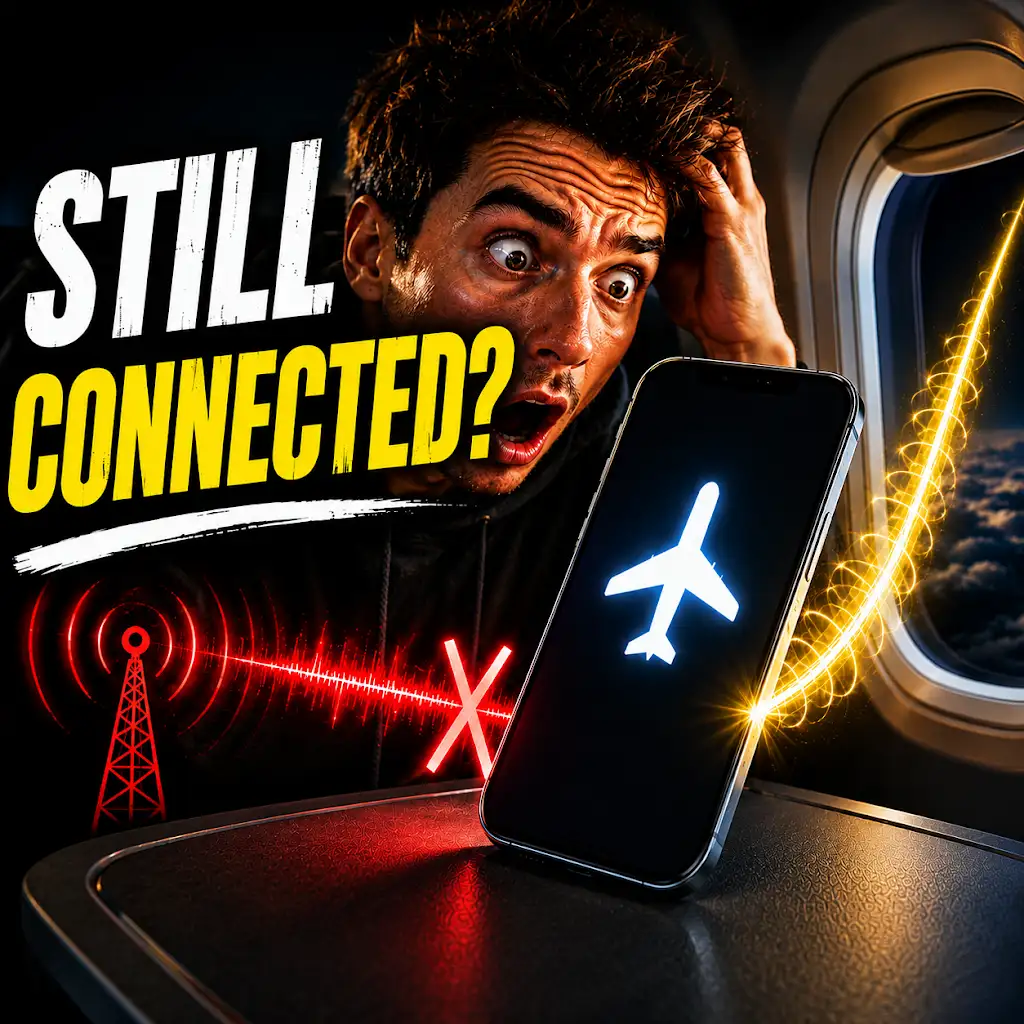
Your Phone Can Still Know Where You Are in Airplane Mode
FAQs
What is airplane mode and how does it work?
Airplane mode is a setting on mobile devices that disables the device’s wireless communication functions. This includes disabling cellular, Wi-Fi, and Bluetooth connections. It is designed to prevent interference with aircraft communication and navigation systems during flight.
Does using airplane mode really affect the airplane’s communication and navigation systems?
No, using airplane mode does not affect the airplane’s communication and navigation systems. Airplane mode is a precautionary measure to prevent potential interference, but modern aircraft systems are designed to be resilient to such interference.
Can I use Wi-Fi or Bluetooth while in airplane mode?
No, when airplane mode is enabled, all wireless communication functions, including Wi-Fi and Bluetooth, are disabled. However, some airlines now offer in-flight Wi-Fi, which can be used if the airline permits it and the device is in airplane mode with Wi-Fi enabled.
Can I use my phone for other activities while in airplane mode?
Yes, you can still use your phone for activities that do not require a wireless connection, such as playing games, reading e-books, or using offline apps. However, you will not be able to make or receive calls, send or receive text messages, or access the internet.
Is it necessary to use airplane mode even if the airline allows the use of electronic devices during the flight?
It is recommended to follow the airline’s guidelines regarding the use of electronic devices during the flight. While some airlines allow the use of certain electronic devices in airplane mode, others may have specific restrictions. It is important to comply with the airline’s policies for the safety and comfort of all passengers.