You hold a small, rectangular device in your hand. It’s sleek, powerful, and utterly indispensable. You tap its glass surface, conjuring vibrant images, instant connections, and a universe of information. But have you ever stopped to wonder about the invisible magic that makes it all possible? You’re constantly immersed in a symphony of radio waves, a silent, unseen language that your smartphone effortlessly understands and speaks. Unlocking the mystery of these signals isn’t just about understanding the technology; it’s about appreciating the intricate dance of physics and engineering that keeps you connected to the world.
Imagine a world without wires. That’s precisely what radio signals enable. They are a form of electromagnetic radiation, just like visible light, X-rays, and microwaves. What distinguishes them is their specific frequency and wavelength, which dictates how they travel and what they can carry. Your smartphone, at its core, is a sophisticated radio transmitter and receiver, constantly sending and receiving these invisible waves to communicate with cell towers, Wi-Fi routers, and even other nearby devices.
The Electromagnetic Spectrum: A Cosmic Highway
The entire range of electromagnetic radiation is known as the electromagnetic spectrum. It’s a vast continuum, ordered by frequency (how many waves pass a point per second) and wavelength (the distance between wave crests). You experience different parts of this spectrum every day.
Radio Waves: The Long Haulers
At the lower frequency end of the spectrum are radio waves. These are characterized by their long wavelengths and their ability to travel long distances. They can also penetrate many obstacles, making them ideal for broadcasting information over wide areas. This is the primary domain of your cellular network.
Microwaves: The Speedy Couriers
Moving up in frequency, you encounter microwaves. These are shorter than radio waves and are excellent for carrying larger amounts of data over shorter distances. Wi-Fi and Bluetooth both operate in the microwave portion of the spectrum, enabling the high-speed connections you rely on for internet browsing and device pairing.
Visible Light: The Colors You See
Your eyes perceive only a tiny sliver of the electromagnetic spectrum – visible light. This is how you see the world, and it’s a testament to the diverse nature of these invisible forces.
Beyond Light: X-rays and Gamma Rays
At even higher frequencies are X-rays and gamma rays. These have very short wavelengths and high energies, capable of penetrating matter deeply, which is why they are used in medical imaging and have powerful, sometimes dangerous, applications.
Modulation: The Art of Encoding Information
Simply emitting radio waves isn’t enough. To send meaningful information – your voice, text messages, images, or videos – these waves need to be encoded, or modulated. Think of it like assigning a specific tune to each piece of data you want to send.
Amplitude Modulation (AM): Varying the Strength
One of the simpler modulation techniques is Amplitude Modulation (AM). In AM, the amplitude (the height or strength) of the radio wave is varied to carry the information. Imagine a steady stream of waves, and you’re changing how tall each wave is to represent different sounds or data points. AM is robust but can be susceptible to interference.
Frequency Modulation (FM): Shifting the Pitch
Frequency Modulation (FM), on the other hand, changes the frequency of the radio wave. Think of it like changing the pitch of a musical note to represent different information. FM is generally less susceptible to static and interference than AM, which is why it’s often used for high-fidelity audio broadcasting.
Digital Modulation: The Language of Bits
Modern smartphones primarily use digital modulation techniques. This is where the information is represented by discrete values, typically binary digits (bits) – 0s and 1s. These bits are then encoded onto the radio waves using sophisticated methods.
Quadrature Amplitude Modulation (QAM): A Double Whammy
QAM is a powerful digital modulation technique that combines both amplitude and phase variations to encode data. This allows for a significantly higher data rate compared to simpler modulation schemes. It’s like having two separate ways to change the wave – its height and its timing – to pack in more information.
Phase-Shift Keying (PSK): Timing is Everything
PSK manipulates the phase of the radio wave to represent different bits. The phase refers to the position of the wave in its cycle. By precisely shifting the start of the wave, different binary values can be represented.
Understanding how smartphone radio signals work is crucial for grasping the technology behind modern communication. For a deeper dive into this topic, you can refer to a related article that explains the intricacies of radio wave transmission and reception in smartphones. This article provides insights into the frequency bands used, the role of antennas, and how signals are processed within the device. To learn more, visit this link.
The Cellular Symphony: How Your Phone Connects to the Network
Your smartphone’s most fundamental radio function is its connection to the cellular network. This is what allows you to make calls and access data from virtually anywhere. It’s a complex system involving a vast network of cell towers and sophisticated radio communication.
The Role of Cell Towers: Your Wireless Gateways
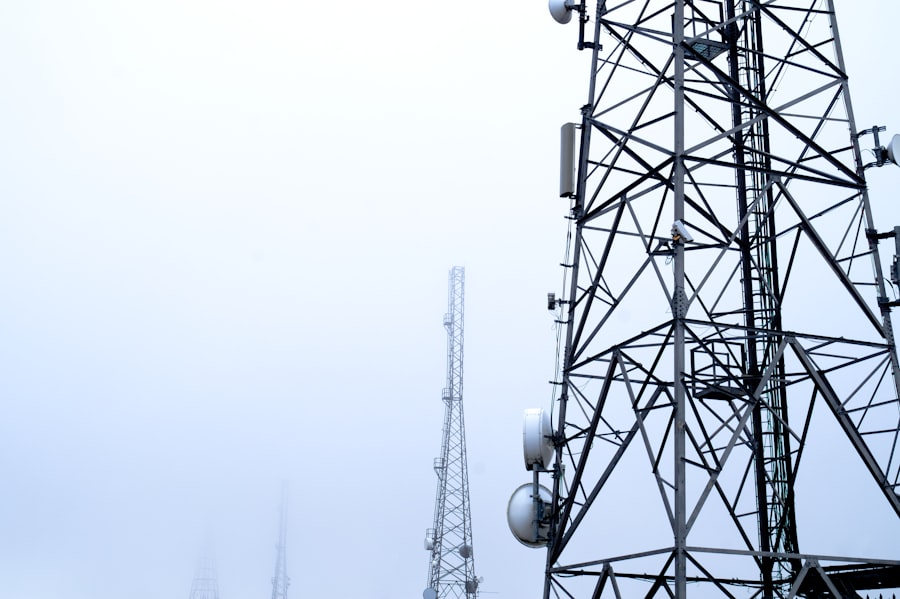
Cell towers, those ubiquitous metal structures you see dotting the landscape, are the backbone of cellular communication. Each tower is equipped with antennas that transmit and receive radio signals from your phone and other devices in its coverage area.
Cell Division: Maximizing Coverage and Capacity
The entire service area of a mobile operator is divided into smaller geographic regions called “cells.” Each cell is served by a cell tower. This division is crucial for managing the limited radio spectrum and allowing the same frequencies to be reused in non-adjacent cells, significantly increasing the network’s capacity.
Hand-offs: Seamless Transitions
As you move from one cell to another, your phone doesn’t lose its connection. The network seamlessly “hands off” your connection from one cell tower to the next. This process is orchestrated by the mobile network’s infrastructure, ensuring an uninterrupted conversation or data stream.
Frequency Bands: The Assigned Channels
The radio spectrum is a finite resource, and different frequency bands are allocated to different mobile network technologies and services. Your smartphone is designed to operate on a specific range of these frequencies.
4G LTE and 5G: The Latest Generations
Fourth-generation (4G) LTE and the newer fifth-generation (5G) technologies utilize a wide array of frequency bands. 5G, in particular, leverages both lower bands for wide coverage and higher, millimeter-wave (mmWave) bands for ultra-fast speeds over shorter distances.
Legacy Bands: Maintaining Compatibility
Even with newer technologies, your phone often retains compatibility with older frequency bands used by 2G and 3G networks to ensure you can connect in areas where newer infrastructure might not be fully deployed.
The Art of Duplexing: Talking and Listening Simultaneously
When you’re on a phone call, you’re not just sending your voice; you’re also receiving the voice of the person you’re speaking to. This ability to transmit and receive simultaneously is achieved through duplexing techniques.
Frequency Division Duplexing (FDD): Separate Lanes
In FDD, separate frequency bands are used for transmitting and receiving. Imagine a highway with two separate lanes: one for outgoing traffic (your voice) and one for incoming traffic (their voice). This is the most common method used in cellular networks.
Time Division Duplexing (TDD): Taking Turns
TDD, on the other hand, uses the same frequency band for both transmitting and receiving, but it allocates specific time slots for each direction. It’s like a single lane where cars travel in one direction for a while, then switch to the other direction. TDD is often used in Wi-Fi and some newer cellular deployments.
Beyond Cellular: Wi-Fi and Bluetooth Signals
While cellular connectivity is vital, your smartphone also relies on other radio technologies for shorter-range communication. Wi-Fi and Bluetooth are your indispensable companions for accessing local networks and connecting to peripherals.
Wi-Fi: Your Gateway to the Internet at Home and Beyond
Wi-Fi is the technology that allows you to connect to wireless local area networks (WLANs), most commonly for internet access in your home, office, or public places. It operates on specific radio frequencies, primarily in the 2.4 GHz and 5 GHz bands.
The 2.4 GHz Band: Reach and Penetration
The 2.4 GHz band is known for its longer range and better ability to penetrate walls and other obstacles. However, it’s also a more crowded band, often experiencing interference from other devices like microwaves and Bluetooth.
The 5 GHz Band: Speed and Less Interference
The 5 GHz band offers significantly higher bandwidth, leading to faster data speeds. It also experiences less interference because fewer devices operate in this band. However, its range is shorter, and it’s more easily obstructed by physical barriers.
Wi-Fi Standards: Evolution of Speed and Efficiency
Wi-Fi technology has evolved through various standards (e.g., 802.11b, g, n, ac, ax, and the latest Wi-Fi 7). Each new standard brings improvements in speed, efficiency, and capacity, allowing your devices to communicate more effectively.
Bluetooth: The Personal Area Network Pro
Bluetooth is designed for short-range wireless communication between devices, forming what’s known as a Personal Area Network (PAN). It’s perfect for connecting your phone to headphones, speakers, smartwatches, and even your car’s infotainment system.
Low Energy (BLE): Power Efficiency for Peripherals
Bluetooth Low Energy (BLE) is a specialized version of Bluetooth designed for devices that require minimal power consumption, such as fitness trackers, sensors, and smart home devices. This allows them to operate for extended periods on small batteries.
Pairing: Establishing a Secure Connection
When you pair two Bluetooth devices, they establish a secure, encrypted connection. This process involves exchanging identification information and generating unique keys to ensure that only authorized devices can communicate.
Frequency Hopping: Avoiding Interference
Bluetooth uses a technique called “frequency hopping” where it rapidly switches between different frequencies within its allocated band. This makes it highly resistant to interference from other devices operating in the same frequency range.
The Science Behind the Signal: Antennas and Radio Frequency Components

The magic of radio communication wouldn’t be possible without the specialized components within your smartphone that generate, receive, and process these invisible waves. Antennas are at the forefront of this, acting as the literal interface between your device and the radio waves.
Antennas: The Signal Catchers and Emitters
An antenna is a conductor designed to convert electrical signals into electromagnetic waves (for transmission) and vice versa (for reception). The size and shape of an antenna are crucial for its efficiency at specific frequencies.
Internal Antennas: The Sleek Integration
Modern smartphones house intricate internal antennas, often strategically placed within the device’s chassis. These are designed to be compact and efficient, while also minimizing interference with other internal components. You won’t see them, but they are constantly working.
Antenna Diversity: Improving Signal Quality
Many smartphones employ antenna diversity, which means they have multiple antennas. This allows the phone to select the best signal from whichever antenna is experiencing the least interference at any given moment, leading to more reliable connections.
Radio Frequency (RF) Transceivers: The Communication Hub
The RF transceiver is the heart of your smartphone’s radio communication system. It’s a complex integrated circuit that handles both transmitting and receiving radio signals.
Amplifiers: Boosting the Signal Strength
To ensure signals can travel the necessary distances, amplifiers are used. These components increase the power of the transmitted signal and strengthen the weak received signal, making communication possible.
Filters: Isolating Desired Frequencies
In the crowded radio spectrum, it’s essential to isolate the specific frequencies your phone needs to communicate on. Filters are used to block out unwanted signals, ensuring that only the desired radio waves are processed.
Mixers: Changing Frequencies
Mixers are used to combine signals or to change the frequency of a signal. This is crucial in superheterodyne receivers, a common design in radio technology, for converting received signals to a more manageable intermediate frequency for processing.
Understanding how smartphone radio signals work is crucial for grasping the technology behind modern communication. For those interested in delving deeper into this topic, a related article can be found on Freaky Science, which explores the intricacies of radio wave transmission and reception. This resource provides valuable insights into the science that enables our devices to connect seamlessly. You can read more about it in this fascinating article.
The Future of Smartphone Radio: Evolution and Innovation
| Aspect | Description |
|---|---|
| Frequency | Smartphone radio signals operate within specific frequency bands, such as 700 MHz, 2.4 GHz, and 5 GHz. |
| Modulation | Radio signals are modulated to carry data, with common techniques including amplitude modulation (AM) and frequency modulation (FM). |
| Antennas | Smartphones use internal antennas to transmit and receive radio signals, typically located near the top and bottom of the device. |
| Propagation | Radio signals propagate through the air via line-of-sight or non-line-of-sight paths, with factors such as distance and obstacles affecting signal strength. |
| Protocols | Various wireless communication protocols, such as LTE, Wi-Fi, and Bluetooth, are used for different types of smartphone radio signals. |
The world of smartphone radio signals is constantly evolving. Researchers and engineers are tirelessly working on new technologies to make your devices faster, more efficient, and capable of connecting in even more ways.
5G and Beyond: The Next Frontier of Connectivity
5G is still rolling out globally, but the focus is already shifting towards 6G and beyond. These future generations promise even faster speeds, lower latency, and the ability to connect an unprecedented number of devices, ushering in an era of truly ubiquitous connectivity.
Millimeter Wave (mmWave) Technology: Unleashing Extreme Speeds
The use of millimeter-wave frequencies in 5G is a significant leap, offering massive bandwidth for incredibly fast data transfer. Future generations will likely explore even higher frequency bands for even greater speeds and capacity.
Beamforming: Directing the Signal
Beamforming is a sophisticated technique that directs radio signals precisely towards the intended receiver, rather than broadcasting them in all directions. This improves signal strength, reduces interference, and increases efficiency.
Enhanced Security and Privacy: Protecting Your Invisible Conversations
As radio communication becomes more pervasive, ensuring its security and privacy is paramount. Innovations are focused on developing more robust encryption methods and secure protocols to protect your data from interception.
Advanced Encryption: Fortifying Your Data
Newer encryption algorithms and protocols are being developed to make it even harder for unauthorized parties to decipher your radio communications.
Network Slicing: Dedicated Channels for Specific Needs
In future networks, network slicing will allow for the creation of virtual, dedicated networks optimized for specific applications. This could mean a slice optimized for ultra-low latency gaming or another for critical emergency communications, each with its own tailored radio characteristics.
The Internet of Things (IoT): A Connected Ecosystem
The proliferation of Internet of Things (IoT) devices – smart home appliances, wearables, industrial sensors – relies heavily on efficient and low-power radio communication. Your smartphone will increasingly act as a central hub for managing this ever-expanding ecosystem of connected devices.
Low-Power Wide-Area Networks (LPWAN): Connecting the Unconnected
Technologies like LoRaWAN and NB-IoT are designed for long-range, low-power communication, enabling vast numbers of IoT devices to connect without draining their batteries.
In essence, the radio signals from your smartphone are not just abstract scientific concepts; they are the invisible threads that weave together your digital life. From the fundamental principles of electromagnetism to the cutting-edge innovations shaping the future, understanding this intricate world reveals the true marvel of the technology you hold in your hand. You are, quite literally, surrounded by and interacting with a constant, invisible dialogue, and the more you understand it, the more you can appreciate the incredible engineering that makes it all possible.
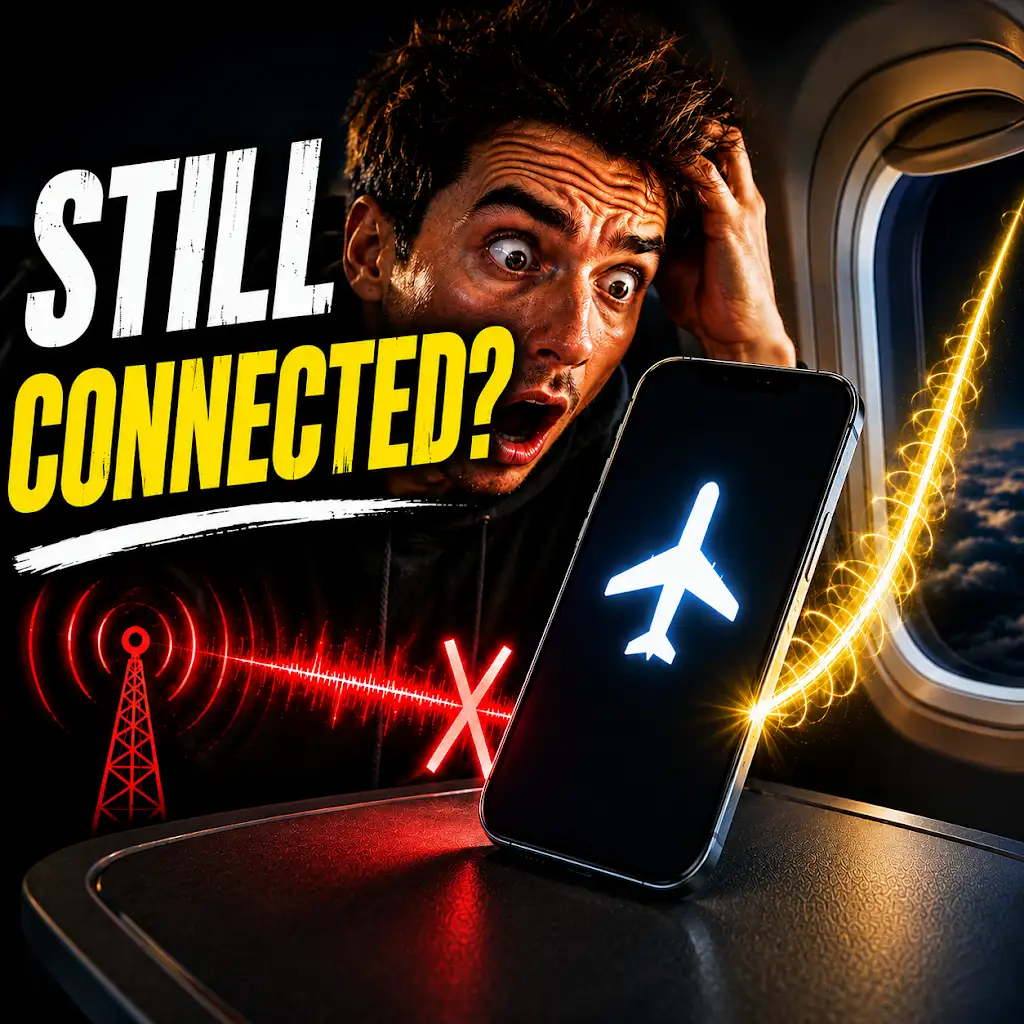
Your Phone Can Still Know Where You Are in Airplane Mode
FAQs
1. What are smartphone radio signals?
Smartphone radio signals are electromagnetic waves that are used to transmit and receive data between a smartphone and a cellular network. These signals allow smartphones to make calls, send text messages, and access the internet.
2. How do smartphone radio signals work?
Smartphone radio signals work by using radio frequency waves to communicate with nearby cellular towers. When a user makes a call or sends a message, the smartphone sends a signal to the nearest tower, which then relays the information to the recipient’s smartphone or the internet.
3. What frequency bands are used for smartphone radio signals?
Smartphone radio signals typically operate within specific frequency bands allocated by regulatory authorities. In the United States, for example, the Federal Communications Commission (FCC) allocates frequency bands such as 700 MHz, 850 MHz, 1900 MHz, and 2100 MHz for cellular communication.
4. How are smartphone radio signals affected by obstacles and distance?
Smartphone radio signals can be affected by obstacles such as buildings, trees, and hills, which can block or weaken the signal. Additionally, the strength of the signal decreases as the distance between the smartphone and the cellular tower increases, leading to potential dropped calls or slower data speeds.
5. Are smartphone radio signals secure?
Smartphone radio signals can be encrypted to provide a level of security for voice calls and data transmissions. However, it is important for users to be aware of potential security risks, such as eavesdropping or unauthorized access to their smartphone’s radio signals.