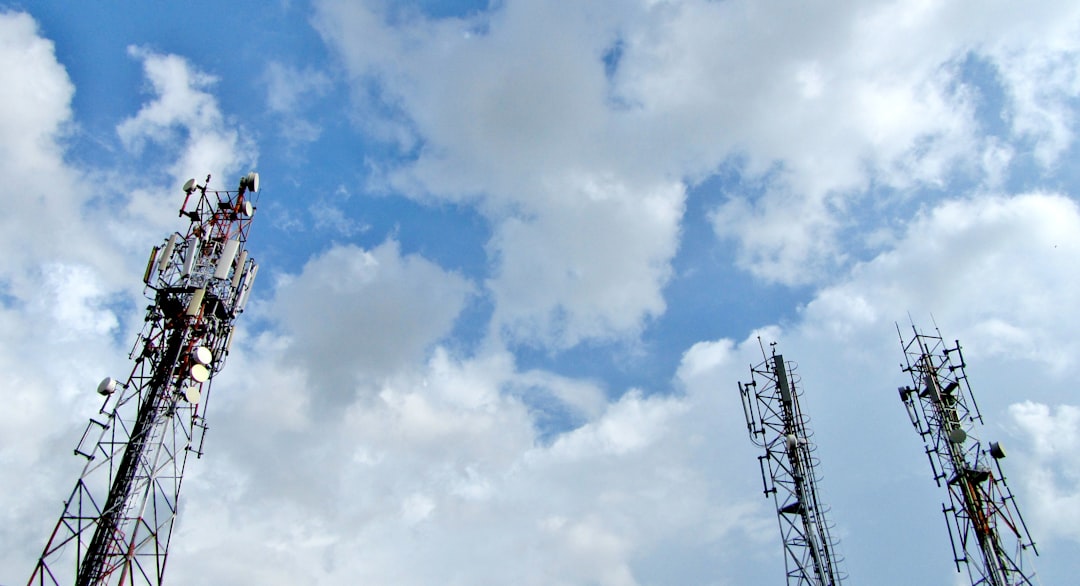
You’re scrolling through social media, the latest episode of your favorite show is buffering, or you’re in the middle of a crucial call. All of this relies on an invisible, intangible force: radio waves. But have you ever stopped to think about the intricate dance happening inside your phone to make this all possible? It’s not just a black box of technology; it’s a marvel of engineering, a miniature symphony of electronics that captures and decodes these fleeting signals. Let’s pull back the curtain and explore the fascinating journey of a radio signal from the ether into your hands, transforming into the information you see and hear.
The Invisible Orchestra: Understanding Radio Waves
Before we delve into your phone’s inner workings, it’s essential to grasp what radio waves are and how they operate. Think of them as a specific part of the electromagnetic spectrum, like light or X-rays, but with different wavelengths and frequencies. These waves are generated by the oscillation of electric charges, essentially vibrating electricity. This vibration creates a propagating disturbance in the electromagnetic field, traveling at the speed of light.
A Spectrum of Possibilities
The electromagnetic spectrum is vast, encompassing everything from extremely low-frequency (ELF) waves to gamma rays. Radio waves occupy a particular band within this spectrum, typically ranging from about 3 kHz to 300 GHz. This range is further divided into various sub-bands, each allocated for specific purposes. For instance, AM and FM radio broadcasting occupy different frequency ranges, while your Wi-Fi operates on specific bands like 2.4 GHz and 5 GHz. Cellular communication, the backbone of your mobile experience, uses even higher frequencies, allowing for the transmission of vast amounts of data.
The Wavelength-Frequency Relationship
A fundamental concept here is the inverse relationship between wavelength and frequency. Wavelength is the distance between successive crests (or troughs) of a wave, while frequency is the number of waves that pass a point per second, measured in Hertz (Hz). Longer wavelengths mean lower frequencies, and shorter wavelengths mean higher frequencies. This relationship dictates how radio waves propagate and interact with the environment. Lower frequencies can travel further and penetrate obstacles more easily, which is why they are used for long-range broadcasting. Higher frequencies, while offering greater bandwidth for data transmission, are more susceptible to obstruction.
Modulation: Encoding Information onto Waves
Radio waves themselves are just carriers. To convey information – your voice, an image, a webpage – this information needs to be “encoded” or “modulated” onto the wave. This is where modulation techniques come into play, acting like different ways of writing messages on the carrier wave.
Amplitude Modulation (AM)
One of the simplest forms is Amplitude Modulation (AM). Imagine a continuous wave. In AM, the amplitude (the height or strength) of this carrier wave is varied in accordance with the signal you want to transmit. Think of it like changing the volume of a constant tone to represent different parts of your message. While simple, AM is susceptible to noise and interference.
Frequency Modulation (FM)
Frequency Modulation (FM) is another common technique. Here, the frequency of the carrier wave is varied, while its amplitude remains constant. This is like slightly changing the pitch of a tone to convey your message. FM is generally more resistant to noise than AM, which is why it’s preferred for high-fidelity audio broadcasting.
Digital Modulation Techniques
Modern devices, including your phone, primarily use digital modulation techniques. These involve encoding information into discrete digital values (0s and 1s). Some common examples include Phase-Shift Keying (PSK) and Quadrature Amplitude Modulation (QAM). These methods allow for a much higher density of information to be transmitted, crucial for the data-rich world of mobile communication. They essentially represent different combinations of phase and amplitude shifts to encode multiple bits of data simultaneously.
Understanding how phones receive radio signals is crucial for grasping the technology behind modern communication. For an in-depth exploration of this topic, you can refer to a related article that delves into the science of radio waves and their interaction with mobile devices. This article provides insights into the mechanisms that allow smartphones to connect to cellular networks and Wi-Fi. To learn more, visit Freaky Science.
The Antenna: The Signal’s First Embrace
The journey of a radio signal into your phone begins with its antenna. This seemingly simple component is the crucial interface between the external electromagnetic world and the internal electronics. It’s designed to resonate with specific frequencies, efficiently capturing the incoming radio waves and converting them into electrical signals that your phone can understand.
Antenna Design and Functionality
Antennas are not just random pieces of metal. Their design is precisely engineered to match the frequencies they are intended to receive. For example, the length of a simple dipole antenna is often half the wavelength of the signal it’s designed to capture. Modern smartphones, with their compact form factors, employ sophisticated antenna designs that can operate across multiple frequency bands. This often involves complex geometries, multiple antenna elements, and advanced materials.
Resonating with the Signal
The core principle is resonance. When an incoming radio wave with a frequency that matches the antenna’s resonant frequency strikes it, it induces a tiny electrical current. This is akin to striking a tuning fork; if you strike it with its natural frequency, it vibrates strongly. The antenna effectively “tunes in” to the specific frequencies of the radio signals it’s designed for.
Multi-Band Antennas in Smartphones
Your smartphone doesn’t just connect to one type of network. It needs to communicate with various cellular bands (2G, 3G, 4G, 5G), Wi-Fi networks, Bluetooth, GPS, and more. This necessitates multi-band antennas. These are ingeniously designed to be receptive to a wide range of frequencies. They might achieve this through:
Incorporating Multiple Antenna Elements
Different antenna elements, each tuned to a specific frequency band, are integrated into the device. These can be strategically placed to minimize interference with each other.
Using Complex Geometries and Materials
Advanced antenna designs can exploit the physical properties of the materials and their shapes to create broadband resonance, meaning they can efficiently pick up signals over a wider range of frequencies. Think of fractal antennas or slot antennas, which pack a lot of radiating or receiving surface area into a small space.
Antenna Switching
In some cases, the phone might use antenna switching. This involves intelligently selecting the best antenna element or combination of elements for the current signal conditions to ensure optimal reception.
The RF Front-End: The Gatekeeper and Amplifier
Once the antenna captures a radio wave and converts it into a faint electrical signal, it’s passed to the Radio Frequency (RF) front-end. This is a critical stage where the signal is filtered, amplified, and prepared for further processing. It’s the first line of defense against unwanted noise and interference.
Filtering: Isolating the Desired Signal
The RF front-end’s primary job is to isolate the signal you want from all the other radio waves bombarding your phone. Imagine trying to hear a whisper in a crowded stadium; you need to filter out all the background noise.
Bandpass Filters
Bandpass filters are essential components here. They allow signals within a specific frequency range to pass through while attenuating (reducing the strength of) signals outside that range. Your phone has multiple such filters, each tuned to the frequencies used by different cellular bands, Wi-Fi, and other wireless technologies.
Reducing Interference
This filtering process is crucial for preventing interference from other devices or even different services within your own phone. Without it, your Wi-Fi signal could be drowned out by a nearby radio station, or your cellular signal could be degraded by Bluetooth noise.
Amplification: Boosting the Faint Whisper
The signals captured by the antenna are often incredibly weak, having traveled through the air and potentially bounced off numerous objects. The RF front-end employs low-noise amplifiers (LNAs) to boost these faint signals without adding significant noise of their own.
Low-Noise Amplifiers (LNAs)
LNAs are designed to have a very low noise figure, meaning they add minimal unwanted thermal or electronic noise to the signal as they amplify it. This is crucial because any noise introduced at this early stage can be amplified along with the desired signal, making it harder to decode later.
Gain Control
Modern phones also employ automatic gain control (AGC) in their RF front-end. This allows the amplifier’s strength (gain) to be adjusted dynamically based on the incoming signal strength. If the signal is strong, the gain is reduced to prevent distortion. If the signal is weak, the gain is increased to make it detectable.
The Receiver and Demodulator: Unveiling the Message
After being filtered and amplified, the electrical signal representing the radio wave is passed to the receiver and demodulator. This is where the magic truly happens: the encoded information is extracted from the carrier wave.
The Receiver Chain
The receiver chain is a complex system that takes the amplified RF signal and converts it into a digital baseband signal that the phone’s main processor can work with. This involves several stages of down-conversion, where the high-frequency RF signal is progressively reduced to lower intermediate frequencies (IF) and then to the baseband.
Mixers and Local Oscillators
Key components in this process are mixers and local oscillators (LOs). Mixers combine the incoming RF signal with a signal generated by the LO. By carefully choosing the frequency of the LO, the mixer can effectively shift the frequency of the incoming signal down to an IF or baseband. This process is repeated to bring the signal to a manageable frequency for digital processing.
Analog-to-Digital Conversion (ADC)
At some point in this chain, an Analog-to-Digital Converter (ADC) is used. Since the signals processed so far are analog (continuous electrical signals), the ADC converts them into discrete digital values (0s and 1s). This is essential because your phone’s sophisticated processors operate on digital data.
Demodulation: Extracting the Intelligence
Once the signal is in a suitable form, the demodulator takes over. Its job is to reverse the modulation process performed at the transmitter. It “listens” to how the carrier wave was altered and decodes the original information.
Reversing Modulation Techniques
If the signal was modulated using AM, the demodulator would detect the variations in amplitude. For FM, it would detect the frequency variations. For digital modulation schemes like QAM, it would analyze the combinations of phase and amplitude shifts to recover the original bits.
Error Correction
Modern communication systems employ sophisticated error correction codes. Even with careful design, radio signals can experience errors during transmission due to noise or fading. The demodulator, in conjunction with the phone’s software, uses these codes to detect and correct such errors, ensuring the integrity of the data you receive.
Understanding how phones receive radio signals is essential for grasping the technology behind modern communication. The process involves converting radio waves into electrical signals that can be processed by the device. For a deeper dive into the science behind this technology, you can explore a related article that explains the intricacies of radio signal transmission and reception. This article provides valuable insights into how various frequencies are utilized in mobile communication. To learn more, check out this informative piece on Freaky Science.
The Digital Signal Processor (DSP) and Beyond: Making Sense of It All
The digital baseband signal, now stripped of its carrier wave and ready to be interpreted, is passed to the Digital Signal Processor (DSP) and the phone’s main Central Processing Unit (CPU). This is where the raw data is transformed into the recognizable audio, video, and text that you interact with.
The Role of the DSP
The DSP is a specialized processor optimized for performing mathematical operations on digital signals. It plays a crucial role in tasks like:
Decoding and Reconstruction
The DSP meticulously decodes the digital data, reconstructing audio streams, video frames, or text messages. This involves applying complex algorithms that interpret the patterns in the digital signal.
Audio and Video Processing
For voice calls, the DSP handles audio encoding and decoding, noise reduction, and echo cancellation. For streaming video, it’s involved in decompressing and rendering the visual data.
Network Protocol Handling
The DSP also plays a part in managing the various network protocols that govern how your phone communicates. This ensures that your phone adheres to the rules of Wi-Fi, Bluetooth, or cellular networks.
The CPU: The Brain of the Operation
The phone’s main CPU takes the processed digital data from the DSP and uses it to drive the applications you interact with.
Application Integration
The CPU is responsible for feeding the reconstructed information to the relevant applications. This means displaying text on your screen, playing audio through your speakers, or rendering video.
User Interface and Control
It also handles the user interface, allowing you to interact with your phone, make selections, and control your applications. When you tap a button or swipe across your screen, the CPU processes these inputs and directs the phone’s actions.
Managing Multiple Connections
Your phone often juggles multiple wireless connections simultaneously. The CPU, in conjunction with the DSP and RF front-end, manages these connections, prioritizing them and ensuring seamless operation. For instance, it might manage an ongoing voice call while simultaneously downloading an email in the background.
In essence, the journey of a radio signal into your phone is a testament to human ingenuity. From the invisible dance of electromagnetic waves to the intricate electronic symphony within your device, each component plays a vital role in bringing the digital world to your fingertips. The next time you’re effortlessly streaming a video or having a crystal-clear conversation, take a moment to appreciate the silent, invisible magic that makes it all possible, happening at the speed of light, right inside your pocket.

Your Phone Can Still Know Where You Are in Airplane Mode
FAQs
1. How do phones receive radio signals?
Phones receive radio signals through their built-in antennas. When a phone is turned on, the antenna picks up radio frequency signals from nearby cell towers.
2. What happens to the radio signals once they are received by the phone?
Once the radio signals are received by the phone’s antenna, they are converted into electrical signals. These electrical signals are then processed by the phone’s internal circuitry and translated into voice, data, or internet connectivity.
3. What types of radio signals do phones receive?
Phones receive various types of radio signals, including signals for voice calls, text messages, and data transmission for internet connectivity. These signals are transmitted over different frequency bands, such as 2G, 3G, 4G, and 5G.
4. Can phones receive radio signals in remote or rural areas?
Phones can receive radio signals in remote or rural areas, but the signal strength and quality may vary depending on the distance from the nearest cell tower. In some cases, signal boosters or repeaters may be used to improve reception in areas with weak signal coverage.
5. Are there any factors that can affect a phone’s ability to receive radio signals?
Yes, several factors can affect a phone’s ability to receive radio signals, including distance from the nearest cell tower, physical obstacles such as buildings or terrain, electromagnetic interference, and the quality of the phone’s antenna and internal circuitry.