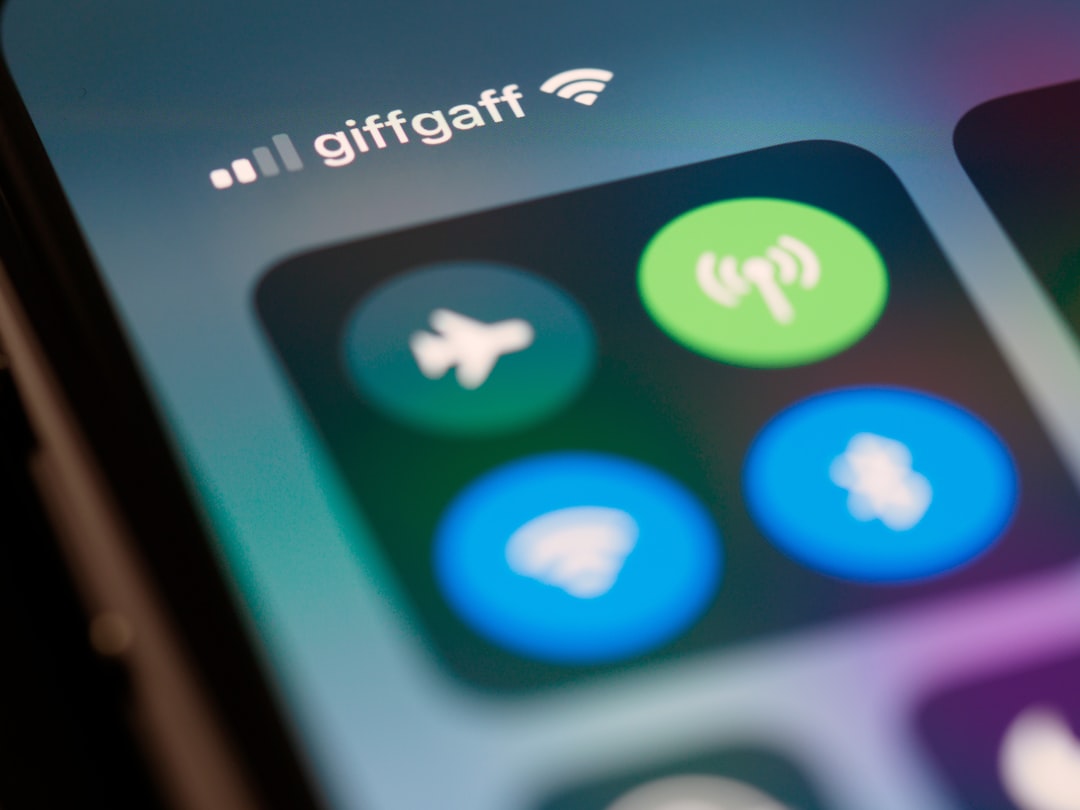
You’re sitting on the plane, the cabin lights dimmed, and the flight attendant has just announced that you can now enable airplane mode. You dutifully tap your phone and toggle the switch. But then, you remember – your wireless earbuds. They’re still connected. You press play, and your favorite podcast starts streaming. A flicker of confusion, perhaps even a touch of rebellion, crosses your mind. Why on earth does Bluetooth still work when you’re supposed to be in “airplane mode”? It seems counterintuitive, a technological loophole defying the very purpose of the restriction.
The truth, however, is far less about defying the rules and more about understanding the subtle but significant differences in radio wave emissions and their intended use. Airplane mode, in its essence, is a broad-stroke safety measure designed to prevent interference with critical aircraft systems. And while it disables certain communication methods, it’s remarkably permissive when it comes to the low-power, short-range handshake of Bluetooth.
The narrative surrounding airplane mode often conjures images of all radio signals being silenced, a complete digital blackout. This stems from the days when even basic mobile phone transmissions were viewed with suspicion. However, modern aviation technology and the evolution of wireless communication have led to a more nuanced approach. The Federal Aviation Administration (FAA) and other aviation authorities have consistently refined their guidelines, recognizing that not all radio frequencies or transmission powers pose the same threat.
The Spectrum of Signals: Understanding Aircraft Interference
To truly grasp why your Bluetooth works in airplane mode, you need to step back and consider the electromagnetic spectrum and how different devices interact with it. Aircraft are incredibly sophisticated machines, relying on a vast array of radio communications for navigation, air traffic control, and internal systems. These systems operate on specific frequencies and with carefully managed power outputs.
Aircraft Communication and Navigation Systems
Imagine the cockpit of an airplane. It’s a symphony of radio signals. There’s the communication between pilots and air traffic control (ATC) on VHF frequencies, the navigation signals from VOR (VHF Omnidirectional Range) stations, the data streams from GPS satellites, and the signals from the aircraft’s own radar and transponder. Any unauthorized or unmanaged radio transmissions could, in theory, introduce noise or corruption into these critical streams, leading to misinterpretations, loss of signal, or even erroneous readings.
The Historical Context of Airplane Mode
In the early days of commercial aviation, mobile phones were a relatively new and powerful technology. Their cellular radios transmitted at a higher power than is typical for modern Bluetooth devices. The concern was that these transmissions could potentially interfere with the sensitive avionics. Hence, the blanket “airplane mode” was introduced as a precautionary measure. It was simpler and safer to disable all cellular and Wi-Fi transmissions than to try and differentiate between potentially harmful and harmless signals.
Modern Aviation’s Evolving Stance
As technology has advanced, so too has the understanding of radio wave propagation and its impact. Aircraft systems are now more shielded, and the power levels of many consumer electronic devices have been reduced. Aviation authorities have conducted extensive testing and research, leading to a more refined understanding of what constitutes a genuine risk. This has paved the way for allowing certain wireless technologies, like Bluetooth and Wi-Fi (when explicitly permitted for in-flight use), to operate during flights, even when airplane mode is technically engaged.
When flying, many passengers wonder why Bluetooth functionality remains operational even when their devices are set to airplane mode. This is primarily because airplane mode disables cellular connections while allowing certain wireless technologies, like Bluetooth, to function. For a deeper understanding of this topic, you can read a related article that explains the intricacies of Bluetooth and its compatibility with airplane mode at Freaky Science.
Bluetooth’s Design Philosophy: Low Power, Short Range
The key to understanding Bluetooth’s resilience in airplane mode lies in its fundamental design principles: low power consumption and short-range communication. These characteristics are not accidental; they are deliberate choices that make Bluetooth an ideal technology for personal area networks and device connectivity.
The Bluetooth Protocol Stack Explained
Bluetooth operates using a complex but efficient protocol stack. At its core, it utilizes frequency hopping spread spectrum (FHSS) in the 2.4 GHz industrial, scientific, and medical (ISM) band. This means that instead of transmitting on a single frequency, Bluetooth devices rapidly hop between many different frequencies within a specific range. This hopping pattern makes the signal more resistant to interference and harder to detect, which is a crucial aspect of its security and reliability.
Power Output: A Tiny Whisper in the Electromagnetic Roar
Compared to the power output of a cellular radio or even a Wi-Fi transmitter, a Bluetooth radio is remarkably meek. A typical Bluetooth device, like your earbuds or smartwatch, transmits at a power level of around 1 milliwatt (mW). To put that into perspective, a typical Wi-Fi router might transmit at 100 mW, and a cellular phone can reach several watts during peak usage. This minuscule power output means that the electromagnetic footprint of a Bluetooth device is extremely small, limiting its potential to cause widespread interference.
Range Limitations: The Personal Bubble of Connectivity
Bluetooth is designed for close-proximity communication. Its effective range is typically around 10 meters (33 feet), although some newer versions can extend this slightly. This limited range is a direct consequence of its low power output. It’s not intended to broadcast its signal across vast distances, unlike cellular or Wi-Fi signals. This localized nature further reduces the likelihood of it impacting sensitive aircraft systems, which are designed to be protected from signals originating far beyond the aircraft’s immediate vicinity.
Airplane Mode: Not a Complete Radio Blackout
The term “airplane mode” is a bit of a misnomer. It doesn’t necessarily shut down all radio transmissions. Instead, it’s a setting that disables specific, high-power, long-range communication radios that are deemed potentially disruptive during flight.
The Role of Cellular Radios
The primary function of airplane mode is to disable your device’s cellular radio. This is the radio that connects you to cellular towers for making calls, sending text messages, and accessing mobile data. These radios can transmit at significant power levels, and their continuous searching for a cellular signal could potentially interfere with aircraft communication systems. Therefore, these are the first to be silenced when you activate airplane mode.
Wi-Fi and its Nuances
Wi-Fi is a more complex case. Historically, Wi-Fi was also disabled in airplane mode. However, many airlines now offer in-flight Wi-Fi services. This has led to a modification of the airplane mode functionality. When you enable airplane mode, your Wi-Fi radio is typically turned off. However, you can then manually re-enable Wi-Fi within airplane mode if the airline provides a connection. This demonstrates the evolving understanding of radio interference and the practicalities of modern air travel.
The Permitted Exceptions: Bluetooth and GPS
Bluetooth and GPS are often the exceptions to the blanket shutdown. As discussed, Bluetooth’s low power and short range make it a low-risk technology. GPS, on the other hand, receives signals from satellites; it doesn’t transmit, so it poses no interference risk to aircraft systems. This is why your GPS location services often continue to function even when airplane mode is on.
Why Bluetooth is the “Safe Bet”
Given its inherent characteristics, Bluetooth has become the de facto standard for personal device connectivity in situations where broader radio transmissions are restricted. Its design makes it unobtrusive and highly unlikely to cause the kind of interference that aviation authorities are concerned about.
Bluetooth’s Low Emission Profile
The low milliwatt output of Bluetooth devices means their electromagnetic emissions are minimal. Think of it like the difference between a loud siren and a gentle whisper. The siren (a cellular signal) can be heard for miles and could potentially drown out important sounds. The whisper (a Bluetooth signal) is only audible to those very close by and is unlikely to disrupt anything significant at a distance.
The Absence of Continuous Handshakes
Unlike cellular radios that are constantly searching for the strongest signal from a tower, Bluetooth devices establish a direct connection with a specific paired device. Once connected, they maintain that connection with minimal signaling. This absence of constant, power-intensive handshakes with a distant network further reduces their potential for causing interference.
Focus on Personal Area Networks
Bluetooth is engineered for Personal Area Networks (PANs) – small, localized networks for connecting devices in close proximity. This inherent limitation in range and power is precisely what makes it suitable for scenarios where broad-spectrum transmissions are not desired or permitted. Your earbuds connecting to your phone are a prime example of a PAN.
When flying, many passengers wonder why Bluetooth can still function while their devices are in airplane mode. This is because airplane mode disables cellular signals but allows users to connect to Bluetooth devices, which do not interfere with aircraft systems. For a deeper understanding of the science behind this feature, you can check out a related article that explores the intricacies of wireless technology and its applications. To learn more, visit Freaky Science.
Your Device, Your Choice: Managing Connectivity in Flight
While Bluetooth is generally permitted, it’s always wise to be aware of the airline’s specific policies. The rules can sometimes vary depending on the airline, the aircraft type, and the stage of the flight.
Airline Policies and Recommendations
Most airlines now permit the use of Bluetooth devices throughout the flight, provided airplane mode is enabled. However, it’s always a good practice to check the in-flight magazine or listen to the cabin crew’s announcements for any specific instructions. Some airlines might ask you to disable Bluetooth during takeoff and landing, as a precautionary measure, even though the risk is minimal.
When to Disable Bluetooth for Peace of Mind
While Bluetooth is generally safe, some travelers prefer to disable it during critical phases of flight like takeoff and landing simply for peace of mind. If you are concerned about any potential, however unlikely, interference, it’s perfectly fine to toggle off Bluetooth along with your other wireless connections. The few minutes of silence are unlikely to be detrimental to your enjoyment of the flight.
The Future of In-Flight Connectivity
As technology continues to evolve, we may see even more seamless integration of personal devices in aviation. Regulations are constantly being reviewed and updated based on new research and technological advancements. The trend is towards allowing more personal wireless devices, provided they meet stringent safety and interference standards. So, the next time you enjoy your music or podcasts on a flight thanks to Bluetooth, you can appreciate the clever engineering that makes it all possible within the context of airplane mode. It’s a testament to how understanding the nuances of technology allows us to enjoy its benefits responsibly, even in the skies.
Your Phone Can Still Know Where You Are in Airplane Mode
FAQs
1. How does Bluetooth work in airplane mode?
Bluetooth technology operates on a different frequency than the ones used by airplane communication systems. Therefore, it does not interfere with the aircraft’s communication and navigation systems, allowing it to function even when the device is in airplane mode.
2. Is it safe to use Bluetooth in airplane mode?
Yes, it is safe to use Bluetooth in airplane mode. Bluetooth technology operates on a low power and short-range frequency, which does not pose any risk to the aircraft’s communication and navigation systems.
3. Can I use Bluetooth for wireless headphones or speakers in airplane mode?
Yes, you can use Bluetooth for wireless headphones or speakers in airplane mode. As long as the Bluetooth device is within the approved usage guidelines for the airline, it should not interfere with the aircraft’s systems.
4. Why do airlines allow the use of Bluetooth in airplane mode?
Airlines allow the use of Bluetooth in airplane mode because the technology does not interfere with the aircraft’s communication and navigation systems. This allows passengers to continue using Bluetooth-enabled devices for entertainment or other purposes during the flight.
5. Are there any restrictions on using Bluetooth in airplane mode?
Some airlines may have specific restrictions on the use of Bluetooth devices, even in airplane mode. It is important to check with the airline’s guidelines and regulations before using Bluetooth devices during the flight.