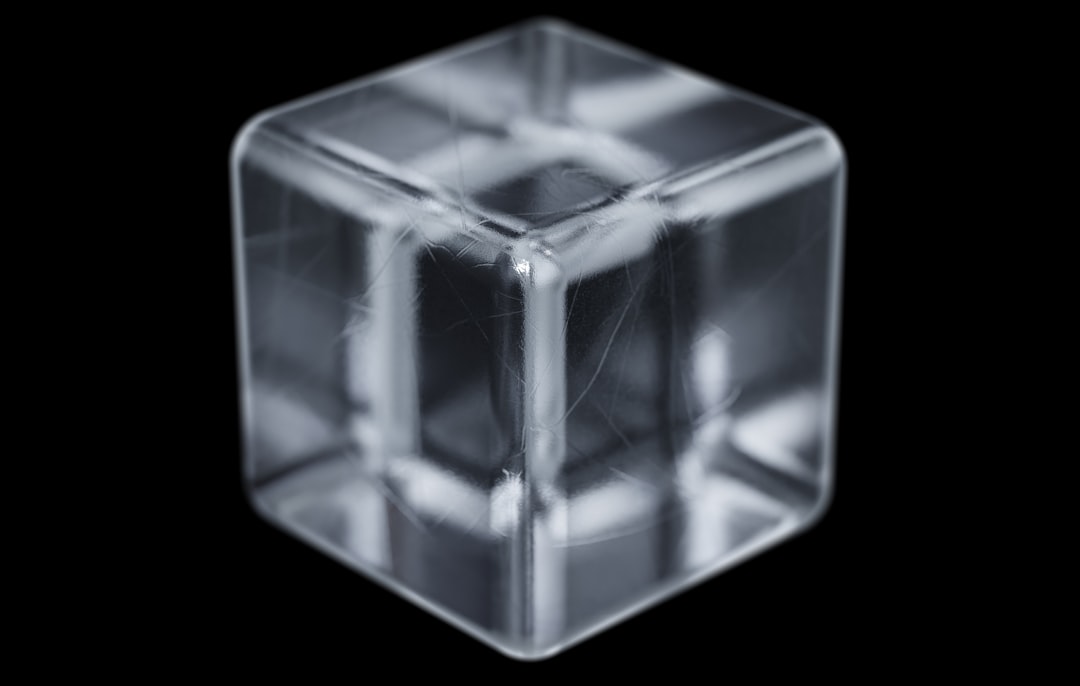
The world of everyday phenomena often holds hidden depths, and few substances exhibit such commonplace yet enigmatic behavior as solid ice. For most, ice is a simple frozen state of water, a mere utilitarian object for chilling drinks or forming winter landscapes. However, beneath its seemingly inert exterior lies a complex and fascinating world of molecular interactions that explain its decidedly peculiar habits. This article will delve into the mystery of solid ice’s strange behavior, revealing how its unique molecular structure orchestrates a symphony of surprising properties.
At the heart of ice’s unusual nature lies the water molecule itself. A single water molecule, H₂O, is comprised of one oxygen atom covalently bonded to two hydrogen atoms. This seemingly simple arrangement, however, is anything but. The oxygen atom, being more electronegative than the hydrogen atoms, pulls the shared electrons closer to itself. This creates a significant polarity within the molecule, with a partial positive charge on the hydrogen atoms and a partial negative charge on the oxygen atom. This inherent polarity is the foundation upon which all of water’s remarkable properties, including those of ice, are built.
The Geometry of Polarity
The bent geometry of the water molecule is crucial to its polarity. The two hydrogen atoms are not arranged in a straight line with the oxygen atom. Instead, they form an angle of approximately 104.5 degrees. This tetrahedral electron geometry, with the oxygen atom at the apex, ensures that the molecule has a distinct positive end and a distinct negative end, making it a powerful dipole. Without this specific shape, water would behave more like a nonpolar substance, and the formation of the intricate ice crystal lattice would be impossible.
The Hydrogen Bond: The Architect of Ice
The true magic of ice emerges when these polar water molecules come together. The partial positive charge on the hydrogen atoms of one water molecule is attracted to the partial negative charge on the oxygen atom of a neighboring water molecule. This intermolecular force, known as a hydrogen bond, is weaker than covalent or ionic bonds but is incredibly abundant in water and ice. In solid ice, these hydrogen bonds form a highly ordered, three-dimensional crystalline network, the hexagonal lattice structure that is characteristic of ordinary ice, known as Ice Ih.
Solid ice exhibits peculiar behaviors that can be attributed to its unique molecular structure and the hydrogen bonding between water molecules. For a deeper understanding of these phenomena, you can explore the article on the topic at this link: Freaky Science. This resource delves into the science behind ice’s unusual properties, including its lower density compared to liquid water and its ability to insulate rather than conduct heat, which are crucial for understanding the environmental implications of ice in our climate system.
The Hexagonal Lattice: A Framework of Order
The most striking manifestation of ice’s peculiar behavior stems from its crystalline structure. The hexagonal lattice of Ice Ih is not a random jumble of water molecules but a precisely arranged framework dictated by the geometry of hydrogen bonding. Each water molecule in the lattice is hydrogen-bonded to four other water molecules – two through its oxygen atom and two through its hydrogen atoms. This creates a repeating pattern of six-membered rings of water molecules.
Open Structure and Low Density
The most counterintuitive consequence of this ordered, hydrogen-bonded structure is that ice is less dense than liquid water. In liquid water, molecules are closer together, and hydrogen bonds are constantly breaking and reforming, allowing for more efficient packing. In ice, the rigid, open hexagonal structure creates significant empty space between the water molecules. This “openness” means that a given volume of ice contains fewer water molecules than the same volume of liquid water, leading to its lower density. This is why ice floats.
The Anomaly of Floating Ice
The fact that ice floats is a direct consequence of its lower density. In most substances, the solid form is denser than the liquid form. The floating of ice is a critical phenomenon for life on Earth. If ice sank, lakes and oceans would freeze from the bottom up, eventually killing all aquatic life. The insulating layer of ice on the surface protects the water below, allowing for survival during freezing temperatures. This is a remarkable example of how a seemingly simple molecular property has profound ecological implications.
Variations in Crystal Structures
While Ice Ih is the most common form of ice encountered on Earth’s surface, it’s not the only one. Under different temperature and pressure conditions, water molecules can arrange themselves into a staggering array of other crystalline structures, known as polymorphs. There are at least 19 known forms of ice, each with its own unique lattice arrangement and properties. These can range from cubic ice to amorphous ice, showcasing the remarkable versatility of hydrogen bonding.
High-Pressure Ices: A Different World
Under extreme pressures, water molecules are forced into more compact arrangements, leading to the formation of high-pressure ice phases. Ice II, for example, has a more complex monoclinic structure, while Ice III has a tetragonal structure. These high-pressure polymorphs often exhibit metallic properties or superconductivity, highlighting the extraordinary transformations that can occur when the fundamental building blocks of matter are subjected to extreme forces.
The Supercooled State: Defying Freezing
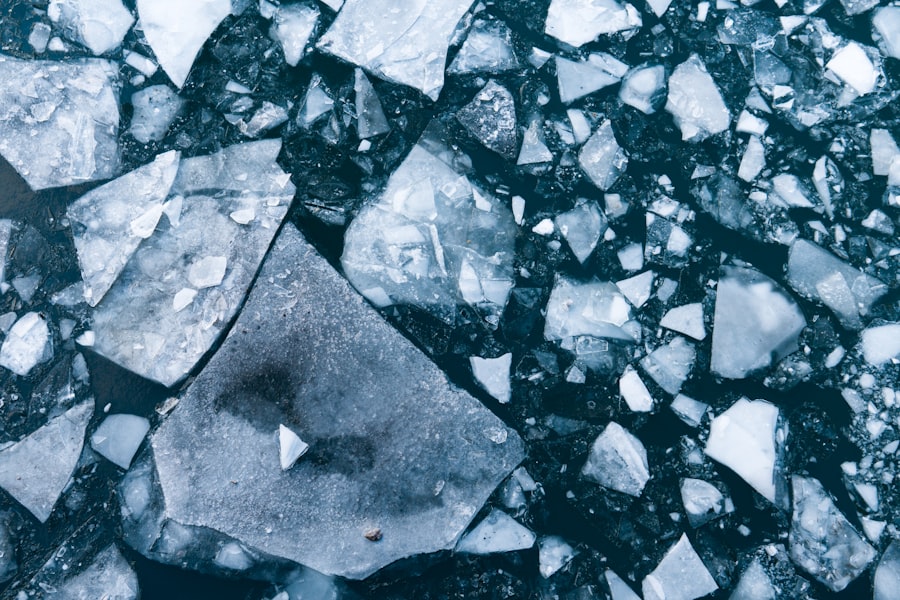
Another perplexing behavior of water and ice is the phenomenon of supercooling. Liquid water can often be cooled below its freezing point (0°C or 32°F) without solidifying. This occurs when the water is exceptionally pure and undisturbed, lacking nucleation sites – impurities or imperfections – that typically initiate the formation of ice crystals.
The Role of Nucleation
Nucleation is the critical first step in the crystallization process. In the absence of suitable nucleation sites, water molecules remain in a liquid state even at sub-zero temperatures. It is only when a disturbance, such as shaking the container or introducing a seed crystal, provides a surface for molecules to organize, that rapid freezing occurs. This demonstrates that the formation of solid ice is not merely a passive process but requires a trigger.
Everyday Examples of Supercooling
Supercooling is not just a laboratory curiosity; it can be observed in everyday life. For instance, refrigerators often cool beverages to below freezing without them turning into ice. This is why a soda can might explode if it freezes unexpectedly when shaken. Understanding supercooling is crucial in various industrial processes, from food preservation to weather forecasting, where controlling ice formation is paramount.
Homogeneous vs. Heterogeneous Nucleation
The nucleation process can be broadly categorized into homogeneous and heterogeneous nucleation. Homogeneous nucleation occurs spontaneously within the bulk liquid when a cluster of molecules achieves a critical size and stability. Heterogeneous nucleation, on the other hand, occurs on the surface of foreign particles or imperfections within the liquid. In most natural scenarios, heterogeneous nucleation is far more common, as impurities are almost always present.
Surface Properties: The Slippery Secret
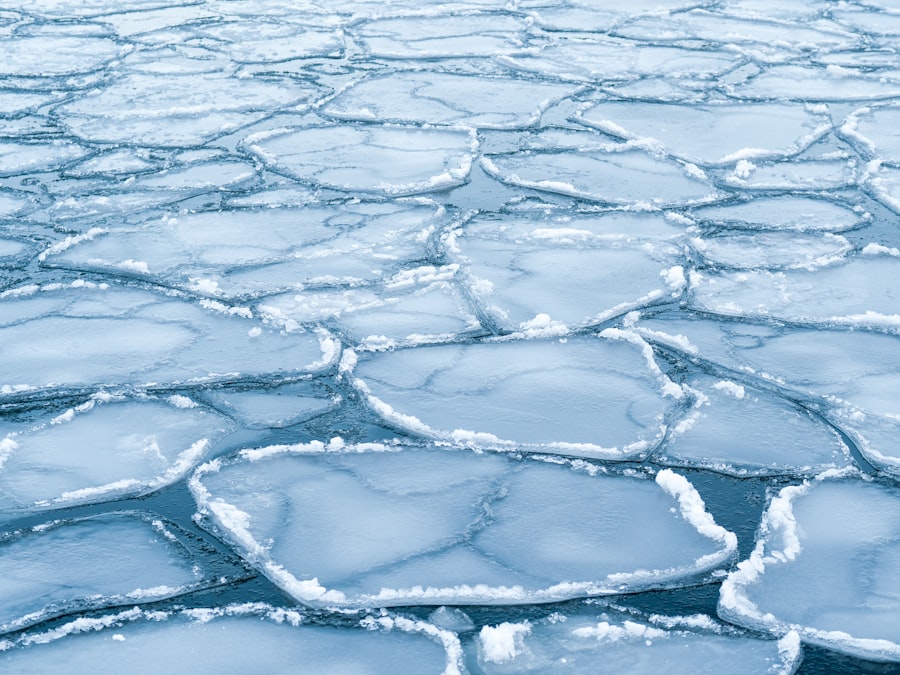
Perhaps the most famous strange behavior of ice is its slipperiness. While it might seem intuitive that a solid surface would offer traction, ice presents a distinct challenge to our footing. The explanation for this slipperiness lies not in the bulk of the ice itself but in the properties of its very surface layer.
The Quasi-Liquid Layer
Recent scientific understanding suggests that the surface of ice, even well below its melting point, is not entirely solid. Instead, a thin, mobile layer of liquid-like water, often referred to as the “quasi-liquid layer,” exists on the surface. This layer is thought to be a result of the dynamic nature of hydrogen bonds at the surface, where fewer bonding partners are available, leading to increased molecular motion.
Friction and Pressure Melting
This quasi-liquid layer acts as a lubricant, significantly reducing friction between the ice surface and any object in contact with it. Traditional explanations often focused on pressure melting, where the weight of an object increases pressure on the ice, slightly lowering its melting point and creating a thin film of water. While pressure melting plays a role, especially under high loads like a skater’s blade, the existence of the quasi-liquid layer provides a more comprehensive explanation for slipperiness across a range of conditions.
Implications for Skaters and Animals
The slipperiness of ice has profound implications for activities like ice skating, where the low friction allows for effortless gliding. For animals adapted to icy environments, such as polar bears and penguins, their specially adapted paws and claws can provide sufficient grip on this slippery surface. The evolutionary adaptations of these creatures highlight the importance of understanding and interacting with the unique surface properties of ice.
The Microscopic View of Friction
At a microscopic level, the interaction between a sliding object and the ice surface involves the breaking and reforming of intermolecular bonds. The presence of the quasi-liquid layer facilitates this process, allowing for easier slippage. Even the minuscule imperfections on both surfaces play a role in the overall frictional forces.
Scientists have long been fascinated by the peculiar behavior of solid ice, which can sometimes seem counterintuitive compared to other materials. For a deeper understanding of this phenomenon, you might find the article on the topic quite enlightening. It explores the unique molecular structure of ice and how it leads to unusual properties, such as its ability to float on water. To learn more about these intriguing characteristics, you can read the full article here.
Beyond Earth: The Diversity of Ices
| Reasons for Strange Behavior of Solid Ice |
|---|
| 1. Expansion upon freezing |
| 2. Hydrogen bonding |
| 3. Hexagonal crystal structure |
| 4. Lower density than liquid water |
| 5. Anomalous thermal expansion |
The strange behaviors of solid ice are not confined to our planet. In the vastness of space, water ice exists in a multitude of forms and environments, leading to even more extraordinary phenomena. From comets to the moons of outer planets, ice plays a crucial role in celestial processes.
Ices in the Solar System
Water ice is abundant throughout our solar system, found on the surfaces of moons like Europa and Enceladus, as well as in the polar caps of Mars. The behavior of ice under the extreme temperatures and pressures found on these celestial bodies can be vastly different from what we observe on Earth. For instance, the cryovolcanism observed on Enceladus, where plumes of water vapor erupt from its surface, is a direct result of internal heating and the properties of subsurface ice.
Subsurface Oceans and Astrobiology
The presence of liquid water beneath icy shells on moons like Europa has sparked intense interest in the possibility of extraterrestrial life. If these subsurface oceans harbor the right conditions, they could potentially support microbial ecosystems. The study of Earth’s ice, including its ability to form vast subsurface reservoirs, provides valuable insights into the potential for life beyond our planet.
The Amorphous Forms of Ice
In interstellar space and under laboratory conditions, amorphous forms of ice can exist. Unlike crystalline ice, which has a highly ordered structure, amorphous ice lacks long-range order in its molecular arrangement. These forms can be produced by rapidly cooling water vapor, preventing the molecules from organizing into a crystal lattice. Amorphous ices exhibit different thermal and mechanical properties compared to their crystalline counterparts, making them of interest in fields like astrophysics and material science.
The Mysteries of Amorphous Ice Formation
The exact mechanisms by which amorphous ice forms and its precise structural properties remain areas of active research. Scientists are investigating how the cooling rate, pressure, and presence of other molecules influence the transition from vapor to amorphous solid. This exploration is crucial for understanding the composition and evolution of icy bodies in space.
In conclusion, the familiar solid form of water, ice, is a substance of remarkable complexity. Its peculiar behaviors, from floating to slipperiness and its varied crystalline structures, are all intricately linked to the unique polarity and hydrogen-bonding capabilities of the water molecule. As we continue to explore the universe and delve deeper into the fundamental properties of matter, the study of solid ice promises to unveil further mysteries and deepen our appreciation for the elegant science that governs our world and beyond.

Why Ice Is Slippery Is Stranger Than You Think
FAQs
What is the strange behavior of solid ice?
Solid ice behaves strangely because it expands when it freezes, unlike most other substances which contract when they solidify. This expansion is due to the unique arrangement of water molecules in the solid state.
Why does solid ice float on water?
Solid ice floats on water because it is less dense than liquid water. This is also a result of the unusual expansion of water when it freezes. This property is important for aquatic ecosystems, as it allows for the formation of an insulating layer of ice on the surface of bodies of water, protecting the life below.
What is the structure of solid ice?
Solid ice has a hexagonal crystal structure, which is responsible for its unique properties. The arrangement of water molecules in this structure creates open spaces, making ice less dense than liquid water and causing it to expand when it freezes.
How does the behavior of solid ice impact the environment?
The unusual behavior of solid ice has significant impacts on the environment. For example, the expansion of ice can cause damage to roads, buildings, and infrastructure. Additionally, the ability of ice to float on water plays a crucial role in regulating the Earth’s climate by influencing ocean circulation patterns.
Can the strange behavior of solid ice be observed in everyday life?
Yes, the strange behavior of solid ice can be observed in everyday life. For example, ice cubes float in a glass of water, and the expansion of freezing water can cause pipes to burst in cold weather. These phenomena are direct results of the unique properties of solid ice.