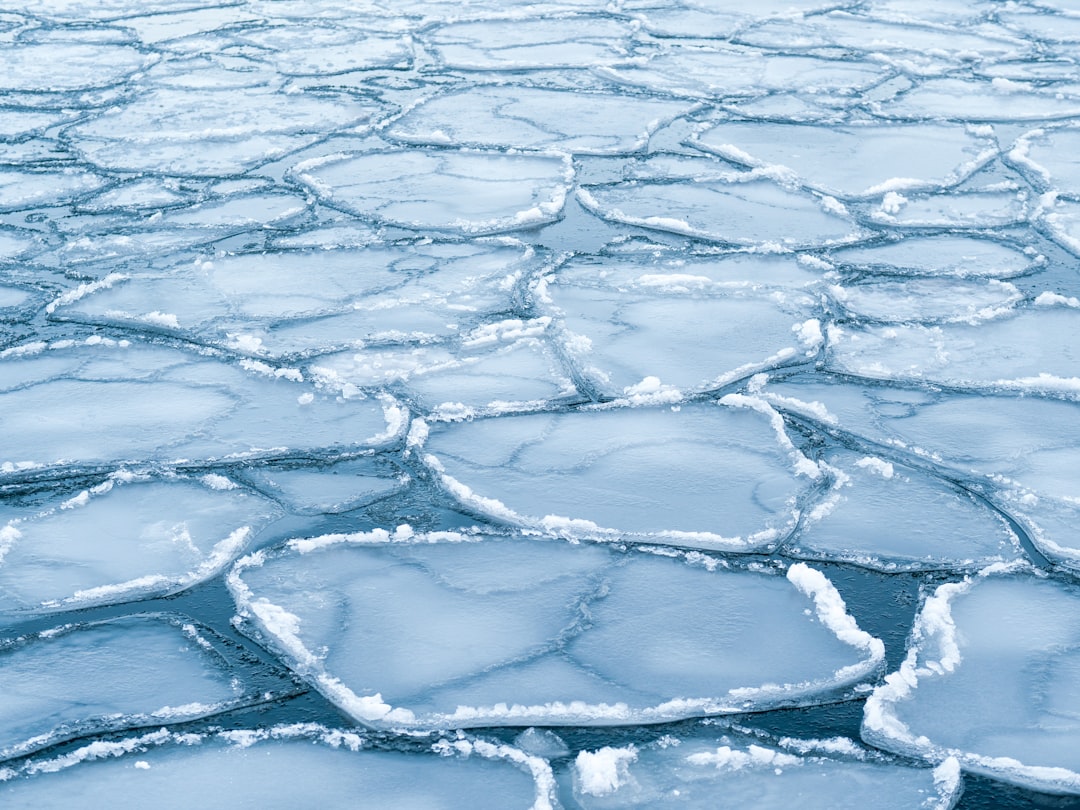
The seemingly simple act of ice skating, or even just slipping on a frozen puddle, belies a complex interplay of physics at the most fundamental level. While we perceive ice as a solid, smooth surface, its interaction with a moving object is governed by a fascinating realm of microscopic phenomena. Understanding the microscopic physics of ice friction reveals why skates glide so effortlessly and why a sudden stop can be so challenging. It’s a world where temperature, pressure, and the very molecular structure of water molecules conspire to create a slippery, yet sometimes resistant, surface.
At the heart of ice friction lies a long-standing, yet now refined, theory that explains its remarkable slipperiness, particularly under pressure. For decades, the prevailing explanation was the “pressure melting theory.” This idea suggested that the immense pressure exerted by a sharp blade, for instance, could actually lower the freezing point of ice. According to this hypothesis, the weight of an object pressing down on the ice forces the water molecules at the interface to transition into a liquid state, even below 0°C (32°F). This thin layer of liquid water then acts as a lubricant, dramatically reducing friction.
Historical Context and Early Observations
The pressure melting theory was first proposed in the 19th century by notable scientists like Michael Faraday. Faraday himself conducted experiments with ice, observing how two blocks of ice would fuse together when placed under pressure, even if the ambient temperature was below freezing. This phenomenon, known as regelation, provided strong empirical evidence for the concept of pressure-induced melting. The idea resonated because it offered a straightforward explanation for a common observation: that ice is slipperier when compressed.
Limitations and Refinements of the Pressure Melting Theory
While pressure melting provides a partial explanation, it is not the complete story. Modern research has shown that the pressure required to significantly lower the freezing point of ice is considerably higher than what is typically generated by everyday objects like skates. For a standard ice skate blade, the pressure is usually insufficient to induce substantial melting solely through this mechanism. This realization led scientists to explore other contributing factors.
The Role of Blade Sharpness
The sharpness of an ice skate blade plays a crucial role, not just in the pressure it exerts, but in how that pressure is distributed. A sharper blade concentrates the force over a much smaller area, leading to higher localized pressure. However, even with very sharp blades, the pressure melting alone cannot fully account for the low friction observed, especially at typical skating speeds and temperatures. This suggests that other physical processes are at play.
Temperature Dependence of Slipperiness
One of the key observations that challenged the sole reliance on pressure melting was the temperature dependence of ice friction. While pressure melting predicts increased slipperiness with increased pressure, experimental data showed that ice can become less slippery at very low temperatures, even under pressure. This indicated that the liquid layer might not be solely a product of pressure.
Recent studies in the microscopic physics of ice friction have shed light on the complex interactions at play when ice comes into contact with various surfaces. For a deeper understanding of this fascinating topic, you can explore the related article that discusses the underlying mechanisms and implications of ice friction in different environments. To read more, visit this article.
The Dominance of Frictional Heating
As our understanding of ice friction evolved, another significant mechanism emerged as a primary driver of slipperiness: frictional heating. This theory posits that the motion of an object across the ice generates heat at the microscopic interface. This heat, in turn, causes a thin layer of the ice surface to melt, creating the lubricating film of water. This mechanism is far more effective at lower temperatures, where pressure melting is less significant.
The Science of Frictional Heat Generation
When two surfaces rub against each other, kinetic energy is converted into thermal energy. At the microscopic level, this involves the vibration of molecules at the points of contact. For ice, these vibrations are particularly effective at breaking the weak hydrogen bonds that hold the water molecules in their crystalline structure. This localized energy input leads to a phase transition from solid ice to liquid water.
Temperature as a Key Factor in Frictional Heating
The rate of frictional heating is highly dependent on the ambient temperature. At temperatures closer to the melting point, less energy is required to transition ice to water, and thus frictional heating is more efficient in creating a lubricating layer. Conversely, at very low temperatures, the ice lattice is more rigid, and more energy is needed to break the bonds, making frictional heating less pronounced. This explains why ice can feel “dry” and less slippery at extremely low temperatures.
Surface Roughness and Contact Points
The microscopic roughness of both the ice surface and the sliding object plays a vital role in frictional heating. Even seemingly smooth surfaces have microscopic asperities – tiny peaks and valleys. It is at these points of contact that the majority of the friction and subsequent heating occurs. A smoother ice surface generally leads to less friction and less heating, but perfect smoothness is unattainable.
Sliding Speed and Its Influence
The speed at which an object slides across the ice also influences frictional heating. Higher speeds generally lead to more rapid conversion of kinetic energy into heat, thus increasing the rate of melting. This can explain why skaters can achieve higher speeds and perform more elaborate maneuvers when moving quickly. However, excessive speed can also lead to other complexities, such as instabilities in the water layer.
The Crucial Role of Surface Chemistry and Contaminants

Beyond the purely mechanical aspects of pressure and friction, the chemical nature of the ice surface and the presence of impurities play a surprisingly significant role in determining its slipperiness. Ice is not always pure water. It can contain dissolved gases, salts, and other substances that alter its properties.
Impurities and the Melting Point Depression
The presence of impurities in water, particularly salts, is well-known to lower its freezing point. When ice forms with dissolved substances, these impurities tend to congregate at the crystal boundaries. This makes it easier for the ice to melt, even at temperatures below the normal freezing point of pure water. This effect is critical in real-world scenarios, such as roads being salted to prevent ice formation or to make it melt more readily.
Dissolved Gases in Ice
Even dissolved gases, such as oxygen and nitrogen from the atmosphere, can influence the melting point of ice. While their effect is less dramatic than that of salts, they can still contribute to a slight depression of the freezing point, and thus to increased slipperiness. The precise concentration and type of dissolved gases can subtly alter the ice’s frictional behavior.
Surface Contamination from Sliding Objects
The object sliding on the ice also introduces its own chemical signature. For example, skate blades are often coated with oils or waxes, intended to reduce friction. These materials can interact with the ice surface, creating a composite layer that is more slippery than pure ice. Similarly, the wear and tear of a sliding object can release fine particles that can either increase or decrease friction depending on their nature.
The “Slickness” of the Blade Itself
The material composition and surface finish of an ice skate blade are carefully engineered. Stainless steel is commonly used for its durability and corrosion resistance. However, the microscopic texture and any residual manufacturing lubricants can influence the initial interaction with the ice.
Electrical Phenomena and Ice Friction
In recent years, research has also begun to explore the potential role of electrical phenomena in ice friction. While still an area of active investigation, there is evidence to suggest that charge transfer and surface polarization can contribute to the observed slipperiness.
Surface Charge and Dielectric Properties
Ice is a polar molecule, meaning it has a slight electric dipole moment. When ice comes into contact with another material, especially a conductor or a material with different dielectric properties, charge transfer can occur. This can lead to the formation of charged layers on the ice surface, which in turn can influence the interaction with the sliding object.
The Formation of Surface Dipoles
The inherent polarity of water molecules means that when they are arranged in the ice lattice, there can be a net charge distribution on the surface. This surface charge can interact electrostatically with the surface of the sliding object, potentially creating repulsive forces that reduce adhesion and thus friction.
Triboelectric Effects on Ice
The triboelectric effect, the generation of static electricity through friction, might also play a role. When two dissimilar materials rub against each other, electrons can be transferred from one to the other, creating a charge imbalance. If this occurs on an ice surface, the resulting electrostatic forces could contribute to lubrication or, in some cases, to increased friction.
Ion Migration and Surface Potential
There is also evidence suggesting that ion migration within the ice structure, particularly at the surface, can contribute to surface potential variations. These variations can influence the interaction with the sliding object and the dynamics of the water layer.
Recent studies have shed light on the microscopic physics of ice friction, revealing the intricate interactions at play when surfaces slide against each other in icy conditions. For a deeper understanding of this fascinating topic, you can explore a related article that discusses the fundamental principles governing ice friction and its implications in various fields. This research not only enhances our knowledge of physics but also has practical applications in winter sports and transportation safety. To read more about these insights, visit this article.
Advanced Research and Future Directions
| Metrics | Data |
|---|---|
| Friction Coefficient | 0.1 – 0.3 |
| Surface Roughness | 0.1 – 10 micrometers |
| Temperature | -10°C to 0°C |
| Ice Crystal Structure | Hexagonal |
The microscopic physics of ice friction is a dynamic field of research, with scientists continually refining existing theories and exploring new avenues. Advanced techniques are being employed to probe the ice-air or ice-solid interface at unprecedented resolutions.
Atomic Force Microscopy (AFM) Studies
Atomic Force Microscopy (AFM) allows researchers to image and manipulate surfaces at the atomic scale. Using AFM, scientists can directly observe the interactions between individual molecules and the ice surface. This has provided crucial insights into the nature of the lubricating layer and the forces involved in friction.
Probing Surface Forces
AFM can be used to measure the forces between the tip of the microscope and the ice surface as it slides. This allows for the quantification of adhesion forces and frictional forces at the nanometer scale, providing direct experimental evidence for theoretical models.
Computational Modeling and Simulations
Modern computational power allows for sophisticated simulations of molecular interactions. These simulations can model the behavior of water molecules at the ice surface under various conditions of temperature, pressure, and shear.
Molecular Dynamics Simulations
Molecular dynamics simulations can track the movement of individual atoms and molecules over time. By simulating the sliding of a surface over an ice crystal, researchers can observe the formation of the liquid layer, the breaking of hydrogen bonds, and the dynamics of heat dissipation.
Emerging Theories and Unanswered Questions
While significant progress has been made, several questions remain about the precise contributions of each mechanism and their interplay. For instance, the exact thickness and rheological properties of the lubricating water layer are still areas of active investigation.
The Role of Layered Water Structures
Some research suggests that the water layer at the ice surface might not be a simple bulk liquid but could possess layered structures with different properties. Understanding these structures is crucial for a complete picture of ice friction.
Towards Predictive Models
The ultimate goal of this research is to develop accurate predictive models for ice friction under a wide range of conditions. Such models would have applications in fields ranging from sports science and winter sports equipment design to understanding the behavior of ice in industrial settings and on celestial bodies. The microscopic physics of ice friction, therefore, continues to be a fertile ground for scientific discovery, revealing the intricate beauty of a seemingly simple phenomenon.

Why Ice Is Slippery Is Stranger Than You Think
FAQs
What is the microscopic physics of ice friction?
The microscopic physics of ice friction refers to the study of the interactions between the surface of ice and the materials that come into contact with it at a molecular level. This includes understanding the forces and mechanisms that contribute to the resistance experienced when one object moves across the surface of ice.
What factors contribute to ice friction at a microscopic level?
At a microscopic level, factors such as the crystal structure of ice, the presence of surface impurities, the formation of a thin layer of liquid water on the ice surface, and the adhesion and deformation of materials in contact with the ice all contribute to ice friction.
How do scientists study the microscopic physics of ice friction?
Scientists study the microscopic physics of ice friction using techniques such as atomic force microscopy, molecular dynamics simulations, and surface analysis methods. These approaches allow researchers to observe and analyze the interactions between materials and ice at the molecular scale.
What are the potential applications of understanding ice friction at a microscopic level?
Understanding ice friction at a microscopic level can have implications for various fields, including transportation, winter sports equipment design, and the development of materials with improved ice adhesion properties. This knowledge can also contribute to the design of more effective de-icing strategies.
How can the understanding of ice friction at a microscopic level contribute to reducing accidents and improving safety on icy surfaces?
By gaining insights into the microscopic physics of ice friction, researchers can develop strategies to reduce the likelihood of accidents on icy surfaces. This may involve the design of better anti-icing and de-icing technologies, as well as the development of materials with enhanced frictional properties on ice.