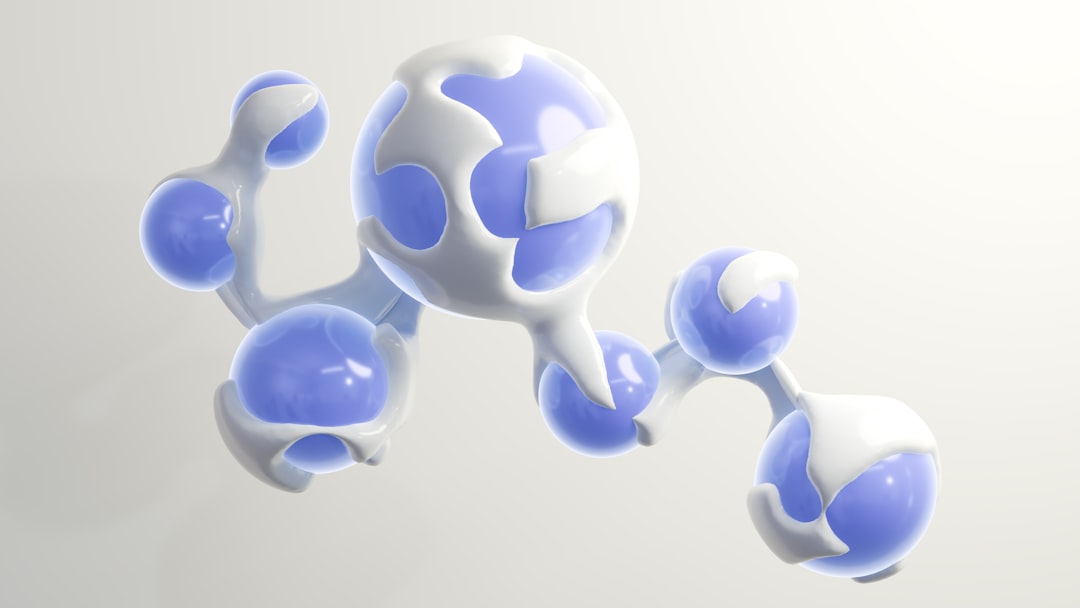
The Behavior of Water Molecules on Ice
Water, a substance ubiquitous and vital to life, exhibits fascinating and often counterintuitive behaviors at its solid phase, ice. Far from being a static, inert block, the surface of ice teems with molecular activity, a dynamic interplay of motion and order that defies simple intuition. This article delves into the intricate world of water molecules on ice, exploring their restless dance and the underlying physical principles that govern their behavior. From the subtle vibrations within the crystal lattice to the presence of a transient liquid-like layer, the surface of ice is a complex and active environment.
To understand the behavior of water molecules on ice, one must first appreciate the underlying structure of the solid itself. Ice, specifically the most common form, Ice Ih (Ice one h), boasts a highly ordered, crystalline lattice. This hexagonal arrangement is not merely an aesthetic feature; it dictates the potential energy landscape and the types of motion available to the individual water molecules.
Hydrogen Bonding: The Backbone of Ice
The defining characteristic of ice’s structure is the extensive network of hydrogen bonds. Each water molecule, with its polar oxygen atom and two hydrogen atoms, acts as both a donor and an acceptor of hydrogen bonds. In ice, each oxygen atom is tetrahedrally coordinated to four other oxygen atoms, with two of these connections formed by hydrogen bonds where the water molecule acts as a donor, and two where it acts as an acceptor. This arrangement creates a rigid, three-dimensional framework.
The Ice Rule and Proton Disorder
While the oxygen atoms reside in a highly ordered lattice, the hydrogen atoms within these bonds exhibit a degree of disorder, often referred to as the “ice rule” or Bernal-Fowler condition. This rule states that in a stable ice lattice, each oxygen atom has two hydrogen atoms covalently bonded to it and two hydrogen atoms involved in hydrogen bonds pointing towards it. However, the precise locations of the protons (the hydrogen nuclei) within the hydrogen bonds are not fixed. They can fluctuate, leading to a dynamic arrangement where individual water molecules can orient themselves in slightly different ways while maintaining the overall lattice structure. This proton disorder is crucial for understanding certain phenomena on the ice surface.
Lattice Vibrations: A Constant Hum
Even in its solid state, water molecules are not completely still. They are in constant motion, vibrating around their equilibrium positions within the lattice. These vibrations are quantized, meaning they can only occur at specific energy levels, and are a manifestation of the thermal energy present in the ice. The frequency and amplitude of these vibrations are dependent on factors like temperature and pressure.
Phonons: Collective Vibrations
The vibrations of water molecules in ice are not independent. They propagate through the lattice as collective excitations known as phonons. These phonons can be thought of as quantized sound waves that travel through the crystal. Different types of phonons exist, corresponding to different modes of vibration, such as stretching and bending of the hydrogen bonds, or translations and rotations of the entire water molecules. The study of phonons provides deep insights into the mechanical and thermal properties of ice.
Surface vs. Bulk: A Crucial Distinction
It is essential to distinguish between the behavior of water molecules within the bulk of the ice and those residing on its surface. The molecules in the bulk are surrounded by a relatively uniform environment, experiencing strong attractive forces from their neighbors. Surface molecules, however, are different. They have fewer neighboring molecules and are exposed to the surrounding environment, leading to a distinct set of behaviors.
Unpaired Bonds and Surface Energy
Surface water molecules possess “unpaired” hydrogen bonds, meaning they are not fully engaged in the ice lattice’s extensive hydrogen bonding network. This leads to a higher surface energy. To minimize this surface energy, the ice crystal tends to expose its most energetically favorable facets. The specific orientation of the crystal plane at the surface significantly influences the local arrangement of water molecules and their associated behaviors.
The behavior of water molecules on ice is a fascinating topic that reveals the unique properties of water in its solid state. As water freezes, the molecules arrange themselves in a crystalline structure, which is less dense than liquid water, causing ice to float. This unusual behavior is crucial for aquatic life during winter months. For a deeper understanding of this phenomenon and its implications, you can read more in this related article on Freaky Science: Freaky Science.
The Transient Liquid-Like Layer
One of the most remarkable aspects of water molecule behavior on ice is the existence of a thin, transient layer of liquid-like water that exists at the surface, even at temperatures well below the bulk melting point. This phenomenon, known as surface melting or quasi-melting, is not a complete liquefaction but a dynamic surface phase.
Evidence for Surface Melting
The existence of this liquid-like layer has been supported by a variety of experimental techniques. Techniques like Atomic Force Microscopy (AFM) can directly probe the surface, revealing a smoother, more mobile layer at elevated temperatures. Neutron scattering experiments have provided evidence for increased molecular mobility at the ice surface. Spectroscopic methods have also detected changes in the vibrational modes of water molecules at the surface, indicative of a less rigid structure.
Temperature Dependence of the Liquid-Like Layer
The thickness and mobility of this liquid-like layer are strongly dependent on temperature. As the temperature approaches the bulk melting point (0°C or 273.15 K at standard pressure), the layer becomes thicker and the molecular mobility increases significantly. Even at temperatures as low as -30°C, there is evidence for some degree of surface mobility. This suggests that the melting process is not a sharp transition but a gradual phenomenon that begins at the surface.
The Role of Disorder and Defects
The presence of point defects, like vacancies and dislocations, within the ice lattice can also influence the formation and behavior of the liquid-like layer. These defects disrupt the perfect order of the lattice, creating energetically favorable sites for surface melting.
Molecular Dynamics and Surface Mobility
The liquid-like layer is characterized by increased translational and rotational diffusion of water molecules compared to the bulk. While not exhibiting the same chaotic motion as bulk liquid water, these molecules are still able to slide past one another and reorient themselves with relative ease.
Diffusion Coefficients and Their Variation
Studies have measured diffusion coefficients for water molecules at the ice surface. These coefficients are generally lower than those for bulk liquid water but significantly higher than for water molecules in the bulk ice lattice. The diffusion coefficients are observed to increase as temperature increases, mirroring the thickening of the liquid-like layer.
The Influence of Surface Crystallographic Orientation
The specific crystallographic plane exposed at the ice surface plays a crucial role in the extent of surface melting and molecular mobility. Different facets have different arrangements of hydrogen bonds and therefore different surface energies. Some facets are more prone to surface melting than others, leading to variations in the liquid-like layer’s properties. For instance, basal planes (parallel to the hexagonal layers) tend to exhibit different surface behaviors compared to prism planes.
Molecular Interactions at the Ice-Air Interface
The interface between ice and air is where the unique properties of the liquid-like layer are most prominently displayed. Here, water molecules interact with the surrounding gaseous environment, leading to phenomena like adsorption and desorption.
Adsorption and Desorption Dynamics
Water molecules from the atmosphere can adsorb onto the ice surface, becoming part of the hydrogen-bonded network. Conversely, molecules from the liquid-like layer can desorb back into the gas phase. This dynamic exchange is influenced by factors such as humidity, temperature, and air flow.
Energy Barriers for Adsorption and Desorption
The energy required for a water molecule to transition between the gas phase and the ice surface, or between the liquid-like layer and the gas phase, involves overcoming specific energy barriers. These barriers are determined by the strength of the interactions between the water molecule and the ice surface, as well as the internal energy of the water molecule itself.
The Influence of Impurities
The presence of impurities at the ice-air interface can significantly alter adsorption and desorption dynamics. Impurities can affect the surface energy, create new adsorption sites, or block existing ones, thereby modifying the behavior of water molecules.
The Role of Surface Roughness
The physical roughness of the ice surface also plays a role in adsorption and desorption. Irregularities and crevices can trap water molecules, increasing the effective surface area and influencing the residence time of adsorbed molecules.
Capillary Condensation in Ice Pores
In porous ice structures, phenomena like capillary condensation can occur. Water vapor can condense in these small pores at partial pressures below the saturation vapor pressure, forming thin liquid-like bridges due to the enhanced surface area and curvature effects.
Dynamic Processes on the Ice Surface
Beyond the existence of a liquid-like layer, several dynamic processes occur on the ice surface, driven by the inherent mobility of water molecules. These processes are crucial for understanding phenomena like ice crystal growth, friction, and chemical reactions on ice.
Surface Diffusion and Rearrangement
Water molecules on the ice surface can diffuse laterally, moving from one position to another. This surface diffusion allows for the rearrangement of molecules to minimize surface energy and to accommodate incoming molecules during ice growth.
Mechanisms of Surface Diffusion
Surface diffusion can occur through various mechanisms, including the hopping of molecules between adjacent lattice sites and the movement of entire defects or molecular clusters. The dominant mechanism is often dependent on the local surface structure and temperature.
The Influence of Impurities on Diffusion
Impurities on the ice surface can act as obstacles to diffusion, slowing down the lateral movement of water molecules. Conversely, some impurities might create pathways or reduce the energy barriers for diffusion.
Ice Crystal Growth and Dissolution
The growth and dissolution of ice crystals are fundamentally surface phenomena. Water molecules from the liquid phase (or from the vapor phase in the case of deposition) attach to the ice surface, or molecules leave the surface to enter the liquid phase. The dynamics of these processes are heavily influenced by the behavior of water molecules at the interface.
Step Flow Growth and Surface Mobility
In a process known as step flow growth, ice crystals grow by the addition of molecules at the edges of existing terraces or steps on the surface. The mobility of water molecules on these terraces and their ability to reach the steps are critical for efficient growth. High surface mobility can lead to smoother crystal faces and faster growth rates.
The Impact of Supercooling on Growth Kinetics
The rate at which ice crystals grow is directly related to the degree of supercooling (the difference between the actual temperature and the equilibrium freezing point). Higher supercooling leads to faster growth, as it provides a greater driving force for molecules to attach to the ice surface.
Friction and Tribology of Ice
The remarkably low friction of ice, a phenomenon experienced by ice skaters and skiers, is intimately linked to the behavior of water molecules at the ice-surface interface. It is now widely accepted that the low friction is not solely due to a bulk melting effect, but rather to the presence of a thin, mobile surface layer.
The Role of the Liquid-Like Layer in Friction
When an object slides over ice, the pressure exerted can further promote the formation or thickening of the liquid-like layer, effectively lubricating the interface. The shear forces within this mobile layer are significantly lower than the forces required to move molecules within the solid ice lattice.
The Influence of Sliding Speed and Pressure
The magnitude of the frictional force is influenced by the sliding speed and the applied pressure. At higher sliding speeds, frictional heating can contribute to the formation of a thicker liquid layer. Similarly, higher pressures can also increase the rate of surface melting.
The behavior of water molecules on ice is a fascinating topic that reveals the unique properties of water in its solid state. When water freezes, the molecules arrange themselves in a hexagonal lattice structure, which is less dense than liquid water, causing ice to float. This unusual behavior plays a critical role in aquatic ecosystems and climate regulation. For a deeper understanding of this phenomenon, you can explore a related article that discusses the science behind water’s properties in more detail. Check it out here.
Spectroscopic and Computational Insights
| Behavior | Description |
|---|---|
| Hydrogen Bonding | Water molecules form hydrogen bonds with the ice surface, causing them to align in a specific orientation. |
| Surface Tension | Water molecules on ice have a higher surface tension, causing them to form a solid layer on the surface. |
| Crystalline Structure | Water molecules arrange themselves in a hexagonal lattice structure on the ice surface. |
| Diffusion | Water molecules move more slowly on the ice surface compared to in the liquid state, due to the rigid structure of ice. |
Understanding the complex behavior of water molecules on ice relies heavily on sophisticated experimental techniques and advanced computational modeling. These methods provide complementary views into the molecular world.
Spectroscopic Probes of Surface Dynamics
Various spectroscopic techniques are employed to study the vibrational, rotational, and electronic properties of water molecules at the ice surface. Infrared (IR) and Raman spectroscopy can reveal information about the hydrogen bonding network and the presence of different molecular species. Nuclear Magnetic Resonance (NMR) spectroscopy, particularly solid-state NMR, can provide insights into the mobility and local environment of water molecules.
Sum-Frequency Generation (SFG) Spectroscopy
Sum-frequency generation (SFG) spectroscopy is a particularly powerful technique for studying interfaces because it is inherently surface-sensitive. By tuning the incident laser frequencies, SFG can selectively probe the vibrational modes of molecules at the ice-air interface, providing detailed information about their structure and dynamics.
Deuterium NMR Studies of Proton Mobility
Using deuterium-labeled water allows for the study of proton (or deuteron) mobility in ice. These studies can provide quantitative information about the rates of proton jumps and the dynamics of the hydrogen bond network, which are crucial for understanding ice’s electrical properties and dielectric relaxation.
Computational Modeling and Molecular Dynamics Simulations
Molecular dynamics (MD) simulations are indispensable tools for exploring the behavior of water molecules on ice at the atomic level. These simulations use classical mechanics to track the motion of individual atoms and molecules over time, allowing researchers to observe phenomena that are difficult to access experimentally.
Simulating Surface Melting and Diffusion
MD simulations can directly model the formation and dynamics of the liquid-like layer, providing insights into the diffusion coefficients, residence times, and molecular arrangements within this surface phase. Researchers can systematically vary temperature and pressure to investigate their effects on surface properties.
Quantum Mechanical Calculations of Surface Energies and Barriers
While MD excels at simulating dynamics, quantum mechanical calculations are essential for accurately determining the energies of different molecular configurations, the strength of hydrogen bonds, and the activation barriers for various molecular processes, such as adsorption, desorption, and diffusion. These calculations help to interpret experimental results and to refine the force fields used in MD simulations.
Conclusion
The behavior of water molecules on ice is far from passive. It is a dynamic and intricate dance governed by the principles of hydrogen bonding, lattice vibrations, and the unique conditions at the ice-air interface. The existence of a transient liquid-like layer, the continuous adsorption and desorption of molecules, and the subtle diffusion and rearrangement of surface species all contribute to a complex and active environment. From the fundamental understanding of ice’s structure to the practical applications in fields like glaciology, meteorology, and material science, the study of water molecule behavior on ice continues to reveal the remarkable adaptability and profound importance of this seemingly simple substance. The ongoing interplay between experimental observation and theoretical modeling promises to further unravel the mysteries of this fascinating surface phenomenon.

Why Ice Is Slippery Is Stranger Than You Think
FAQs
1. What causes water molecules to behave differently on ice compared to in liquid form?
Water molecules behave differently on ice because the lower temperature causes them to form a crystalline structure, with each molecule bonding to four neighboring molecules in a rigid lattice.
2. How do water molecules arrange themselves on the surface of ice?
On the surface of ice, water molecules arrange themselves in a hexagonal lattice, with the oxygen atoms of the water molecules forming hydrogen bonds with neighboring molecules.
3. What is the significance of the arrangement of water molecules on ice?
The arrangement of water molecules on ice is significant because it creates a rigid and stable structure, which gives ice its characteristic hardness and ability to support weight.
4. How do water molecules behave when in contact with ice at different temperatures?
When in contact with ice at different temperatures, water molecules can either form a layer of liquid water on the ice surface if the temperature is close to the melting point, or they can form a layer of solid ice if the temperature is below the melting point.
5. How does the behavior of water molecules on ice impact everyday life?
The behavior of water molecules on ice impacts everyday life in various ways, such as influencing the properties of ice for recreational activities like skating and hockey, as well as affecting the formation of ice on roads and sidewalks during cold weather.