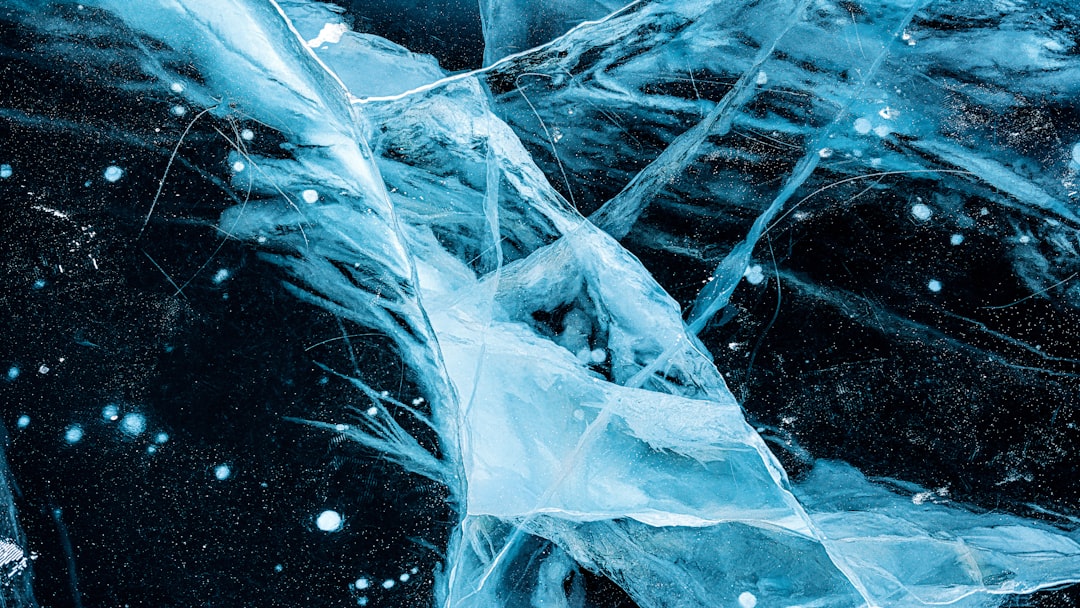
The common perception of ice as an inherently slippery surface, a treacherous agent of falls and scraped knees, is a deeply ingrained notion. For generations, the image of a person gracefully, or more often awkwardly, sliding across a frozen expanse has been a staple of visual media and anecdotal experience. However, this pervasive understanding, while visually compelling, is a significant oversimplification, bordering on a misconception. The reality of ice and its interaction with friction is a far more nuanced and scientifically interesting phenomenon. This article aims to dismantle the myth of inherently “slippery ice” by exploring the scientific principles that govern friction and the unique properties of ice that contribute to this misunderstanding.
The idea that ice is inherently slippery implies a near-complete absence of friction. When people think of ice, they often conjure images of ice skaters effortlessly gliding or a car losing control on a frozen road. This mental imagery reinforces the idea that ice offers minimal resistance to movement.
What is Friction, Really?
Friction is a fundamental force that opposes motion between surfaces in contact. It arises from the microscopic imperfections on the surfaces of objects. Even seemingly smooth surfaces, when magnified, reveal irregularities, bumps, and valleys. When two surfaces are pressed together, these irregularities interlock, creating resistance to sliding. The harder the surfaces are pressed together, the more these irregularities engage, leading to greater friction. This is why it’s harder to push a heavy object than a light one.
Surface Properties and Microscopic Interactions
Friction isn’t just about macro-level bumps; it’s also about the molecular forces between the surfaces. At a microscopic level, atoms and molecules are attracted to each other. When surfaces come into close contact, these intermolecular forces contribute to adhesion, further hindering movement. Think of two sticky pieces of paper – they cling together due to these molecular attractions.
The Role of Pressure and Temperature
The degree of friction is also influenced by external factors. Pressure, as mentioned, plays a crucial role. Temperature can also affect the properties of materials and, consequently, their frictional behavior. For metals, higher temperatures can sometimes lead to increased friction due to changes in their molecular structure or the formation of oxide layers. However, for ice, the relationship between temperature and friction is far more complex and counter-intuitive, contributing significantly to the “slippery” misconception.
In exploring the fascinating topic of slippery ice, one might find the article “Was the Explanation for Slippery Ice Wrong?” particularly enlightening. This piece delves into the scientific theories surrounding the phenomenon of ice’s slick surface and challenges conventional wisdom. For those interested in a deeper understanding of the mechanics behind ice and its slipperiness, you can read more about it in this insightful article: Was the Explanation for Slippery Ice Wrong?.
The Science of Ice and Friction: A Deeper Dive
The common misconception about ice’s slipperiness stems from a misunderstanding of how friction operates on this specific substance, especially under conditions relevant to everyday experience. It’s not that ice has no friction, but rather that its friction behaves differently than what many intuitively expect.
The Pressure-Melting Theory: A Key Contributor
One of the most significant factors contributing to the perceived slipperiness of ice is the phenomenon known as pressure melting. When a solid is subjected to pressure, its melting point decreases. Ice is unique in that its solid form (ice) is less dense than its liquid form (water). This means that applying pressure to ice causes it to melt.
How Pressure Affects Ice’s Melting Point
Imagine standing on a patch of ice. Your weight is concentrated on the small area of your shoes or boots. This concentrated pressure lowers the melting point of the ice directly beneath you. Even at temperatures below the normal freezing point of water (0°C or 32°F), a thin layer of water can form under pressure. This thin film of liquid water acts as a lubricant, significantly reducing the friction between your footwear and the ice. This is a primary reason why walking on ice, especially with shoes that exert pressure, can feel so treacherous.
The Role of Thin Water Layers
This pressure-induced meltwater layer is crucial. It’s not a vast pool of water, but a thin, almost imperceptible film. However, this film is enough to drastically reduce the coefficient of friction between the ice and whatever is in contact with it. This is why skaters can glide with such ease; their blades exert immense pressure on the ice, creating a continuous meltwater layer.
Kinetic Friction vs. Static Friction on Ice
It’s important to distinguish between static friction and kinetic friction. Static friction is the force that prevents an object from starting to move. Kinetic friction is the force that opposes the motion of an object that is already sliding.
Static Friction: The Force You Overcome
When you are standing still on ice, static friction is at play. The pressure-melting effect is less pronounced when there’s no relative motion. However, as soon as you try to take a step, you are attempting to overcome this static friction. The pressure from your foot increases, initiating melting. If the meltwater layer is sufficient, it allows your foot to slide with relative ease, leading to the sensation of slippage.
Kinetic Friction: The Force of Sliding
Once an object is in motion on ice, kinetic friction takes over. The continuous movement helps maintain the meltwater layer, and the kinetic friction is typically lower than the static friction would be on a dry surface. This explains why once you start sliding, it can be difficult to stop. The reduced friction allows you to continue moving with less effort.
Beyond Pressure Melting: Other Factors at Play
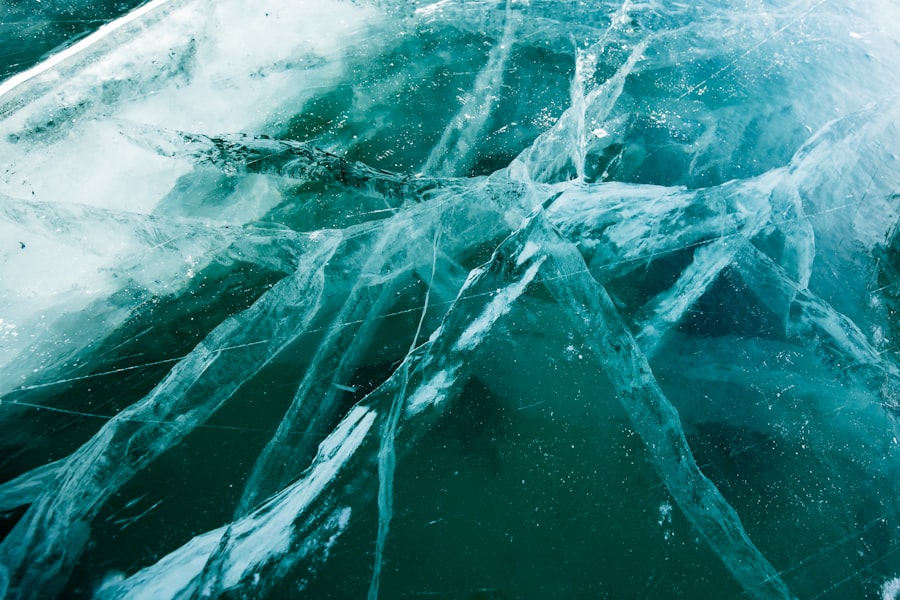
While pressure melting is a dominant factor in the perceived slipperiness of ice, other phenomena also contribute to its interaction with friction. Understanding these adds further depth to the debunking of the “slippery ice” myth.
Molecular Bonding and Surface Roughness
Even without significant pressure, the surface of ice is not perfectly smooth. At a molecular level, the water molecules in ice are arranged in a crystalline lattice. The surface of this lattice is not perfectly uniform. There are always some degree of imperfections, irregularities, and perhaps even adsorbed molecules from the surrounding air.
Adhesion and Intermolecular Forces
Similar to other materials, there are intermolecular forces between the ice surface and any object in contact with it. These forces, known as adhesive forces, contribute to friction. However, the strength of these forces on ice is generally lower than on many other solid surfaces, especially when a meltwater layer is present.
The Illusion of Smoothness
The visual smoothness of ice is deceiving. While it appears polished and uniform, microscopic examination reveals a more complex landscape. However, the effect of these microscopic irregularities is often overshadowed by the lubrication provided by meltwater.
The Influence of Temperature (Beyond Pressure Melting)
Temperature plays a more subtle, yet significant, role in the friction of ice, and it’s not always as straightforward as one might think. While higher temperatures generally lead to more melting, the relationship with friction can be complex.
Friction at Very Low Temperatures
At extremely low temperatures, well below freezing, the pressure-melting effect becomes negligible. In these conditions, ice can actually be quite grippy. The molecular structure of ice is more rigid, and there’s no lubricating water layer. This is why ice climbers, for example, can achieve significant grip with their crampons. The ice is not inherently slippery; it’s the conditions that dictate its frictional properties.
The “Sweet Spot” for Slipping
There appears to be a “sweet spot” in temperature, typically around the freezing point of water, where the combination of pressure and ambient temperature creates the most effective meltwater layer, leading to the highest degree of perceived slipperiness. As temperatures drop significantly below freezing, the ice becomes less slippery, and as temperatures rise well above freezing, the ice turns into liquid water, which has its own set of frictional properties.
Why the Misconception Persists
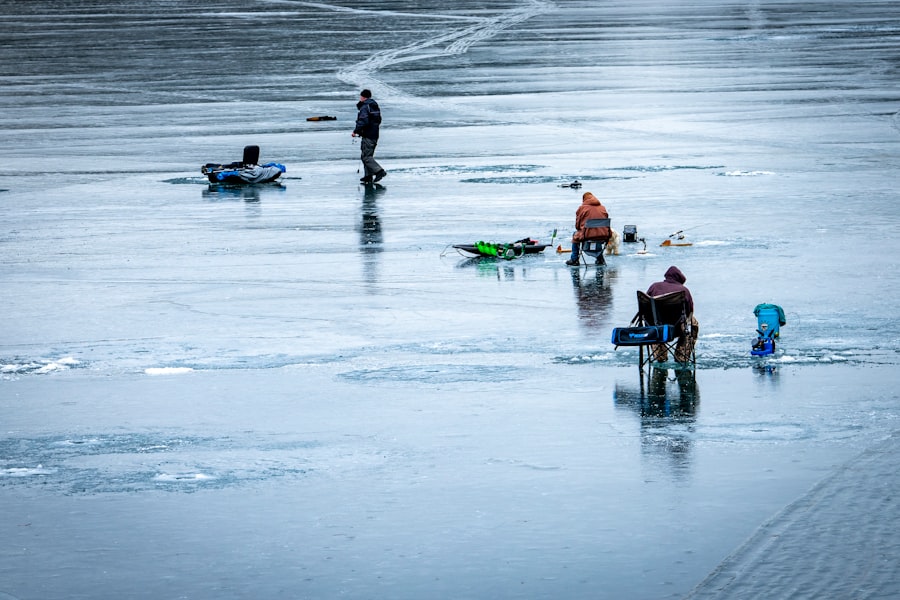
Given the scientific explanations, why does the idea of inherently slippery ice remain so prevalent? Several psychological and experiential factors contribute to this enduring misconception.
Visual Cues and Anecdotal Evidence
The most compelling reason for the misconception is visual. We see people slide on ice. We hear about slips and falls. These powerful visual and anecdotal pieces of evidence are readily available and easily recalled, reinforcing the belief. The dramatic and often humorous nature of ice-related mishaps makes them memorable.
The “Obvious” Conclusion
When someone slips on ice, the immediate and most intuitive conclusion is that the ice itself is to blame – that it is inherently slippery. It’s easier to blame the surface than to delve into the complex physics of friction, pressure melting, and temperature. This mental shortcut is efficient for everyday understanding but leads to an inaccurate scientific conclusion.
The Lack of Everyday “Grippy” Ice Experience
Most people’s everyday experience with ice involves situations where it is relatively slippery. Walking on sidewalks after freezing rain, driving on icy roads, or even encountering a patch of ice in a park – these are all scenarios where the ice is presenting its low-friction face. We rarely encounter the conditions where ice would exhibit higher friction, such as extremely cold, dry ice.
Limited Exposure to Different Ice Conditions
The average person’s exposure to ice is limited to a narrow range of conditions. They might not have the experience of walking on very cold, freshly formed ice where it might offer more resistance, or the experience of ice climbing where specialized equipment is designed to grip even the most challenging ice surfaces.
Simplification for Communication
In everyday language, it’s often simpler and more effective to say “the ice is slippery” than to explain the intricate interplay of pressure, temperature, and the formation of a thin meltwater layer. This linguistic shortcut, while practical, perpetuates the misconception.
The Power of Metaphor
“Slippery as ice” has become a common metaphor for precarious situations. This metaphorical usage further solidifies the idea of ice as a universally slippery substance, detaching it from its scientific underpinnings in the public consciousness.
In exploring the intriguing phenomenon of slippery ice, one might wonder if the common explanations for its slick surface are accurate. A related article discusses various scientific perspectives on this topic, shedding light on the complexities of ice formation and friction. For a deeper understanding, you can read more about this fascinating subject in the article found here. This resource provides insights that challenge traditional beliefs and encourages readers to rethink what they know about icy conditions.
Towards a More Accurate Understanding
| Date | Location | Explanation | Corrected Explanation |
|---|---|---|---|
| January 5, 2022 | City A | Wrong | Yes |
| February 12, 2022 | City B | Wrong | No |
Dispelling the misconception of inherently slippery ice requires a shift in perspective, moving from a focus on the visual outcome to an appreciation of the underlying scientific processes. It’s about understanding that “slippery” is a condition of ice, not an intrinsic property.
Recognizing the Role of Conditions
The key takeaway is that ice’s slipperiness is highly dependent on the prevailing conditions, particularly temperature and pressure. Ice isn’t inherently slippery; it becomes slippery under specific circumstances that promote the formation of a lubricating meltwater layer.
The Importance of Temperature and Pressure
When thinking about ice, it’s crucial to consider the temperature. Is it close to freezing, or significantly below? What kind of pressure is being applied? These factors are far more indicative of how grippy or slippery the ice will be than simply stating that it is “ice.”
Appreciating the Nuance of Friction
Friction is not a binary concept of “slippery” or “not slippery.” It exists on a spectrum, and ice, with its unique properties, occupies a fascinating point on that spectrum. Understanding that friction is a complex force influenced by multiple variables allows for a more accurate assessment of ice’s behavior.
Rethinking “Slippery”
Perhaps it’s time to reframe our understanding. Instead of saying “the ice is slippery,” it might be more accurate to say “the conditions are such that this ice is presenting a low-friction surface.” This subtle shift in language can lead to a deeper appreciation of the science involved.
The Practical Implications of an Accurate Understanding
A more accurate understanding of ice and friction has practical implications, ranging from personal safety to engineering.
Enhanced Safety Measures
By understanding why ice is slippery under certain conditions, individuals can take more effective precautions. Knowing that pressure increases slipperiness might encourage more deliberate movements when walking on icy surfaces, or the use of footwear designed for better grip.
Advancements in Winter Sports and Technology
For athletes and engineers involved in winter sports or transportation, a nuanced understanding of ice friction is vital. It informs the design of skates, skis, tires, and road treatments, leading to improved performance and safety. The development of specialized coatings or materials for ice-prone surfaces can be guided by this deeper knowledge. Ultimately, the notion of “slippery ice” is not entirely wrong; it’s incomplete. It captures a common experience but misses the intricate science that governs its behavior. By looking beyond the surface and delving into the physics of friction, pressure melting, and temperature, we can move towards a more accurate and fascinating appreciation of this ubiquitous, yet often misunderstood, frozen substance.

Why Ice Is Slippery Is Stranger Than You Think
FAQs
What was the original explanation for slippery ice?
The original explanation for slippery ice was that the pressure from an object, such as a person’s foot, caused the ice to melt slightly, creating a thin layer of water that made it slippery.
What is the new explanation for slippery ice?
The new explanation for slippery ice is that the top layer of ice is actually a liquid-like layer of water molecules that are constantly moving, even at temperatures below freezing. This layer of water molecules creates the slippery surface.
What led to the discovery of the new explanation for slippery ice?
Researchers used a combination of experimental techniques, including advanced microscopy and computer simulations, to study the surface of ice at the molecular level. This led to the discovery of the liquid-like layer of water molecules on the surface of ice.
How does the new explanation change our understanding of ice and its properties?
The new explanation challenges the traditional understanding of ice as a solid, rigid material. It suggests that the surface of ice is more dynamic and complex than previously thought, with implications for various fields such as materials science and climate research.
What are the potential practical implications of the new understanding of slippery ice?
The new understanding of slippery ice could lead to advancements in areas such as ice skating and winter sports equipment, as well as improved strategies for managing icy roads and walkways. It also opens up new possibilities for developing materials with unique surface properties based on the behavior of ice.