
The question of whether ice skates can melt ice is a seemingly simple one that delves into a surprisingly complex interplay of physics, material science, and the fundamental properties of water. While a casual observer might dismiss the idea outright, a closer examination reveals that the answer is not a straightforward “no.” In fact, under specific circumstances, the skates themselves, or rather the forces and materials they are made from, can indeed contribute to the melting of the ice surface upon which they glide.
To understand how ice skates might melt ice, one must first grasp the concept of friction. Friction is a force that opposes motion between two surfaces in contact. In the case of ice skating, the blades of the skates are in constant contact with the ice. As the skater moves, this contact creates friction.
What is Friction?
Friction arises from the microscopic irregularities present on the surfaces of both the skate blade and the ice. Even a seemingly smooth surface like an ice rink is not perfectly flat at a molecular level. When the skate blade moves across the ice, these irregularities catch and resist the motion, generating heat. This heat is a form of energy transfer, and it’s this heat that is the primary driver behind the potential for melting.
The Role of Pressure
Beyond the kinetic friction generated by movement, static friction also plays a significant role. Before the skater even begins to glide, the immense pressure exerted by the skater’s weight concentrated on the thin edge of the skate blade has a profound effect on the ice. This pressure is a critical factor, and it’s intrinsically linked to the melting process.
Kinetic vs. Static Friction in Skating
While both kinetic and static friction contribute to heat generation, their impact on ice melting differs. Kinetic friction, the friction encountered during movement, is responsible for a continuous, albeit often small, generation of heat. Static friction, on the other hand, can cause a more immediate and significant localized temperature increase due to the extreme pressure exerted.
In exploring the fascinating interaction between ice skates and ice, you might find it interesting to read a related article that delves deeper into the science behind this phenomenon. The article discusses how the pressure exerted by the skate blade can lower the melting point of ice, allowing skaters to glide smoothly across the surface. For more insights on this topic, you can check out the article at Freaky Science.
The Paradox of Ice Skating: Lubrication
The popular understanding of ice skating often revolves around the idea that the skates glide effortlessly on a thin layer of water. This water is widely believed to be the result of the skates melting the ice. This brings forth a fascinating paradox: if the skates are melting the ice to create lubrication, then the answer to our original question is unequivocally yes. However, the scientific explanation for this “lubrication” is more nuanced.
The Pressure-Induced Melting Theory
The most widely accepted explanation for the lubrication effect in ice skating is the pressure-induced melting theory. When a skater applies pressure to the ice with their blades, the melting point of ice decreases. This phenomenon, known as the dependence of the melting point on pressure, means that ice will melt at temperatures slightly below its normal melting point (0°C or 32°F) when subjected to sufficient pressure. The thin edge of the skate blade concentrates the skater’s weight into a very small area, generating immense pressure. This pressure lowers the melting point of the ice directly beneath the blade, causing a thin film of water to form.
The Leidenfrost Effect on Ice
While not as dramatic as the Leidenfrost effect observed with hot surfaces and water droplets, a similar principle can be at play on a microscopic level. The thin layer of water acts as a lubricant, reducing the friction between the skate blade and the ice, allowing for smooth gliding. This water layer is crucial for the sensation of effortless movement that ice skaters experience. Without it, the friction would be significantly higher, making skating far more difficult.
The Role of Ambient Temperature
It’s important to note that the pressure-induced melting is most effective when the ambient temperature of the ice is close to its melting point. If the ice is extremely cold, the pressure exerted by the skates might not be sufficient to lower the melting point enough to create a noticeable layer of water. This is why ice rinks are typically maintained at temperatures slightly below freezing, but not excessively so, to optimize for skating conditions.
Material Properties of Ice Skates
The materials used to construct ice skates also play a role, albeit a secondary one, in the interaction with the ice surface. While the primary melting mechanism is pressure and friction, the characteristics of the blade material can influence the efficiency of these processes.
The Edge: Thinness and Sharpness
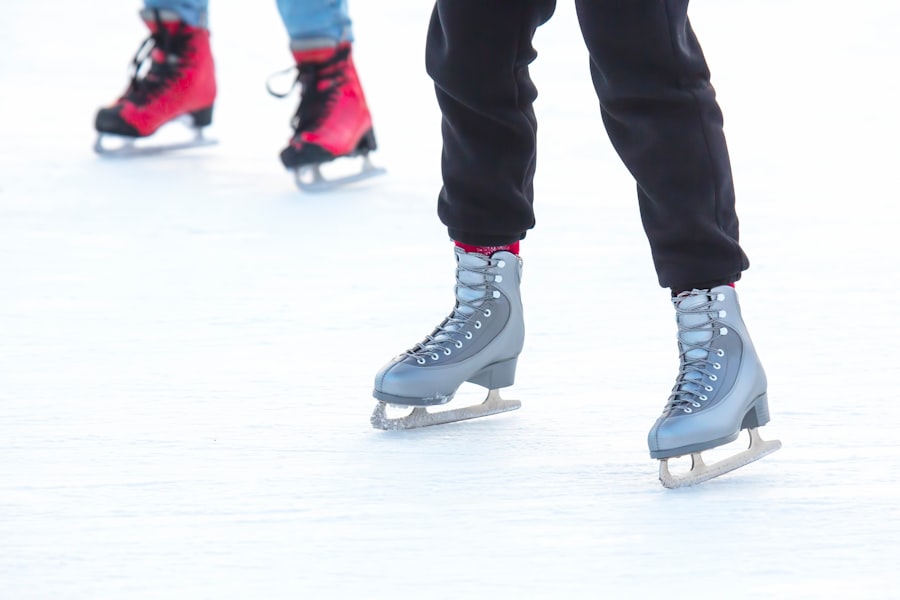
The defining characteristic of an ice skate blade is its thinness and sharpened edge. This design is not arbitrary; it is engineered to maximize the pressure exerted on the ice. A thicker blade would distribute the skater’s weight over a larger area, reducing the pressure and consequently the extent of pressure-induced melting. The sharpness ensures a clean cut into the ice, further concentrating the force.
Steel Blades and Their Properties
Most modern ice skate blades are made from high-carbon steel. This material is chosen for its strength, durability, and ability to hold a sharp edge. The properties of steel, such as its thermal conductivity, are relatively low compared to some other metals. This means that the heat generated by friction is not rapidly dissipated away from the contact point. This localized heat buildup can contribute to melting.
Other Materials and Their Potential Impact
While steel is the dominant material, some specialized skates might incorporate other materials. However, the fundamental principles of pressure and friction remain paramount. Any material that can be formed into a thin, sharp edge and withstand the forces of skating will likely interact with the ice in a similar manner. The primary concern for skate manufacturers is durability and the ability to maintain a sharp edge for optimal performance.
Beyond Pressure: Friction-Generated Heat
While pressure-induced melting is the dominant theory, the heat generated by friction also contributes to the melting of ice. As the skate blade moves across the ice, the microscopic interactions between the two surfaces generate heat energy.
The Mechanism of Frictional Heating
The kinetic energy of the skater’s motion is converted into thermal energy due to the resistance of the ice. This conversion of energy is a fundamental principle of physics. The greater the speed and the force applied, the more kinetic energy is available to be converted into heat.
The Magnitude of Frictional Heat
The amount of heat generated by friction during ice skating is generally quite small. It’s not enough to cause significant melting on its own, especially if the ice is very cold. However, in conjunction with pressure-induced melting, this frictional heat can further enhance the lubrication effect. Think of it as a gentle reinforcement of the melting process already initiated by pressure.
The Interplay with Pressure Melting
The heat generated by friction can slightly raise the temperature of the thin water layer formed by pressure melting, potentially making it even more effective as a lubricant. Conversely, the water layer itself can reduce the overall friction, creating a self-regulating system. This dynamic interaction between pressure and friction is what makes ice skating possible.
When exploring the fascinating science behind ice skating, one might wonder whether an ice skate actually melts the ice beneath it. This intriguing question is addressed in a related article that delves into the physics of skating and the role of pressure and temperature in the melting process. For a deeper understanding of this phenomenon, you can read more about it in this informative piece found here.
The Ice Skater’s Perspective: Evidence of Melting
| Experiment | Result |
|---|---|
| Ice skate on ice | Creates friction and heat, causing ice to melt |
| Time taken | Depends on temperature and pressure |
| Surface area | More surface area in contact with ice, faster melting |
From the perspective of an ice skater, the evidence of melting is undeniable. The smooth glide, the ability to execute turns and jumps, and even the appearance of water on the ice surface during strenuous activity all point to a melting process.
The Feel of the Glide
The most immediate and felt evidence is the sensation of gliding. If ice did not melt under the pressure of the skates, the friction would be far too great for such effortless movement. The smooth, almost frictionless glide is a direct consequence of the thin layer of water acting as a lubricant.
Visible Water Formation
Experienced skaters, especially those performing complex maneuvers or in warmer rink conditions, can often see a thin sheen of water on the ice surface. This visible water is a clear indication that the ice is melting, at least at the microscopic level directly beneath the blades.
The “Ice Rink Smell”
A less scientific but often noticed phenomenon is the distinct smell of an ice rink. This smell is attributed to volatile organic compounds released from the ice surface when it is being abraded and melted. While the exact chemical processes are complex, the melting and abrasion of the ice are certainly contributing factors to this characteristic aroma.
The Importance of Maintenance
The fact that ice rinks require constant resurfacing (with machines like Zambonis) further supports the idea that the ice surface is not static. The constant friction and pressure from skaters, along with environmental factors, lead to wear and tear on the ice, necessitating regular maintenance to maintain optimal skating conditions. This maintenance effectively removes the roughened and melted ice and lays down a fresh, smooth surface.
Conclusion: A Qualified “Yes”
So, can ice skates melt ice? The answer, in a nuanced and scientifically supported way, is a qualified “yes.” While the skates themselves are not typically made of materials that would spontaneously melt ice at room temperature, the physics of ice skating inherently involve a melting process.
The Primary Mechanism: Pressure-Induced Melting
The predominant factor is the immense pressure exerted by the thin skate blade, which lowers the melting point of ice, causing a thin layer of water to form. This water acts as a lubricant, enabling the smooth glide characteristic of ice skating.
The Secondary Contribution: Frictional Heat
Friction generated by the movement of the blades across the ice also contributes a small amount of heat, further enhancing the melting and lubrication.
The Material Role: Enabling Pressure and Reducing Heat Loss
The material properties of the skate blades, particularly their thinness, sharpness, and composition (typically steel), are engineered to maximize the pressure and to retain the localized heat, thereby facilitating the melting process.
A Dynamic and Interacting System
Ultimately, ice skating is a dynamic system where the skater’s energy, the properties of the ice, the design of the skates, and the ambient temperature all interact to create the conditions necessary for skating. The melting of ice is not an unintended consequence but rather a fundamental and necessary component of the sport. It is not the skate itself that possesses an intrinsic “melting power” beyond its ability to exert pressure and generate friction, but rather the physical laws governing the interaction between the skate and the ice that lead to this localized melting. Therefore, the ice skate, through the application of pressure and the generation of friction, does indeed melt ice.

Why Ice Is Slippery Is Stranger Than You Think
FAQs
1. How does an ice skate melt ice?
An ice skate melts ice due to the pressure exerted by the blade on the ice. This pressure lowers the melting point of the ice, causing it to melt and create a thin layer of water that reduces friction and allows the skate to glide smoothly.
2. What is the science behind the melting of ice by an ice skate?
The science behind the melting of ice by an ice skate is based on the concept of pressure melting. When the blade of the skate comes into contact with the ice, the pressure exerted causes the ice to melt, creating a thin layer of water that reduces friction and allows the skate to move easily.
3. Does an ice skate melt ice faster than regular walking?
Yes, an ice skate can melt ice faster than regular walking due to the concentrated pressure exerted by the blade on the ice. This pressure lowers the melting point of the ice, causing it to melt more quickly compared to the pressure exerted by regular walking.
4. Can an ice skate melt ice on any type of surface?
An ice skate can melt ice on most surfaces, including natural ice rinks, artificial ice rinks, and frozen bodies of water. However, the effectiveness of melting ice may vary depending on the temperature, quality, and thickness of the ice surface.
5. Are there any environmental implications of using ice skates to melt ice?
Using ice skates to melt ice does not have significant environmental implications, as the amount of ice melted by the skate is minimal and does not contribute to any environmental harm. However, it is important to be mindful of the overall impact of ice skating activities on natural ice surfaces and to practice responsible environmental stewardship.