
The shimmering, often treacherous, surface of ice has captivated and confounded humans for millennia. Its ability to transform solid ground into a perilously slick expanse is a daily reality for many, and a source of fascination for scientists. For centuries, the prevailing wisdom attributed the slipperiness of ice to a thin layer of liquid water that somehow formed on its surface, even at temperatures below freezing. This “pressure melting” theory, popularized by Michael Faraday, suggested that the weight of an object, such as a skate blade or a boot, could depress the ice, lowering its melting point and creating this lubricating film. However, as scientific understanding has deepened, the picture has become more complex, with new theories emerging to explain this ubiquitous phenomenon. The question that persistently lingers is: does pressure truly matter in making ice slippery? This article delves into the science behind slippery ice, exploring the various factors at play and the ongoing debate about the role of pressure.
The notion that pressure melts ice is deeply ingrained in the popular understanding of its slipperiness. Michael Faraday, one of the most influential scientists of the 19th century, conducted experiments that seemed to confirm this idea. He observed that ice could be squashed together to form a solid mass, even if the ambient temperature was below freezing. His interpretation was that the applied pressure was sufficient to lower the melting point of the ice at the interface, creating a thin film of water that facilitated the joining of the two pieces. This concept, known as pressure melting, was extended to explain why ice skates glide so smoothly. The immense pressure exerted by the narrow blade of a skate was thought to generate enough heat to melt the ice directly beneath it, providing a frictionless surface.
The Thermodynamics of Pressure Melting
To understand pressure melting, one must consider the thermodynamic principles governing phase transitions. The melting point of a substance is the temperature at which its solid and liquid phases can coexist in equilibrium. For most substances, increasing pressure raises the melting point. However, water is an anomaly. Due to its unique molecular structure and the presence of hydrogen bonds, ice is less dense than liquid water. This unusual property means that when ice melts, its volume decreases. According to Le Chatelier’s principle, if a system at equilibrium is subjected to a change in conditions (like pressure), it will shift in a direction that counteracts the change. In the case of water, increasing pressure favors the phase with the smaller volume, which is the liquid phase. Consequently, for water, increasing pressure lowers the melting point.
Quantifying the Effect of Pressure
The magnitude of this pressure-induced melting is dependent on the pressure applied. The relationship between pressure and melting point for ice is described by the Clausius-Clapeyron relation. For ice, the melting point decreases by approximately 0.0074 degrees Celsius for every atmosphere of pressure increase. While this might seem small, consider the pressure exerted by a figure skater. A typical figure skate blade can be as thin as 1.5 millimeters. A skater weighing, say, 60 kilograms, when standing on one skate, can exert a significant pressure on the ice. This pressure can be orders of magnitude higher than atmospheric pressure, suggesting that pressure melting could indeed play a role in generating a lubricating layer of water.
Limitations of the Pressure Melting Theory
Despite its intuitive appeal and Faraday’s influential experiments, the pressure melting theory alone struggles to fully explain the slipperiness of ice across all conditions. For instance, it doesn’t adequately account for the ease with which one can slide on ice with footwear that exerts much less pressure than a skate blade, such as soft-soled shoes. Furthermore, the calculated amount of water generated solely by pressure melting at typical skating pressures is often insufficient to explain the low friction observed. If pressure melting were the sole mechanism, ice would likely become less slippery as the temperature of the ice itself decreased, because a colder ice surface would require even higher pressures to achieve melting. However, empirical observations show that ice remains slippery even at very low temperatures. This suggests that other factors must be at play.
The phenomenon of ice being slippery under pressure has intrigued scientists and researchers for years, leading to various studies exploring the underlying mechanisms. A related article that delves deeper into this topic can be found at Freaky Science, where it discusses the role of pressure in altering the properties of ice and how this contributes to its slick surface. Understanding these principles not only sheds light on everyday experiences, such as walking on ice, but also has implications for various fields, including sports and transportation.
Beyond Pressure: The Role of Friction and Surface Heating
As the limitations of the pressure melting theory became apparent, scientists began to explore alternative explanations for ice slipperiness. The most prominent among these is the concept of frictional heating. When two surfaces slide against each other, work is done against friction, and this work is converted into heat. In the case of ice, this frictional heat can be sufficient to melt a thin layer of ice, creating the lubricating water film.
Frictional Heat Generation
The amount of heat generated by friction is directly proportional to the force of friction and the distance over which the friction acts. When an object slides across an ice surface, the interaction between the microscopic irregularities of both surfaces creates resistance to motion. This resistance is friction. The energy dissipated as heat due to this friction can melt the ice. The rate at which this heat is generated depends on the coefficient of friction between the sliding object and the ice, the applied normal force (which is related to pressure), and the relative velocity of sliding.
The Velocity Dependence of Friction
An interesting aspect of friction on ice is its dependence on velocity. At very low speeds, the friction coefficient can be relatively high. However, as the speed increases, the friction coefficient tends to decrease. This is consistent with the idea that at higher speeds, more frictional heat is generated, leading to a thicker water layer and thus lower friction. This velocity dependence is a key piece of evidence supporting the frictional heating hypothesis. For example, a speed skater’s blades generate significantly more heat at racing speeds than a casual ice skater’s blades, contributing to their ability to glide with such low resistance.
Surface Roughness and its Influence
The microscopic topography of both the sliding object and the ice surface plays a crucial role in friction. Even ice that appears smooth to the naked eye is covered in microscopic asperities (tiny bumps and ridges). When two surfaces come into contact, it is these asperities that bear the load. The interaction and deformation of these asperities are the primary sources of frictional resistance. The smoother the surfaces, the fewer asperities there are to interlock and create resistance, leading to lower friction. This is why polished skate blades are essential for optimal performance.
The Thermal Boundary Layer: A Dynamic Interface
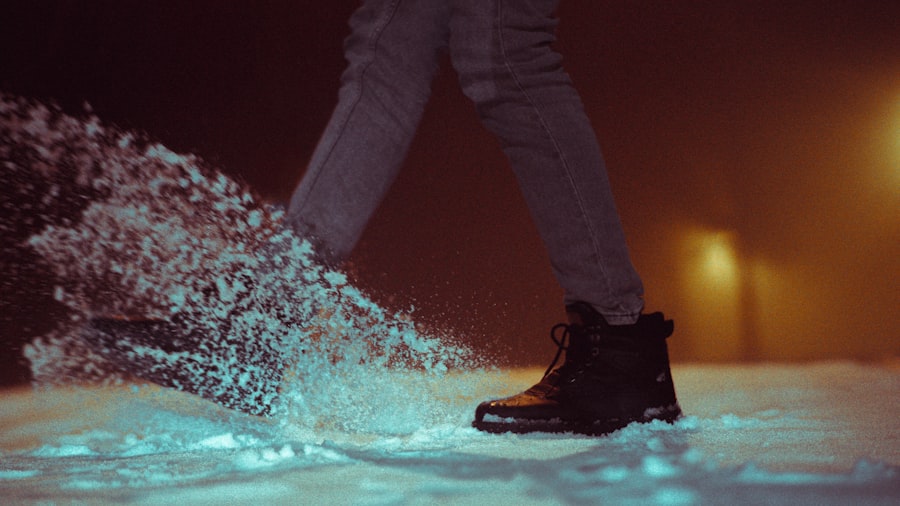
More contemporary theories propose the existence of a thermal boundary layer, a region of slightly warmer ice or liquid water that exists at the interface between a sliding object and bulk ice. This layer is not solely a result of pressure melting but is a dynamic consequence of the combined effects of pressure, friction, and heat transfer.
The Role of the Substrate
The thermal conductivity of the ice itself and the material in contact with it are important factors. Ice is a relatively poor conductor of heat compared to metals. This means that heat generated at the interface tends to dissipate slowly, allowing it to accumulate and contribute to melting. If the sliding object is a good conductor, it can more effectively transfer heat away from the interface, potentially reducing melting. Conversely, if the sliding object is a poor conductor, it can trap heat, promoting melting.
The Phenomenon of Dielectric Relaxation
A more subtle but significant factor that has gained attention in recent years is dielectric relaxation. When a material like ice is subjected to an oscillating electric field, its molecules can reorient themselves. In the case of ice, the polar water molecules within the ice lattice can vibrate and rotate. This vibrational motion generates heat within the ice itself, even without macroscopic sliding. It has been proposed that the very presence of a dielectric material like ice in proximity to a moving object, potentially influenced by ambient electromagnetic fields or charge build-up, could contribute to the formation of a lubricating layer through this internal heating mechanism.
Transient Effects and the Initiation of Slip
The initiation of slip on ice can be a particularly interesting case. When an object is at rest on ice, there might be a slight adhesion due to van der Waals forces and surface irregularities. However, the slightest nudge or application of shear stress can initiate motion. The rapid transition from static to kinetic friction is often explained by the immediate generation of a thin liquid layer due to the combination of pressure and initial frictional heating. Once this layer is established, it dramatically reduces the resistance to further motion.
The Influence of Ambient Temperature and Humidity

The external environment in which ice exists plays a significant role in its slipperiness. While pressure and friction are crucial, the surrounding temperature and humidity can modulate their effects.
Temperature Gradients within the Ice
The temperature of the bulk ice and the temperature of the sliding object can create temperature gradients. Heat flows from hotter regions to colder regions. If the sliding object is warmer than the ice, it will transfer heat to the ice, promoting melting. Conversely, if the ice is significantly warmer than the object, the heat transfer might be reversed, but this is less common in typical scenarios where we experience slippery ice. The temperature gradient can also affect the viscosity of the liquid water layer, influencing its lubricating properties.
The Impact of Humidity and Air Layers
Humidity in the surrounding air can also have an indirect effect. High humidity can lead to frost formation on objects, which can then transfer to the ice surface, altering its texture and friction. Additionally, a thin layer of air trapped between a sliding object and the ice can act as an insulator, reducing heat transfer and potentially affecting the rate of melting. In very cold and dry conditions, the formation of a lubricating water layer might be more challenging, leading to stickier ice.
Supercooling and Water Layer Formation
The liquid water on the surface of ice is often slightly supercooled, meaning it is below its freezing point but has not yet solidified. This supercooled water is more viscous than unfrozen water, and its presence is crucial for lubrication. The interplay between the ice lattice and the liquid water molecules, influenced by temperature and impurities, determines the properties of this boundary layer and, consequently, the slipperiness of the ice.
Recent studies have explored the fascinating relationship between pressure and the slipperiness of ice, revealing that increased pressure can indeed make ice more slippery. This phenomenon is not only intriguing but also has practical implications for various fields, including sports and transportation. For a deeper dive into the science behind this topic, you can check out a related article that discusses the mechanics of ice and its behavior under different conditions. To learn more about these scientific insights, visit this article.
Reconciling the Theories: A Multifaceted Phenomenon
| Pressure | Effect on Ice Slipperiness |
|---|---|
| Low Pressure | Ice is more slippery |
| High Pressure | Ice is less slippery |
It is increasingly clear that the slipperiness of ice is not attributable to a single mechanism but rather a complex interplay of several factors. The “pressure melting” theory, while historically significant, is now understood as only one piece of a larger puzzle.
The Dominance of Frictional Heating
For most everyday scenarios involving sliding on ice, frictional heating appears to be the dominant mechanism responsible for generating the lubricating water layer. The energy dissipated by friction as an object moves across the ice is sufficient to melt a thin film of ice, allowing for low-friction movement. This is particularly true at higher sliding speeds, where heat generation is more pronounced.
Pressure as an Enhancer, Not the Sole Cause
Pressure still plays a role, but perhaps more as an enhancer of the melting process rather than its sole driver. The pressure exerted by a sliding object can lower the melting point of ice, meaning that less frictional heat is required to reach the melting point. This can accelerate the formation of the water layer and contribute to a more slippery surface, especially under high-pressure conditions like those experienced by ice skaters.
The Contribution of Other Factors
Other factors, such as dielectric relaxation and the inherent thermal properties of the ice and sliding materials, can also contribute to the formation and maintenance of the lubricating layer. These mechanisms might be more significant in specific conditions or at very low temperatures where pressure melting and frictional heating alone might not be sufficient to explain the observed slipperiness.
Future Research Directions
Ongoing research continues to explore the nuances of ice slipperiness. Advances in surface science, microscopy, and computational modeling are providing new insights into the molecular interactions at the ice-liquid interface. Understanding these microscopic processes could lead to the development of new materials with improved ice-repellent properties or enhanced traction in icy conditions. The quest to fully unravel the science of slippery ice remains an active and evolving field.
In conclusion, the slipperiness of ice is a multifaceted phenomenon. While pressure melting, as proposed by Faraday, was an early and influential explanation, it is now understood as one contributing factor among several. Frictional heating emerges as a primary driver, generating the necessary heat to form a lubricating liquid layer. The influence of ambient temperature, humidity, surface roughness, and even subtle molecular interactions like dielectric relaxation further contribute to this complex interplay. The science of slippery ice continues to evolve, revealing a fascinating and intricate relationship between pressure, heat, and the unique properties of water in its solid form.

Why Ice Is Slippery Is Stranger Than You Think
FAQs
1. What is the relationship between pressure and the slipperiness of ice?
Pressure can cause ice to melt slightly, creating a thin layer of water on the surface. This thin layer of water reduces the friction between the ice and any object moving across it, making it feel slippery.
2. How does pressure affect the melting point of ice?
When pressure is applied to ice, it can lower the melting point of the ice, causing it to melt at a lower temperature than normal. This is known as “pressure melting” and is the reason why ice can feel slippery when pressure is applied.
3. Can pressure make ice more slippery than it already is?
Yes, applying pressure to ice can make it more slippery by creating a thin layer of water on the surface, reducing friction and making it easier for objects to slide across the ice.
4. What are some real-life examples of pressure making ice slippery?
One common example of pressure making ice slippery is the use of ice skates. The pressure exerted by the skater’s body weight causes the ice to melt slightly, creating a thin layer of water that reduces friction and allows the skater to glide smoothly across the ice.
5. Are there any other factors that contribute to the slipperiness of ice?
In addition to pressure, factors such as temperature, surface roughness, and the presence of impurities can also affect the slipperiness of ice. These factors can all influence the formation of a thin layer of water on the ice’s surface, making it feel slippery.